Bangladesh
13 Referenzen
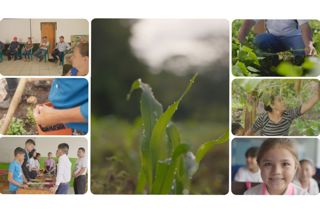
Supporting WFP’s Changing Lives Transformation Fund (CLTF) to Support Country Offices in the Design and Implementation of Impact Measurement Components
- 2023 – 2026
- unter 500.000 €
- Bangladesh, Chad, Kenya, Peru
The Changing Lives Transformation Fund (CLTF) of the World Food Programme (WFP) was established to provide selected WFP Country Offices (COs), via calls for proposals, with funding to better support governments to design and implement policies and programmes that improve the lives of the most vulnerable people.
The CLTF has three windows, under which a total of 10 country proposals were selected in 2023:
- Window 1: Transition (of populations from dependence on humanitarian assistance to increased self-sufficiency) - Chad, Kenya, Philippines.
- Window 2: Systems strengthening (better capacity and resilience of national programmes and systems) - Bangladesh, Iraq, Niger, Peru.
- Window 3: Climate adaptation - Ghana, Nicaragua, Tanzania.
For each window, the research team designed a global impact measurement framework comprising a theory of change, evaluation questions, indicators, and quantitative and qualitative methodologies for impact measurement. The team also assessed the feasibility of independent impact evaluations in all 10 country proposals.
5 COs were selected for further technical assistance for impact measurement: Chad and Kenya (under Window 1), and Bangladesh, Iraq and Peru (under Window 2). Together with each of these 5 COs, the team conducted research design workshops and developed country-specific concept notes on impact measurement questions and strategies. Finally, the team provided in-country support for baseline data collection and analysis to the COs in Chad, Kenya, Bangladesh and Peru.
- Partner:
- Particip (federführend), C4ED
- Schlagwörter:
- Aus- und Fortbildung, Ernährung, Humanitäre Hilfe, Monitoring und Evaluierung, Umwelt
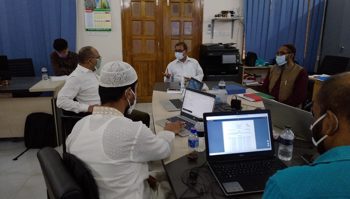
Technical Assistance to support the Human Capital Development Programme for Bangladesh 2021
- 2019 – 2026
- 5 – 10 Millionen €
- Bangladesh
In accordance with the EU's Multi-Annual Indicative Programme for Bangladesh 2014-2020, that aims to contribute to a better educated, trained and qualified population through improved education and skills development, the Human Capital Development Programme for Bangladesh 2021 (HCDP 21) was designed. The programme added value by extending the current budget support modality in primary education and the area of TVET under one single Sector Reform Performance Contract (SRPC) with an overall allocation of EUR 200 million, EUR 150 designated for primary education and EUR 50 million for TVET.
Under this contract, complementary services to the SRPC were provided to enhance policy dialogue for long-term strategic system strengthening of the sector, to support performance assessment and to strengthen the institutional capacity of the relevant government bodies to bring about policy reforms, while ensuring full ownership and sustainability of these reforms. The contract also encouraged the GoB to continue to strengthen governance and PFM systems at sector level, in complementarity with other EU-funded programmes in PFM in the country.
The purpose of this contract was:
- To support the EUD and relevant Government bodies in the more effective delivery of quality primary education services, through targeted technical assistance that will provide institutional strengthening support, capacity building, policy advice and evidence-based research, as required;
- To support the EUD and relevant Government bodies in the more effective delivery of TVET services, through targeted technical assistance that will provide institutional strengthening support, capacity building, policy advice and evidence-based research, as required. Support to the establishment of a SWAP in TVET, through enhanced results-based planning, management and assessment and improved coordination across the TVET sector;
- To support the relevant Government bodies responsible for Finance and Procurement in improving the Public Financial Management (PFM) system in ensuring adequate and equitable financing and management of funds.
- To support the EUD in (i) facilitating more effective policy dialogue with MoE and MoPME by providing technical inputs for strategic thinking on further policy analysis, development and implementation within the education sector in Bangladesh; (ii) periodic monitoring and assessment of overall sector performance and progress in the implementation of the NEP, Sector Budget Support (SBS) eligibility criteria and assessment of progress towards the HCDP21 disbursement linked indicators (DLI) targets of the TVET sector and, if required, for the primary education sector.
The key results to be achieved by the contractor were as follows:
- Develop the necessary enabling environment to reinforce institutional capacities to undertake effective, timely and evidence-based primary education system reforms: through well-targeted institutional capacity development interventions, support the relevant government departments (DPE, BNFE, NCTB…) in achieving the results under each of the targeted PEDP-4 components (Quality, Access and participation and Governance, financing and management);
- Develop the necessary enabling environment for a strengthened public TVET system: Effective and timely support to TMED's TVET services, particularly in respect to strengthening the institutional capacity of key central departments (including TMED, DTE and BTEB) and facilitate better coordination with other stakeholders. A particular focus will be put on successfully supporting the relevant government departments in attaining the DLI targets;
- EU policy dialogue, conditionalities and capacity building activities are more strategic, better coordinated and more conducive for implementation of government strategies/policies that contribute to progress in the education sector as a whole, in line with the SDG agenda.
- Partner:
- Particip (federführend), involas (formerly INBAS GmbH), OPM, Shushilan
- Schlagwörter:
- Bildung
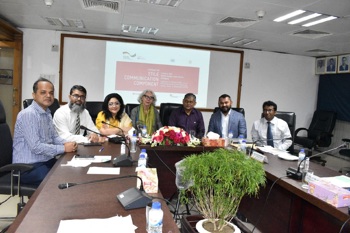
Communication Component of the project Sustainability in the Textile and Leather Sector in Bangladesh (STILE)
- 2021 – 2024
- 1 – 2 Millionen €
- Bangladesh
The Deutsche Gesellschaft für Internationale Zusammenarbeit (GIZ) GmbH on behalf of the Federal Ministry for Economic Cooperation and Development (BMZ) implemented the project “Sustainability In the Textile And Leather Sector” (STILE).
The objective of the project was to “strengthen Public and private sector actors’ capacity to fulfil their mandate and responsibilities to ensure compliance with social and environmental standards in the textile-, garment and leather industry in Bangladesh.”
The project consisted of four outputs:
- Output 1: The institutional capacities of selected public institutions responsible for ensuring compliance with social standards have been strengthened.
Output 1 focused on strengthening the institutional capacities of Bangladesh’s Labour inspectorate (Department of Inspection for Factories and Establishments, DIFE);
- Output 2: The prerequisites for the regulatory and organisational performance of selected public institutions in the area of the environment have improved.
Output 2 focused on strengthening the regulatory and enforcement capacities of Bangladesh’s Ministry of Environment, Forests and Climate Change (MoEFCC) as well as the country’s environmental protection agency (Department of Environment, DoE);
- Output 3: Private sector measures have complemented public sector initiatives to improve compliance with social and environmental standards.
Output 3 focused on aligning private sector initiatives to foster compliance with social and environmental standards with measures taken by the government to ensure better implementation of sustainability standards; and
- Output 4: Workers in the textile and leather industry have been actively advocated to increase compliance with social and environmental standards in their working and living environment.
Output 4 focused on encouraging workers in the textile-, garment and leather industry to actively advocate for compliance with social and environmental standards in their working and living environment.
Within this context, GIZ contracted Particip GmbH to implement Output 4.
Output 4 focused on four areas of intervention:
(1) developing and implementing at least five awareness-raising and information campaigns and designing related communication materials regarding social and environmental sustainability and pandemic preparedness measures in the textile- and leather clusters,
(2) conducting capacity development measures for at least ten Women Cafés of selected Non-Governmental Organisations (NGOs) to support them with educating workers regarding their rights and duties at the workplace and fostering conflict-resolution services,
(3) developing and implementing capacity development measures, and providing advisory services for workers and employers to initiate measures to improve compliance with social standards together with the management in 100 factories using Worker Participation Committees (WPCs), and
(4) monitoring and evaluating workers' activities in actively advocating to increase compliance with social and environmental standards in their working and living environment.
- Partner:
- Particip (federführend), COEL, Red Orange Media and Communication
- Schlagwörter:
- Industrie und Privatsektorentwicklung, Kommunikation und Medien, Menschenrechte, Zivilgesellschaft

EEM to Bangladesh 2023 - Parliamentary Elections
- 2023 – 2024
- unter 500.000 €
- Bangladesh
The purpose of this Election Expert Mission (EEM) was to collect and analyse factual information, assess and report on the electoral process against international commitments, standards and good practice for democratic elections in line with the criteria contained in the Commission Communication on Electoral Assistance and Observation. The experts also formulated recommendations to improve future electoral processes and assessed the state of implementation of recommendations made by previous electoral missions.
- Schlagwörter:
- Wahlen

Evaluation of Finland's Humanitarian Assistance 2016-2022
- 2021 – 2022
- unter 500.000 €
- Global
The Ministry for Foreign Affairs of Finland (MFA) commissioned an evaluation of Finland’s humanitarian assistance. The purpose of the evaluation was to help further enhance the effectiveness of the humanitarian assistance provided by Finland. To that end, the evaluation identifed the strengths and weaknesses of Finland’s delivery model for its humanitarian assistance and cooperation arrangements, including the effectiveness and efficiency of its management arrangements.
The specific objectives of the evaluation were:
- To review the relevance of Finnish humanitarian assistance 2016-current in meeting the needs of affected populations, and in its interconnections with development and peace interventions
- To assess the function and purpose of the 2019 Humanitarian Policy as a guiding instrument for Finnish humanitarian assistance
- To assess the functioning of partnerships and co-operation in Finnish humanitarian assistance and whether the current balance of partnerships/scope of Finnish influencing is optimal;
- To assess the management arrangements for humanitarian assistance in light of its effectiveness and make proposals for any future improvements; and
- To assess the effectiveness of the assistance in delivering results for affected populations.
- Partner:
- Particip (federführend), NIRAS
- Schlagwörter:
- Humanitäre Hilfe, Monitoring und Evaluierung
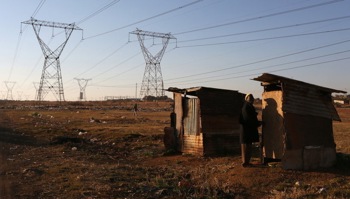
Evaluation of Danida Sustainable Infrastructure Finance Programme
- 2020 – 2022
- unter 500.000 €
- Bangladesh, Ghana, Mozambique, Viet Nam
DSIF provides concessional loans for funding of sustainable infrastructure projects, which cannot otherwise be financed on commercial terms in developing countries. The projects have to be sustainable, support the national development plans and contribute to sustainable growth and employment in line with the Sustainable Development Goals. The evaluation of DSIF served learning and accountability purposes for both the Investment Fund for Developing Countries (IFU)/DSIF and the Ministry of Foreign Affairs (MFA).
This evaluation had two objectives. The first objective was to assess DSIF’s relevance, coherence, effectiveness, efficiency, development impact and sustainability as well as commercial outcomes through its investments in developing countries. The evaluation applied the updated OECD/DAC evaluation criteria to DSIF investment projects. It involved an analysis of the project portfolio in terms of geographies, sectors and types of projects and funds, and the development of the portfolio composition over time. The evaluation included all DSIF activities since the last evaluation in 2002, although with an emphasis on the last ten years of operation. It included DSIF investments and, to the extent relevant, activities related to project preparation managed by DSIF.
The second objective was to assess the policy directions of the MFA and DSIF’s mandate over the evaluation period and provide an assessment of DSIF’s envisaged future role in Danish development cooperation, and whether the organisation was fit for purpose. During the evaluation period, Danish development policy had evolved, and expectations and requirements from the MFA towards DSIF had accordingly led to adjustments in the mandate. The evaluation took into account these changes in development policy and adjusted DSIF mandate when assessing its performance during the evaluation period, including changes in CSR/sustainability polices and the commercial framework under which this development finance instrument worked. The evaluation assessed the extent to which policy-driven initiatives derived from the Danish development policies had the potential to influence DSIFs portfolio, which was otherwise based on client demand. In this context the evaluation assessed the relevance of the adjustments made to the DSIF-mandate and, to the extent possible also, assessed whether the DSIF organisational set-up was Fit for Purpose, including risk management as well as results measurement and communication.
Case studies, including field visits were implemented in Bangladesh, Ghana, Mozambique, and Vietnam.
- Partner:
- Particip (federführend)
- Schlagwörter:
- Energie, Industrie und Privatsektorentwicklung, Infrastruktur, Monitoring und Evaluierung
Visibility & Communication for the European Union Development Cooperation in Bangladesh
- 2020 – 2021
- 500.000 € – 1 Million €
- Bangladesh
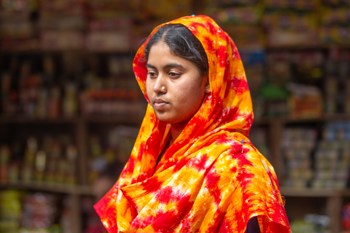
The overall objective of the project was to enhance the visibility of EU development cooperation in Bangladesh.
The specific objectives were:
- The EU is perceived as an important and longstanding partner of development cooperation in Bangladesh.
- The EU is perceived as an important strategic partner for Bangladesh (beyond development).
- EU development cooperation is seen as making a difference in people's daily life in Bangladesh in the long term, in particular with regard to the priority sectors in the Multi-annual Indicative Programme (MIP) 2014-2020, i.e. democratic governance, food & nutrition security, and education & skills development.
- EU development cooperation in Bangladesh is perceived as a good investment/win-win option for the beneficiary country and the EU.
- Partner:
- Particip (federführend)
- Schlagwörter:
- Kommunikation und Medien

Study on air pollution in Dhaka and opportunities for cost-effective control solutions
- 2019 – 2021
- unter 500.000 €
- Bangladesh
The global objective of the project is to identify the most effective solutions to tackle the problem of air pollution in Dhaka metropolitan area.
Specifically, the project aims:
- To determine the main drivers of air pollution in Dhaka metropolitan area and its surroundings, categorized by type, origin and impact,
- To have an overview of the economic costs of air-pollution, also with reference to health impacts,
- To identify key areas of action for cost-effective control solutions and strategies, to address/mitigate the causes of air pollution in the Dhaka metropolitan area.
The services provided by our expert include:
- Collection and analysis of all available information and already existing data, statistics, literature and studies on the quality of air and air pollution levels in Dhaka metropolitan area;
- Elaboration of an in-depth understanding of the main sources of air pollution in the area;
- Outline of an estimate of the economic costs of air-pollution's impact on health (e.g. estimated medicines expenses, labour loss…) by source of pollution;
- Identification of cost-effective actions for remediation and mitigation of the impact of the pollution in Dhaka metropolitan area, listed and classified in a way that provides a clear comparison of their feasibility, cost-effectiveness, impact extent; a SWOT analysis could be performed as well;
- Assessment and outline of the associated risks for the identified actions including gaps in laws and regulations, feasibility to fill those gaps, potential job creation/losses, bottlenecks among others.
- Partner:
- Particip (federführend), AETS, CAPA EEIG (managed by Particip)
- Schlagwörter:
- Umwelt
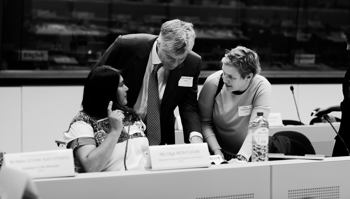
This action contributed to the effective implementation of international human rights instruments, principles and standards, primarily by means of exchange of best practices with partner countries.
The project was conceived to serve and preserve EU values and interests by means of complementary actions. It promoted policy cooperation with partner countries of strategic interest to the EU as well as enhanced the EU's visibility and coherence. This was done through the development of an analysis of the human rights situation in 13 countries, the organisation of seminars/roundtables and outreach activities. This ensured increased human rights awareness and access to human rights knowledge.
The Specific objectives were:
- 1)To ensure appropriate follow-up to political and human rights dialogues with partner countries. This includes, inter alia, facilitating south-south cooperation and exchange of ideas, knowledge and expertise on commonly identified human rights issues; providing technical assistance including in the form of trainings and roundtable discussions with governments in partner countries in order to strengthen their human rights expertise; facilitating interaction among representatives from the private sector and government representatives in partner countries to ensure compliance with the internationally recognised human rights framework; and facilitating regular interaction between partner countries with a view to building and reinforcing regional alliances which may contribute to serving EU interests in multilateral fora;
- 2)To contribute to bringing together experts from the EU and partner countries such as academics, private sector and government representatives in order to equip the EU to remain innovative and tackle emerging subjects of EU interest as a vehicle of cooperation with partner countries such as artificial intelligence, academic freedom, right to water and sanitation, economic social and cultural rights;
- 3)To support and enhance the monitoring of Generalised Scheme of Preferences (GSP) GSP+/ Everything but Arms (EBA) beneficiaries' commitments under the seven GSP core human rights conventions.
Internal studies analysing Human Rights situation in the following countries
- Armenia
- Bangladesh
- Bolivia
- Cabo Verde
- Cambodia
- Kyrgyztan
- Mongolia
- Myanmar
- Pakistan
- Philippines
- Sri Lanka
- Tajikistan
- Uzbekistan
- Partner:
- Particip (federführend), SICI Dominus
- Schlagwörter:
- Kommunikation und Medien, Menschenrechte, Monitoring und Evaluierung, Zivilgesellschaft

Evaluation of the EU's external action support in the area of gender equality and women's and girls' empowerment (2010-2018)
- 2019 – 2021
- 500.000 € – 1 Million €
- ACP (Africa), ACP (Caribbean), ACP (Pacific), DCI, ENI, ENI East, ENI South, IPA
The main objective of this evaluation was to provide an independent assessment and evidence on the contribution of EU external action support in the policy area of gender equality and women empowerment (GEWE). In line with the EU policy on evaluation, this evaluation sought to be a stock- taking lesson-learning and forward-looking exercise, as well as an accurate assessment of achieved results in line with the objectives of the EU Gender Action Plan (GAP) II and other relevant overall policy frameworks for gender equality such as the new approach on Women, Peace and Security Agenda, Agenda 2030, the New European Consensus for Development.
Its specific objectives were the following:
- To assess in both qualitative and quantitative terms the relevance, conditions of implementation and performance of EU external action to promote GEWE and its mainstreaming, particularly its efficiency, effectiveness, sustainability, and the EU added value.
- To assess whether the EU's policy and operational response on GEWE in partner regions (EU Plans of Action on Gender Equality and Women’s Empowerment for 2010-2015 and 2016-2020) have triggered new approaches and rendered EU external action support more effective, targeted, gender-responsive and efficient.
- To assess: a) the coordination and complementarity of the European Commission services, the European External Action Service (EEAS) and EU Members States’ external action; b) the coordination and complementarity between EU external action support and other non-EU donors’ and actors’; c) the coherence of EU GEWE policy in external action with other relevant EU external policies; and d) the coherence of EU external action support with international commitments to GEWE.
The evaluation should lead to the identification of conclusions, lessons learnt (both positive and negative), good practices regarding the achievement of the intended GEWE-related results and the Commission, the EEAS and EU Member States with a set of targeted and useful forward-looking recommendations for the improvement of the programming and implementation.
Through the course of the evaluation, the evaluation team conducted 18 case studies (focusing on countries, regions and thematic areas) which were subject to an in-depth analysis, including 9 field visits. Both a ‘country-level’ and ‘global’ survey – covering EU services (HQ and EU Delegations/Offices worldwide), EU Member States, other development partners and Civil Society Organisations – were part of the data collection and analysis process. Findings from all evaluation activities were synthesized into a final report.
Final report available here: https://ec.europa.eu/international-partnerships/evaluation-eus-external-action-support-area-gender-equality-and-womens-and-girls-empowerment_en
- Schlagwörter:
- Menschenrechte, Monitoring und Evaluierung, Regierungsführung

Evaluation of the EU's external action support in the area of migration (2008-2018)
- 2019 – 2021
- unter 500.000 €
- ACP (Africa), Asia, ENI East, ENI South, IPA
The purpose of this evaluation is to provide an independent assessment and evidence on the contribution of EU external action support in aspects of the policy area of migration. Its specific objectives are the following:
- To assess in both qualitative and quantitative terms the relevance, conditions of implementation and performance of EU external action support to migration in the areas defined in the evaluation’s focal areas.
- To address coherence of the EU external action projects/programmes framed also in the international context (e.g. UN related and non-EU Member States) and achievement by the EU and the candidate countries for EU membership, the potential candidates and the partner countries of their respective commitments in these policy areas.
- To assess how EU external action support in the area of migration in the geographical focal areas, has changed in the aftermath of the 2015 structural shift associated with the so-called “refugee crisis.” The assessment shall also take into account complementarity of EU external action support with that of other donors and actors, including EU Member States.
- To assess whether the EU's policy and operational response to the external dimension on migration triggered new approaches and rendered programmes and actions more effective, targeted and efficient.
It furthermore aims to provide lessons learnt and recommendations for the improvement of the programming and implementation and shall:
- lead to the identification of conclusions based on objective, credible, reliable and valid findings;
- highlight lessons learnt;
- provide the Commission and the European External Action Service (EEAS) with a set of operational, targeted and useful forward-looking recommendations.
The three overarching thematic focal areas examined by this evaluation are the following: Legal (labour) migration, Smuggling of Migrants (SoM), and Trafficking of Human Beings (THB).
Report available here: https://ec.europa.eu/neighbourhood-enlargement/sites/default/files/eval_eu_support_migration_area_-_final_report.zip
- Partner:
- Particip (federführend), ECDPM
- Schlagwörter:
- Monitoring und Evaluierung

Evaluation of the Results-Based Financing for Low Carbon Energy Access Facility (RBFF) within Energising Development (EnDev)
- 2015 – 2020
- 500.000 € – 1 Million €
- Global
The overall objective was to evaluate the Results-Based Financing (RBF) for Low Carbon Energy Access Facility within the Energising Development (EnDev) Programme. The specific purposes of this evaluation were (i) to assess the performance of the RBF Facility over the period 2012-2020 against key OECD/DAC evaluation criteria, (ii) to understand and disseminate what had worked in which circumstances and why, and (iii) to derive lessons learned and recommendations for future programmes in RBF, energy access support through private sector development, and climate finance more broadly.
EnDev piloted an RBF scheme offering incentive payments to private sector market actors in the low-carbon off-grid energy sector in developing countries. Payments were made against pre-specified results achieved in delivery and sustainable operation of modern energy technologies and services.The aim of the RBF Facility within the global EnDev programme was to (i) increase access to modern energy services in developing countries (including vulnerable groups) (ii) through the use of decentralised renewable energy products and services, (iii) delivered as market-based approaches through private sector actors.
The scope of the evaluation encompassed 17 different RBF projects within the global EnDev programme. The evaluation focused on market changes and private sectors responses – such as market efficiency, business development, distribution strategies and technology adoption –, but also analysed the consumer perspective and the interaction with sector policies and regulation by national governments.
Outputs included:
- Inception Report.
- Baseline Report (review of existing baseline studies).
- Internal Process Review.
- A Mid-term Evaluation, including a set of project evaluations and a portfolio review.
- Deep impact studies of one selected country project in Tanzania.
- A cross-portfolio survey targeting RBF participants.
- Final Evaluation, including a set of project evaluations and a portfolio review.
- Concept notes for the various evaluation products.
- Networking conferences with individual projects to foster knowledge-sharing and learning experiences based on the above products and between projects.
Nine countries were targeted for field and remote evaluation: Bangladesh, Benin, Cambodia, Kenya, Peru, Rwanda, Tanzania, Uganda, Vietnam.
- Partner:
- Particip (federführend), Arepo Consult
- Schlagwörter:
- Energie, Industrie und Privatsektorentwicklung, Monitoring und Evaluierung

Chapeau Contract for the Evaluation of the Common Implementing Regulation (CIR), Evaluation of the Development Co-operation Instrument (DCI), Evaluation of Greenland Decision (GD), Coherence Report on the External Financial Instruments and Co-ordination
- 2016 – 2017
- unter 500.000 €
- DCI
The Chapeau contract concerned the external financing instruments (EFIs) of the European Union. It was an overarching contract comprising several individual external financing instrument evaluations, a Coherence Report of the EFIs, and the process of co-ordination across all the EFIs.
The objective of each of the individual EFI evaluations was:
- to provide the relevant external relations services of the European Union and the wider public with an independent assessment of the European Union's EFIs, including complementarities/synergies between the given EFI and each of the other EFIs.
- to inform the programming and implementation of the current EFIs, as well as the next generation of the EFIs.
The deliverables of the Chapeau contract were as follows:
- the Development Co-operation Instrument (DCI) Evaluation Report.
- the Greenland Decision (GD) Evaluation Report.
The DCI and GD are two instruments in the set of EFIs which together form the multi-annual financing package for the programming cycle 2014 – 2020.
- the Common Implementing Regulation (CIR) Evaluation Report. The CIR is an 'umbrella' regulation which brings together the implementing rules for the following instruments – DCI, ENI, EIDHR, PI, IcSP, IPA II. The Greenland Decision and INSC follow these rules as well.
- a Coherence Report of the EFIs. The report showed to what extent the existing instruments were, when considered together, still adapted to the evolving international context and still contribute to a consistent Union external action.
- Co-ordination.The objective of the co-ordination tasks was to ensure a reasonably consistent and coherent approach across the set of individual EFI evaluations. The Chapeau contract team leader had the specific role of working with, drawing on and co-ordinating knowledge produced by the evaluations within this contract and the evaluation teams of the other EFI evaluations.
The reports are availble at:
DCI: https://ec.europa.eu/europeaid/draft-evaluation-report-external-financing-instruments-development-cooperation-instrument-dci_en
Greenland: https://ec.europa.eu/europeaid/evaluation-greenland-decision-gd-draft-report_en
CIR: https://ec.europa.eu/europeaid/draft-evaluation-report-external-financing-instruments-common-implementing-regulation_en
- Partner:
- Particip (federführend), ECDPM, itad
- Schlagwörter:
- Bildung, Energie, Ernährung, Forstwirtschaft, Gesundheit, Industrie und Privatsektorentwicklung, Institutionelle Entwicklung, Justiz / Rechtsstaatlichkeit, Landwirtschaft, Menschenrechte, Monitoring und Evaluierung, Regierungsführung, Zivilgesellschaft