Chad
14 Referenzen
Improving Strategic Communication and Visibility of the EU in Chad
- 2025 – 2027
- 1 – 2 Millionen €
- Chad
The specific objectives (results) of this contract are as follows:
- Result 1: Raise awareness about the values, actions, and impact of the European Union in implementing development initiatives that improve the living conditions of the Chadian population, particularly youth and women.
-
Result 2: Improve the knowledge and perception of Chadian citizens regarding the European Union, its cooperation offer, and the Global Gateway strategy implemented by Team Europe in Chad, through strategic communication operations — including public campaigns in official languages (French and Arabic) and in commonly spoken local languages — in complementarity with public diplomacy.
-
Result 3: Strengthen existing networks and create new links with the media, networks, and influential individuals (influencers, opinion leaders at the local level, diaspora) in order to improve the perception of the European Union in Chad.
- Schlagwörter:
- Kommunikation und Medien
Strategic Evaluation of the EU partnership with Chad (2015-2025)
- 2025 – 2027
- Global price
- Chad
This strategic evaluation has two overarching objectives: (i) to provide EU services and stakeholders with an independent, comprehensive assessment of the performance of the EU-Chad partnership, with particular attention to results achieved against expected objectives and the underlying drivers of these results; and (ii) to identify key lessons, conclusions, and forward-looking recommendations to support decision-makers in improving current and future EU strategies, instruments, and interventions in Chad.
In particular, this evaluation aims to assess the relevance, coherence, effectiveness, efficiency and sustainability of the EU’s engagement in Chad over 2015–2025, and the EU’s added value in a highly fragile and geopolitically sensitive environment. It will analyse the EU’s combined use of instruments and modalities, and the extent to which EU actions contribute to expected strategic objectives at country level. Findings will be grounded in a theory‑based approach and strong triangulation, and will be translated into practical recommendations for the second half of the 2021–2027 period and beyond.
- Partner:
- Particip (federführend), ECDPM
- Schlagwörter:
- Monitoring und Evaluierung
Supporting WFP’s Changing Lives Transformation Fund (CLTF) to Support Country Offices in the Design and Implementation of Impact Measurement Components
- 2023 – 2026
- unter 500.000 €
- Bangladesh, Chad, Kenya, Peru
The Changing Lives Transformation Fund (CLTF) of the World Food Programme (WFP) was established to provide selected WFP Country Offices (COs), via calls for proposals, with funding to better support governments to design and implement policies and programmes that improve the lives of the most vulnerable people.
The CLTF has three windows, under which a total of 10 country proposals were selected in 2023:
- Window 1: Transition (of populations from dependence on humanitarian assistance to increased self-sufficiency) - Chad, Kenya, Philippines.
- Window 2: Systems strengthening (better capacity and resilience of national programmes and systems) - Bangladesh, Iraq, Niger, Peru.
- Window 3: Climate adaptation - Ghana, Nicaragua, Tanzania.
For each window, the research team designed a global impact measurement framework comprising a theory of change, evaluation questions, indicators, and quantitative and qualitative methodologies for impact measurement. The team also assessed the feasibility of independent impact evaluations in all 10 country proposals.
5 COs were selected for further technical assistance for impact measurement: Chad and Kenya (under Window 1), and Bangladesh, Iraq and Peru (under Window 2). Together with each of these 5 COs, the team conducted research design workshops and developed country-specific concept notes on impact measurement questions and strategies. Finally, the team provided in-country support for baseline data collection and analysis to the COs in Chad, Kenya, Bangladesh and Peru.
- Partner:
- Particip (federführend), C4ED
- Schlagwörter:
- Aus- und Fortbildung, Ernährung, Humanitäre Hilfe, Monitoring und Evaluierung, Umwelt
Final evaluation of decision n°042-166 (AMCC+) “Strengthening Governance and Climate Resilience in Chad”
- 2024 – 2024
- unter 500.000 €
- Chad
In accordance with the rules and procedures of the European Union, a final evaluation is planned towards the end of the operational phase of the GCCA+ programme after approximately 50 months of implementation.
The main objectives of this evaluation are to provide the relevant European Union departments, interested stakeholders and the general public with:
• An independent overall assessment of the performance of the action “Strengthening climate governance and resilience in Chad (GCCA+) and its 5 implementation contracts”, paying particular attention to its different levels of results measured against the expected objectives and the reasons underlying these results; and
• Identify the main lessons learned, conclusions and related recommendations in order to inform decision-makers on how to improve current and future interventions to be formulated in 2025.
In particular, this evaluation should:
• Conduct a quantitative and qualitative analysis, take stock of the overall results and the level of indicators achieved and the impact of the project. Measure in a factual and documented manner the degree of achievement of the main objectives and results assigned and in relation to the resources allocated to the project.
• Conduct an in-depth examination of the effectiveness of the coordination of the AMCC+ project and the institutional set-up (institutional anchoring, targeting of stakeholders, implementation steering mechanism) and its relevance with regard to the objectives of the AMCC+ project and measure the adequacy with regard to strategies and policies in the fight against climate change.
• Analyze the achievements of the project with tangible impacts, consolidate the elements of good adaptation practices in the form of a summary note with concrete elements that can feed into the reflections on the formulation of the future intervention of 2025.
• Analyze the institutions (Designated National Authority of the Green Climate Fund and National Implementation Institutions-INM) facilitating climate financing, analyze the capacities of Chadian actors to submit bankable projects, describe the main obstacles/weaknesses and propose concrete elements to remove these constraints in order to have efficient institutions and actors.
- Partner:
- Particip (federführend)
- Schlagwörter:
- Forstwirtschaft, Monitoring und Evaluierung, Umwelt
Provision of expertise and tools to support Recovery and Peace Building Assessments and Post-Disaster Needs Assessments
- 2017 – 2024
- 2 – 5 Millionen €
- Global
The Particip-led “Post Crisis Assessment and Recovery Planning: Support Office of the EU“ provided systematic support to all stages of disaster- and conflict-related needs assessment missions.
As part of the 2008 Joint Declaration on Post-Crisis Assessments and Recovery Planning, the World Bank (WB), United Nations (UN), and European Union (EU) have committed to providing joint support for assessing, planning, and mobilising efforts toward recovery, reconstruction, and development in countries affected by crises. This tripartite agreement was executed via the mechanism of joint Recovery and Peacebuilding Assessments (RPBA), Post-Disaster Needs Assessments (PDNA), and Pandemic Recovery Needs Assessments (PRNA).
The activities of the advisory team included:
- Provision of support to EU Delegations around the world and EU Services in Brussels in the planning, undertaking and reporting of post crisis assessments: RPBA: support to peacebuilding through short- and longterm support to specific EUDs. Trainings and and workshops for local authorities, ministries and EU staff. PDNA: post-disaster assessments and support to recovery including trainings and workshops. CRNA/PRNA: COVID/pandemic recovery needs assessments and support to recovery including trainings and workshops.
- Support to third countries to build their capacity to carry out RPBAs, PDNAs, and PRNA this includes institutional strengthening and inter-institutional coordination such as the HLAG (High-level-Advisory-Group) composed of WB, UN and EU;
- Facilitate coordination of EU and tripartite input to the implementation of the joint declaration (conceptual work and RPBA/PDNA/PCNA missions);
- Elaborate a preliminary early and longer-term framework (which identifies key recovery sectors, peacebuilding priorities, etc.)– in close cooperation with the EU Delegation and other relevant EU services, including identification/definition of sectors requiring additional EU support (whether provided through short-term assistance under the present project or not), essential cross-cutting issues, a tentative recovery calendar, recovery information management systems, the existing capacity in-country and institutional and legal arrangements for national Authorities, recovery support anticipated, etc.;
- Deployment of experts in RPBA/PDNA/PRNA missions, and
- Revise and/or updating the methodologies as necessary.
Recovery and Peacebuilding Assessments (RPBAs) offered countries a standardised and internationally recognised approach to identify the underlying causes and impacts of conflict and crisis. The RPBA had three primary purposes:
- to help governments identify, prioritise and sequence recovery and peacebuilding activities,
- to provide an inclusive process to support political dialogue and participation of stakeholders,
- to coordinate international support through a joint assessment and a joint recovery and peacebuilding plan as well as a monitoring system.
Post-Disaster Needs Assessment (PDNA) assisted governments with assessing the full extent of a disaster’s impact on the affected country and, on the basis of these findings, producing an actionable and sustainable Recovery Strategy for mobilizing financial and technical resources. The internationally recognised PDNA methodology is a key commitment mentioned in the the Joint Declaration on Post-Crisis Assessments and Recovery Planning. In May 2020, in order to respond to the COVID-19 pandemic, the PDNA methodology was adapted to elaborate a COVID-19 Recovery Needs Assessment (CRNA) methodology.
Recovery and Peace Building Assessment (RPBA)
Myanmar (Jan 2018); Burkina Faso (Jun 2019-June 2021); Mozambique (RPBA Nov 2020-Nov 2021); Azerbaijan (Joint Recovery Needs Assessment - falls outside the RPBA framework, Scoping Mission March 2022); Libya (Stocktaking 2018-2019, RPBA 2022)
Post-Disaster Needs Assessment (PDNA) & Disaster Risk Framework (DRF)
Myanmar (Jan 2018); Syria (Feb 2018); Ivory Coast (July-Sept 2018); Tunisia (Oct 2018); Bangladesh (2018); Georgia (2018); Tonga (2018); Fiji (2018); Mozambique (Apr–Aug 2019);
Central African Republic/CAR (July 2019); Somalia (Drought Impact Needs Assessment/DINA, July - Aug 2018); Albania (Dec 2019-Feb 2020); Lebanon (Rapid Damage Needs Assessment/RDNA, Aug 2020); Lebanon (DRF, Sep 2020-2021); Saint Vincent and the Grenadines (June–Aug) 2021); El Salvador (June-Dec 2021); Haiti (Sep-Oct 2021); Haiti (DRF, Nov-Dec 2021); Pakistan (Sep-Nov 2022); Pakistan (DRF, Nov-Dec 2022); Belize (Jan-Feb 2023); Turkey (Feb-Mar 2023); Ukraine Khakhova dam (June 2023), Myanmar (CMRNA , Sep 2023); Libya ( RDNA, Sep 2023); Afghanistan ( Oct 2023); Afghanistan ( AFPR-PDNA like Refugee support assessment, Nov 2023)
COVID-19 Recovery Needs Assessment (CRNA)
Ecuador (July 2020-Apr 2021); El Salvador (July-Sept 2020); Dominican Republic (Dec 2020-Feb 2021); Zambia (Feb-Aug 2021); Eswatini (Dec 2020-Nov 2021)
Trainings: Recovery and Peace Building Assessment (RPBA)
Bangkok, Thailand (Dec 2017); Lebanon (Apr 2018)
Trainings: Post-Disaster Needs Assessment (PDNA) & Disaster Risk Framework (DRF)
Dominican Republic (Nov 2017); Fiji (Mar-Apr 2018); Vanuatu (Apr 2018); Somalia (May 2018); Myanmar (Aug 2018); Mauritius (Oct 2018); Djibouti & Ethiopia (Feb 2019); Chad (Apr 2019); CAR & Congo (July 2019); India (Aug 2019); Kenya (Sept 2019); Caribbean (Nov 2019); St. Lucia (Nov 2019); Balkans (Sarajevo, Bosnia & Herzegovina, Feb 2020); Mexico (Feb 2020); Liberia (Mar 2020); Senegal (May 2021); Europe and the Commonwealth of Independent States/ECIS region (Jun 2021); University of West Indies (Training of Trainers/ToT, Dec 2021); Panama (PDNA/DRF, Latin American countries/LAC, Mar 2022); Belgrade (ECIS DPPI-SEE, Jun 2022); Regional ECIS (DRF, June 2022); Columbia (PDNA/DRF, July 2022); Costa Rica (PDNA/DRF, July 2022); Barbados (Caribbean countries, Mar 2023); Training Togo Regional ECOWAS (PDNA/DRF, May 2023); Antigua and Barbuda, Saint Johns (DRF, Sept 2023)
Trainings: COVID-19 Recovery Needs Assessment (CRNA) & Pandemic Recovery Needs Assessment (PRNA)
Sahel Region Academia (Nov 2020); Sahel Region government staff and regional organisations (Dec 2020); Ghana (Mar 2021); India (PRNA, Mar 2023)
Other Events
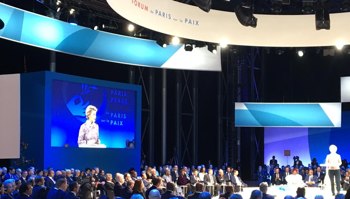
Fragility Forum (RPBA, Mar 2018); Paris Peace Forum (RPBA/PDNA 2019); Paris Peace Forum (RPBA/PDNA, Nov 2020); EU Information Session (Oct 2021); EU Information Session: Asia/Pacific Hub (April 2022); World Reconstruction Conference 5 and Global Platform for Disaster Risk Reduction/GPDRR (Apr 2022); International Society for Photogrammetry and Remote Sensing (ISPRS) Congress (satellite, June 2022); EU Information Session: Caribbean Region (online, June 2023); Slow Onset Event Damage and Loss Workshop ( Nov 2023); Cyclone Mitch 25 year Commemoration ( Oct 2023)
- Partner:
- Particip (federführend), GIZ InS
- Schlagwörter:
- Aus- und Fortbildung, Projektdurchführung / technische Hilfe, Regierungsführung, Zivilgesellschaft
Production of the Sahel Alliance 5 years results report
- 2023 – 2023
- unter 500.000 €
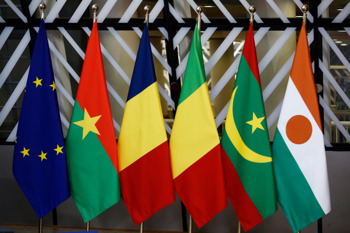
- Burkina Faso, Chad, Mali, Mauritania, Niger
The members of the Sahel Alliance have chosen to concentrate their efforts in five priority sectors of intervention, in line with the development priorities established by the G5 Sahel countries: Agriculture, rural development and food security; Decentralisation and basic services; Education and youth employment; Energy; Governance.
The overall objective of this contract is to produce the 5-years Technical Report in line with the needs of the SA needs. In line with the commitments of the SA and its members, the Sahel Alliance Coordination Unit (UCA) plans to produce a SA 5 years results report in 2023.
The 5 years results report will include the following elements:
- Analysis of the evolution of the national indicators included in the Alliance results framework in relation to the target values set by the G5 Sahel countries.
- The analysis of the aggregated results of the projects included in the Alliance Sahel portfolio in line with the project indicators included in the Alliance Sahel results framework.
- Analysis of the achievements attributable to the Sahel Alliance stricto sensu will beproduced, in order to show whatthe platform has collectivelyachieved and what its membersare achieving individually.
The following elements should be taken into consideration while drafting the report:
- A qualitative analysis will be needed, particularly in terms of Sahel Alliance member organizations contribution to the provision of basic services;
- The contexts of Sahelian countries (crisis, displacement of population, COVID-19, etc.) should be taken into account in the analysis of results where possible;
- Where possible, the results obtained should be read with regard to the existing policy messages and the sectoral notes issued by the sectoral and thematic coordination groups of the SA in order to measure their operational translation
Evaluation of the EU's external action support in the area of gender equality and women's and girls' empowerment (2010-2018)
- 2019 – 2021
- 500.000 € – 1 Million €
- ACP (Africa), ACP (Caribbean), ACP (Pacific), DCI, ENI, ENI East, ENI South, IPA
The main objective of this evaluation was to provide an independent assessment and evidence on the contribution of EU external action support in the policy area of gender equality and women empowerment (GEWE). In line with the EU policy on evaluation, this evaluation sought to be a stock- taking lesson-learning and forward-looking exercise, as well as an accurate assessment of achieved results in line with the objectives of the EU Gender Action Plan (GAP) II and other relevant overall policy frameworks for gender equality such as the new approach on Women, Peace and Security Agenda, Agenda 2030, the New European Consensus for Development.
Its specific objectives were the following:
- To assess in both qualitative and quantitative terms the relevance, conditions of implementation and performance of EU external action to promote GEWE and its mainstreaming, particularly its efficiency, effectiveness, sustainability, and the EU added value.
- To assess whether the EU's policy and operational response on GEWE in partner regions (EU Plans of Action on Gender Equality and Women’s Empowerment for 2010-2015 and 2016-2020) have triggered new approaches and rendered EU external action support more effective, targeted, gender-responsive and efficient.
- To assess: a) the coordination and complementarity of the European Commission services, the European External Action Service (EEAS) and EU Members States’ external action; b) the coordination and complementarity between EU external action support and other non-EU donors’ and actors’; c) the coherence of EU GEWE policy in external action with other relevant EU external policies; and d) the coherence of EU external action support with international commitments to GEWE.
The evaluation should lead to the identification of conclusions, lessons learnt (both positive and negative), good practices regarding the achievement of the intended GEWE-related results and the Commission, the EEAS and EU Member States with a set of targeted and useful forward-looking recommendations for the improvement of the programming and implementation.
Through the course of the evaluation, the evaluation team conducted 18 case studies (focusing on countries, regions and thematic areas) which were subject to an in-depth analysis, including 9 field visits. Both a ‘country-level’ and ‘global’ survey – covering EU services (HQ and EU Delegations/Offices worldwide), EU Member States, other development partners and Civil Society Organisations – were part of the data collection and analysis process. Findings from all evaluation activities were synthesized into a final report.
Final report available here: https://ec.europa.eu/international-partnerships/evaluation-eus-external-action-support-area-gender-equality-and-womens-and-girls-empowerment_en
- Schlagwörter:
- Menschenrechte, Monitoring und Evaluierung, Regierungsführung
Independent Evaluation of SDC’s Performance in Disaster Risk Reduction (DRR) 2010-2017
- 2018 – 2019
- unter 500.000 €
- Global
The purpose of this evaluation was to build an evidence base for the implementation of the SDC’s Guidelines on Disaster Risk Reduction (DRR), and programmes and partnerships established by SDC to address DRR on global, regional and national levels.
The evaluation was designed to:
- Contribute to strategic decision-making (i.e. for the Dispatch 2021-2024).
- Derive lessons learnt in order to improve institutional performance.
- Serve as one measure of accountability towards the Parliament and the public.
The evaluation assessed the extent to which and how DRR practice is currently and should be applied across the SDC. The evaluation team identified successes, challenges and opportunities for DRR within the SDC as well as a comparison of SDC’s performance with other practices when feasible.
The temporal scope was 2010-2017, covering almost three Swiss Dispatches, including but not limited to, an estimated tentative total of approximately 461.9 million CHF, 818 projects with 1,482 ‘project phases’, identified by the DRR Portfolio Analysis. The evaluation was both backward (2010-2018) - and forward-looking (building on good practice to suggest ways SDC can reshape the future of DRR).
The geographic scope of the evaluation was global with an in-depth analysis of five geographic case studies: Peru/Bolivia, Chad, Morocco, Tajikistan and Thailand/Myanmar. In addition, three thematic case studies have been performed: 1.Climate Change and DRR: adaptation (CCA) & mitigation (CCM), 2. DRR Value for Money (V4M); and 3. Modalities: Swiss Humanitarian Aid Unit/Secondments, Network, DRR Consultative Group.
While the Whole of Government Approach (WoGA) was explored as was feasible, this was not an evaluation of any specific department, division, department, network, component or project/programme inside or outside SDC.
- Schlagwörter:
- Ernährung, Humanitäre Hilfe, Monitoring und Evaluierung, Öffentliche Finanzen / Haushaltsplanung, Regierungsführung, Umwelt, Zivilgesellschaft
Technical Assistance support to the start of the activities of APEF program
- 2017 – 2018
- unter 500.000 €
- Chad
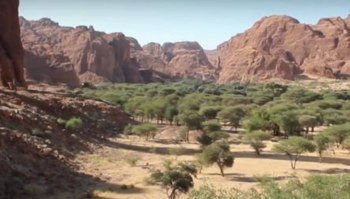
Le programme a pour objectif global de promouvoir la conservation durable et concertée de la faune sauvage, de la biodiversité et du patrimoine du Tchad au bénéfice des populations.
L'objectif spécifique est de promouvoir la gestion concertée des aires protégées et écosystèmes fragiles du Tchad. Les trois résultats attendus :
- Résultat 1 - Gouvernance, financement durable et renforcement institutionnel : les capacités des institutions de conservation de la biodiversité, des aires protégées et du patrimoine sont renforcées.
- Résultat 2 - Grand écosystème fonctionnel de Zakouma : un modèle de conservation du Grand écosystème fonctionnel de Zakouma est développé et mis en œuvre de manière concertée.
- Résultat 3 - Patrimoines sahélo-sahariens : la protection, la gestion concertée et la mise en valeur des écosystèmes fragiles et sites patrimoniaux au bénéfice des communautés locales des zones sahélo-saharienne et saharienne sont assurées durablement.
- Partner:
- Particip (federführend), AETS, ETI
- Schlagwörter:
- Umwelt

Evaluation of the implementation of the African Peace Facility as an instrument supporting African efforts to manage conflicts on the continent
- 2017 – 2018
- unter 500.000 €
- ACP (Africa)
The objective of the evaluation was to provide an overall independent assessment of the performance of the African Peace Facility (APF) for the period 2014-2016 and, on this basis, draw key lessons and recommendations in order to improve current and future support through that instrument.
The evaluation served policy decision-making and project management purposes. The main users of this evaluation were DG DEVCO, the EEAS, EU delegations in the APF beneficiary regions; the AU and the REC/RMs. The evaluation also generated results of interest to governmental and civil society partners and the EU member states.
Evaluators followed a two-step approach:
- First, the evaluation provided an assessment of what has been achieved through the APF for the period 2014-2016 with regards to Peace Support Operations and capacity-building, taking into account the conclusions and recommendations of th11-0248-052e 2013 APF evaluation.
- Second and based on the findings of the first step, the evaluation offered concrete and actionable follow-up as well as new recommendations to address the remaining and new challenges faced by the APF.
- Partner:
- Particip (federführend), Cardno UK, ECDPM
- Schlagwörter:
- Monitoring und Evaluierung, Regierungsführung

Support for the establishment of the National Council of Internal Security of Chad (NCIS)
- 2017 – 2018
- unter 500.000 €
- Chad
The mission was part of the preparation of the PAASIT, whose general objective is to contribute to reduce and dissipate the general climate of impunity and insecurity by providing security as a public good quality that meets the needs of all citizens.
The specific objective of the mission was to enable the NCIS to be set up.
- Schlagwörter:
- Justiz / Rechtsstaatlichkeit, Regierungsführung

Mid-term evaluation of the Global Alliance for Climate Change (GCCA) Financing Agreement (FC) No. ENV / 2012 / 024-59 and the performance evaluation of the operational mechanism for the implementation of the GCCA project
- 2017 – 2017
- unter 500.000 €
- Chad
L’objectif général de l’intervention a été d’appuyer le Tchad dans la mise en œuvre d’une réponse nationale aux défis posés par le changement climatique, et de contribuer ainsi à l’émergence d’une économie résiliente au changement climatique et à faibles émissions de carbone.
L’objectif spécifique était:
- d’améliorer la gouvernance climatique, par l’intégration du changement climatique dans quelques politiques sectorielles clés et la réalisation de projets de terrain s’inscrivant dans les priorités du PANA et des priorités connexes.
Ces objectifs sont conformes aux objectifs de l’AMCC, et s’inscrivent plus particulièrement dans les domaines prioritaires que sont l’intégration du changement climatique, l’adaptation et, pour le volet « énergie renouvelables », l’amélioration de l’accès au marché du carbone.
- Partner:
- Particip (federführend), ETI
- Schlagwörter:
- Umwelt

"Adaptation to the Effects of Climate Change and Development of Renewable Energy in Chad": recruitment of independent assessors via a research department for the evaluation of request for subsidy received within the framework of the call for offer n° EuropeAid/137-512/ID/ACT/TD
- 2016 – 2017
- unter 500.000 €
- Chad
L´objectif(s) généraux a été de:
Contribuer à la mise en œuvre de 4 projets-pilote de terrain en appuyant le Ministère de l'Environnement et de la Pêche (MEP) et la Délégation de l'Union Européenne (DUE) dans ce processus d’évaluation des demandes de subvention reçues dans le cadre de l’appel à propositions Référence : EuropeAid/137-512/ID/ACT/TD.
Les Objectifs particulies étaient:
- Les évaluations des étapes n°1 (notes succinctes de présentation) et n°2 (demandes complètes) sont validées et approuvées par les parties impliquées. Les documents de contractualisation (conditions particulières et annexes aux contrats) sont validés par les parties impliquées.
- Partner:
- Particip (federführend), ETI
- Schlagwörter:
- Monitoring und Evaluierung, Umwelt

Final evaluation of component n°2 of PADL II (EDF/2010/022-061) support to the Zakouma National Park and mid-term evaluation of the implementation of the Public-Private Partnership Agreement (PPP) between African Parks Network (APN) and the Government of Chad
- 2016 – 2017
- unter 500.000 €
- Chad
Objectif global est de contribuer à la stabilisation et à la réhabilitation du Sud-Est du Tchad. Evaluer les résultats atteints par la mise en œuvre du contrat de subvention n°FED/2011/260915 de la composante n°2 du PADL II, et le niveau et la qualité de la mise en œuvre du PPP, puis formuler des orientations devant le consolider.
L'objectif spécifique est la conservation et bonne gouvernance des ressources naturelles du Parc National de Zakouma (PNZ) et de ses écosystèmes au bénéfice du développement local:
- Formuler, de manière indépendante, une appréciation sur les performances et une analyse qualitative et quantitative des résultats du contrat de subvention n°FED/2011/260-915 de la composante n°2 du PADL II depuis le 28/01/2011 jusqu'à nos jours. Cette appréciation sera basée d’une part sur la stratégie et l’approche (démarches et méthodes) mises en place par APN pour la mise en œuvre des actions, et d’autre part sur le contexte spécifique du PNZ en matière de développement local;
- Analyser l'évolution institutionnelle de la création de la fondation, des efforts accomplis et du processus devant aboutir dans le court terme à la création de la Fondation;
- Analyser le degré d'apports/actions (communautaires) du projet dans la zone périphérique du PNZ, le degré d'implication des autres acteurs et d'appropriation des acquis par les communautés locales;
- Faire le bilan de l’atteinte des résultats et des objectifs du partenariat entre le Ministère en charge de l’Environnement et APN ; tirer les leçons et enseignements de sa mise en œuvre, capitaliser les acquis, et proposer des orientations pour le développement du Partenariat;
- Analyser et évaluer le niveau d’atteinte des résultats prévus initialement et mesurer les ressources financières et humaines allouées pour l’obtention de ces résultats. Dans la mesure du possible, l’évaluation doit mesurer les effets/impacts à long terme (local, national et international) du PPP tant pour la préservation du Parc que pour son rôle dans le développement économique et social de la région et du pays. L’évaluation doit également étudier le mode de gestion du programme : analyse et évaluation de la gestion de l’intervention par rapport à sa conception et mise en œuvre ainsi qu’à la coordination des différents acteurs.
- Partner:
- Particip (federführend), Expertise Advisors (formerly: ETI Consulting)
- Schlagwörter:
- Umwelt