Germany
7 Referenzen
Consulting Services Agenda 2030, Poverty, and Inequality
- 2025 – 2027
- unter 500.000 €
- Germany
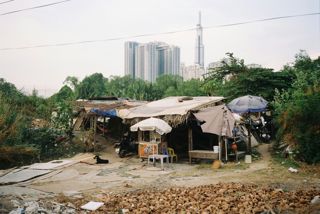
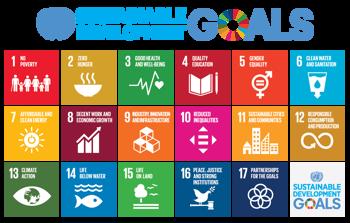
The 2030 Agenda, with its 17 Sustainable Development Goals (SDGs), serves as a strategic framework for international cooperation. The project addresses poverty and inequality through multidimensional and cross-sectoral approaches, with SDG 1 ("No Poverty") and SDG 10 ("Reduced Inequalities") at its core.
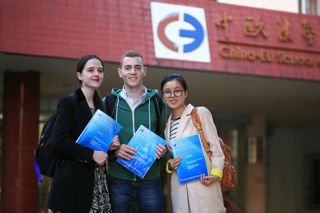
The China-Europe School of Law (CESL) Project was designed to enhance Chinese legal professionals' knowledge of the European legal system, its legislation, best practices, and international and comparative law through the establishment of a China-Europe School of Law.
The objective of this evaluation was to provide the European Union and relevant stakeholders with an independent assessment of the China-Europe School of Law's performance. It focused on how the school met its expected objectives and the factors that influenced these outcomes. Additionally, the evaluation identified key lessons learned, drew conclusions, and provided recommendations to assist decision-makers in improving future interventions.
The specific objectives of this evaluation were:
- To inform the exit strategy of the intervention and ensure the sustainability of its results.
- To assess the feasibility of and propose ideas for achieving a higher level of independence for CESL.
- To draw conclusions and lessons learned that could be replicated in other EU interventions.
- To assess the need for and propose ideas for continued cooperation between the EU and CESL after the project's conclusion.
- To ensure accountability for the use of EU resources in relation to the results of the intervention.
The evaluation assessed the intervention using the six standard DAC evaluation criteria: relevance, coherence, efficiency, effectiveness, sustainability, and impact perspectives. Additionally, the evaluation applied an EU-specific criterion: the EU added value.
- Schlagwörter:
- Bildung, Justiz / Rechtsstaatlichkeit
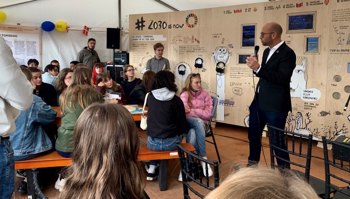
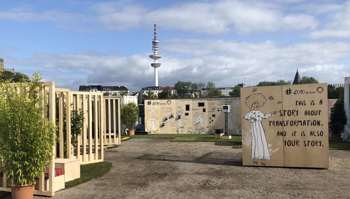
The EC implemented the 2019 #2030isnow campaign of the EU Development Communication Network. The main objective of this campaign was to inform European citizens - particularly young people - about European development cooperation policies and activities in support of the 2030 Agenda and the SDGs.
As a main communication tool, the Network opted to install stands with an interactive “wall” in existing summer festivals around Europe. The interactive wall informed the festivalgoers about the 2030 Agenda and Europe’s leading role in supporting the SDGs around the world. The installation of both the wall and the surrounding elements required the management of their procurement, delivery, installation, removal and disposal. Particip further responsible to ensure the correct functioning of all technical and IT components integrated into the interactive wall throughout the entire duration of all events.
The project closely coordinated with the participating Member States, the festival organizers, other involved service providers and the European Commission on all practical aspects of the organization in each country.
The events and festivals identified were located in Slovenia, Estonia, Germany, Spain, Denmark, Belgium and other European countries.
The campaign ran from May to September 2019 and the project also supported follow-up activities in 2020.
- Partner:
- Particip (federführend)
- Schlagwörter:
- Kommunikation und Medien, Zivilgesellschaft
Advisory Services for GIZ Sector Project Agenda 2030
- 2019 – 2021
- unter 500.000 €
- Germany
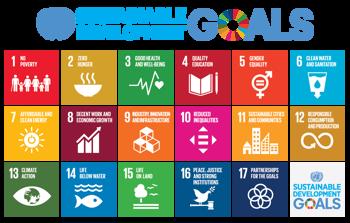
The Agenda 2030 for Sustainable Development has been implemented by all countries since 2016. Over the next 15 years, it will shape numerous policy areas - far beyond development cooperation (DC). The Federal Ministry for Economic Cooperation and Development (BMZ) is in the process of aligning development policy with the implementation of Agenda 2030. This is based on three pillars: implementation in Germany, support for the partner countries of German development cooperation and at the international level.
The sector project (SV) Agenda 2030 for sustainable development advises the BMZ to all three pillars. The focus of advisory activities is on the following three areas:
- German Sustainability Strategy and Architecture
- SDG Measurement Methods, Monitoring/ Data & & Statistics,
- Integrated implementation/policy coherence,
- Financing for sustainable development,
- Multilateral Processes
- Methodical implementation of Agenda 2030.
This means that the SV Agenda 2030 for Sustainable Development has the following requirements: (i) to work on new topics in depth in its activities, even at a short notice; (ii) to cover a wide range of topics using expert advice and to work on them in an integrated manner; (iii) to maintain an overview of the various reform processes and to classify them correctly; and (iv) to react to a broad spectrum of actors and provide advice. The dynamics, thematic range and complexity of the implementation of Agenda 2030 makes it necessary for the SV to have access to well-founded expertise on a wide range of topics (e.g. implementation at local level, private sector, monitoring/data & statistics, integrated implementation/policy coherence, financing for sustainable development, multilateral processes).
Against this background, the scientific/conceptual support prepares existing knowledge in this respect and accelerates, facilitates and deepens the advisory service through corresponding professional preparatory work.
The support provided by the contractor enables the SV Agenda 2030 to award contracts for the development of individual services at relatively short notice. At the same time, the contractor's broad technical base ensures the availability of scientific expertise on various topics relevant to the project and thus enables the BMZ to provide technically adequate and precise advice. Furthermore, the SV is to be enabled to maintain an overview of existing reform and adaptation processes and to derive recommendations for German development cooperation from these. As part of the scientific support, the contractor cooperates with the SV Agenda 2030 on a case-by-case and topic basis upon request and provides services to be specified in detail.
The EC seeked to establish a Europe-wide Communication Network gathering EU and EU Member States’ development cooperation departments for enhancing their awareness building activities on development issues. The aim was to establish a more coordinated approach between EU and Member States towards communication on development, and to create the basis for more effective partnerships with stakeholders, civil society and partner countries.
The general objective of the assignment was to increase outreach to the general public on development cooperation policies and activities, with a focus on young people.
Specific objectives:
- Establish, manage and coordinate the EU Development Communication Network (incl. organisation of annual steering committee meeting and creation of a closed social media group);
- Design, creation and management of a password-accessed web-based digital platorm for the network members;
- Organisation of an annual Europe-wide event to promote development cooperation policies and activities of the EU, directed to the general public.
- Schlagwörter:
- Kommunikation und Medien
Advisory Services for GIZ Sector Project Agenda 2030
- 2018 – 2019
- unter 500.000 €
- Germany
The Agenda 2030 for Sustainable Development has been implemented by all countries since 2016. Over the next 15 years it will shape numerous policy areas - far beyond development cooperation (DC). The Federal Ministry for Economic Cooperation and Development (BMZ) is in the process of aligning development policy with the implementation of Agenda 2030. This is based on three pillars: implementation in Germany, support for the partner countries of German development cooperation and at the international level.
The sector project (SV) Agenda 2030 for sustainable development advised the BMZ to all three pillars. The focus of advisory activitieswas on the following three areas:
- Design and operationalisation of Agenda 2030 in the international context;
- Development of conceptual foundations and materials for the implementation of the Agenda 2030 in German Development Cooperation;
- Establishment and Management of the Transformation Fund Agenda 2030
- Development of conceptual foundations for operationalisation and implementation of Agenda 2030 in Germany.
This means that the SV Agenda 2030 for Sustainable Development had the following requirements: (i) to work on new topics in depth in its activities, even at short notice; (ii) to cover a wide range of topics in expert advice and to work on them in an integrated manner; (iii) to maintain an overview of the various reform processes and classify them correctly; and (iv) to react to a broad spectrum of actors in its advice. The dynamics, thematic range and complexity of the implementation of Agenda 2030 made it necessary for the SV to have access to well-founded expertise on a wide range of topics (e.g. implementation at local level, private sector, monitoring/data & statistics, integrated implementation/policy coherence, financing for sustainable development, multilateral processes).
Against this background, the scientific/conceptual support prepared existing knowledge in this respect and accelerate, facilitate and deepen the advisory service through corresponding professional preparatory work.
The support provided by the contractor enabled the SV Agenda 2030 to award contracts for the development of individual services at relatively short notice. At the same time, the contractor's broad technical base ensured the availability of scientific expertise on various topics relevant to the project and thus enabled the BMZ to provide technically adequate and precise advice. Furthermore, the SV was to be enabled to maintain an overview of existing reform and adaptation processes and to derive recommendations for German development cooperation from these. As part of the scientific support, the contractor cooperated with the SV Agenda 2030 on a case-by-case and topic basis upon request and provide services to be specified in detail.
- Schlagwörter:
- Makroökonomie / nationale Politik, Öffentliche Finanzen / Haushaltsplanung, Regierungsführung, Umwelt, Zivilgesellschaft

Advisory services for the GIZ Sector Project "Agenda 2030 for Sustainable Development" on cross-sectoral issues and international processes
- 2017 – 2018
- unter 500.000 €
- Germany
The Agenda 2030 for Sustainable Development is being implemented by all countries since January 2016. Over the next 15 years, it will shape numerous policy fields - far beyond development cooperation. The Federal Ministry for Economic Cooperation and Development (BMZ) is currently aligning its development policy with the implementation of the Agenda 2030. This is based on three pillars: the implementation of the Agenda in Germany, the support of the partner countries of the German Development Cooperation, and the implementation on the international level. The sectoral project (SV) Agenda 2030 advises the BMZ on sustainable development on all three pillars.
Due to the dynamics, the thematic scope and the complexity of the Agenda 2030, the SV Agenda 2030 demands through this assignment the support by profound expertise on various topics.
In this context, the contractor supported the content and conceptual work of the SV Agenda 2030 with input. The scientific and conceptual support provided by the contractor was intended to synthesize existing knowledge and, by means of correspondingly professional preparatory work, deepen the content of the consultancy, accelerate the handling of the requests, and enable promt reaction to developments in the desired quality. The contractor's broad professional profile was to ensure the availability of scientific expertise on various topics; thus, enabling technically adequate advisory services for BMZ. Furthermore, the SV was enabled to keep an overview of existing reforms and adaptation processes and to derive recommendations for German development cooperation.
Within the scope of the scientific support, the contractor worked, on request, together with the SV Agenda 2030 on various topics and provided specific services. A pool of 3 specialists was provided.
- Schlagwörter:
- Regierungsführung