China
6 Referenzen

The evaluation of the Danish Energy Partnership Programmes (DEPP) covers more than a decade of bilateral cooperation supporting the green energy transition in emerging economies. Since 2012, these programmes have engaged Denmark with key partner countries such as China, India, South Africa, Vietnam, and Mexico, whose future energy choices will significantly shape global emissions. DEPP provides technical assistance in long-term energy planning, renewable energy integration, energy efficiency, and the development of regulatory frameworks.
The overall objective of the evaluation is to strengthen accountability and learning by documenting results and assessing DEPP’s contributions to capacity strengthening, as well as their strengths and weaknesses. More specifically, the study will analyse the programmes’ relevance, coherence, effectiveness, efficiency, impact, and sustainability. By doing so, it will generate lessons learned and actionable recommendations to inform the design and implementation of future programmes, consolidating Denmark’s role as a trusted partner in advancing global climate and energy goals
.
- Partner:
- NCG Denmark (federführend), DEM, Particip

The China-Europe School of Law (CESL) Project was designed to enhance Chinese legal professionals' knowledge of the European legal system, its legislation, best practices, and international and comparative law through the establishment of a China-Europe School of Law.
The objective of this evaluation was to provide the European Union and relevant stakeholders with an independent assessment of the China-Europe School of Law's performance. It focused on how the school met its expected objectives and the factors that influenced these outcomes. Additionally, the evaluation identified key lessons learned, drew conclusions, and provided recommendations to assist decision-makers in improving future interventions.
The specific objectives of this evaluation were:
- To inform the exit strategy of the intervention and ensure the sustainability of its results.
- To assess the feasibility of and propose ideas for achieving a higher level of independence for CESL.
- To draw conclusions and lessons learned that could be replicated in other EU interventions.
- To assess the need for and propose ideas for continued cooperation between the EU and CESL after the project's conclusion.
- To ensure accountability for the use of EU resources in relation to the results of the intervention.
The evaluation assessed the intervention using the six standard DAC evaluation criteria: relevance, coherence, efficiency, effectiveness, sustainability, and impact perspectives. Additionally, the evaluation applied an EU-specific criterion: the EU added value.
- Schlagwörter:
- Bildung, Justiz / Rechtsstaatlichkeit

The main objectives of this evaluation are to provide the relevant services of the European Union, the interested stakeholders with:
- an overall independent assessment of the past performance of the Partnership Instrument (PI) funded Policy Dialogues Support Facilities (PDSFs) to be evaluated, paying particular attention to the approach taken under the different PDSFs, as well as paying particular attention to the intermediate or final results measured against their expected objectives; and the reasons underpinning such results;
- key lessons learned, conclusions and related recommendations in relation to the PI approach and use of PDSFs and in order to improve current and future Actions.
The specific rationale for undertaking this evaluation is to assess the relevance, outcomes, and approach of PI funded Policy Dialogues Support Facilities (PDSFs), as well as the added value of the activities in strengthening EU’s partnerships/alliances and its position as a global player in the countries concerned, and reinforcing multilateralism, as expressed in the specific objectives of the PI.
This evaluation contract covers 13 actions. The work to be covered under this contract is a hybrid evaluation of individual actions and, drawing conclusions, recommendations and lessons learned, where possible, when looking at the package of these projects as a whole and the approaches taken on how to use the “SPDF approach” to influence effectively EU interests in the respective countries.
The focus of the evaluation is two-fold:
- On the assessment of the approach taken in relation to PDSFs under the different Actions, progress to date and, by explaining why progress is happening or is not happening as planned, provide recommendations on how to improve the approach in order to achieve the expected objectives of the PI, taking into account problems and opportunities.
- This evaluation will also serve to understand the performance of the Actions, its enabling factors and those hampering a proper delivery of results as to inform the planning of the future funded Policy Dialogues Support Facilities.
- Partner:
- Particip (federführend), Idem Concept
- Schlagwörter:
- Monitoring und Evaluierung
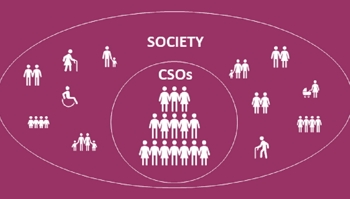
Support Measures: capacity strengthening of local Civil Society Organizations in China
- 2020 – 2022
- unter 500.000 €
- China
Global objective
The global objective of this assignment was enhancing Chinese CSO's capacities to contribute to governance and development processes in China.
Specific objective(s)
- Improve local CSOs capacity for better project management, including enhanced financial and contractual management capacities and standard procedures.
- Improve local CSOs' understanding of thematic/conceptual content in the field of social sectors, with focus on results and emphasis on the most vulnerable beneficiaries
- All EU funded actions apply rights-based approach and mainstream crosscutting objectives of the EU e.g. gender equality, youth, persons with disability, indigenous peoples, environment and climate change a.o.
The targeted CSOs were local Chinese CSOs, both those that have worked under EU-funded grant contract, but also those that never were contracted but may show interest.
Required outputs
- Preparation of a work plan during the first month of the assignments
- The first output submitted during or shortly after the first debriefing, was the work plan, the power-point template to be used respecting the EU Visibility guidelines. These were part of the Inception Report.
- Completion of requested Workshops Type A -B. Outputs included implementation of the requested services by workshops attended by members of selected CSOs.
- Submission of reports as described in section 5.1 Reporting
- Schlagwörter:
- Zivilgesellschaft

Systematic and timely evaluation of its programmes and activities is an established priority of the European Commission.
The focus of evaluations is on the assessment of achievements, the quality and the results of Actions in the context of an evolving cooperation policy with an increasing emphasis on result-oriented approaches and the contribution towards EU foreign policy objectives and the implementation of the SDGs.
From this perspective, evaluations should look for evidence of why, whether or how these results are linked to the EU intervention and seek to identify the factors driving or hindering progress.
Evaluations should provide an understanding of the cause and effect links between: inputs and activities, and outputs, outcomes and impacts. Evaluations should serve accountability, decision making, learning and management purposes.
The main objectives of this evaluation are to provide the relevant services of the European Union and the interested stakeholders with:
- an overall independent assessment of the past performance of the Action ‘Reducing plastic wast and marine litter in East and South East Asia – Supporting a transition to a circular economy in the region’ (PI/2019/405-400), paying particular attention to its intermediate results measured against its expected objectives; and the reasons underpinning such results;
- key lessons learned, conclusions and related recommendations in order to improve current and future Actions.
- Schlagwörter:
- Monitoring und Evaluierung, Umwelt

Final evaluation China-EU Access to Justice project
- 2017 – 2018
- unter 500.000 €
- China
The main objectives of this final evaluation were to provide the relevant services of the European Union and interested stakeholders with:
- An overall independent assessment of the past performance of the China-EU Access to Justice project, paying particularly attention to its results against its objectives;
- Key lessons and recommendations in order to improve current and future actions in this and related sectors.
In particular this evaluation served to assess the results of the action as well as the reasons for success or failure for achieving the expected results.
The specific aspects to be evaluated were:
a) The results and possible impact achieved through project support;
b) The experience of linking state and non-state legal service providers and impact on strengthening of the role of civil society in social justice issues in China;
c) Areas where learning opportunities and transfer of knowledge on legal aid modalities and practice between Europe and China were pursued and analysis of relevance to the broader EU-China strategic relationship.
- Schlagwörter:
- Justiz / Rechtsstaatlichkeit, Menschenrechte, Monitoring und Evaluierung