Belgium
36 Referenzen

EU Outreach and Partnership Facility for the GCC
- 2026 – 2029
- 2 – 5 Millionen €
- Bahrain, Belgium, Kuwait, Oman, Qatar, Saudi Arabia, United Arab Emirates
As outlined in the Joint Communication, the Gulf is a dynamic neighbouring region and an important gateway between Europe, Asia and Africa. Likewise, the EU has a lot to offer to the Gulf partners, as the world’s biggest single market, trading bloc and investor, a leader in research and innovation, and an important mediator and promoter of multilateralism, social transformation including human rights, gender equality, diversity and inclusion. As both regions navigate an increasingly complex global landscape, their partnership will continue to be shaped by economic interdependence, shared security interests, and a commitment to addressing global challenges collaboratively.
The overall objective to which the project contributes is to consolidate the EU-GCC partnership at regional and bilateral level, and improve the EU’s perception in the region.
The specific objectives of the project are as follows:
1) Strengthen the position of the EU as a key partner in the GCC region in areas of mutual interest.
2) Support the implementation and monitoring of EU–GCC partnership and cooperation initiatives.
3) Foster deeper cooperation and mutual understanding between non-state actors, academia, civil-society and citizens in the EU and the GCC region.
The expected outputs of the project are as follows:
1) Outcome 1: Strengthen the position of the EU as a key partner in the GCC region in areas of mutual interest. Output: Increased awareness, exchange and collaboration between EU and GCC stakeholders in key strategic areas with a focus on joint initiatives, dialogues, and collaborative projects.
2) Outcome 2: Support the implementation and monitoring of EU-GCC partnership and cooperation initiatives. Output: Enhanced analysis, knowledge, and expertise to support the implementation and monitoring of joint policy priorities.
3) Outcome 3: Foster deeper cooperation and mutual understanding between non-state actors, academia, civil-society and citizens in the EU and the GCC region. Output: Expanded opportunities for people-to-people diplomacy, including joint cultural initiatives, academic exchanges, and cross-regional collaborations on mutually strategic sectors.
- Partner:
- Particip (federführend), Clingendael, CommWithUs, GINGER Group (ex SOFRECO)
- Schlagwörter:
- Bildung, Industrie und Privatsektorentwicklung, Kommunikation und Medien, Menschenrechte, Regierungsführung

IFF/TOC TEI - Technical assistance – Support to the management structures, knowledge management, monitoring and information sharing
- 2026 – 2028
- unter 500.000 €
- Africa
The overall objective underlying the proposed specific contract is to support the Contracting Authority (INTPA G5) and its partners to coordinate, manage and deliver on the components of the TEI. The technical assistance is primarily focused on coordination/management support and delivery of TEI processes and outputs, while providing capacity for targeted substantive IFF/TOC inputs as needed.
Specific objectives are:
1. Ensure smooth, efficient and inclusive coordination of all TEIs stakeholders within and among the Strategic Steering Group and the Management Committee.
2. Support high-level knowledge management, monitoring and information sharing to enhance the coordination, coherence, complementarity and visibility of actions taken by the EU and TEI members in the areas covered by the TEI.
3. Provide a platform for EU actors and African partners to align approaches, ensuring a unified stance and stronger visibility in regional and global fora.
- Schlagwörter:
- Projektdurchführung / technische Hilfe, Regierungsführung
Services for EU’s External Action (FWC SEA 2023) - Lot 15: Monitoring
- 2024 – 2028
- Global
The objective of the FWC is to provide, via individual assignments defined and contracted through Specific Contracts, expertise which can be mobilised at short notice. The quality of the services, which may make use of expertise either internal or external to the Framework Contractor, must be guaranteed by the Framework Contractor who will provide the appropriate internal technical skills and resources.
The FWC has no funds on its own. The main instrument within external action is the Neighbourhood, Development and International Cooperation Instrument - Global Europe (NDICI-Global Europe).
Within lot 15, Framework Contractors are expected to assist European Commission services (HQ and EUDs) in monitoring the performance of EU-funded interventions across all regions and sectors of activity.
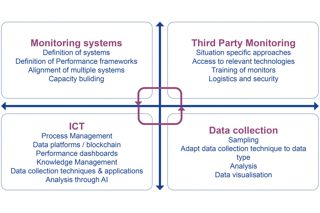
Lot 15 covers monitoring services that fulfil specific, local requirements. These may include but are not limited to: monitoring systems at intervention/portfolio level, third party monitoring, Information and Communication Technology (ICT) and emerging technologies for monitoring, and data collection for strategic purposes. The Results-Oriented Monitoring (ROM) is contracted through direct service contracts and therefore not covered by this Framework Contract.
- Partner:
- Particip (federführend), Altai, Dev4U, Idem Concept, Integration
Facility for the ENI CBC and Interreg NEXT programmes on EU external borders with the neighbouring partner countries
- 2023 – 2027
- 5 – 10 Millionen €
- ENI, Europe
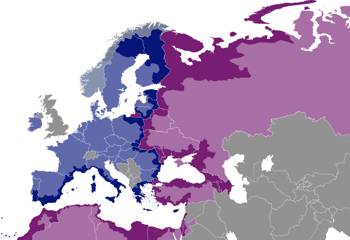
The European Neighbourhood Instrument (ENI) Cross-border cooperation (CBC) and Interreg NEXT (acronym for: “Neighbourhood External”) programmes extend the principles of European Territorial Cooperation (ETC) among Member States within the EU, better known as Interreg, to territorial cooperation between Member States and the Partner countries and territories in the Neighbourhood area. They cover both cross-border cooperation (CBC) on land borders and sea crossing as well as transnational cooperation programmes covering sea basins.
Cross-border and transnational (sea-basin) cooperation along EU’s external land and sea borders is a unique form of cooperation between EU MS and neighbouring countries. It provides the framework and opportunities for enhanced people-to-people contacts, cooperation and exchanges essentially at regional and local level, and involves a broad range of actors (local authorities, NGOs, Civil Society Organisations (CSO), universities and other stakeholders).
The overall objective (Impact) to which this action contributes is to enhance the implementation of the ENI CBC and Interreg NEXT programmes by providing technical support to the programme authorities, beneficiaries, and stakeholders as well as to the Commission during all phases of the programme cycle.
The specific objectives of this contract are the following:
- to enable participating countries to manage, implement and close the ENI CBC Programmes taking into account the disruptions caused by the Russian aggression against Ukraine;
- to enable participating countries to manage and implement Interreg NEXT programmes in the most efficient way and to ensure effective cooperation between the Member States and the partner countries;
- to support the Commission with the effective management, implementation and closure of ENI CBC/Interreg NEXT programmes;
- to provide support to joint secretariats (JS)/branch offices in order to improve the project development and management capacity of organisations eligible to participate in the ENI CBC and Interreg NEXT programmes – such as local and regional authorities, CSOs and other relevant players. These activities should benefit eligible partner countries;
- to provide targeted support to the beneficiaries of partner countries impacted by the Russian aggression against Ukraine in close coordination with managing authorities and joint secretariats;
- to increase the capacities of regional and local authorities and other stakeholders in partner countries, in particular Ukraine, Republic of Moldova and Georgia, with a view to support their EU Accession process;
- to stimulate coordination not only among ENI CBC/Interreg NEXT programmes but also between ENI CBC/Interreg NEXT programmes and other similar instruments. This would allow for exchanges of best practices among both Programmes and projects as well as increase the ENI CBC and NEXT visibility.
- Partner:
- Particip (federführend), Stantec SA (MWH-BXL)
Support to programming, monitoring, evaluation and knowledge sharing in the EU external action (meldea)
- 2023 – 2027
- über 10 Millionen €
- Africa, Asia, ENI, Latin America & Caribbean, Oceania, Western Balkans
The overall aim of the project is to support DG INTPA and DG NEAR in improving quality of performance, institutional learning and accountability for a better targeted and more sustainable impact of EU external action.
The project comprises 7 different services:
1: provide methodological support to EU staff to plan, design, implement, monitor, and evaluate EU interventions in a coherent, efficient and effective manner.
2: assist requests of methodological screening and quality assurance related to programming and design.
3: assist to the enhancement of the internal monitoring and results reporting systems of the Commission services.
4: support and contribute to the revision of the results-oriented monitoring (ROM) system and provide operational and coordination support to the ROM contracts.
5: assist Commission staff in their mandate to steer, coordinate, monitor and report on evaluation activities.
6: support the two units of the DGs to enhance the quality of EU external action by ensuring the quality of the different evaluation deliverables.
7: provide methodological support on knowledge management for INTPA.D4 and NEAR.A4 by developing a set of tools and techniques and responding to requests of support.
Main staff provided for 4 year of contract:
- Key Expert 1 (Team Leader): 880 WD
- Key Expert 2: 880 WD
- Key Expert 3: 880 WD
- Key Expert 4: 880 WD
- SNKE: 11.847,25
- MNKE: 7.146
- JNKE: 5.887,50
- Partner:
- SQuaRE by MEL (Managed by Particip) (federführend), Dev4U, Espes, Meliorate, Particip
- Schlagwörter:
- Aus- und Fortbildung, Management, Monitoring und Evaluierung, PCM / Logframe

Capacity-building for the Implementation of Interreg and Cohesion Policy
- 2025 – 2026
- unter 500.000 €
- ENI, EU, IPA
The EU Cohesion Policy is a key investment strategy aimed at reducing regional disparities and fostering smart, sustainable, and inclusive growth across the EU. It operates through national, regional, and Interreg cooperation programmes to support infrastructure, the green transition, connectivity, and social inclusion in the EU Member States, while preparing candidate countries for EU membership by building administrative capacity through Interreg and tailored training programmes.
The overall objective of the project is to prepare candidate countries for implementing cohesion policy in the lead up to and upon accession.
The project specifically aims to:
- Train staff from national administrations at central and local/regional level participating in Interreg programmes (and IPA III programmes, if staff overlaps), to reinforce their capacities for participating in and later on implementing cohesion policy programmes.
- Organise study visits (and cover related travel and accommodation costs and per diem) for short-term work experience in selected Member States’ managing or audit authorities, thereby increasing the skills for benefitting better from their participation in existing programmes and preparing future ones.
- Partner:
- Particip (federführend), SZPO
- Schlagwörter:
- Aus- und Fortbildung, Institutionelle Entwicklung, Monitoring und Evaluierung, Öffentliche Finanzen / Haushaltsplanung, PCM / Logframe, Regierungsführung
Support for programme management and implementation of the OPSYS ecosystem
- 2022 – 2026
- über 10 Millionen €
- Global
The purposes of this contract are as follows:
1) Provide support to the business owner (system owner) in areas covered by the OPSYS ecosystem and in line with the Commission PM21 standards for: a)Business management in terms of requirements, tests, and process management; b)Programme management; c)Change management; d) Provision of ad hoc long term and short-term expertise.
2) Provide support to the IT supplier(s) from a business point of view, specifically in terms of expertise in the area of user experience, data migration or quality assurance.
The main results to be achieved by the contractor are as follows:
1) Programme management as well as OPSYS governance and the other corporate governance institutions (GPSB, CC) are supported, and a good level quality assurance and professionalism is assured;
2) Change management activities are designed and performed in a sustainable manner for all affected staff within DG INTPA, DG NEAR and FPI, as well for relevant external partners. These activities include, inter alia, communication, training, change agent network, helpdesks in coordination with IT supplier responsibilities;
3) Business processes are improved and efficiently managed;
4) Data synchronization during the transitory phases, as well as data migration to phase out legacy systems are achieved, mitigating the burden on users;
5) Short-term expertise is identified and provided according to existing and emerging needs.
- Partner:
- Everis Belgium (federführend), NTT DATA Belgique SRL, Particip
C2C technical coordination support - bridge contract
- 2024 – 2025
- unter 500.000 €
- Global
The Specific Objectives are threefold (and interconnected):
- To support DG INTPA, through analyses, in its in-house knowledge/policy reflection on its future engagement with LAs and the place of decentralized cooperation in it, connecting it with important EU development policy trends and thematic priorities such as the so-called “geographisation” of EU aid, the Global Gateway strategy, the EU engagement in fragile states and support to local democracy.
- To maintain a strategic relationship between DG INTPA and a selection of the 57 cityto-city Partnerships (“champions”), including through the organization in Europe of a 3 rd global conference during the 1 st semester of 2025.
- To communicate strategically about the results, lessons learnt and added value of the overall programme and advocate at EU and international level for enhancing support to decentralized cooperation/city-to-city partnerships in the future.
- Schlagwörter:
- Zivilgesellschaft

Ex-post Evaluation of Cohesion Policy Programmes 2014-2020 Financed by the ERDF. Work Package 11 – European Territorial Cooperation
- 2022 – 2025
- unter 500.000 €
- ENI, EU, Europe, IPA
Regional Policy is one of the EU’s main investment policies. It targets all regions and cities in the European Union in order to support job creation, business competitiveness, economic growth, sustainable development, and improve citizens’ quality of life. It is implemented through several specific Funds in financial cycles of seven years (programming periods), reflecting the EU’s multiannual financial framework.
This evaluation addressed the investments made through cooperation programmes under the European Territorial Cooperation (ETC) goal, co-financed by the ERDF during the 2014-20 period. It assessed their rationale and the evidence of their effectiveness, efficiency and impact, as well as their coherence with other policies, their relevance and the EU added value. It identified factors that contributed to the success or failure of these investments under different socio-economic conditions, highlighted good practice, and examined their contribution to growth, sustainable development and job creation.
The evaluation analysed the effects of investments on integrated regional development between neighbouring border regions (land and maritime) and transnational areas, the challenges and barriers to cooperation, and how these were addressed. This was carried out through the identification of theories of change (ToC) relevant to clusters of ETC programmes.
- Partner:
- Particip (federführend), COWI, M&E Factory
- Schlagwörter:
- Ländliche und städtische Entwicklung, Monitoring und Evaluierung, Regierungsführung
Policy Dialogue and Public Diplomacy Facility for Australia and New Zealand
- 2023 – 2025
- 500.000 € – 1 Million €
- EU, Oceania
The overall objective of the project was to strengthen EU-Australia and EU-New Zealand relations, in line with bilateral agreements and in coherence with the objectives of the EU’s Foreign Policy, as well as key EU strategies: the European Green Deal, a Stronger EU in the World, the EU’s Multilateral Strategy, the EU-Asia Connectivity Strategy, the Indo-Pacific Strategy, Global Gateway and Strategic Compass.
Specific objective(s)
- To advance existing policy dialogues and open avenues to expand relations in priority areas for the EU in Australia and New Zealand, through communication actions that contribute to the implementation of the bilateral Framework Agreement with Australia, the Partnership on Relations and Cooperation Agreement (PARC) with New Zealand, and future bilateral Free Trade Agreements.
- To increase understanding of EU policies and objectives, to build support and agreement in areas of mutual interests for the EU with Australia and with New Zealand, and to increase awareness of the role of the EU as a global player, via public diplomacy activities.
- Schlagwörter:
- Kommunikation und Medien, Regierungsführung

The global objective of this action was to contribute to the implementation of the HDP nexus to bridge the gap between short, medium and long-term EU action in fragile and crisis- or conflict-affected partner countries, increasing its coherence and impact.
The specific objective of this action was to provide support in concrete identified needs for the implementation of the HDP nexus in EU action:
- Specific Objective 1: To provide expertise, facilitation and logistical support for the regular HDP Nexus workshops for colleagues in EU Delegations, ECHO offices and HQ across the 4 services relevant to the Nexus (ECHO, INTPA, EEAS and FPI).
- Specific Objective 2: To provide expertise for the development of a self-paced course on the HDP Nexus, targeted at EU colleagues in EU Delegations, ECHO offices and HQ across the 4 services relevant to the Nexus (ECHO, INTPA, EEAS and FPI).
- Specific Objective 3: To provide a report on the EU understanding of the peace dimension of the humanitarian development-peace nexus.
- Partner:
- Particip (federführend), ECDPM
- Schlagwörter:
- Aus- und Fortbildung, Management

The global objective of this study is to develop a methodology for assessing the economic impact of EU sanctions and to apply that methodology to a number of selected cases to demonstrate the feasibility of the proposed framework.
The specific objectives of the proposed study are to
- provide a review and critical evaluation of the existing research related to the topic of the study;
- develop a detailed methodology for analysing the economic impact of EU sanctions, including a description of the concrete steps, options and approaches, that can be replicated and adapted to different types of sanctions and sanctions combinations; and
- test this methodology on a number of selected case studies to demonstrate its usefulness and highlight the related conditions, limitations and issues identified or foreseen.
The ‘economic impact of EU sanctions’ is understood as meaning the impact of EU sanctions on: (1) the economic development of third countries with listed persons and entities directly affected by EU sanctions; (2) the wider economic sectors of which those listed persons and entities by EU sanctions are part of in those third countries; (3) the listed persons and entities themselves; (4) trade patterns between the EU and third countries directly concerned; and (5) EU companies operating in or with third countries directly affected by EU sanctions.
- Partner:
- Particip (federführend), ULB
- Schlagwörter:
- Handel, Industrie und Privatsektorentwicklung, Makroökonomie / nationale Politik, Monitoring und Evaluierung
Strengthening DG REFORM's capacity of designing, monitoring and evaluating projects
- 2022 – 2023
- unter 500.000 €
- Belgium
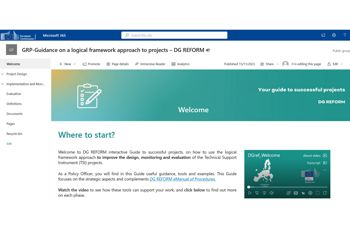
The general objective of this service contract is to strengthen DG REFORM capacity of designing, monitoring, and evaluating projects.
The three outcomes of this contract are as follows:
Outcome 1: DG REFORM staff have developed consolidated skills and expertise in designing, implementing, monitoring and evaluating technical support projects, using the principles and methodology of the Logical Framework Approach
Outcome 2: DG REFORM policy officers have been empowered to embed evaluation concepts and tools at each step of the project management cycle (design, contracting, implementation, evaluation)
Outcome 3: DG REFORM has developed an evaluation strategy to assess outcomes and impact of groups of projects
In the medium and long run, the achievement of the outcome of this service contract should contribute towards the development of a strong evaluation culture in DG REFORM (impact)
- Schlagwörter:
- Aus- und Fortbildung, Monitoring und Evaluierung, PCM / Logframe

Evaluation of the Finnish Development Policy Influencing in the European Union
- 2021 – 2022
- unter 500.000 €
- Global
The Ministry for Foreign Affairs of Finland (MFA) commissioned an evaluation of Finnish Development Policy Influencing in the European Union. The purpose of this evaluation was to assess the relevance, effectiveness and coherence of the different development policy influencing activities of the Finnish MFA in relation to the EU and its institutions, and to provide guidance to the Ministry on further strengthening of the influencing activities for the future. The evaluation was mostly forward-looking and utilization focused, providing strategic information to inform future developments of the influencing agenda.
The objectives of this evaluation were:
- To assess how Finland has managed to promote Agenda2030, Building Back Better (and Greener), and Finland’s Development Policy objectives in the EU, as well as the common development cooperation practices and principles by the member states.
- To assess the effectiveness of various influencing activities, means and channels and Finland’s best opportunities to influence (intuitions and bodies, country delegations, interventions etc.) taking into account available human and financial resources.
- To analyze the factors (structures, processes, tools, capacity, other) that have facilitated/enabled or hindered the positive results of the influencing activities.
- To provide insight on the best opportunities and ways to engage and influence in the future, especially under the new EU funding instrument and the evolving development cooperation scene.
- To provide insight on how the Ministry together with other relevant stakeholders could develop their practices in order to maximize influence for the future, taking into account available human and financial resources.
- Partner:
- Particip (federführend), Niras Finland Oy
- Schlagwörter:
- Bildung, Forstwirtschaft, Menschenrechte, Monitoring und Evaluierung, Regierungsführung, Umwelt
Support for programme implementation of the OPSYS information system
- 2018 – 2022
- 5 – 10 Millionen €
- Belgium
Deliver and make operational a new information system (OPSYS) replacing inter alia the existing information system called CRIS (Common Relex Information system) system, addressing gaps, supporting the new DG DEVCO, NEAR, FPI and European Commission strategies as well as engaging in a business transformation starting with the harmonisation/simplification of business processes.
The purpose of this contract is:
1. Provide support to the business owner (system owner) in areas covered by the OPSYS programme and in line with the Commission PM2 standards for:
a) Business management in terms of inter alia requirements, tests, process management;
b) Programme management;
c) Change management;
d) Provision of ad hoc long term and short term expertise
- Partner:
- Everis Belgium (federführend), Particip
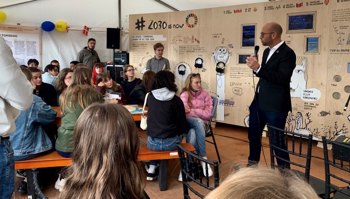
The EC implemented the 2019 #2030isnow campaign of the EU Development Communication Network. The main objective of this campaign was to inform European citizens - particularly young people - about European development cooperation policies and activities in support of the 2030 Agenda and the SDGs.
As a main communication tool, the Network opted to install stands with an interactive “wall” in existing summer festivals around Europe. The interactive wall informed the festivalgoers about the 2030 Agenda and Europe’s leading role in supporting the SDGs around the world. The installation of both the wall and the surrounding elements required the management of their procurement, delivery, installation, removal and disposal. Particip further responsible to ensure the correct functioning of all technical and IT components integrated into the interactive wall throughout the entire duration of all events.
The project closely coordinated with the participating Member States, the festival organizers, other involved service providers and the European Commission on all practical aspects of the organization in each country.
The events and festivals identified were located in Slovenia, Estonia, Germany, Spain, Denmark, Belgium and other European countries.
The campaign ran from May to September 2019 and the project also supported follow-up activities in 2020.
- Partner:
- Particip (federführend)
- Schlagwörter:
- Kommunikation und Medien, Zivilgesellschaft

Mid-term evaluation of the Environmental Diplomacy in G7/G20 project
- 2019 – 2021
- unter 500.000 €
- Global
Systematic and timely evaluation of its programmes and activities is an established priority of the European Commission. The focus of evaluations is on the assessment of achievements, the quality and the results of Actions in the context of an evolving cooperation policy with an increasing emphasis on result-oriented approaches and the contribution towards EU foreign policy objectives and the implementation of the SDGs. From this perspective, evaluations should look for evidence of why, whether or how these results are linked to the EU intervention and seek to identify the factors driving or hindering progress. Evaluations should provide an understanding of the cause and effect links between: inputs and activities, and outputs, outcomes and impacts. Evaluations should serve accountability, decision making, learning and management purposes.
The main objectives of this evaluation are to provide the relevant services of the European Union and the interested stakeholders with:
- an overall independent assessment of the past performance of the Environmental Diplomacy project, paying particular attention to its intermediate results measured against its expected objectives; and the reasons underpinning such results;
- key lessons learned, conclusions and related recommendations in order to improve current and future Actions.
- Schlagwörter:
- Kommunikation und Medien, Monitoring und Evaluierung, Regierungsführung, Umwelt

Non-proliferation and disarmament (NPD) monitoring system and logframe migration to OPSYS
- 2020 – 2021
- unter 500.000 €
- Global
The overall objective of this assignment is to provide a sound basis for the future design, implementation, monitoring and reporting of results of NPD actions to the Commission, FPI.3 and implementing partners as represented by FPI.3.
The specific objectives are to:
- Develop an overall intervention logic and results framework for NPD as an area of FPI intervention, including core indicators.
- Propose an NPD action-level intervention logic and results framework template, including core indicators suitable for sub categories of interventions as relevant, while seeking: (1) Coherence with the overall intervention logic and results framework for NPD as an area of FPI intervention, and (2) Consideration of differences between the focus of different NPD actions and categories of NPD actions.
- Partner:
- Idem Concept (federführend), Particip
- Schlagwörter:
- Monitoring und Evaluierung, PCM / Logframe, Regierungsführung

Mid-term evaluation of the EU's 'Strategic Partnerships for the Implementation of the Paris Agreement (SPIPA)'
- 2020 – 2020
- unter 500.000 €
- Global
Systematic and timely evaluation of its programmes and activities is an established priority of the European Commission. The focus of evaluations is on the assessment of achievements, the quality and the results of Actions in the context of an evolving cooperation policy with an increasing emphasis on result-oriented approaches and the contribution towards EU foreign policy objectives and the implementation of the SDGs. From this perspective, evaluations should look for evidence of why, whether or how these results are linked to the EU intervention and seek to identify the factors driving or hindering progress. Evaluations should provide an understanding of the cause and effect links between: inputs and activities, and outputs, outcomes and impacts. Evaluations should serve accountability, decision making, learning and management purposes.
The main objectives of this evaluation are to provide the relevant services of the European Union and the interested stakeholders with:
- an overall independent assessment of the past performance of the SPIPA project, paying particular attention to its intermediate results measured against its expected objectives; and the reasons underpinning such results;
- key lessons learned, conclusions and related recommendations in order to improve current and future Actions.
- Schlagwörter:
- Monitoring und Evaluierung, Regierungsführung, Umwelt

Support to the Assessment of the 2019 EIDHR Global Call for Proposals
- 2020 – 2020
- unter 500.000 €
- Global
The global objective of this assignment was to support civil society in protection and promotion of democracy, human rights and fundamental freedoms worldwide.
The specific objective of this assignment was to provide technical support to the European Commission for the evaluation and selection of the proposals received under the 2019 EIDHR global call for proposals.
- Partner:
- Particip (federführend), EMI (formerly: Cardno Belgium), EPRD
- Schlagwörter:
- Menschenrechte
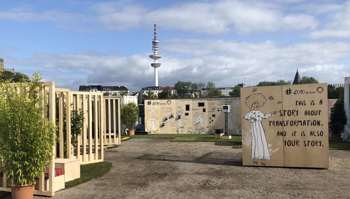
The EC seeked to establish a Europe-wide Communication Network gathering EU and EU Member States’ development cooperation departments for enhancing their awareness building activities on development issues. The aim was to establish a more coordinated approach between EU and Member States towards communication on development, and to create the basis for more effective partnerships with stakeholders, civil society and partner countries.
The general objective of the assignment was to increase outreach to the general public on development cooperation policies and activities, with a focus on young people.
Specific objectives:
- Establish, manage and coordinate the EU Development Communication Network (incl. organisation of annual steering committee meeting and creation of a closed social media group);
- Design, creation and management of a password-accessed web-based digital platorm for the network members;
- Organisation of an annual Europe-wide event to promote development cooperation policies and activities of the EU, directed to the general public.
- Schlagwörter:
- Kommunikation und Medien
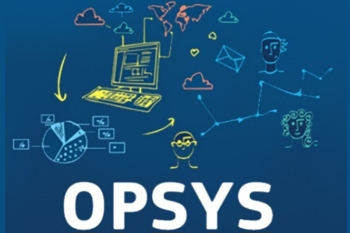
Migration of LogFrame for Result Reporting MFF 2014-2020
- 2018 – 2019
- 500.000 € – 1 Million €
- EU
The overall objective of the project is to support DEVCO, DG NEAR and FPI in migrating data over period 2014-2020 (MIPs indicators, Logframes across projects and programmes).
The project team consists of non-key experts and serves the purposes of this contract set as follows:
Purpose:
- Establish the strategy of migration across DEVCO, DG NEAR and FPI;
- Establish lists of indicators and logframes to be migrated and collect logframes;
- Implement the migration.
A) as a first step into an excel template which corresponds to the needs of OPSYS and the business rules which have been developed
B) as a second step into OPSYS from excel and through a dedicated IT application which will be developed by DIGIT
- Schlagwörter:
- PCM / Logframe, Projektdurchführung / technische Hilfe

Final evaluation of 2014/355-412 "Gender-sensitive Transitional Justice"
- 2018 – 2019
- unter 500.000 €
- Global
The overall objective of this assignment is to conduct a final evaluation of 2014/355-412 Gender-sensitive Transitional Justice.
The final evaluation will provide the European Commission, the implementing partners, and other relevant stakeholders with:
- an independent assessment of the overall intervention, paying particularly attention to the design of the tool, the set-up of the agreement, and results achieved against its objectives; and
- key lessons and recommendations in order to improve current and future actions financed under the IcSP in this sector of intervention.
The specific objectives of this final evaluation are:
- to assess the performance of the project, including type of intervention, design and execution of assignment as well as its results;
- to assess if and to what extent the project has contributed to strengthen the capacities of the implementing partners to engage in transitional justice at international, regional or local levels;
- to assess the relevance of the project in this context and sector of intervention, and in comparison to other transitional justice related initiatives;
- to make an assessment of the project’s visibility, information and communication;
- to identify and document good practices and key lessons learned on mainstreaming gender- sensitivity into transitional justice processes;
- to produce a set of recommendations that will assist the EU in designing and implementing future actions in the area of transitional justice, in applying gender-sensitive approaches to a specific thematic area, and in managing multi-country projects.
- to assess the extent to which the project has contributed to strengthen EU-UN relations in the field of transitional justice
- Partner:
- Particip (federführend), Cardno UK, Cideal
- Schlagwörter:
- Justiz / Rechtsstaatlichkeit, Menschenrechte
Video production and Animation for DEVCO online Communications
- 2018 – 2019
- unter 500.000 €
- Belgium, Jordan, Madagascar, Tanzania
The objective of this contract was to provide DEVCO.C.7 with professional video and animation expertise, including production and editing.
DEVCO.C.7 wanted to make sure that EU citizens and stakeholders are informed about the EIP and its implementation, as well as the results in the context of EU international cooperation and development and neighbourhood policies. In order to do so, it needed to reflect achievements in the formats that appeal to audiences today on online channels. More and more, these include short videos, animated data visualisations and animations.
Therefore, the specific objectives of this contract were as follows:
- Regular development of short videos to feed social media channels and other online channels with the latest news about the work of the EU External Investment Plan (EIP) and its achievements in the field, mostly in English but also occasionally in other languages
- Less frequently, production of animated data visualisations and short animations to better explain to its audiences’ issues which are easier to illustrate with video or photo material. All outputs should apply a consistent visual identity in line with Commission’s Visual Identity Guidelines.
- Schlagwörter:
- Kommunikation und Medien

Civil Society and Foundations Communication and visibility programme 2018-2020
- 2018 – 2018
- unter 500.000 €
- Global
DEVCO’s Civil Society and Foundations unit is also tasked with contributing to strengthen communication, information sharing and coordination (within DEVCO and with European External Action Service, EU Delegations in partner countries and, where appropriate, with line DGs, EU Member States and the Council) and improving visibility and understanding of the EU development cooperation on sector related issues.
Therefore, the overall objective of this assignment was to design an action plan to support and assist the implementation of the communication strategy elaborated by DEVCO Civil Society and Foundations unit.
The specific objectives were to raise awareness, promote and increase knowledge and visibility of the Civil Society and Foundations' policy and initiatives with, amongst others, its Framework Partnership Agreement signatories, EU institutions, development actors and the general audience in the EU and partner countries through the design and production of multimedia, visibility and other materials as required.
- Partner:
- Particip (federführend), ESN
- Schlagwörter:
- Kommunikation und Medien, Zivilgesellschaft

Provision of expertise on Gender-sensitivity in the IcSP (Instrument contributing to Stability and Peace) context – the 'Gender Facility II'
- 2017 – 2018
- unter 500.000 €
- Global
The objective of this Gender Facility II was to enhance IcSP projects effectiveness by strengthening IcSP staff capacities to take up and apply of gender-sensitive approaches in project design and implementation.
The project provided IcSP staff at Headquarters and EU Delegations/Regional Teams with training, guidance notes and technical assistance on practical ways to apply gender sensitivity at project design and implementation.
- Partner:
- Particip (federführend), Cideal, Femconsult
- Schlagwörter:
- Aus- und Fortbildung
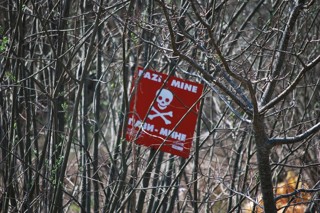
Final evaluation of the IfS/lcSP support under Article 3 to Mine Action in beneficiary countries (2007-2017)
- 2018 – 2018
- unter 500.000 €
- Global
The main objectives of this evaluation were to provide the relevant services of the European Union, the interested stakeholders and the wider public with:
- an overall independent assessment of the past performance of the IfS/IcSP support to mine;
action related projects and programmes;
- key lessons and recommendations in order to improve current (if relevant) and future actions;
- recommendations for the future within the frame of the EU guidelines on Mine Action that are currently subject to review.
In particular, this evaluation served the European Commission, the European External Action Service, and other relevant stakeholders with:
- an independent assessment of the overall IfS/IcSP support to mine action (2007-2017), paying particularly attention to the results achieved against its objectives;
- key lessons and recommendations to FPI.2 in order to improve current and future support for mine action related interventions financed under the IcSP;
- recommendations to the European Commission on the best way to approach and improve its support to mine action overall.
The main users of this evaluation will be the European Commission and the European External Action Service.
- Schlagwörter:
- Humanitäre Hilfe

Annual Report 2017: editing, drafting, layout, translation, printing, infographics factsheet, PowerPoint presentation
- 2017 – 2018
- unter 500.000 €
- Belgium
The "Annual Report on the implementation of the European Union's instruments for financing external actions" is first and foremost a legal obligation for the European Commission to report to the European Council and to the European Parliament on development and external assistance and their implementation.
The global objective for this assignment was to produce the "Annual Report 2017 on the implementation of the European Union's instruments for financing external actions in 2016” as well as its accompanying Staff Working Document.
The assignment included the editing of the Staff Working Document, the drafting, layout and design of the Annual Report, as well as the production of an animated presentation of the Report's results. The Report was translated into all official EU languages.
- Schlagwörter:
- Kommunikation und Medien
Change Management for Business Transformation Programme
- 2016 – 2018
- 500.000 € – 1 Million €
- Belgium
DG DEVCO has launched a large-scale Business Transformation Programme, currently called the ‘OpSys programme’ with the strategic objectives of increasing productivity, improving quality, simplifying and harmonising processes and increasing transparency of results. The OpSys programme encompasses 6 projects to gradually upgrade operational processes and the tools available to staff from DGs DEVCO and NEARand the Service for Foreign Policy Instruments (FPI). From end users to top managers, the upgraded processes and tools will allow staff to efficiently manage their portfolio of projects/programmes throughout the cycle of operations. OpSys will enable the staff to easily access information on projects/programmes, prepare, validate and monitor them, tender and contract relevant assistance and manage results following a ‘no re-encoding’ principle. The system will also be open to external partners and provide essential data for reporting and communication tools allowing greater transparency. Project 1 (of 6) is already being implemented. It focuses on Operational Entities and Results Management and is designed to achieve 6 key outputs which represent a major change in the working methods of the concerned DGs and FPI. This change began a long time ago and includes many efforts to introduce result based management, some of which we are well aware of (e.g. results reporting within the EU Results Framework, considerable effort to improve results indicators and generally the management of programmes and projects using these indicators). In order to take place smoothly, and in a sustainable manner, this change must be managed which means that all the stakeholders must “buy into” the process, and be trained in its implementation. This change management project, accompanying Project 1, will consist of appropriate communication and training around the approach to results management focused on the Operational Managers
- Schlagwörter:
- Kommunikation und Medien, Regierungsführung

Elaboration of a Strategy Proposal for Strengthening Partnership for capacity development in the ACP water and sanitation sector
- 2017 – 2017
- unter 500.000 €
- Belgium
The aim of the project was to contribute to improving water governance and management of water resources and to the sustainable development and maintenance of water infrastructure in ACP countries, through strengthening and promoting Water Operators Partnership.
The principal purposes of this contract were:
- to present the lessons learned from the projects of the 2nd CfP of the Water facility;
- to review the existing initiative related to Water Partnership;
- to present an inventory of Professional Association of European Water Operator, and their willingness to engage in Water Partnership;
- to disseminate the interlink between the result of the analysis above and the evaluation of the Water Facility, focusing on the water operators component (organisation of an event in Brussels).
- to elaborate a proposal for a strategy to strengthen Water Operator Partnership, in light of the lessons learned from the second CfP of the 10th EDF Water Facility and the existing initiatives.
- Partner:
- Particip (federführend), PEMconsult a/s
- Schlagwörter:
- Infrastruktur, Institutionelle Entwicklung, Umwelt

TA to OCTA for its Institutional Strengthening
- 2017 – 2017
- unter 500.000 €
- Belgium
Assistance to the Executive Committee of OCTA in the implementation of its mandate from the 14th OCTA Ministerial Conference to "examine options for further strengthening the OCTA Secretariat" and to "review the Articles of Association in view of presenting recommendations to the 15th Ministerial Conference" in February 2017
The specific results achieved were:
Result 1: Assistance in ensuring that OCTA fulfills its legal, contractual, fiscal, accounting and HR obligations
Result 2: Assistance to OCTA in reviewing the Articles of Association in the context of its institutional strengthening and presenting recommendations to the Ministerial Conference
Result 3: Assistance OCTA in the process of applying for financial support by the European Union in the frame of the 11th EDF.
- Schlagwörter:
- Institutionelle Entwicklung, Projektdurchführung / technische Hilfe, Regierungsführung

Evaluation of the project proposals submitted under the SWITCH-Asia II Programme Restricted Call for Proposals 2017
- 2017 – 2017
- unter 500.000 €
- Belgium
The global objective of this assignment was to support the Commission to identify the project proposals that contribute best to achieving the objectives of the grant component of the SWITCH-Asia II Programme.
The specific objective was to provide services to the European Commission linked to the administrative (data processing, ranking, and statistical follow-up) and the qualitative parts (technical and financial assessment of Concept Notes and Full Applications) of the evaluation procedure.
- Partner:
- Particip (federführend), AETS, DAI Global UK
- Schlagwörter:
- Umwelt

Support to visibility and communication events presenting the results and impact of EU Development Cooperation in Latin America and Caribbean
- 2015 – 2017
- unter 500.000 €
- Belgium
Implementation of up to three visibility and communication events about the EU's development cooperation in the LAC region during the European Year of Development (EYD) 2015.
The main objectiv was to raise awareness among the European and Latin American and Caribbean citizens, key players and stakeholders about the EU's development cooperation in the LAC region- to directly engage them into the global development debate. The assignment aimed at demonstrating the impact of the programmes and raise awareness of the results od EU cooperation in favour of the LAC region.
- Partner:
- Particip (federführend), GOPA COM.
- Schlagwörter:
- Kommunikation und Medien

Final evaluation of the IfS/IcSP support under Article 3 and 4 to Security Sector Reform in beneficiary countries (2007-2016)
- 2017 – 2017
- unter 500.000 €
- Belgium, Guinea (Conakry)
The purpose of this evaluation was to provide an assessment and evidence on the scope and performance of the implemented and on-going EU support for Security Sector Reform (SSR) provided by the IfS and the IcSP from 2007 to 2016. The project aimed at providing recommendations for the improvement of the design and the implementation of EU support to SSR in line with the principles laid down in the joint communication JOIN (2016)31 final - "Elements for an EU-wide strategic framework to support security sector reform" and the Global Strategy for the European Union's Foreign and Security Policy.
The evaluation has provided the European Commission, the European External Action Service, and other relevant stakeholders with:
- an independent assessment of the overall IfS/IcSP support to SSR (2007-2016), paying particularly attention to the results achieved against its objectives;
- key lessons and recommendations to FPI.2 in order to improve current and future support for SSR financed under the IcSP;
- recommendations to the European Commission on the best way to approach and improve its support to SSR both in terms of the use of policy dialogue and financial assistance following the adoption of the new EU SSR policy framework.
The results of the evaluation will be used to:
- demonstrate whether already on-going/planned IcSP interventions in the area of SSR have taken on board the past lessons learned;
- feed into the future overall evaluation or impact assessment of the IcSP.
This evaluation aimed to:
a) assess the performance (relevance, efficiency, effectiveness, coherence, impact, sustainability and EU added value) of the IfS/IcSP support to SSR between 2007-
2016;
b) assess the coherence, complementarity and coordination of EU interventions financed from IfS/IcSP with other actions financed from other EU instruments, CFSP/CSDP actions and actions carried out by Member States, regional and international donors (state and/or international organisations) for SSR in the beneficiary countries;
c) identify and document key lessons learned;
d) provide conclusions and recommendations both at policy and financial instrument level on how to further improve the support provided to SSR under the IcSP, including cross-fertilisation with other instruments.
- Schlagwörter:
- Monitoring und Evaluierung

Post-conflict and post-disaster needs assessment (PCNA/PDNA): development of assessment capacity and tools - Phase I + II
- 2013 – 2017
- 2 – 5 Millionen €
- Global
Relevant background
Since early 2007, the Commission, the UN-family and the World Bank have worked together in setting up a platform for cooperation on post-crisis needs assessments for natural disaster (Post-Disaster Needs Assessment, PDNA) and conflict (Recovery and Peacebuilding Assessment (RPBA), previously named Post-Conflict Needs Assessment, PCNA) scenarios. This trilateral cooperation was framed and formalised through the signature of a Joint Declaration on “Post-Crisis Assessments and Recovery Planning” in September 2008. The EU/UN/WB platform covers the whole PDNA/RPBA(PCNA) process, including strategic coordination, development of joint methodologies for post-crisis assessments, joint deployment of assessment teams, joint training and joint recovery planning and monitoring.
In line with the 2008 Declaration on Joint Post-crisis Assessments and Recovery Planning, the overall objective of the project is to assist and develop third countries’ in-country capacity to gradually assume a more prominent role in Post-Disaster Needs Assessments and Post-Conflict Needs Assessments (now changed to Recovery and Peacebuilding Assessments, RPBA).
The purpose of this project was:
- to support further development of joint PDNA/RPBA(formerly PCNA) methodologies, tools, training programmes, etc.;
- to support joint PDNA/RPBA(formerly PCNA) missions in-country/in region (in coordinating with EU Heads of Delegations and with the European External Actions Service (EEAS) and European Commission). While such support could cover any relevant technical field (long-term and short-term expertise), it is foreseen that a particular emphasis is put on expertise in mission planning and development of final reports/recovery frameworks.
The two phases of the project contributed to a variety of outputs and results, including:
- Phase 1 (01/01/2013 – 31/07/2015): revision of the PDNA methodology and development of the joint EU/UN/WB PDNA Guide, development of the Disaster Recovery Framework (DRF) Guide, review of the PCNA methodology, development of training and capacity building materials, delivery of information/capacity building sessions, joint PDNA/PCNA training courses for national authorities and regional/international organisations, support to over 15 joint EU/UN/WB PDNA/PCNA missions;
- Phase 2 (10/07/2015 – 09/07/2017): revision of the PCNA methodology and development of the RPBA methodology, development of training and capacity building materials, delivery of information/capacity building sessions, joint PDNA/RPBA training courses for national authorities and regional/international organisations, support to over 10 joint EU/UN/WB PDNA/RPBA missions.
- Partner:
- Particip (federführend), Dara, ECDPM, GOPA, Punto.sud
- Schlagwörter:
- Aus- und Fortbildung, Humanitäre Hilfe, Institutionelle Entwicklung, Regierungsführung

Annual Report 2016: editing, drafting, layout, translation, printing, infographics factsheet, PowerPoint presentation
- 2016 – 2017
- unter 500.000 €
- Belgium
The Annual Report is a legal obligation for the European Commission to report to the European Council and the European Parliament on development and external assistance and their implementation. Furthermore, it also serves as a public information tool.
Global objective:
- Production of the “Annual Report 2016 on the implementation of the
European Union's instruments for financing external actions in 2015
- Production of the accompanying Staff Working Document
- Production of a Factsheet with infographics
- Partner:
- Particip (federführend), Global Concept, ICF Next
- Schlagwörter:
- Kommunikation und Medien