Our projects
Explore Particip’s project experience across countries, sectors and areas of expertise.
Our references provide an overview of completed and ongoing assignments, including their objectives, geographic scope, duration and contract value.
Showing 121–130 of 515 references

Strategic Environmental Assessment for the Forest Sector
- 2025 – 2026
- under € 500,000
- Sierra Leone
The objective of this SEA is to inform the Government of Sierra Leone as well as the EU and other donors on the potential significant environmental, climate and social challenges and opportunities related to the Forestry and Wildlife Sector Strategic Planning Framework (SPF) 2024-2030 and the potential Forest Partnership with the EU.
This includes the identification of potential significant impacts on the environment and climate that may result from the implementation of the Forestry and Wildlife Sector Strategic Planning Framework (SPF) 2024-2030 and the potential Forest Partnership; the identification of measures to avoid or minimize adverse impacts and to maximize positive impacts.
The SEA will also identify the challenges that environmental degradation and climate change pose to the sustainability and feasibility of the Forestry and Wildlife Sector Strategic Planning Framework (SPF) 2024-2030 and the potential Forest Partnership and identify measures to be integrated in those actions to take them into account and enhance their resilience.
The SEA will thus provide elements that will contribute to enhance the state of the environment and health, build climate resilience of the forest sector and the population, contribute to disaster risk reduction, and promote low carbon development and the transition to a green economy.
- Partners:
- Particip (Lead), Expertise Advisors (formerly: ETI Consulting)
- Keywords:
- Environment, Forestry
Mid-term evaluation of project 2024/458-756 'Support to the Global Campus of Human Rights 2024 -2026'
- 2025 – 2026
- under € 500,000
- Global
The EU intervention “Support to the Global Campus of Human Rights (2024–2026)” is a EUR 10.6 million global human-rights education action supporting the Global Campus of Human Rights and its university network delivering postgraduate diplomas and Master’s programmes, including scholarship support to students and human rights defenders from third countries. The project runs from 01/08/2024 to 15/06/2026. It is implemented worldwide through the Global Campus headquarters and eight regional hubs in Venice, Pretoria, Yerevan, Sarajevo/Bologna, Buenos Aires, Beirut, Bangkok and Bishkek. The project’s general objective is to foster new generations of human rights defenders able to contribute to a world where human rights and democracy are realised, and it is structured around three specific objectives: Education, Employability, and Research/Networking/Outreach.
The evaluation is a mid-term evaluation covering the intervention in its entirety (including eligible costs retroactive from 01/08/2024) and is framed as an opportunity to reflect on progress, strengthen performance, and improve strategic planning, with an increasing emphasis on achieving best value for money. The evaluation’s global objective is to provide an independent assessment of performance (explicitly including a focus on efficiency and best use of resources) and to produce lessons learned and recommendations to improve current and future interventions.
- Keywords:
- Human rights, Monitoring & Evaluation
Evaluation of the McGovern-Dole Food for Education Project in Sindh, Pakistan (2025-2030)
- 2026 – 2026
- under € 500,000
- Pakistan
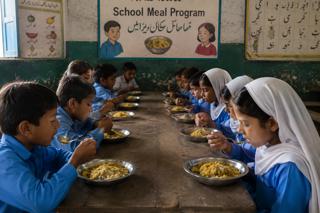
WFP Pakistan is implementing a school meals project in two districts (Malir and Keamari) of the Karachi Division in Sindh Province from 2026 to 2030. The project is funded with USD 40 million from the United States Department of Agriculture’s (USDA) McGovernDole International Food for Education and Child Nutrition Program. In addition to school meal provision, the project includes complementary and system-strengthening support in four areas: (i) literacy programming, (ii) school health, nutrition and WASH, (iii) meal delivery infrastructure, and (iv) government capacity strengthening. It expects to reach approximately 100,000 (pre-)primary students in more than 600 schools.
WFP Pakistan has commissioned a baseline study (2026), midterm evaluation (2028), and endline evaluation (2030) of the project. The midterm and endline evaluations would be implemented by the same contractor consortium based on satisfactory performance in the baseline. The evaluation series will cover the period from December 2025 to December 2030. Covering the evaluation criteria of relevance, coherence, effectiveness, efficiency, impact and sustainability, it aims to assess the performance of the project and related activities. It will serve both accountability and learning to measure and understand the effectiveness of the project in improving enrolment, attendance, literacy, health and nutrition of primary school students in government schools. It is also expected to enable WFP to strengthen implementation, document lessons learned and develop key operational procedures and guidelines along with the Sindh Education and Literacy Department to expand school meals across the province.
The evaluation will adopt an integrated mixed methods design that combines a quasi-experimental (difference-in differences) impact framework with theory-based qualitative enquiry. The quantitative component will estimate changes in outcomes and performance indicators over time and, at endline, it will identify program effects using a comparison group. The proposed sample comprises a survey with 300 schools at baseline and endline, with 12 students per school (survey of 3,600 households and students per wave). The qualitative component will contribute to the assessment of all six evaluation criteria (through document review, key informant interviews at all schools, and focus group discussions in schools).
- Partners:
- C4ED (Lead), Particip
Final evaluation of the European Union Emergency Trust Fund for stability and addressing root causes of irregular migration and displaced persons in Africa
- 2024 – 2026
- € 500,000 – 1 million
- Africa
The general purpose of this assignment is to provide the relevant EU services, EU and non-EU donors of the trust fund, African partner countries and the wider public with an independent final evaluation of the EUTF for Africa. The EUTF for Africa is financing interventions in several countries in Africa, crossed by the major migration routes, including countries in the Sahel and Lake Chad regions, the Horn of Africa and North Africa. The final evaluation covers the period since the EUTF for Africa inception in November 2015 until December 2024. Thematically, the evauation focuses on the EUTF's objective of addressing the root causes of irregulat migration and forced displacement.
The specific objectives of the evaluation are:
- to independently assess/examine/analyse the EUTF for Africa and its interventions;
- to assess overall whether and how the EUTF for Africa as an instrument of EU external assistance (and the financed interventions) contributed to address the root causes of irregular migration and forced displacement, taking into account the specific characteristics of the EUTF for Africa, compared to other funding instruments;
- to identify key lessons and to provide recommendations to inform future EU strategic approaches and actions in addressing irregular migration and forced displacement, thereby filling the evaluation and knowledge gaps, that this evaluation aims to address;
- finally, the evaluation would assess whether EUTF for Africa interventions have effectively addressed cross-cutting issues, such as human rights, gender and youth in the context of irregular migration and forced displacement.
- Partners:
- Particip (Lead), ECDPM
- Keywords:
- Food and nutrition, Governance, Justice/Rule of Law, Macro-economic/ National policy, Monitoring & Evaluation
Final evaluation of the Gulf of Guinea Inter-regional Network Extended (GoGIN II)
- 2025 – 2026
- under € 500,000
- Nigeria
The global objective of this assignment was to provide the relevant services of the European Union, interested stakeholders and the wider public with an independent assessment of the performance of the Gulf of Guinea Inter-regional Network Extended (GoGIN II), paying particular attention to the different levels of results achieved against expected objectives and to the factors explaining those results. The evaluation also aimed to identify key lessons learned, conclusions and recommendations to inform decision-making and improve current and future interventions.
The evaluation covered GoGIN II in its entirety in the Gulf of Guinea. It focused in particular on the YARIS maritime information-sharing and coordination platform, assessing its operational status and level of use, its functionality and financial sustainability after the handover, the performance of the implementing partner in engaging regional organisations and other partners, and the intervention’s exit strategy.
The evaluation assessed the intervention through the six OECD-DAC criteria (relevance, coherence, effectiveness, efficiency, impact and sustainability) and the EU-specific criterion of EU added value. Its main users included EU services and Delegations, Gulf of Guinea Member States, Expertise France, regional organisations and the Yaoundé Architecture, and implementing partners of similar interventions.
- Partners:
- Particip (Lead)
- Keywords:
- Governance, Monitoring & Evaluation
EU Mobility in VET: Empowering providers through international exchange programmes
- 2025 – 2026
- under € 500,000
- Ukraine
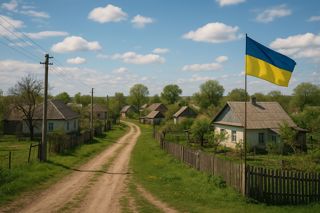
Support will be provided to Ukrainian Vocational Education and Training (VET) providers to strengthen their capacity to participate in Erasmus+ programmes. All services are to be delivered remotely between June 2025 and May 2026, structured under two main work packages.
Work Package 1: International Engagement through Erasmus+
A total of 40 VET providers will be engaged, with 25 selected for in-depth support. A joint planning workshop will be conducted with the National Erasmus+ Office–Ukraine and GIZ to define the training programme. Initial online sessions will be held to introduce Erasmus+ opportunities, followed by targeted training for the selected providers on project development and application processes. Partnerships with institutions in EU Programme countries will be facilitated, and individual support will be provided throughout the proposal preparation and submission phases. At least 18 Erasmus+ project applications are expected. All sessions will be fully organized and documented, including logistical coordination and reporting.
Work Package 2: Handbook Development
A bilingual handbook (Ukrainian and English) will be created to guide VET providers in drafting Erasmus+ project proposals. The handbook will include step-by-step instructions, visual aids, and digital navigation features, ensuring accessibility across devices. Its content will be tested during the application phase, revised accordingly, and submitted for approval by GIZ and the National Erasmus+ Office–Ukraine.
Consultancy services to support sustainable management of natural resources and economic development through local community engagement in Ukraine
- 2025 – 2026
- under € 500,000
- Ukraine
The overall objective of this consultancy is to deliver analytical work, technical assistance, and capacity building that promote community-based sustainable management of natural resources (NRM) and support local economic development in Ukraine, in line with the goals of the EU4Environment Programme. The service is designed to assist the World Bank and Ukrainian national and local authorities in implementing Activity 4.2: “Promoting sustainable NRM, economic development, and participation at the local community level.”
Its specific objectives are the following:
- To assess the current level of community engagement in NRM and identify gaps, needs, and opportunities for improved participation, particularly in forest ecosystem management;
- To develop tailored knowledge products and recommendations that support inclusive NRM approaches and green economic opportunities at the local level;
- To document and disseminate best practices and lessons learned to support replication in other communities and inform national policy processes.
The consultancy places particular emphasis on:
i) community-driven forest and land management;
ii) inclusive development strategies aligned with environmental and EU policy objectives;
iii) post-war reconstruction and capacity building of local governments.
- Partners:
- Particip (Lead)
Strategic Communication Support Programme (SCSP)
- 2023 – 2026
- € 2 – 5 million
- Malawi
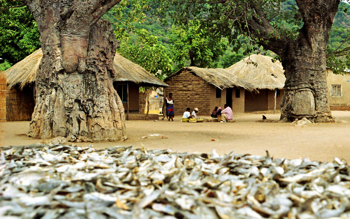
To raise the profile, awareness and understanding of the EU action and its rationale within the framework of the EU MIP for Malawi and of the shared values and principles that lie at the basis of the MIP.
This will entail:
- ensuring a positive perception of the EU and maintaining support to and understanding of the EU and its partnership and international values among target audiences
- informing on the activities of the EU in Malawi in line with the MIP and the Global Gateway strategy
- establishing and/or strengthening relationships with key identified target audiences for strategic communication and, where relevant, public diplomacy, including the media, through tailored actions.
- Partners:
- Particip (Lead), M&C Saatchi
- Keywords:
- Communication & media
Final Evaluation – Evaluation of Budget Support Programme “Support to Justice Sector Reforms in Armenia, Phase I” ENI-ENEST/2020/042019
- 2026 – 2026
- under € 500,000
- Armenia
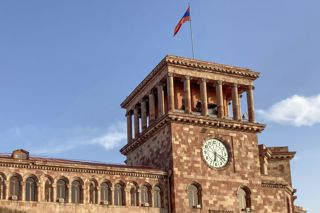
The Final Evaluation of the Budget Support Programme “Support to Justice Sector Reforms in Armenia, Phase I” provides an independent assessment of the programme’s effectiveness, efficiency, and impact in supporting Armenia’s policies on good governance, rule of law, justice, and anti-corruption. It examines the extent to which EU budget support has helped strengthen institutional capacities, improve policy frameworks, and enhance public budget spending in support of the Government of Armenia’s reform agenda. The evaluation also considers how this support has enabled progress on Armenia’s commitments under the Comprehensive and Enhanced Partnership Agreement (CEPA).It reviews the sustainability of supported policies and analyses the complementarity and synergies between EU budget support, other aid modalities, and interventions by development partners. A further objective is to identify constraints in government policies, institutional structures, and administrative arrangements that may reduce the effectiveness of budget support in promoting public spending reforms and targeted policy actions. The findings are intended to inform future EU cooperation in Armenia and strengthen the design and delivery of budget support operations in the justice sector.The general objectives of this evaluation are:
- to assess the contribution of EU budget support and complementary assistance to capacity building;
- to assess policy dialogue, coordination mechanisms, and policy monitoring processes;
- to answer the evaluation questions.
The Evaluation Manager is responsible for the management and the coordination of all activities, which mainly include:
- methodological steering of the evaluation
- Drafting the final evaluation report
- Keywords:
- Justice/Rule of Law, Monitoring & Evaluation
Ex-post evaluation for South Sudan Women Empowerment Programme
- 2025 – 2026
- under € 500,000
- South Sudan
The purpose of this evaluation was to provide a systematic and objective assessment of the South Sudan Women Empowerment Programme. The programme's overall objective was to advance the empowerment of women and girls by supporting the effective implementation and enforcement of women’s rights legislation through capacity building of duty bearers, and by promoting women’s economic, political and social participation at the local level, with particular attention to those in the most vulnerable situations.
The evaluation's global objective is twofold: i) to deliver an independent assessment of performance to the European Union, stakeholders and the wider public; and ii) to generate key lessons, conclusions and recommendations to guide decision makers in improving current and future interventions.
The specific objectives were:
- to inform the next phase of programming on gender equality and women's empowerment,
- to draw lessons that can be replicated in other ongoing and future EU interventions across thematic areas such as economic development, human development and governance, thereby strengthening gender mainstreaming,
- to ensure accountability for the use of EU resources in relation to the results achieved in promoting gender equality and women's empowerment.
- Partners:
- UPC (Lead)
- Keywords:
- Civil society, Human rights, Justice/Rule of Law, Monitoring & Evaluation, Rural and urban development