Malawi
19 references
Provision of Technical Assistance to the RE2CLID Programme
- 2026 – 2029
- € 2 – 5 million
- Malawi
The specific objectives (SOs - Outcomes) of this contract are as follows:
- Strengthen Gender-responsive disaster forecasts and management systems to better prevent, minimize and resolve displacement at the local, national, and regional levels;
- Improve Natural resources governance and management benefitting DACs and communities at risk of future displacement;
- Reinforce Resilience and self-reliance of DACs in environmentally fragile areas.
- Partners:
- Expertise Advisors (formerly: ETI Consulting) (Lead), Particip
- Keywords:
- Environment

Technical Assistance to support the Malawi Youth Sounding Board (2025-2027)
- 2026 – 2028
- under € 500,000
- Malawi
The project “Technical Assistance to support the Malawi Youth Sounding Board (2025–2027)” contributes to the European Union’s commitment to promoting inclusive governance, youth participation, and responsive policymaking in Malawi. It is implemented in the context of a youthful population facing persistent challenges related to unemployment, socio-economic exclusion, and limited participation in decision-making processes, while at the same time representing a key asset for the country’s long-term development.
Overall Objective:
The overall objective of the project is to empower Malawian youth by actively involving them in the shaping, monitoring, and dissemination of European Union initiatives, ensuring that EU actions in Malawi are inclusive, relevant, and aligned with the aspirations and needs of young people, particularly those who are most vulnerable. By strengthening youth participation, the project supports the EU Youth Strategy and contributes to democratic governance, social inclusion, and sustainable development in Malawi.
Specific Objective
The specific objective of the project is to provide comprehensive technical, administrative, and communication support to the Malawi Youth Sounding Board (MW-YSB), enabling it to efficiently and effectively implement its mandate as an advisory and consultative body to the EU Delegation in Malawi.
Project Description
To achieve these objectives, the Technical Assistance supports the day-to-day functioning and strategic positioning of the Malawi Youth Sounding Board. It facilitates regular and structured dialogue between the EU Delegation and Youth Sounding Board members, ensuring that youth perspectives are systematically integrated into EU programmes, policies, and initiatives. The project also supports the organisation and coordination of Youth Sounding Board participation in EU events, programme activities, and exchanges with national, regional, and international stakeholders.
A strong emphasis is placed on capacity building and skills development. The project designs and delivers demand-driven training activities tailored to the needs of Youth Sounding Board members, equipping them with the knowledge and competencies required to engage meaningfully in policy dialogue, advocacy, monitoring, and communication. In parallel, the project strengthens linkages between the Youth Sounding Board and existing youth networks, civil society organisations, and institutions across Malawi, thereby reinforcing outreach, inclusiveness, and representativeness.
The Technical Assistance further develops monitoring and feedback mechanisms that allow young people to collect, analyse, and synthesise youth perspectives on EU-supported initiatives. These insights are consolidated into regular reports that inform the EU Delegation’s programming and implementation processes. In addition, the project supports the development and implementation of a communication and visibility strategy aligned with the EU Delegation’s Strategic Communication framework, enhancing the visibility of youth engagement and EU actions among Malawian youth.
Finally, the project contributes to the sustainability of youth engagement by supporting the establishment and operationalisation of a Youth Sounding Board Alumni Network, ensuring continuity, institutional memory, and long-term impact beyond individual mandates. Through these combined actions, the project strengthens the role of Malawian youth as active partners in EU cooperation and national development processes.
- Keywords:
- Civil society, Governance

Strengthening the national regional linkages in SADC (SNRL) - Consultancies on regional integration based on SADC policies, facilitation of events, communication and visibility
- 2023 – 2027
- € 2 – 5 million
- SADC region
The overall objective of the project "Strengthening the national regional linkages in SADC (SNRL)" is to support the Southern African Development Community (SADC) in its efforts to promote regional integration in the member states (MS) for the benefit of the population in the SADC region.
The project is aligned with SADC's regional strategy (the Regional Indicative Strategic Development Plan 2020-30, RISDP) and supports its implementation.
In particular, it supports SADC and its MS on implementing Chapter 5 of the RISDP focusing on the strategic management objectives of the RISDP. By strengthening SADC as a regional organization and by supporting the implementation of the regional agenda RISDP, the SNRL project aims to facilitate the regional integration in the SADC region.
The objective of this contract is the provision of high-quality short-term expert (STE) advice in various topics relevant for enhancing the capacities of national stakeholders to vigorously and effectively pursue in their respective countries the regional integration protocols, policies and strategies of SADC.
The individual consultancy assignments are developed between GIZ and its partners and are based on a joint process and methodology aimed at identifying the needs in the SADC region and within individual member states.
The assignments focus on the scaling-up of best practices and should aim to share experiences and knowledge throughout the region (for example by aiming to standardize products developed as part of the assignment).
The following outputs are expected as a result of project implementation:
- Output 1: The institutional framework for the implementation of regional integration in the SADC region has improved in the member states;
- Output 2: Monitoring and evaluation systems for the implementation of regional integration are in place in selected member states;
- Output 3: The strategic communication capacities of SADC and member states for high profile communication around SADC activities and operations are strengthened.
Implemented projects include the following (project number and title):
- P1/2023 Consultancy to Support the SADC Secretariat to Develop and Pilot the Protocol Compliance Mechanism and Monitoring of the Trade Protocol;
- P2/2023 Perception Survey on the status of SADC regional integration in the Member States;
- P3/2023 Facilitator/Presenter and Group Work Moderators for Two Regional Workshops Supported by SNRL;
- P4/2023 Development of Model Law for the Establishment of SADC National Committees in Member States;
- P5/2023 Consultancy to develop communication products for publication purposes from the deliberations of SADC Member States at the Regional Learning and Exchange Symposium in Lesotho;
- P6/2023 Consultancy to develop presentation on the Status of SADC National Structures and their Financing at the Regional Learning and Exchange Symposium in Lesotho;
- P7/2023 Facilitation Operational Planning SNRL;
- P8/2023 Consultancy Services to Support the Publicity Products of The SADC Summit Public Lecture- Angola;
- P9/2023 Consultancy Services to Provide Rapporteuring of the Proceedings of The SADC Summit Public Lecture- Angola;
- P10/2023 Development of Peer Learning & Review Mechanism for national SADC coordination;
- P11/2023 Shadow monitoring on the extent of implementation of the SADC RAIP 2017 – 2022;
- P12/2023 Editing & Design of Eswatini’s New Industrial Policy;
- P13/2023 Capacity Building on SADC Regional Integration and Project Management for SADC National Contact Points Junior and Middle Staff;
- P14/2023 Updating and Finalising the Status of the SADC National Committees Desk Review Report;
- P15/2023 Consultancy Services to Support the Documentation of Proceedings at the SADC Integrated Regional Electronic Settlement System 10th Anniversary Celebrations;
- P16/2023 Consultancy Services to Support the Publicity Products of the SADC Integrated Regional Electronic Settlement Systems 10-year anniversary;
- P17/2023 Consultancy Services to Support the Rapporteuring of the SADC Integrated Regional Electronic Settlement Systems 10-year anniversary;
- P18/2023 Scoping Studies South Africa and Zimbabwe;
- P19/2023 Scoping Study Madagascar;
- P20/2023 SNRL II Operational Planning Workshop.
- P21 Team Retreat Facilitatior
- P22 Communication Guidelines
- P23 Lesotho National Policy on Regional Economic Integration
- P24 Scoping study and development of SA documentary
- P25 Production of SADC video podcasts
- P27 Development of a Resource Mobilisation Plan for the SNC of the Kingdom of Eswatini
- P28 Ops Manual, OP & Capacity Building Training on RI & PM - Eswatini
- P29 Communications Capacity Building in Botswana
- P30 SNRL II Team Retreat Refresher
- P31 CB& Strengthening Lesotho's SNCs - Project Management
- P33 Establishment of South Africa’s SADC National Committee
- P34 Graphic Design for Promotional Material - SADC Public Lecture in Zimbabwe
- P35 Rapportuering of the SADC Public Lecture Zimbabwe
- P36 Madagascar National Policy on SADC RI
- P37 Capacity Building & Strengthening SNC in Madagascar
- P38 CB & Training on SADC RI & PM for Zambia’s SNC staff
- P39 CB on Resource Mobilisation & Development of Resource Mobilisation Strategy in Zambia
- P40 Regional CB on Resource Mobilisation
- P41 Model Law on the Establishment of SNCs
- P42 Policy briefs on SADC-RTGS; role/significance of the SADC public lectures in promoting regional cooperation and integration in the SADC region.
- P43 Fact Sheets on SADC Protocols
- P44 Communications Strategy and Social Media Dissemination Plan for BGCIS in Botswana
- P46 RI Orientation & Induction for the SNC in Eswatini
- P47 SNRL II Operational Planning Workshop 2025
- P48 Rapporteur for Tanzania Event on SADC RAIP 2017-2022 Shadow Monitoring Report
- P49 Rapporteur for Malawi Event on SADC RAIP 2017-2022 Shadow Monitoring Report
- P50 Policy Brief, Factsheet & Press Release On he AML (Anti-Money Laundering) & CFT
- P51 Madagascar Resource Mobilisation Strategy and Action Plan
- P52 Piloting SNC Peer Learning and Review Mechanism (S-PLRM)
- P53 Establish Baseline Values on SADC Parliamentary Forum’s Operational Efficiency
- P54 Revise SADC Draft Communication, Awareness and Visibility Strategy
- P55 NSA Baseline Indicators
- P56 Interpretation Assignments
- P57 Facilitation of Consultation Workshop SNRL
- P58 Endline Perception Survey
- P60 Piloting M&E Framework for the SADC Protocol on Trade
- P61 SADC Parliamentary Forum M&E on Gender
- P62 Photography, Videography and Livestreaming _ Launch of SA's SNC
- P63 SADC PRU Comms Strategy Launch
- P64 Status of SNCs in the Member States
- P65 Training of Botswana SNC
- P69 Facilitation of SPLRM 1st Cycle
- P70 SPRLM Budget and Finance Plan
- P71 CfP Support
- P72 Facilitation of SNC Guidelines
- P73 SADC PF Publication and Dissemination
- P74 SADC PF Gender Assessment
- P75 SADC PF Mid-Term Evaluation
- P77 Review of Public Hearing
- P81 Communication Documentary Launch
- Partners:
- Particip (Lead), Africa Practice, DPC, Imani Development Group
- Keywords:
- Agriculture, Communication & media, Governance, Industry & private sector development, Institutional development, Monitoring & Evaluation, Trade
Strategic Communication Support Programme (SCSP)
- 2023 – 2026
- € 2 – 5 million
- Malawi
To raise the profile, awareness and understanding of the EU action and its rationale within the framework of the EU MIP for Malawi and of the shared values and principles that lie at the basis of the MIP.
This will entail:
- ensuring a positive perception of the EU and maintaining support to and understanding of the EU and its partnership and international values among target audiences
- informing on the activities of the EU in Malawi in line with the MIP and the Global Gateway strategy
- establishing and/or strengthening relationships with key identified target audiences for strategic communication and, where relevant, public diplomacy, including the media, through tailored actions.
- Partners:
- Particip (Lead), M&C Saatchi
- Keywords:
- Communication & media

Evaluation of the African Development Bank’s Regional Integration Strategy Paper for Southern Africa (2020-2026)
- 2025 – 2026
- under € 500,000
- Angola, Botswana, Eswatini, Lesotho, Madagascar, Malawi, Mauritius, Mozambique, Namibia, São Tomé & Príncipe, South Africa, Zambia, Zimbabwe
The evaluation focuses on the African Development Bank’s Regional Integration Strategy for Southern Africa (SA-RISP) 2020–2026, with coverage of the period 2020–2024. Its primary purpose is to assess how far the strategy has progressed towards achieving its intended results and to provide lessons and recommendations for the design of the next regional integration strategy. The evaluation will review both lending operations, sovereign and non-sovereign, and non-lending activities such as policy dialogue, analytical work, and technical assistance.
Key objectives include examining the relevance and design of the SA-RISP as a framework for advancing regional integration, its coherence with regional and continental frameworks such as SADC, COMESA, and the AfCFTA, and its effectiveness, efficiency, impact, and sustainability. The evaluation will also analyse factors that have enabled or constrained implementation, including operational, institutional, and policy challenges, as well as cross-cutting issues. Ultimately, it aims to draw out lessons learned and practical recommendations to strengthen AfDB’s future engagement in supporting regional integration in Southern Africa.
- Keywords:
- Industry & private sector development, Infrastructure, Monitoring & Evaluation, Trade
Consulting Services - Support to the Malawi Youth Sounding Board (2023 - 2025)
- 2023 – 2025
- under € 500,000
- Malawi
The global objective (Impact) to which this action contributed was to enhance youth engagement and youth inclusion in the programmes and policies of the European Union Delegation to Malawi.
The specific objective of this contract was to provide technical, administrative and communication support to the MW-YSB to efficiently and effectively implement its role and fulfil its mandate.
- Keywords:
- Civil society, Communication & media

Assessment and mapping of Community-Based Childcare centres (CBCC)
- 2024 – 2025
- under € 500,000
- Malawi
Children who do not receive adequate health, nutrition, early stimulation, learning opportunities, care and protection, all identified as elements of ‘nurturing care’, tend to have lowered cognitive, language and psychosocial outcomes as well as executive functioning. This usually translates to lowered academic achievement in primary school and, ultimately, dropping out of school. The Government of Malawi recognizes the importance of investing in the integrated Early Childhood Development (ECD) approach which is evident in key steps it has taken to update the National Early Childhood Development (ECD) Policy and framework and develop quality standards.
UNICEF is supporing the Ministry of Gender, Community Development and Social Welfare in strengthening systems for Early Childhood Development (ECD) through the following broad activities: i. Capacity building of CBCC caregivers through training and supervision; ii. Provision of ECD learning and stimulation materials; iii. Provision of CBCC playing materials and equipment; iv. Minor rehabilitation of CBCC infrastructure; v. Counselling of parents on positive parenting; vi. Transition of children from CBCC to early primary school.
Particip will carry out assessment and mapping community-based childcare centres in consultation with UNICEF, Ministry of Gender, Community Development and Social Welfare and respective district social welfare offices). At the conclusion of the assignment, the institution is expected to submit a detailed assessment and mapping report.
- Partners:
- Particip (Lead), Palm Consulting
- Keywords:
- Education, Monitoring & Evaluation
Provision of Technical Assistance to Improving Secondary Education in Malawi (ISEM)
- 2016 – 2024
- € 2 – 5 million
- Malawi
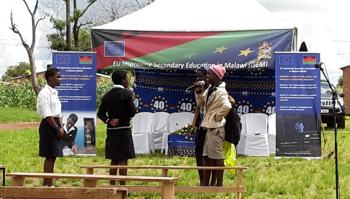
The overall objective is to contribute to the strengthening of Malawi's education sector and its capacity to satisfy the economy's need for educated youth through the expansion and improvement of equitable access to inclusive quality education.
The target groups are the students in the selected CDSSs (particularly girls and other vulnerable students), Science teachers and School Managers as primary beneficiaries. The programme will also target Education managers at various levels in the system, and some support will be provided to the MoEST education institutions such as the Malawi College for Distance Education (MCDE) and the Malawi Institute for Education (MIE).
Particip provides the Government of Malawi, and in particular the Ministry of Education, Science and Technology (MoEST), the Education Divisions, Districts and Secondary Schools, with technical assistance to deliver on its desired objectives of promoting equitable access to secondary education, improving the quality and relevance of secondary education, and strengthening of governance and management capacity of secondary education institutions.
Through technical and administrative support, Particip will deliver the following results:
Result 1: Improved teacher training and technical skills to deliver the new secondary school curriculum, thus contributing to quality education.
Result 2: Successful and effective implementation of programme activities in close collaboration with the MoEST. This will also include identification and provision of solutions to emerging challenges in the sector related to delivery of the programme.
Result 3: Strengthened capacity of education managers at various levels for effective governance and management of the secondary education sub-sector, also including the area of public finance management.
- Partners:
- Particip (Lead), WYG Turkey
- Keywords:
- Education, Institutional development, Management, Project implementation / Technical Assistance, Training

European Union Electoral Follow-up Mission (EU EFM) Malawi 2022
- 2022 – 2023
- under € 500,000
- Malawi
The overall objective of this assignment was to contribute to improving the electoral and democratic framework of Malawi during the inter-election period and raising awareness and understanding of the EU EOM recommendations and technical issues related to their implementation.
In general, an EFM supports the consolidation of democracy, institution-building and democratic elections in Malawi in the context of the implementation of the 2019 EU EOM recommendations.
The specific objectives of the Mission included:
- Assess the state of play of the implementation of the recommendations of the 2019 EU EOM to Malawi;
- Assess any electoral reforms adopted since the last EOM or which are under consideration (e.g. draft legislation) or planned and the degree to which these reflect EOM recommendations and their alignment with international standards for democratic elections;
- Identify which EOM recommendations are most relevant to the prevailing country situation and the current phase of the electoral cycle;
- Generate additional impetus for – or contribute to ongoing debates on – electoral reform;
- Identify areas of agreement and disagreement on EU EOM recommendations among the stakeholders and any political, technical, financial obstacles to electoral reform;
- Propose actions to overcome obstacles to electoral reform, including measures to develop support for and national ownership of the recommendations;
- If helpful and requested, assist the EU Delegation, EEAS and INTPA in their assessment on whether ongoing cooperation and conflict prevention projects are addressing the recommendations made by EU EOMs. Based on a brief overview of existing programmes, provide needed information to support identification of potential additional election/democracy support action that could contribute to strengthening the implementation of the recommendations and/or to the overall improvement of the electoral framework;
- Contribute to analysis by the EU Delegation, EEAS and INTPA with information to originate any other possible EU actions that could contribute to strengthening the implementation of the recommendations and/or to the overall improvement of the electoral framework;
- Prepare/update with EU Delegation a follow-up plan to EU EOM recommendations.
- Keywords:
- Elections

The main purpose of this exercise is to produce an independent assessment of the past and current support of the EU in food and nutrition security, sustainable agriculture and fisheries at country, regional and global levels. The evaluation aims more specifically at:
- Informing strategic decisions on the implementation and future mid-term review of the new Multi-annual Financial Framework (MFF);
- Improving cooperation with EU partners under the new MFF and in the light of the new EU Sustainable Agri-Food Systems (SAFS) approach;
- Nurturing the design of new interventions in support of Agri-Food Systems transformations;
- Guiding choices for scaling up and replicating innovative/pilot approaches.
The evaluation covers non-spending (e.g., policy dialogue and advocacy) and spending activities funded under geographic (DCI Latin America, DCI Asia, EDF for Africa and Pacific and Caribbean) and thematic financing instruments (DCI-FOOD, DCI-ENV/DCI-GPGC, etc). The analysis considers interventions financed through other thematic budget lines such as the DCI-CSO&LA, and the Trust funds (e.g. the EU Trust Fund for Africa, Trust Fund Bêkou, Trust Fund for Colombia).
The temporal scope focuses on the MFF 2014-2020 and considers any major developments that occurred in 2021.
The geographical scope of the evaluation is essentially worldwide, but in practice will focus on 59 partner countries for which food and nutrition security or sustainable agriculture have been a priority sector in the previous MFF (2014-2020). A thorough selection of case studies identified a representative and evaluable sample of countries: Niger, Kenya, Malawi, Colombia, Haiti and Cambodia.
Following the 2020 4th Biennial Report and the 2019 EU Achievements Report, four EU priorities for addressing the challenges of food and nutrition security, as well as sustainable agriculture, are at the heart of the evaluation:
- Enhancing the resilience of the most vulnerable to food crises;
- Fostering specific nutrition outcomes;
- Increasing responsible investments in agriculture and food systems;
- Stimulating innovations for sustainable agri-food systems.
- Partners:
- Particip (Lead), AKADEMIYA2063, ECDPM, KIT - Royal Tropical Institute
- Keywords:
- Agriculture, Environment, Food and nutrition, Governance

Study on post-2020 electoral and judicial developments and possible new presidential elections
- 2020 – 2020
- under € 500,000
- Africa (Eastern)
The objective of this project is to provide electoral and technical guidance to EEAS HQ (Global.3 and Africa.2) as well as the EU Delegation to Malawi, during the period leading to the new presidential election, ordered by the Constitutional Court of Malawi in its judgement of 3 February 2020.
This analysis will contribute to the work of the EEAS and the EU Delegation to Malawi, in preparation for the 2020 fresh presidential election. It will also help to ensure the ground for the effective follow up to the 2019 EU EOM recommendations, especially those that require a legislative change, in the post 2020 electoral period. Furthermore, activities could contribute to the EU Delegation in Malawi analysis and reporting on the presidential election (tbc depending on the date of the new election).
- Keywords:
- Elections, Governance
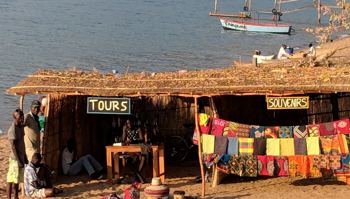
More Income and Employment in Rural Areas of Malawi (MIERA): Support to the Tourism Value Chain
- 2015 – 2019
- € 1 – 2 million
- Malawi
The overall programme aimed at improving the value addition of local small producers and micro, small and medium-sized enterprise (MSME) in selected value chains, through the use of inclusive business models. It applied a value chain approach. This in turn made for an enabling environment in which rural income and employment could be increased. Attention was paid in particular to involving women and young people.
The specific contract supported the value chain development for sustainable tourism in cooperation with national and regional stakeholders. The contract included three main fields of cooperation, which aimed at addressing main barriers for tourism sector development in Malawi:
- Field 1: Strengthen vocational education and training in the tourism sector: to improve employability of the trainees and contribute to the development of the tourism industry by developing the skills necessary to improve the current performance
- Field 2: Strengthen development and marketing of tourism products: to support an increased focus on a specific market positioning that differentiates Malawi from the other countries and complements tour itineraries in the region.
- Field 3: Establishment of national and regional tourism networks: to strengthen the dialogue between the Government and the private sector by establishing establish a national platform for public-private dialogue.
The first phase of the project (01/06/2015 – 31/01/2017) saw the successful implementation of a pilot inclusive business model in the Nkhothakota region. The model consisted of one or more groups of rural MSME or smallholders which joined to provide a service or product to an anchor firm. During the second phase of the project (01/02/2017 to 31/01/2019) the inclusive business model was scaled-up to 3 geographical clusters consisting of at least 4 sub-projects each. MSME and smallholders received technical training in their specific product/service line as well as in sustainable development and inclusive cooperation.
Projects supported included, for example:
Horticulture: Production and provision of vegetable products from the (newly created) Mtwana Nkhandwe rural horticulture group for the Nkhotakota Pottery Lodge’s restaurant.
Horticulture: Creating business partnership between Mufasa Ecolodge and Winston Chiwaya so that the community farming group can be providing vegetables directly to the lodge.
Horticulture: Publicising Winston's farm in order to provide fresh vegetables to domestic tourists travelling to the self-catered cottage
Arts & Crafts: Sunset Curios Market providing innovative, new products to clients of the lodges in Senga Bay, with professional customer service and pricing.
Community Tours: Formalisation of the Sinthana Community Tour through new advertising materials and training for the Director.
Arts & Crafts: Sweet Papaya Art group agreed to provide good quality items for Safari Beach Lodge to decorate their lodge with.
Arts & Crafts: Safari Beach Lodge agreed to provide a space for the Sweet Papaya Art Shop so that clients can purchase products made by Sweet Papaya during their stay at Safari Beach Lodge.
Arts & Crafts: Sweet Papaya’s Art Shop aggreed to stock and sell pots from local clay artisans, Penwell Pottery.
Arts & Crafts: Malawi Wowie signed an agreement with The Weaverbirds, a group of local weavers to provide the woven bags to the company.
Organic waste management: The Senga Bay Vegetable Farming Project was set up by Safari Beach Lodge with support from Cool Runnings (Lodge) and in collaboration with GIZ FNSP and the Salima District Council. The intervention is a response to waste management of organic waste challenges in this beach community and lack of variety in the vegetables that are available for the tourism industry.
Arts & Crafts: Training was provided for the Penwell Pottery team to welcome tourists on a local pot making and decorating experience. Posters and promotional material was made and distributed.
- Partners:
- Particip (Lead), Mascontour
- Keywords:
- Industry & private sector development
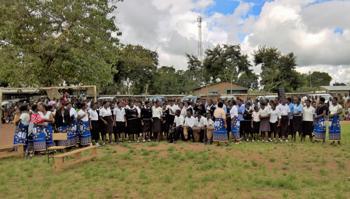
Capacity Assessment for Inclusive Education in Primary Schools in Malawi
- 2018 – 2019
- under € 500,000
- Malawi
The objective of this project is to analyse the capacity of mainstream primary schools to identify and support learners with special educational needs in Malawi.
The results from the capacity analysis and their reflection against best practices will lead to realistic recommendations to enhance support to learners with special educational needs.
The project is devided in three main phases:
1. Literature review and case studies
2. Capacity assessment of mainstream primary schools to support learners with Special Education Needs
3. Consultation and formulation of recommendations
- Keywords:
- Education

Final evaluation of Development Effectiveness and Accountability Programme (DEAP)
- 2018 – 2019
- under € 500,000
- Malawi
This evaluation served to understand the performance of the Action (The Development Effectiveness and Accountability Programme (DEAP) whose main Implementing Partner (IP) is the Ministry of Finance, Economic Planning and Development - a joint programme funded by the European Union (EU) and United Nations (UNDP, UNICEF and UN Women) -, its enabling factors and those hampering a proper delivery of results with a particular view to their sustainability, in order to adjust its design or implementing modalities for future programmes. It furthered document lessons learnt and any best practices identified and made recommendations to be considerered in future programming of similar initiatives.
The project had three main Intermediate Objectives/Outputs as follows:
- Intermediate Objective 1: National Institutions utilize RBM systems for planning, monitoring and evaluation to enhance ownership and leadership for achievement of development results.
- Intermediate Objective 2: National Institutions have the capacity to align policies, programmes and budgets with national development strategies and Agenda 2030, including the Sustainable Development
Goals(SDGs), for efficient achievement of development results.
- Intermediate Objective 3: Government has sufficient capacity to effectively negotiate, manage and account for development assistance.
- Keywords:
- Monitoring & Evaluation, Public finance/budgeting

Options for a diploma qualification in the primary education sub-sector
- 2017 – 2018
- under € 500,000
- Malawi
The overall objective of the project was to develop realistic options for the introduction of a diploma qualification in the primary education sub-sector and to demonstrate their systemic, financial and institutional implications.
Particip reviewed the various options for a diploma as outlined below:
- Diploma qualification for teachers;
- Diploma qualification for other primary education sub-sector personnel;
- Diploma qualifications in areas of specialisation.
Each review considered different ways in which the category of diploma could be introduced. The project determined the feasibility of sustaining each option in terms of the likely, available financing as well as the set-up costs. The capacity to deliver a diploma programme was analysed as well as implications for Teacher Training Colleges and their associated Teaching Practice Schools. The institutional links necessary to validate a diploma was also explored and elaborated.
- Keywords:
- Education
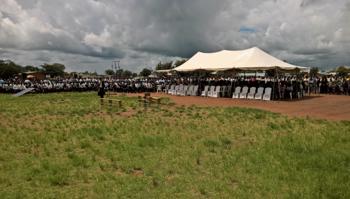
Review of repetition policy and development of policy guidelines for primary schools in Malawi
- 2017 – 2018
- under € 500,000
- Malawi
In Malawi, one of the main priorities within the second Education Sector Implementation Plan (ESIP II) is aiming to significantly reduce repetition through capping the repetition rate at 10%. In 2011, a circular on repetition by MoEST was produced.
The overall objective of this project was to review and update Repetition Policy, develop Policy guidelines and corresponding implementation plan to increase learner retention and promotion.
Policy guidelines developed describe strategies and concrete measures to implement the policy. These strategies address the quality of education in general, but also focus on direct measures to implement the policy. These included but were not limited to measures regarding:
- the assessment of learners and decision making on promotion and repetition
- other related policies and strategies, particularly regarding learner and teacher attendance
- preventive and remedial programmes
- incentive schemes for school management and teachers
- supervision and support to districts and schools
The implementation plan developed lays out activities, timelines and responsibilities in relation to the identified strategies captured in the policy guidelines. Additionally, it included a monitoring framework to ensure the availability of information to track the progress of the implementation and its impact.
- Keywords:
- Education
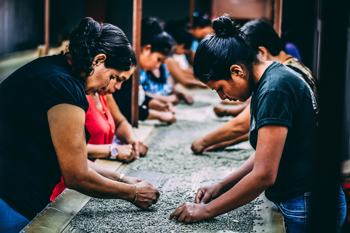
Evaluation of EU support to social protection in external action 2007-2013
- 2016 – 2018
- under € 500,000
- Global
The objectives of the evaluation were to:
- support the decision-making, both at EU strategic (planning) level, and at the level of the design of the action programmes /interventions;
- feed into the reflection on the revision of future development policies in view of the recent adoption of the 2030 Sustainable Development Agenda;
- demonstrate whether already on-going/planned IPA (I) II, ENPI/ENI, DCI and EDF action programmes/interventions in the area of social protection have taken on board the latest lessons learnt from the previous programming period;
- provide recommendations on the best way to approach and improve its support to the development of social protection systems, in partner countries both in terms of the use of policy dialogue and financial assistance;
- contribute to the preparation and adjustment of action programmes, namely for IPA II, ENI, DCI and EDF assistance to the extent possible;
- feed in the Mid-term Review of financial instruments;
- feed in Mid-term Reviews of country/region multi-annual indicative programmes.
The evaluation used the five standard OECD/DAC evaluation criteria, namely relevance, effectiveness, efficiency, impact and sustainability. In addition, the evaluation also looked at the EU added value and the 3Cs.
The evaluation focused on EU support (policy dialogue and financial assistance) provided for the development of social protection systems in partner countries, more specifically on the social insurance and social assistance measures to address the following risks and needs: unemployment, parental responsibilities, sickness and healthcare, work accidents/employment injuries disability, loss of a spouse or parent, old age, housing and social exclusion.
The evaluation covered:
- IPA I beneficiary countries;
- ENPI partner countries;
- Countries covered by DCI and EDF.
The evaluation was conducted in four phases
- An Inception Phase, focusing on the design and the methodology of the evaluation including the reconstruction of the intervention logic and the compilation of an inventory;
- A Desk Phase, focusing on gathering and analysing existing data and information (through literature/document reviews and interviews/focus groups/surveys);
- A Field Phase, including preparation of field missions, visits to the case study countries (Bosnia and Herzegovina, El Salvador, Ethiopia, Turkey, Kyrgyzstan, Macedonia*, Malawi, Moldova, Montenegro, Morocco, Palestine*) and drafting of country reports;
- A Synthesis Phase, producing a final report and dissemination of results to concerned stakeholders.
- Partners:
- AETS (Lead), Particip
- Keywords:
- Civil society, Food and nutrition, Health, Monitoring & Evaluation

Evaluation of the ECHO assistance in the Southern Africa and Indian Ocean Region (SAIO), 2012-2016
- 2017 – 2017
- under € 500,000
- Madagascar, Malawi, Mozambique, Zimbabwe
The purpose of this Assignment was to have an independent overall evaluation of the ECHO actions in the SAIO region during the period 2012-2016.
Specifically, the evaluation provided:
- A comprehensive, retrospective assessment of DG ECHO's strategy/approach (as formalised by the Humanitarian Implementation Plans), in the SAIO region covering the evaluation issues of relevance, coherence, EU Added Value, effectiveness, efficiency and sustainability;
- Prospective, strategic recommendations – based on the retrospective evaluation and the related research – for a future ECHO strategy in the region, with a view of maximizing the benefits of ECHO's initiatives on the ground.
- Keywords:
- Humanitarian aid, Monitoring & Evaluation

Change management expert for the re-orientation of the National Authorising Officer's Support Unit
- 2015 – 2017
- under € 500,000
- Malawi
The project provided a change management expert who, under the supervision of the Reform Task Team (RTT), is entrusted with conducting a comprehensive re-orientation and re-structuring of the National Authorising Officer's Support Unit (NAO SU) with a final goal of significant and measurable improvement and optimization of the NAO SU.
Specifically, the change management expert developed a comprehensive reorientation plan for the NAO SU on the basis of a situation analysis and previous recommendations received through a mid-term review (MTR) and assisted the various stakeholders in implementing the plan. The ultimate goal was that the Change Management Process results in more effective governance and efficient performance of the NAO SU.
- Partners:
- Particip (Lead), ADE