Armenia
13 references

Systematic analysis of the monitoring data should result into recommendations to improve the implementation and design of assistance to civil society and to the EU monitoring to reach the overall objective to contribute to civic resilience and grassroots democracy in the Eastern Partnership. Trainings should be developed and conducted for a sustainable learning experience. The data and analysis should also be presented for communication on the achievements of the civil society assistance and contribute to various reporting exercises.
The outputs of the monitoring on the ground and analysis should enhance the ability of EU project managers to contribute to regular reviews of action progress and operational plans. The concise feedback resulting from the monitoring of an action should allow EU project managers to have more assurance in assessing the content and quality of monitoring reports from CSOs which would allow them to suggest corrective measures or to support efficient and effective implementation. Further to this, the analysis provided should guide future programming
The expected outputs of this contract are as follows:
- Monitoring system of EU-funded civil society projects that will complement existing EU systems of project monitoring maintained and improved;
- Analysis and knowledge sharing products to support decision-making generated and disseminated;
- Capacity of EU project managers, CSOs staff to monitor and implement projects strengthened.
- Partners:
- Particip (Lead), EPRD
- Keywords:
- Civil society, Monitoring & Evaluation

Bridging Knowledge and Policy: Strengthening Armenian Think Tanks for Enhanced EU Engagement and Regional Cooperation
- 2024 – 2026
- under € 500,000
- Armenia
The overall objective of this contract is to support evidence-based policymaking and to strengthen the inputs of the Armenian think tank community in the current context of deepening of EU-AM relations in line with the objective of further strengthening Eastern Partnership (EaP) priorities and enhancing awareness and understanding of the European Neighboured Policy.
The specific objectives of this contract are as follows:
- Specific objective 1: Enable production of high-quality research papers that provide indepth analysis on topics of importance to the EU’s engagement in Armenia and the South Caucasus.
- Specific objective 2: Foster collaboration between Armenia and EU based think-tanks, local experts, policymakers, and EU representatives to support informed decision-making and policy development.
- Keywords:
- Institutional development
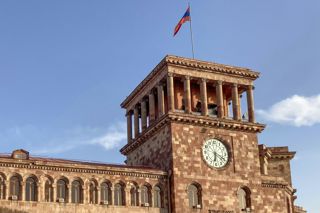
Final Evaluation – Evaluation of Budget Support Programme “Support to Justice Sector Reforms in Armenia, Phase I” ENI-ENEST/2020/042019
- 2026 – 2026
- under € 500,000
- Armenia
The Final Evaluation of the Budget Support Programme “Support to Justice Sector Reforms in Armenia, Phase I” provides an independent assessment of the programme’s effectiveness, efficiency, and impact in supporting Armenia’s policies on good governance, rule of law, justice, and anti-corruption. It examines the extent to which EU budget support has helped strengthen institutional capacities, improve policy frameworks, and enhance public budget spending in support of the Government of Armenia’s reform agenda. The evaluation also considers how this support has enabled progress on Armenia’s commitments under the Comprehensive and Enhanced Partnership Agreement (CEPA).It reviews the sustainability of supported policies and analyses the complementarity and synergies between EU budget support, other aid modalities, and interventions by development partners. A further objective is to identify constraints in government policies, institutional structures, and administrative arrangements that may reduce the effectiveness of budget support in promoting public spending reforms and targeted policy actions. The findings are intended to inform future EU cooperation in Armenia and strengthen the design and delivery of budget support operations in the justice sector.The general objectives of this evaluation are:
- to assess the contribution of EU budget support and complementary assistance to capacity building;
- to assess policy dialogue, coordination mechanisms, and policy monitoring processes;
- to answer the evaluation questions.
The Evaluation Manager is responsible for the management and the coordination of all activities, which mainly include:
- methodological steering of the evaluation
- Drafting the final evaluation report
- Keywords:
- Justice/Rule of Law, Monitoring & Evaluation
Results Oriented Monitoring (ROM) Systems for External aid Interventions Financed by the European Union — Neighbourhood Region
- 2021 – 2026
- over € 10 million
- ENI
Results Oriented Monitoring (ROM) reviews aim to assist the European Commission’s services and EU Delegations in monitoring of and reporting on EU financed development and cooperation projects and programmes in third countries through independent reviews of the progress of their implementation and the achievement of project results.
ROM services to be provided through this contract are clustered in three components:
** Component 1: ROM Reviews. ROM contractors will assess the performance of EU-funded interventionson the basis of the following OECD DAC evaluation criteria: relevance, efficiency, effectiveness, and sustainability.
ROM reviews will cover:
-A sample of EU funded interventions during the inception phase of implementation. The ROM review will support the OM in confirming or updating intervention logic and logframe matrix, in reviewing the monitoring system of the IP, in assessing risks and mitigation measures and fine tune the calendar of activities with a view to improve the performance of the intervention across the OECD DAC criteria.
- ROM reviews will assist the OM in adressing the main implementation problems.
-Other interventions for which Commission services request a ROM review on demand (interventions which could not be visited by EU OMs or for which there is a lack of sector expertise in the EU Delegation/operational unit in HQ).
- Blending operations, focused on asessing the value added of the EU contribution and on the performance of blending interventions in terms of socio-economic development.
** Component 2: Quality assurance and support at design stage for a sample of interventions. Provide technical support to EC services in the formulation of intervention logics and related logical frameworks matrices (logframes) and monitoring and reporting arrangements for a sample of interventions.
**Component 3: Results report (at corporate and intervention level). The Contractor will provide services to encode and quality control results data for a set of interventions subject to results reporting. TOM contractor will ensure quality control of data included in the intervention's logframes. Such quality controls will include, amongs others: verifying that the logframe is correctly encoded and up-to-date , enssuring that the latest values related to logframe indicators are available, and supporting the aggregation of intervention-level results into the EU Results Framework or other frameworks.
- Partners:
- Particip (Lead), Dev4U, Integration
- Keywords:
- Monitoring & Evaluation

The objective of this facility is to improve the overall quality of the NDICI Rapid Response and Peace, Stability and Conflict Prevention thematic areas by providing high quality research services.
We will provide the FPI with flexible and ad hoc research services and prepare literature reviews and rapid assistance reports in the thematic areas specified below.
- Partners:
- Particip (Lead), SICI Dominus
- Keywords:
- Environment, Humanitarian aid
Technical Assistance on Impact Monitoring of EU Civil Society Support in Eastern Partnership Countries
- 2019 – 2023
- € 2 – 5 million
- ENI East
The project contributed to the introduction of results-based management in all the activities of DG NEAR. The ToR underlined the importance of taking account of all related systems and tools and of the reforms currently being introduced, which are listed exhaustively.
Indeed, the EC had embarked in a major transformation project with crucial implications on the way development cooperation is delivered and development cooperation professionals will work in the future. The aim was to introduce a performance and results culture promoting collaboration, accountability and access to knowledge, along with simplification and harmonisation of all processes and tools, combined in a holistic transparent system.
Result 1: Robust evidence was made available through the setup of an appropriate qualitative monitoring system for civil society projects in order to showcase the benefits of civil society support for citizens;
Result 2: Increased credibility of civil society projects was fostered through regular and more accurate monitoring of projects, following EU external monitoring policy.
Result 3: Increased capacity of EU staff to implement EU monitoring guidelines (and apply corrective measures, if needed) was increased through regular and structured on implementation of EU funded CS projects.
- Partners:
- Particip (Lead), EPRD
- Keywords:
- Civil society, Governance, Monitoring & Evaluation, Project implementation / Technical Assistance
Results Oriented Monitoring (ROM) system for external aid interventions financed by the European Union - Lot 1 – Neighbourhood region
- 2019 – 2021
- € 5 – 10 million
- ENI
Results Oriented Monitoring (ROM) reviews aim to assist the European Commission’s services and EU Delegations in monitoring of and reporting on EU financed development and cooperation projects and programmes in third countries through independent reviews of the progress of their implementation and the achievement of project results.
ROM services provided through this contract were clustered in three components:
** Component 1: ROM Reviews. ROM contractors assessed the performance of EU-funded interventions on the basis of the following OECD DAC evaluation criteria: relevance, efficiency, effectiveness, and sustainability.
ROM reviews covered:
-A sample of EU funded interventions during the inception phase of implementation. The ROM review supported the OM in confirming or updating intervention logic and logframe matrix, in reviewing the monitoring system of the IP, in assessing risks and mitigation measures and fine tune the calendar of activities with a view to improve the performance of the intervention across the OECD DAC criteria.
- ROM reviews assisted the OM in adressing the main implementation problems.
-Other interventions for which Commission services requested a ROM review on demand (interventions which could not be visited by EU OMs or for which there was a lack of sector expertise in the EU Delegation/operational unit in HQ).
- Blending operations, focused on asessing the value added of the EU contribution and on the performance of blending interventions in terms of socio-economic development.
** Component 2: Quality assurance and support at design stage for a sample of interventions.The Contractor Provided technical support to EC services in the formulation of intervention logics and related logical frameworks matrices (logframes) and monitoring and reporting arrangements for a sample of interventions.
**Component 3: Results report (at corporate and intervention level). The Contractor provided services to encode and quality control results data for a set of interventions subject to results reporting. TOM contractor ensured quality control of data included in the intervention's logframes. Such quality controls included, amongs others: verifying that the logframe is correctly encoded and up-to-date , enssuring that the latest values related to logframe indicators were available, and supporting the aggregation of intervention-level results into the EU Results Framework or other frameworks.
- Partners:
- Particip (Lead), Dev4U, GOPA, Integration

This action contributed to the effective implementation of international human rights instruments, principles and standards, primarily by means of exchange of best practices with partner countries.
The project was conceived to serve and preserve EU values and interests by means of complementary actions. It promoted policy cooperation with partner countries of strategic interest to the EU as well as enhanced the EU's visibility and coherence. This was done through the development of an analysis of the human rights situation in 13 countries, the organisation of seminars/roundtables and outreach activities. This ensured increased human rights awareness and access to human rights knowledge.
The Specific objectives were:
- 1)To ensure appropriate follow-up to political and human rights dialogues with partner countries. This includes, inter alia, facilitating south-south cooperation and exchange of ideas, knowledge and expertise on commonly identified human rights issues; providing technical assistance including in the form of trainings and roundtable discussions with governments in partner countries in order to strengthen their human rights expertise; facilitating interaction among representatives from the private sector and government representatives in partner countries to ensure compliance with the internationally recognised human rights framework; and facilitating regular interaction between partner countries with a view to building and reinforcing regional alliances which may contribute to serving EU interests in multilateral fora;
- 2)To contribute to bringing together experts from the EU and partner countries such as academics, private sector and government representatives in order to equip the EU to remain innovative and tackle emerging subjects of EU interest as a vehicle of cooperation with partner countries such as artificial intelligence, academic freedom, right to water and sanitation, economic social and cultural rights;
- 3)To support and enhance the monitoring of Generalised Scheme of Preferences (GSP) GSP+/ Everything but Arms (EBA) beneficiaries' commitments under the seven GSP core human rights conventions.
Internal studies analysing Human Rights situation in the following countries
- Armenia
- Bangladesh
- Bolivia
- Cabo Verde
- Cambodia
- Kyrgyztan
- Mongolia
- Myanmar
- Pakistan
- Philippines
- Sri Lanka
- Tajikistan
- Uzbekistan
- Partners:
- Particip (Lead), SICI Dominus
- Keywords:
- Civil society, Communication & media, Human rights, Monitoring & Evaluation

Evaluation on Development Cooperation carried out by the Department for Russia, Eastern Europe and Central Asia, Including The Wider Europe Initiative (WEI)
- 2020 – 2021
- under € 500,000
- Armenia, Azerbaijan, Belarus, Georgia, Kazakhstan, Kyrgyzstan, Moldova, Tajikistan, Turkmenistan, Ukraine, Uzbekistan
The overall purpose of the evaluation was to inform the Ministry for Foreign Affairs in Finland (MFA) on the achievements of its development policy and cooperation in the region over the past decade, and to support the MFA in deciding how to best achieve its policy objectives and to enhance its management of the programme in the region at strategic level. Main sectors of cooperation in the region are i) Government and Civil Society, ii) Energy, iii) Education and iv) Environment Protection. The evaluation was mostly forward-looking but also included summative analysis to respond to the evaluation questions.
Objectives: The objectives of the evaluation were to produce evidence and present well justified conclusions on the following:
1. To assess the impact(s), if any, of Finland’s development cooperation carried out in the region by the Department for Russia, Eastern Europe and Central Asia;
2. To assess the scope of the impact(s) and their relative significance to development in the area;
3. To assess the levels of sustainability of the achieved results and impact;
4. To assess the results achieved by, and management of, the current country strategies;
5. To analyse the reasons explaining success and/or failure in performance and in reaching a lasting impact, including the operational context, human aspects and resources; and
6. To provide recommendations that serve the Ministry in developing its strategic planning, management and response in the region as well as drawing the broader lessons on how to increase impact and sustainability, in advancement of Finland’s development policy objectives.
Final report available here: https://um.fi/development-cooperation-evaluation-reports-comprehensive-evaluations/-/asset_publisher/nBPgGHSLrA13/content/evaluointiraportti-suomen-kehitysyhteisty%25C3%25B6-it%25C3%25A4-euroopassa-ja-keski-aasiassa/384998
- Partners:
- Particip (Lead), NIRAS
- Keywords:
- Civil society, Education, Energy, Environment, Human rights, Monitoring & Evaluation
Evaluation of the Eastern Partnership Technical Assistance Trust Fund (EPTATF)
- 2020 – 2020
- under € 500,000
- ENI East
The EPTATF was set up to accelerate the origination of operations in Eastern Partnership countries, and to improve the quality and development impact of the Bank's operations in the region. The establishment of the EPTATF was based on the assumption that technical assistance available at the time was inadequate to support the Bank’s operations in the region, particularly for small projects. It was set up to be complementary to the Neighbourhood Investment Facility (NIF) instrument and resources.
The purpose of the evaluation was to determine the extent to which the EPTATF has helped to improve EIB operations in Eastern Partnership countries since its establishment. Particip was expected to analyse the functioning of the EPTATF, its decision-making process, its governance arrangement and its organisation and performed a review of the EPTATF portfolio of TA operations.
The evaluation work encompassed the following main phases:
- Structuring phase: the evaluation team took ownership of the evaluation framework and approach, further amended and developed it, if deemed necessary.
- Data collection and analysis phase: this phase entailed a thorough desk review, data collection, validation and analysis. The analysis, focussing on 10 case studies of TA operations (at least three in Ukraine, and at least one in Armenia, Georgia, and Moldova) led up to the drafting of the Evaluation Report
- Preparation of the final report: the Team Leader participated in the presentation of the evaluation’s emerging findings to IG/EV and to the Evaluation Reference Group; and then drafted and finalised the Evaluation Report under the guidance of IG/EV
- Keywords:
- Monitoring & Evaluation, Project implementation / Technical Assistance
Results Oriented Monitoring (ROM) reviews aim to assist the European Commission’s services and EU Delegations in monitoring of and reporting on EU financed development and cooperation projects and programmes in third countries through independent reviews of the progress of their implementation and the achievement of project results.
The ROM reviews and support missions to be carried out are the following:
a) +++ROM reviews of projects signalled as having implementation problems and where EC services have identified a need for an outside expert review to assist in addressing the problems, identifying causes and options for solution and making recommendations.
b) +++ ROM reviews of other projects for which such ROM reviews may have a particular usefulness, in particular for projects which could not be included in the EUDs’ planning of field visits or for which the necessary sector expertise at EUD level may not be sufficiently available at a given point of time or for innovative projects.
c) ROM reviews of BS programmes: in countries where a BS programme is signalled as having implementation problems, a ROM review may be organized focusing on the programme in question for the sector specific aspects but also covering the Public Financial Management (PFM) and macroeconomics aspects of all BS programmes financed by the EU in the country .
d) ROM support to end of project reporting on results (outputs and direct outcomes), including for BS programmes. These ROM support missions are to assist EC services and EUD in strengthening their results reporting capacities in: assisting with the recording actual results achieved by projects and programmes that have come to an end in the specified calendar year, solving technical difficulties that may occur linked to results reporting, and identifying the systemic needs and modalities for improvement which may be needed in these areas. The ROM support to end of project results reporting missions are to focus on projects of EUR 750.000 or more.
- Partners:
- Particip (Lead), GOPA, Integration
- Keywords:
- Monitoring & Evaluation
Support to the coordinator of EU Assistance
- 2015 – 2018
- € 500,000 – 1 million
- Armenia
Since March 2015, the EC initiated another review and consultation process to consider moves toward a new European Neighbourhood Policy.
On-going consultations with partners in the neighbouring countries and with stakeholders across the EU were expected to lead to the issuance of a Communication setting out proposals for the future.
The Armenian Minister of Economy (Coordination of EU assistance) and the Commissioner for ENP and Enlargement Negotiations signed the MoU launching the Single Support Framework for EU support to Armenia to set the priorities for cooperation over the period 2014-2017.
This Project provided continued assistance to Armenian representatives to improve and implement their aid management system, enhance the capacity for quality input, develop consultation mechanisms for civil society organisations and the private sector and the visibility of EU aid through three major Components:
Component I: Institutional strengthening;
Component II: Enhance EU and WTO Affairs Department analysis and input in aid programming and implementation;
Component III: Communication and visibility, especially on budget support.
- Partners:
- Particip (Lead), Ameria CJSC
- Keywords:
- Institutional development, Project implementation / Technical Assistance, Training

Support to the Armenian Ministry of Nature Protection in the further development of climate-relevant environmental legislation
- 2016 – 2017
- under € 500,000
- Armenia
The project supported the environmental policy and law reform which the government of the Republic of Armenia initiated in recent years with the cooperation of the EU, other international donors such as UNDP and UNEP, and also bilateral projects financed by the German BMUB.
The overall goal of the assignment was to support the Armenian Ministry of Nature Protection (MNP) in the further development of climate-relevant environmental legislation (climate change mitigation, climate change adaptation), in particular the implementation of necessary steps with highest priority:
- The finalization of the draft law on environmental policy and;
- The adaptation of the sectoral environmental legislation.
The assignment lead to the following results:
- The finalised draftlaw on environmental policy was prepared.
- Based on review of relevant sectoral environmental legislation including legislation on: air, water, waste, EIA, (environmental) supervision, levies, and others, a series of draft amendments to relevant sectoral legislation necessary to bring relevant sectoral legislation in line with the Draft Law on Environmental Policy were developed. This output includes emission limit values (ELV) for air and waste water as well as EIA criteria by components.
- A Final draft legislation package for submission to law-making procedures was prepared following consultations with all stakeholders, revisions and modifications according to comments and proposals received in the consultation processes, including:
- the draft Law on Environmental Policy,
- the draft amendments to sectoral environmental legislation,
- explanatory memoranda, as required for the respective law-making procedures.
- Relevant target groups/ stakeholders were involved, informed and trained throughout the project through adequate information and consultations.
- A strategy and plan for follow-up activities to complement the environmental law reform were prepared.
- Partners:
- Particip (Lead)
- Keywords:
- Environment