South Sudan
6 references

Enhancing Community Resilience and Local Governance Project Phase II Services of Third-Party Monitoring (TPM) Agent
- 2025 – 2027
- € 500,000 – 1 million
- South Sudan
ECRP-II’s Project development objective is to improve access to services, strengthen flood resilience, and enhance institutional capacity for local service delivery and integrated disaster risk management at the national and sub-national levels.
ECRP-II comprises five components designed to improve service delivery, flood resilience, and institutional capacity in the more vulnerable areas in South Sudan. The five components of ECRP-II are as follows:
- Component 1. Infrastructure and Services for Community Resilience (US$ 113 million): This component will support eligible investments in community-level infrastructure and services as well as physical investments for flood risk reduction. There are three sub-components that focus on eligible sub-project priorities, flood risk reduction investments, and operations and maintenance.
- Component 2. Institution Strengthening (US$10 million): This component supports the participatory planning process for the identification of subprojects to be financed under Component 1, monitoring of the construction of subprojects, and capacity-building of relevant national and sub-national institutions. Three sub-components focus on community institution strengthening, county government strengthening, and national and state government strengthening.
- Component 3. Emergency Flood Response (US$14 million): This component will support targeted emergency flood response in Warrap and Northern Bahr el Ghazal (NBeG) implemented through NGOs with a pre-existing geographic footprint and technical expertise in the two target states. The selection of the NGOs was based on: (i) geographic footprint; (ii) technical expertise on emergency flood response; (iii) adequate absorptive capacity; and (iv) suitable E&S and security risk management mechanisms.
- Component 4. Project Management and Learning (US$ 13 million): This component will support: a) project management including technical planning, FM, procurement, environmental and social (E&S) risk management, and communications; (b) project monitoring that includes a geo-enabled monitoring system and a beneficiary feedback/grievance redress mechanism (GRM), which will be accessible to refugees, IDPs, and host communities and will complement the existing GRMs in refugee areas; (c) impact evaluations; (d) financing for a third-party monitoring agent (TPMA); and € the PMU operating costs.
- Component 5. Contingency Emergency Response (US$ 0): A contingency emergency response component (CERC), initially without a budget allocation, will allow for the rapid reallocation of project funds in the event of natural or man-made crisis and major disease outbreaks of public health importance during the implementation of the project.
The overall objective of this TPM terms of reference is to provide third party monitoring of project implementation activities undertaken under Components 1- 3 to strengthen awareness of project risks, benefits, opportunities for correction, and conditions requiring timely intervention.
- Partners:
- Particip (Lead)
Ex-post evaluation for South Sudan Women Empowerment Programme
- 2025 – 2026
- under € 500,000
- South Sudan
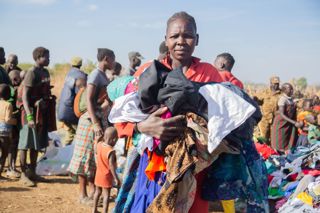
The purpose of this evaluation was to provide a systematic and objective assessment of the South Sudan Women Empowerment Programme. The programme's overall objective was to advance the empowerment of women and girls by supporting the effective implementation and enforcement of women’s rights legislation through capacity building of duty bearers, and by promoting women’s economic, political and social participation at the local level, with particular attention to those in the most vulnerable situations.
The evaluation's global objective is twofold: i) to deliver an independent assessment of performance to the European Union, stakeholders and the wider public; and ii) to generate key lessons, conclusions and recommendations to guide decision makers in improving current and future interventions.
The specific objectives were:
- to inform the next phase of programming on gender equality and women's empowerment,
- to draw lessons that can be replicated in other ongoing and future EU interventions across thematic areas such as economic development, human development and governance, thereby strengthening gender mainstreaming,
- to ensure accountability for the use of EU resources in relation to the results achieved in promoting gender equality and women's empowerment.
- Partners:
- UPC (Lead)
- Keywords:
- Civil society, Human rights, Justice/Rule of Law, Monitoring & Evaluation, Rural and urban development

Evaluation of Finland's Humanitarian Assistance 2016-2022
- 2021 – 2022
- under € 500,000
- Global
The Ministry for Foreign Affairs of Finland (MFA) commissioned an evaluation of Finland’s humanitarian assistance. The purpose of the evaluation was to help further enhance the effectiveness of the humanitarian assistance provided by Finland. To that end, the evaluation identifed the strengths and weaknesses of Finland’s delivery model for its humanitarian assistance and cooperation arrangements, including the effectiveness and efficiency of its management arrangements.
The specific objectives of the evaluation were:
- To review the relevance of Finnish humanitarian assistance 2016-current in meeting the needs of affected populations, and in its interconnections with development and peace interventions
- To assess the function and purpose of the 2019 Humanitarian Policy as a guiding instrument for Finnish humanitarian assistance
- To assess the functioning of partnerships and co-operation in Finnish humanitarian assistance and whether the current balance of partnerships/scope of Finnish influencing is optimal;
- To assess the management arrangements for humanitarian assistance in light of its effectiveness and make proposals for any future improvements; and
- To assess the effectiveness of the assistance in delivering results for affected populations.
- Partners:
- Particip (Lead), NIRAS
- Keywords:
- Humanitarian aid, Monitoring & Evaluation

Strengthening the Policy Frameworks for Transboundary Water Resources Management in the Nile Basin
- 2020 – 2022
- under € 500,000
- Burundi, Congo (Brazzaville), Egypt, Ethiopia, Kenya, Rwanda, South Sudan, Sudan, Tanzania, Uganda
The Nile Basin Initiative (NBI) is a partnership of the 10 Nile Basin riparian states with a shared vision objective to promote sustainable socio-economic development through the equitable utilization of and benefit from the shared Nile Basin water resources. Nile Basin countries face increasing challenges of meeting the requirements of their rapidly growing populations in the face of dwindling resources that are threatened by emerging pressures like climate change, land use change and degradation, urbanization, etc. The challenges result in increased efforts at utilization of the Nile waters for agricultural, domestic, industrial and environmental purposes. Countries are embarking on large-scale developments for water utilization and water-related use in riparian countries which have major implications for current and future availability of water resources.
The assignment took the basin perspective and looked at the transboundary governance mechanisms in place. Especially national level arrangements such as policies and Transboundary Water Management (TWM) units served the various transboundary mechanisms a country subscribes to at the same time.
The objective was to facilitate and document a joint review and learning process on provisions for transboundary cooperation in national policies and related institutional arrangements.
The primary work of the project consisted of the following tasks:
- Task 1: Finalization of the NBI Policy Handbook
- Task 2: Guidance Document on key TWM principles for national water policies
- Task 3: Review of experience and mapping of cross-border cooperation arrangements in Nile Basin
- Task 4: Review of experience of the national level organizational arrangements for TWM
- Task 5: Collaborative assessment of progress of implementation of TWM principles in
National Water Policies
- Task 6: Action plan for transboundary water policy at national and regional level
- Task 7: Policy Synthesis Report – Status of TWM governance and Implementation of
SDG 6.5.2. in the Nile Basin
- Task 8: Blended Learning Module
- Prepare and facilitate Policy Roundtables
- Keywords:
- Environment, Training
External Evaluation of EU’s Support to Conflict Prevention and Peace Building (2013-2017)
- 2018 – 2020
- € 500,000 – 1 million
- Global
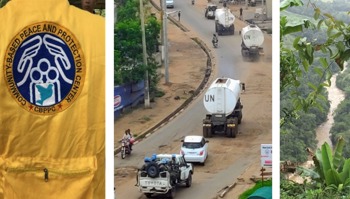
This evaluation took place in a context of a recent surge in violent conflicts and a renewed momentum on Conflict Prevention and Peacebuilding (CPPB) both at the EU and global level. Its purpose was to:
- provide the relevant EU Institutions and the wider public with an overall independent assessment of the EU support to CPPB focusing on the period 2013-2017; and
- identify key lessons, instil good practices, and produce recommendations to feed into ongoing and future approaches to EU’s engagement in the field of CPPB.
In particular, the evaluation will feed into the EU implementation of the Integrated Approach to Conflict and Crises and nurture future EU support to CPPB strategies and interventions.
The scope of the evaluation included:
- all relevant actions (including spending and non-spending activities) and all countries/regions which fall under the responsibility of DG DEVCO and DG NEAR (neighbourhood region only); and
- the work/engagement of EEAS related to them.
In terms of temporal scope, the evaluation focused on the period 2013-2018, but also took the period 2011-2012 into consideration in order to assess the evolution of EU support to CPPB.
Through the course of the evaluation, the evaluation team conducted 12 case studies (focusing on countries, regions and instruments) which were subject to an in-depth analysis, including eight field visits. Two surveys – one covering EU services in Brussels, the other covering EU Delegations/Offices worldwide – were also part of the data collection and analysis process. Findings from all evaluation activities were synthesized into a final report.
The final report is available online: https://ec.europa.eu/international-partnerships/external-evaluation-eus-support-conflict-prevention-and-peacebuilding-2013-2018_en
- Partners:
- Particip (Lead), ECDPM
- Keywords:
- Governance, Monitoring & Evaluation

Mid-Term Evaluation 'Sustaining and strengthening African Union’s Liaison Offices in post-conflict countries'
- 2016 – 2017
- under € 500,000
- Central African Republic, Ethiopia, Ivory Coast, Mali, South Sudan
The main objectives of the evaluation were to provide the relevant external co-operation services of the contributing partners the African Union and, when appropriate, the wider public with:
- an overall independent assessment of the past performance (from 1 January 2013 until 31 December 2015) of the intervention (Sustaining and strengthening African Union’s Liaison Offices in post-conflict countries), paying particular attention to the results of the project against its objectives;
- key lessons learnt and recommendations in order to improve current and future action.
The evaluation was intended to inform the remaining period of implementation of the project, as well as the additional support to the AULO from 1 January 2018.
Evaluations should serve decision-making, learning and management purposes. This evaluation did provide indications to both the AUC and partners on key aspects of the programme management, and fed in the discussion on perspective mandate renewals.
- Keywords:
- Governance, Humanitarian aid