Our projects
Explore Particip’s project experience across countries, sectors and areas of expertise.
Our references provide an overview of completed and ongoing assignments, including their objectives, geographic scope, duration and contract value.
Showing 441–450 of 510 references

Technical Assistance to support the electoral process in the Central African Republic
- 2020 – 2022
- € 500,000 – 1 million
- Central African Republic
The overall objective of the project of which this contract is a part is to foster a credible, inclusive and transparent electoral process in the Central African Republic.
This contract has the following specific objectives:
- the electoral framework in CAR is comprehensive and coherent;
- the organization of the presidential, legislative and local elections 2020/2021 is done by ANE in compliance with the legal framework ;
- The communication of the ANE (National Authority of Elections) with the actors of the electoral process is objective, factual and precise;
- ANE is strengthened in the work that it will be called upon to build in the post-election period, which may include evaluations, the perpetuation of achievements, and the preparation of electoral reform projects.
The mission will contribute to the adoption of effective solutions, the choice of measures aimed at sustainability, and the strengthening of beneficiaries' capacities by focusing as much as possible on the transfer of skills.
Monitoring and Evaluation of Somalia Country Programme (2019-2023) and Peace and Stabilisation Programme (2018-2022)
- 2021 – 2022
- under € 500,000
- Ethiopia, Kenya, Somalia
The Somalia Country Programme (2019-2023) and Peace and Stabilisation Programme (2018-2022) operated in a political challenging and fluid context. In order to ensure proper tracking of the engagements and their developments, progress and results, both programmes, were receiving assistance in ensuring the necessary quality assurance of the management of the result frameworks, theory of change and the risks identified and reporting by setting up and running a robust monitoring and reporting system.
The overall objective of the Assignment was to support the Client in:
- establishing and facilitating a functioning MEAL including risk management system for the two programmes and their engagement documents based on an improved result framework, theory of change and risk set up in order for the Client to strengthen programme efficiency and effectiveness, facilitate learning and ensure informed decision-making by the Client and its partners related to the implementation and development of the programmes; and
- communicating to both the Somalia and Danish general public and other identified recipients, relevant achievements and results obtained by the two programmes.
The overall objective of the Somalia Country Programme (2019 – 2023) (SCP) was to contribute to: “Basic building blocks put in place for the development of a resilient, stable and peaceful Somalia based on responsive and inclusive governance and a growing and poverty-reducing economy”. The SCP contained three Thematic Programmes (TPs):
1) Strengthen resilient, responsive and inclusive governance able to deliver basic services and to promote and protect fundamental human rights.
2) Develop an enabling economic environment through core economic institutions and regulations and strengthen inclusive private sector led development and economic growth through critical and diversified livelihoods.
3) Develop protection and safety nets to enhance resilience, enable durable solutions and reduce forced displacement.
The main objective of the Peace and Stabilisation Programme (2018-2022) (PSP-HoA) was “improved peace and stability in the Horn of Africa by strengthening local, national and regional actors’ capacity and ability to manage conflict and insecurity, counter threats and exercise legitimate authority”. The PSP-HoA had three overriding Thematic Programmes (TPs):
1) Strengthened regional conflict management capacity and efforts of the actors engaged in promoting stabilisation and security in Somalia
2) Reduced levels of violent extremism in the Horn of Africa with a particular focus on Somalia through prevention and disengagement..
3) Improved capacity to exercise regional and governmental authority across land and maritime borders.
Evaluation of the Finnish Development Policy Influencing in the European Union
- 2021 – 2022
- under € 500,000
- Global
The Ministry for Foreign Affairs of Finland (MFA) commissioned an evaluation of Finnish Development Policy Influencing in the European Union. The purpose of this evaluation was to assess the relevance, effectiveness and coherence of the different development policy influencing activities of the Finnish MFA in relation to the EU and its institutions, and to provide guidance to the Ministry on further strengthening of the influencing activities for the future. The evaluation was mostly forward-looking and utilization focused, providing strategic information to inform future developments of the influencing agenda.
The objectives of this evaluation were:
- To assess how Finland has managed to promote Agenda2030, Building Back Better (and Greener), and Finland’s Development Policy objectives in the EU, as well as the common development cooperation practices and principles by the member states.
- To assess the effectiveness of various influencing activities, means and channels and Finland’s best opportunities to influence (intuitions and bodies, country delegations, interventions etc.) taking into account available human and financial resources.
- To analyze the factors (structures, processes, tools, capacity, other) that have facilitated/enabled or hindered the positive results of the influencing activities.
- To provide insight on the best opportunities and ways to engage and influence in the future, especially under the new EU funding instrument and the evolving development cooperation scene.
- To provide insight on how the Ministry together with other relevant stakeholders could develop their practices in order to maximize influence for the future, taking into account available human and financial resources.
Mid-term evaluation of PI/2019/408-604 EU-South East Asia Cooperation on Mitigating Climate Change impact from Civil Aviation (EU-CCCA)
- 2022 – 2022
- under € 500,000
- ASEAN region
The main objectives of this evaluation are to provide the relevant services of the European Union and theinterested stakeholders with: 1) An overall independent assessment of the past performance of ‘EU-South East Asia Cooperationon Mitigating Climate Change impact from Civil Aviation (EU-CCCA)’, paying particular attention to its results measured against its expected objectives; and the reasons underpinning such results; 2) Key lessons learned, conclusions and related recommendations in order to improve current and future Actions.
This evaluation will serve as an external view as to whether performance of this Action can be considered satisfactory/lacking expected progress, identify its enabling factors and those hampering proper delivery of results. The evaluation is to provide recommendations, taking into account the possiblyidentified problems and opportunities. As the findings may serve to inform the planning of the possible future EU interventions and Actions in the same sector, the exercise should encompass both forward and backward looking perspectives.
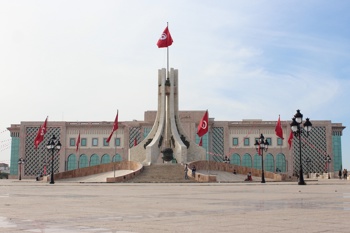
Support for Communication / Appropriation of the process of decentralization in Tunisia
- 2019 – 2022
- € 2 – 5 million
- Tunisia
++General Objective:++
Accompany Tunisia in its process of territorial reinforcement and reduction of regional and local disparities in the framework of the decentralization process.
++Specific objectives:++
- Improve knowledge and promote ownership of the decentralization / deconcentration reform by its actors and beneficiaries.
To achieve this goal in a coherent and inclusive way, the approach must be based on an overall strategy, which contributes to the progress and success of the IPDLI Program and, more broadly, to the understanding and internalization by all stakeholders of the supported reforms, hence each one is called to take in charge their role and responsibilities in their specific registe.
++Results to Achieve:++
- R1: Develop a coherent, comprehensive and evolving communication strategy around the decentralization / deconcentration reform in Tunisia
- R2: Detail the communication strategy around the decentralization / deconcentration reform in Tunisia into actions
- R3: Support IPAPD and the Ministry of Local Affairs and the Environment for planning, designing, producing, disseminating and putting online communication tools
PVB Comoros - Formulation of a green and blue pact in Comoros
- 2022 – 2022
- under € 500,000
- Comoros
The general objective of this contract was to contribute to the implementation of the 2021-2027 cooperation programme between the Union of Comoros and the European Union in terms of improving food security and sustainable management of natural resources.
The specific objective of this contract was to formulate a "Green & Blue Pact programme integrated to the territorial specificities of the Comoros”, financed under the EU Delegation's 2022 Action Programme (AAP 2022).
This EUR 20 million programme aimed to:
- promote the conservation and community-based integrated sustainable management of natural resources, biodiversity and terrestrial/coastal and marine ecosystems;
- improve the sustainability of food systems with an impact on food security and nutrition of the population;
- strengthen the dynamics of institutional and local governance through planning and monitoring-evaluation tools, adapted to the challenges and specificities of the territory.
Formulation mission for a programme to support the Benguela Current Large Marine Ecosystem (BCLME) in Southern Africa
- 2022 – 2022
- under € 500,000
- Angola, Namibia, South Africa
The global objective was:
- to contribute to economic development and sustainable wealth creation through the preservation of Southern Africa’s rich biodiversity in the oceans namely the Benguela Current Large Marine Ecosystem (BCLME), in a way that can support job creation, improved food security and sustainable livelihoods, while preserving and restoring the ecosystems and wildlife that are vital to all.
The objective of the assignment was:
- to assist the EU to undertake the identification and formulation of an action supporting the development of the Benguela Current Large Marine Ecosystem (BCLME) in Southern Africa following a sustainable development approach.
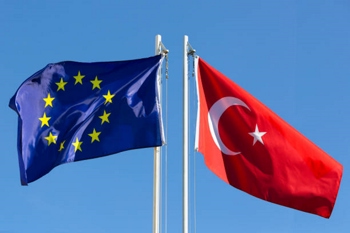
Technical Assistance for the Evaluation of 2014, 2015 and 2016 Türkiye Annual Programmes
- 2021 – 2022
- € 1 – 2 million
- Türkiye
The objective of the contract was to improve the overall management of IPA II financial assistance in Türkiye by enhancing the strategic link between the planning/programming, monitoring and evaluation activities of the National IPA Coordinator (NIPAC) office. In this context, the project team carried out 9 thematic evaluations of the EU funded contracts/interventions financed by IPA II assistance in Türkiye, and disseminated the lessons learnt and the results of IPA II interventions to the stakeholders and the wider public.
The evaluation exercise consisted of 9 thematic evaluations, extending the scope over 109 contracts within 43 activities/interventions of the 2014, 2015 and 2016 IPA Annual Programmes. The thematic areas covered by the evaluation included Agriculture, Energy, EU-Turkey Dialogue, Civil society, Fundamental rights, Border Surveillance, Removal Centres, Judiciary System and Penitentiary System, with all types of contracts, including services, works, supply, twinning, and direct grants. In total, more than 450 million EUR worth of assistance was covered by the evaluation.
The evaluation team has:
- assessed in both qualitative and quantitative terms the relevance, conditions of implementation and performance of each intervention/theme covered by the evaluation, particularly their efficiency, effectiveness, sustainability, and the EU added value;
- assessed the coherence of each intervention/theme with the policy objectives set out at national and European level with a view to identify its contribution in long-term;
- assessed the programming process, the monitoring system and process and, where appropriate, implementation arrangements;
- formulated rigorous conclusions based on objective, credible, reliable and valid findings and evidence, as well as explanatory factors that facilitate or hamper effectiveness and impact;
- provided NIPAC and other stakeholders with lessons learned (both positive and negative), best practices and recommendations to improve the quality and design of current interventions as well as of the future Annual Action Plans in the Framework of IPA III;
- engaged in a variety of dissemination activities aimed at raising awareness of IPA II, understanding of evaluation findings and recommendations, and inspiring further action among stakeholders.
Final evaluation for EU-GCC Clean Energy Network
- 2021 – 2022
- under € 500,000
- Bahrain, Kuwait, Oman, Qatar, Saudi Arabia, United Arab Emirates
Systematic and timely evaluation of its programmes and activities is an established priority of the European Commission. The focus of evaluations is on the assessment of achievements, the quality and the results of Actions in the context of an evolving cooperation policy with an increasing emphasis on result-oriented approaches and the contribution towards EU foreign policy objectives and the implementation of the SDGs. From this perspective, evaluations should look for evidence of why, whether or how these results are linked to the EU intervention and seek to identify the factors driving or hindering progress. Evaluations should provide an understanding of the cause and effect links between: inputs and activities, and outputs, outcomes and impacts. Evaluations should serve accountability, decision making, learning and management purposes.
The main objectives of this evaluation are to provide the relevant services of the European Union and the interested stakeholders with:
- an overall independent assessment of the past performance of the EU-GCC project, paying particular attention to its intermediate results measured against its expected objectives; and the reasons underpinning such results;
- key lessons learned, conclusions and related recommendations in order to improve current and future Actions.
Evaluation of the EU's support to climate change and environment in Enlargement and Neighbourhood regions
- 2021 – 2022
- under € 500,000
- ENI East, ENI South, IPA
The purpose of this study is i) to provide an independent and evidence-based assessment of the EU's past and current external action support in the policy area of environment and climate change in Enlargement and Neighbourhood regions; and ii) based on this assessment, to provide lessons learnt and recommendations for decision-makers at EU level.
The evaluation encompasses both spending and non-spending activities between 2014 and 2020. It examines all funding mechanisms and modalities of implementation used under the Instrument for Pre-Accession (IPA) II and the European Neighbourhood Instrument (ENI) in a variety of sectors (e.g. energy, water and waste management).
The evaluation covers all thematic areas related to environment and climate change, paying special attention to i) issues of mainstreaming in EU external aid programmes and projects for the ten sectors in the environmental chapter of the acquis; and ii) the EU support provided through international organisations, in particular support aimed at strengthening environment and climate change governance at national and regional levels. Process and context factors – conducive to or hampering the performance of EU support, including in terms of the convergence with EU legislation in the regions under scope – are also systematically assessed.
The evaluation aims to contribute to ongoing EU strategic discussions on the use of innovative financing, in particular blending, which is playing an increasingly important role in EU support to environment and climate change. The evaluation results are also useful in enriching ongoing reflections on the future role of European Development Finance Institutions in EU external action. Finally, in the context of the COVID-19 pandemic, the evaluation contributes to identifying good practices that can strengthen Team Europe’s ongoing efforts to help ‘build back better’ and design ‘risk-informed and climate-smart’ recovery actions.