Cambodia
10 references

The main objectives of this evaluation were to provide the relevant services of the European Union, the interested stakeholders with:
- an overall independent assessment of the performance of the “Support to enhanced cooperation in sustainable transboundary water management in the Mekong Basin”, paying particular attention to its different levels of results measured against its expected objectives and the reasons underpinning such results;
- key lessons learned, conclusions and related recommendations in order to improve future interventions (this will include the presentation of options for potential future follow-up intervention(s)).
This evaluation fed into the EU’s assessment of its engagement in the Mekong sub-region as well as potential follow-up intervention(s) that could possibly be financed under the Regional Multi-annual
Indicative Programme for Asia and the Pacific 2021-2027 (subject to the availability of funds). On this basis, the evaluation was forward-looking and took into account the EU’s bilateral cooperation with the countries of the Mekong, other relevant EU regional projects and programmes (for e.g. on forestry, wildlife, safe food systems), and potential for a Team Europe Initiative stemming from possible synergies with EU Member States’ relevant support (as the case may be).
- Partners:
- Particip (Lead), CAPA EEIG (managed by Particip), EMI (formerly: Cardno Belgium), Expertise Advisors (formerly: ETI Consulting)
- Keywords:
- Environment, Monitoring & Evaluation

The main purpose of this exercise is to produce an independent assessment of the past and current support of the EU in food and nutrition security, sustainable agriculture and fisheries at country, regional and global levels. The evaluation aims more specifically at:
- Informing strategic decisions on the implementation and future mid-term review of the new Multi-annual Financial Framework (MFF);
- Improving cooperation with EU partners under the new MFF and in the light of the new EU Sustainable Agri-Food Systems (SAFS) approach;
- Nurturing the design of new interventions in support of Agri-Food Systems transformations;
- Guiding choices for scaling up and replicating innovative/pilot approaches.
The evaluation covers non-spending (e.g., policy dialogue and advocacy) and spending activities funded under geographic (DCI Latin America, DCI Asia, EDF for Africa and Pacific and Caribbean) and thematic financing instruments (DCI-FOOD, DCI-ENV/DCI-GPGC, etc). The analysis considers interventions financed through other thematic budget lines such as the DCI-CSO&LA, and the Trust funds (e.g. the EU Trust Fund for Africa, Trust Fund Bêkou, Trust Fund for Colombia).
The temporal scope focuses on the MFF 2014-2020 and considers any major developments that occurred in 2021.
The geographical scope of the evaluation is essentially worldwide, but in practice will focus on 59 partner countries for which food and nutrition security or sustainable agriculture have been a priority sector in the previous MFF (2014-2020). A thorough selection of case studies identified a representative and evaluable sample of countries: Niger, Kenya, Malawi, Colombia, Haiti and Cambodia.
Following the 2020 4th Biennial Report and the 2019 EU Achievements Report, four EU priorities for addressing the challenges of food and nutrition security, as well as sustainable agriculture, are at the heart of the evaluation:
- Enhancing the resilience of the most vulnerable to food crises;
- Fostering specific nutrition outcomes;
- Increasing responsible investments in agriculture and food systems;
- Stimulating innovations for sustainable agri-food systems.
- Partners:
- Particip (Lead), AKADEMIYA2063, ECDPM, KIT - Royal Tropical Institute
- Keywords:
- Agriculture, Environment, Food and nutrition, Governance
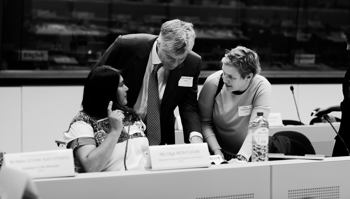
This action contributed to the effective implementation of international human rights instruments, principles and standards, primarily by means of exchange of best practices with partner countries.
The project was conceived to serve and preserve EU values and interests by means of complementary actions. It promoted policy cooperation with partner countries of strategic interest to the EU as well as enhanced the EU's visibility and coherence. This was done through the development of an analysis of the human rights situation in 13 countries, the organisation of seminars/roundtables and outreach activities. This ensured increased human rights awareness and access to human rights knowledge.
The Specific objectives were:
- 1)To ensure appropriate follow-up to political and human rights dialogues with partner countries. This includes, inter alia, facilitating south-south cooperation and exchange of ideas, knowledge and expertise on commonly identified human rights issues; providing technical assistance including in the form of trainings and roundtable discussions with governments in partner countries in order to strengthen their human rights expertise; facilitating interaction among representatives from the private sector and government representatives in partner countries to ensure compliance with the internationally recognised human rights framework; and facilitating regular interaction between partner countries with a view to building and reinforcing regional alliances which may contribute to serving EU interests in multilateral fora;
- 2)To contribute to bringing together experts from the EU and partner countries such as academics, private sector and government representatives in order to equip the EU to remain innovative and tackle emerging subjects of EU interest as a vehicle of cooperation with partner countries such as artificial intelligence, academic freedom, right to water and sanitation, economic social and cultural rights;
- 3)To support and enhance the monitoring of Generalised Scheme of Preferences (GSP) GSP+/ Everything but Arms (EBA) beneficiaries' commitments under the seven GSP core human rights conventions.
Internal studies analysing Human Rights situation in the following countries
- Armenia
- Bangladesh
- Bolivia
- Cabo Verde
- Cambodia
- Kyrgyztan
- Mongolia
- Myanmar
- Pakistan
- Philippines
- Sri Lanka
- Tajikistan
- Uzbekistan
- Partners:
- Particip (Lead), SICI Dominus
- Keywords:
- Civil society, Communication & media, Human rights, Monitoring & Evaluation

Evaluation of the Results-Based Financing for Low Carbon Energy Access Facility (RBFF) within Energising Development (EnDev)
- 2015 – 2020
- € 500,000 – 1 million
- Global
The overall objective was to evaluate the Results-Based Financing (RBF) for Low Carbon Energy Access Facility within the Energising Development (EnDev) Programme. The specific purposes of this evaluation were (i) to assess the performance of the RBF Facility over the period 2012-2020 against key OECD/DAC evaluation criteria, (ii) to understand and disseminate what had worked in which circumstances and why, and (iii) to derive lessons learned and recommendations for future programmes in RBF, energy access support through private sector development, and climate finance more broadly.
EnDev piloted an RBF scheme offering incentive payments to private sector market actors in the low-carbon off-grid energy sector in developing countries. Payments were made against pre-specified results achieved in delivery and sustainable operation of modern energy technologies and services.The aim of the RBF Facility within the global EnDev programme was to (i) increase access to modern energy services in developing countries (including vulnerable groups) (ii) through the use of decentralised renewable energy products and services, (iii) delivered as market-based approaches through private sector actors.
The scope of the evaluation encompassed 17 different RBF projects within the global EnDev programme. The evaluation focused on market changes and private sectors responses – such as market efficiency, business development, distribution strategies and technology adoption –, but also analysed the consumer perspective and the interaction with sector policies and regulation by national governments.
Outputs included:
- Inception Report.
- Baseline Report (review of existing baseline studies).
- Internal Process Review.
- A Mid-term Evaluation, including a set of project evaluations and a portfolio review.
- Deep impact studies of one selected country project in Tanzania.
- A cross-portfolio survey targeting RBF participants.
- Final Evaluation, including a set of project evaluations and a portfolio review.
- Concept notes for the various evaluation products.
- Networking conferences with individual projects to foster knowledge-sharing and learning experiences based on the above products and between projects.
Nine countries were targeted for field and remote evaluation: Bangladesh, Benin, Cambodia, Kenya, Peru, Rwanda, Tanzania, Uganda, Vietnam.
- Partners:
- Particip (Lead), Arepo Consult
- Keywords:
- Energy, Industry & private sector development, Monitoring & Evaluation
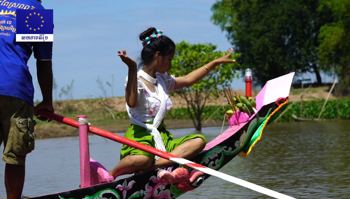
Visibility & communication for the European Union in Cambodia
- 2018 – 2020
- € 500,000 – 1 million
- Cambodia
At global level, the contract aimed to achieve the following objectives:
- the gradual establishment of an improved EU visibility in Cambodia as a key player in providing development cooperation assistance that promotes EU values such as good governance, democracy, human rights, and the rule of law, focusing on quality service delivery to all and finally inclusive and sustainable development– results;
- present the EU's achievements in the last 21 years towards making a difference in the lives of the common people in Cambodia;
- project a clear picture of the EU's image and the manner, in which the EU's global identity impacts on relations with Cambodia, through agreed overall messages, as well as specific thematic messages derived from the policy areas in which the EU is active;
- effective communication of the EU's development cooperation actions in Cambodia and the use of EU funds.
The specific objectives of this contract were:
- to develop, in consultation with the EU Delegation management, staff, and relevant stakeholders, a 'Communication and Visibility Strategy' with clearly defined goals, objectives, and achievable action plans, together with measurable indicators that can be monitored and measured over time.
- to support implementation of the Communication and Visibility Strategy by developing innovative approaches to showcase the EU's visibility in Cambodia guided by agreed overall messages and showcase through specific thematic messages covering EU policies and EU's projects and programmes.
- to enhance communication skills for EUD staff and EU implementing partners/organisations to deliver communication products that are of quality for Cambodian and European audiences.
- to contribute to change in perceptions of EUD staff and EU implementing partners/organisations towards the importance of the communication and visibility for the EU in Cambodia.
- Keywords:
- Communication & media

Legal Advisor to Ministry of Justice: Technical Support for Legal Aid Policy Development
- 2017 – 2018
- under € 500,000
- Cambodia
The global objective was to improve efficiency and professionalism in the judiciary with regards to a broader access to justice
The specific objective was to support the Ministry of Justice in establishing an effective system of legal aid.
- Partners:
- Particip (Lead), GOPA
- Keywords:
- Justice/Rule of Law
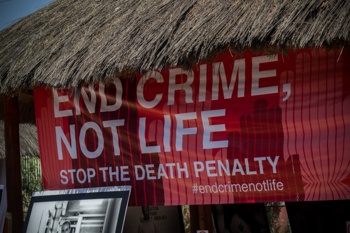
In the framework of its Partnership Instrument, the EU is pursuing action in support of the worldwide abolition of death penalty which is a top foreign policy objective and priority in the EU external human rights policy.
Asia appears as the next frontier in the international campaign against capital punishment. With eight retentionist countries of out 10 ASEAN Member States, South-East Asia (SEA) is a region where capital punishment remains a general standard, with strong roots in local history, cultures and religions/beliefs. A project "Moving away from Death Penalty in South-East Asia" has therefore been designed under the EU's Partnership Instrument. One of its components was this regional awareness campaign with the global objective to promote the abolition of death penalty in South-East Asia
Specific objectives:
- accompany the ASEAN Intergovernmental Commission on Human Rights (AICHR) death penalty study and recommendation process;
- develop and deploy a communication plan and tools in support of regional action on death penalty.
- Partners:
- Edelman Indonesia, HRWG, ICF Next
- Keywords:
- Communication & media, Human rights

The evaluation assessed three regional forestry projects that had support to small producers, development of value chains and the use of participatory approaches in common:
1. ForInfo: Livelihood improvement through generation and ownership of forest information by local people in products and services markets (Mekong, 2011–2015);
2. Finnfor-II: Integrated environmental and forest management co-operation (Central America, 2012–2016);
3. MFS: Sustainable forest management in the Andean region (South America, 2011–2016).
The purpose of the evaluation was to provide guidance to the Ministry for Foreign Affairs of Finland in planning and implementing regional forestry projects. It produced lessons for future forest sector co-operation and planning of other regional programmes. Specific objectives of the evaluation were to:
- Assess the added value of the regional approach compared to a country-based approach;
- Assess the success of the programmes in promoting sustainable forestry based livelihoods and increasing income of small producers;
- Identify the lessons learned from developing value chains and payment for ecosystem services.
The evaluation was conducted in several phases:
- An inception phase focusing on the design and the methodology of the evaluation;
- A desk and field phase with document review and visits to eight different countries in the three regions;
- A synthesis phase with global-level conclusions and recommendations across the three regional projects, presented in a final report to concerned stakeholders.
- Partners:
- Indufor Oy - Metsahallitus Group (Lead), Particip
- Keywords:
- Environment, Forestry, Industry & private sector development, Monitoring & Evaluation

Chapeau Contract for the Evaluation of the Common Implementing Regulation (CIR), Evaluation of the Development Co-operation Instrument (DCI), Evaluation of Greenland Decision (GD), Coherence Report on the External Financial Instruments and Co-ordination
- 2016 – 2017
- under € 500,000
- DCI
The Chapeau contract concerned the external financing instruments (EFIs) of the European Union. It was an overarching contract comprising several individual external financing instrument evaluations, a Coherence Report of the EFIs, and the process of co-ordination across all the EFIs.
The objective of each of the individual EFI evaluations was:
- to provide the relevant external relations services of the European Union and the wider public with an independent assessment of the European Union's EFIs, including complementarities/synergies between the given EFI and each of the other EFIs.
- to inform the programming and implementation of the current EFIs, as well as the next generation of the EFIs.
The deliverables of the Chapeau contract were as follows:
- the Development Co-operation Instrument (DCI) Evaluation Report.
- the Greenland Decision (GD) Evaluation Report.
The DCI and GD are two instruments in the set of EFIs which together form the multi-annual financing package for the programming cycle 2014 – 2020.
- the Common Implementing Regulation (CIR) Evaluation Report. The CIR is an 'umbrella' regulation which brings together the implementing rules for the following instruments – DCI, ENI, EIDHR, PI, IcSP, IPA II. The Greenland Decision and INSC follow these rules as well.
- a Coherence Report of the EFIs. The report showed to what extent the existing instruments were, when considered together, still adapted to the evolving international context and still contribute to a consistent Union external action.
- Co-ordination.The objective of the co-ordination tasks was to ensure a reasonably consistent and coherent approach across the set of individual EFI evaluations. The Chapeau contract team leader had the specific role of working with, drawing on and co-ordinating knowledge produced by the evaluations within this contract and the evaluation teams of the other EFI evaluations.
The reports are availble at:
DCI: https://ec.europa.eu/europeaid/draft-evaluation-report-external-financing-instruments-development-cooperation-instrument-dci_en
Greenland: https://ec.europa.eu/europeaid/evaluation-greenland-decision-gd-draft-report_en
CIR: https://ec.europa.eu/europeaid/draft-evaluation-report-external-financing-instruments-common-implementing-regulation_en
- Partners:
- Particip (Lead), ECDPM, itad
- Keywords:
- Agriculture, Civil society, Education, Energy, Food and nutrition, Forestry, Governance, Health, Human rights, Industry & private sector development, Institutional development, Justice/Rule of Law, Monitoring & Evaluation

Strategic Environmental Assessment of the Strategic Planning Framework for Fisheries (SPF)2010-2024 in Cambodia
- 2016 – 2017
- under € 500,000
- Cambodia
The global objective of this project is to contribute significantly to the achievement of the Cambodia's strategic goals for the fisheries sector (including aquaculture), while ensuring that the growth in this sector is achieved in an equitable, inclusive and environmentally responsible way, resilient to climate change.
Specific objectives of this Strategic Environmental Assessment (SEA) are to describe and assess:
- The likely significant effects on the environment of implementing the Strategic Planning Framework for Fisheries 2010-2024 and the attached National Aquaculture Development Strategy (NADS);
- The most important environmental, natural resource-related and climate change-related constraints bearing on the performance of the fisheries and aquaculture sector in Cambodia;
- The opportunities for the CAPFish programme to contribute to enhancing the state of the environment, building climate resilience of the sector and the population, and promoting low carbon development and the transition to the green economy.
- To provide clear and realistic recommendations targeting the Government of Cambodia and the EU Delegation in order to enhance the environmental sustainability and climate resilience of the sector's strategy and the contributions through EU development cooperation support, in particular the formulation of CAPFish's capture fisheries component and the preparation I inception of its Aquaculture component
This assessment will then be taken into account in the launch to the CAPFish Aquaculture component and the formulation of the CAPFish Capture Fisheries component. The SEA will provide decision makers (in the partner country as well as the EU and other donors) with relevant information to assess the environmental challenges and opportunities (including climate-related ones) with regard to the Strategic Planning Framework for Fisheries.