
Our projects
Explore Particip’s project experience across countries, sectors and areas of expertise.
Our references provide an overview of completed and ongoing assignments, including their objectives, geographic scope, duration and contract value.
Showing 381–390 of 511 references

Corporate Emergency Evaluation of WFP’s Response in Myanmar (2018-2022)
- 2022 – 2023
- under € 500,000
- Myanmar
This independent evaluation of the Corporate Emergency Evaluation of WFP’s Response in Myanmar assessed the appropriateness, effectiveness and efficiency of its emergency response in multiple crises in the country from 2017 to 2022.
The evaluation served the double purpose of providing: a) evidence and accountability (performance and result assessment) for results to WFP stakeholders; and b) provide learning (why certain results occurred or not, lessons and evidence for decision-making about a potential scale-up) on WFP’s performance in the Myanmar emergency context, specifically for developing WFP’s future engagement in Myanmar and for broader learning on WFP complex emergency responses.
The CEE‘s subject and focus followed a modular approach, including:
- Strategic positioning vis-à-vis evolving needs (incl. informed strategy, assistance adaptation to changing needs, internal coherency of CSP and budgets revisions, well targeted assistance for food insecure and vulnerable groups).
- Effectiveness in achieving CSP objectives (incl. delivering on planned activities, outputs and strategic outcomes, coverage of assistance, preparedness to respond to crisis, gender equality and empowerment of women)
- Connectedness of assistance (incl. assistance in taps into local capacities and is community-driven, transition and exit, tailored to local capacities and context, strategic linkages to establish along the triple nexus between humanitarian action, development, and contributions to peace, environmental sustainability)
- Partnerships and coordination (incl. coherent and aligned with the wider UN and humanitarian sector, developed appropriate and effective partnerships).
- Humanitarian principles, protection and AAP (incl. adherence to humanitarian principles and “Do No Harm” in all phases of its assistance, managing trade-offs between humanitarian principles, protection challenges faced personnel and its target populations, accountability to affected populations).
- Efficiency (incl. ability to mobilise adequate resources, activities and outputs delivered within the intended timeframe; activities have been cost-efficient; adequacy of corporate support during the consecutive crises; management of operational risks.
Cross-cutting themes included: humanitarian assistance in conflict and peri-urban settings, food and nutrition security, school-based programmes, nutrition-specific interventions and smallholder farmers support.
The evaluation used a mixed methods approach relying on a variety of primary and secondary sources, including desk review, key informant interviews, focus and groups discussions, additional questions to the post-distribution monitoring, phone survey, and geospatial analysis. Systematic triangulation across different sources and methods was carried out to validate findings and avoid bias in the evaluative judgement.
The final report is available at: https://www.wfp.org/publications/corporate-emergency-evaluation-wfps-response-myanmar-2018-2022
- Partners:
- Particip (Lead)
- Keywords:
- Food and nutrition, Human rights, Humanitarian aid, Monitoring & Evaluation, Rural and urban development

Evaluation of Finland's International Climate Finance
- 2022 – 2023
- under € 500,000
- Global
The ultimate purpose of the forward-looking evaluation was two-fold. Firstly, it informed the MFA on the effectiveness, coherence and relevance of climate finance and what kind of results had been achieved with the various development policy and cooperation instruments over the period 2016-22. Secondly, the evaluation provided information and supported the implementation and further development of the Action Plan for Finland’s Public International Climate Finance to maximize the effectiveness and impact of Finland’s climate finance, especially regarding long-term planning and coordination of climate finance as a whole.
The specific objectives of the evaluation were
- To assess the results of Finland’s international climate finance and policy influencing in directing finance, with due consideration of the opportunities and barriers at both national and global levels
- To assess the relevance and coherence of Finland’s international climate finance
- To assess the functioning of partnerships and co-operation in climate change mitigation and adaptation and whether the current balance of partnerships of Finnish influencing is optimal
- To study relevant peer countries’ experiences in order to learn best practices
- To provide well-justified and evidence-based recommendations on how the MFA together with relevant stakeholders could further improve their actions for a more effective, coherent and relevant response to developing countries’ climate finance needs and for funding priorities through the different cooperation instruments
- Partners:
- Particip (Lead), NIRAS
- Keywords:
- Environment, Monitoring & Evaluation, Public finance/budgeting

Mid-term evaluation of 'Support the Development and Operationalization of the Partnership for Smart and Sustainable Urbanisation for India and the EU, IUC Component IV' (IEUP)
- 2022 – 2023
- under € 500,000
- India
The main objectives of this evaluation was to provide the relevant services of the European Union, the interested stakeholders with:
- an overall independent assessment of the past performance of the Action ‘Support the Development and Operationalization of the Partnership for Smart and Sustainable Urbanisation for India and the EU’, paying particular attention to its intermediate results measured against its expected objectives; and the reasons underpinning such results;
- key lessons learned, conclusions and related recommendations in order to improve current and future Actions, including improving their coordination, coherence and efficiency.
The evaluation team assessed the Action using the five standard DAC evaluation criteria, namely: relevance, effectiveness, efficiency, sustainability and perspective of impact. In addition, the evaluation team assessed two EU specific evaluation criteria:
- the EU added value (the extent to which the Action brings additional benefits to what would have resulted from Member States' interventions only);
- the coherence of the Action itself; 1) with the EU strategy in India covered by the EU-India Partnership on Smart and Sustainable Urbanisation and 2) with other EU policies and EU and Member State Actions.
The evaluation team furthermore considered whether gender, environment and climate change were mainstreamed; the relevant SDGs and their interlinkages were identified; the principle of Leave No-One Behind and the rights-based approach methodology was followed in the identification/formulation documents and the extent to which they have been reflected in the implementation of the Action, its governance and monitoring.
- Keywords:
- Monitoring & Evaluation, Rural and urban development
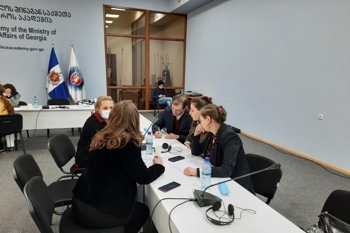
Technical assistance support for public administration reforms in Georgia
- 2019 – 2023
- € 5 – 10 million
- Georgia
The purposes of this contract are as follows:
- 1.Policy development and coordination: to improve results-based approach in policy-development, coordination and implementation following the results of SIGMA baseline assessment in 2018;
- 2.Coordination and structuration of public administration: to improve efficiency of the administration by improved intra and inter-ministerial business processes related to policy making and service delivery;
- 3.Civil service reform: to streamline the implementation of the civil service reform in public institutions ;
- 4.Accountability: to increase the accessibility, accountability and transparency of the executive branch and to combat corruption by strengthened policy development and implementation of the anti-corruption and transparency national policies at all levels;
- 5.Public service delivery: to improve public service design and delivery and establish an efficient, accountable and transparent institutional and legal framework for efficiently, timely and reliably delivered public services (including electronic services);
- 6.Communication: to raise public awareness and increase visibility of the Government’s public administration reform agenda as well as on available public services.
- Partners:
- GINGER Group (ex SOFRECO) (Lead), KAS, Particip
- Keywords:
- Communication & media, Governance, Institutional development, Project implementation / Technical Assistance, Training

The main objectives of this evaluation are to provide the relevant services of the European Union, the interested stakeholders with:
- an overall independent assessment of the past performance of the Partnership Instrument (PI) funded Policy Dialogues Support Facilities (PDSFs) to be evaluated, paying particular attention to the approach taken under the different PDSFs, as well as paying particular attention to the intermediate or final results measured against their expected objectives; and the reasons underpinning such results;
- key lessons learned, conclusions and related recommendations in relation to the PI approach and use of PDSFs and in order to improve current and future Actions.
The specific rationale for undertaking this evaluation is to assess the relevance, outcomes, and approach of PI funded Policy Dialogues Support Facilities (PDSFs), as well as the added value of the activities in strengthening EU’s partnerships/alliances and its position as a global player in the countries concerned, and reinforcing multilateralism, as expressed in the specific objectives of the PI.
This evaluation contract covers 13 actions. The work to be covered under this contract is a hybrid evaluation of individual actions and, drawing conclusions, recommendations and lessons learned, where possible, when looking at the package of these projects as a whole and the approaches taken on how to use the “SPDF approach” to influence effectively EU interests in the respective countries.
The focus of the evaluation is two-fold:
- On the assessment of the approach taken in relation to PDSFs under the different Actions, progress to date and, by explaining why progress is happening or is not happening as planned, provide recommendations on how to improve the approach in order to achieve the expected objectives of the PI, taking into account problems and opportunities.
- This evaluation will also serve to understand the performance of the Actions, its enabling factors and those hampering a proper delivery of results as to inform the planning of the future funded Policy Dialogues Support Facilities.
- Partners:
- Particip (Lead), Idem Concept
- Keywords:
- Monitoring & Evaluation

Review of the MFA’s support to international recruitment
- 2022 – 2023
- under € 500,000
- Global
The overall purpose of this review was to gain a clear picture of international recruitments supported by the Finnish Ministry for Foreign Affairs (MFA). This allows the MFA to further develop this tool as a strategic element for advancing Finland’s development, trade, foreign and security policies.
More specifically, the objectives of this review were:
- To synthesise the goals and the rationale for international recruitments;
- To describe how international recruitments and secondments are managed at the MFA;
- To evaluate the degree to which the JPO, UNV and SARC programmes have contributed to their stated objectives; and
- To formulate evidence-based conclusions and recommendations – including alternative options – for more strategic and effective management of senior-level international recruitments, secondments and the JPO, UNV and SARC programmes in the future.
In terms of scope, the MFA’s support to different international career paths (EU, UN, development banks, JPOs, UNVs, SARCs) as well as secondments administered and/or supported by MFA were included in this review. The temporal scope of the evaluation covered international recruitment activities from 2018 to 2022 but also made use of earlier evaluations on the subject.
- Partners:
- Niras Finland Oy (Lead), Particip
- Keywords:
- Institutional development, Monitoring & Evaluation

The Gender Equality and Women’s Empowerment (GEWE) budget support programme - Mid-Term Evaluation
- 2023 – 2023
- under € 500,000
- South Africa
The main objectives of this evaluation were to provide the relevant services of the European Union and, the interested stakeholders with:
- an overall independent assessment of the performance of the Gender Equality and Women Empowerment (GEWE) budget support programme in South Africa, paying particular attention to its different levels of results measured against its expected objectives; and the reasons underpinning such results.
- key lessons learned, conclusions and related recommendations in order to improve the current implementation of the Gender Equality and Women Empowerment (GEWE) budget support programme in South Africa.
In particular, this evaluation served to:
1. Monitor progress and implementation status of the GEWE programme and predict its outcomes.
2. Identify the improvements in government policies, institutional structures, processes, and administrative arrangements to be made by the DWYPD, DSD, National Treasury and DPME to maximise the implementation of activities towards increased impact of the BS program.
3. Recommend modifications to the current programme, including, where appropriate, to the timelines and the definition of variable indicators to ensure ambitious programme objectives are fully achieved.
The main users of this evaluation are the European Union Delegation in South Africa, the GEWE Program Steering Committee (PSC) and the implementers, i.e. DWYPD, DSD, National Treasury and DPME.
- Keywords:
- Human rights, Monitoring & Evaluation, Public finance/budgeting
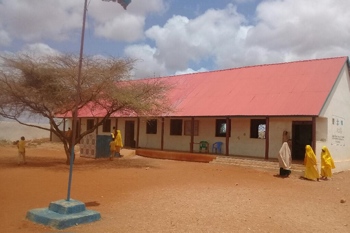
Third Party Monitoring & Evaluation III - EDF
- 2021 – 2023
- under € 500,000
- Somalia
The objective of the Third Party Monitoring and Evaluation activity was to monitor and evaluate the execution and implementation of EU funded projects in Somalia. Monitoring missions were carried out in all the regions of Somalia, including direct field visits to all the locations where the project activities were being implemented. The contract had three main purposes:
- Result 1: Provided specific monitoring reports on the implementation progress of ongoing EDF priority projects. These reports clearly reflected relevance, effectiveness, efficiency, sustainability, and impact, along with conclusions and any other relevant information collected during the monitoring mission.
- Result 2: Offered recommendations, and where relevant, improved indicators of outputs, outcomes, and impact that could be applied in the remainder of the implementation of the projects.
- Result 3: Provided specific monitoring reports on thematic issues as specified and requested by the EU Delegation.
- Partners:
- Particip (Lead)
- Keywords:
- Monitoring & Evaluation

Support to the formulation of an action to support mobility
- 2022 – 2023
- under € 500,000
- Morocco
The main mission of this project was to facilitate and support the Delegation of the
European Union in Morocco (EUD) in close coordination with the services concerned for the design and the implementation of actions in connection with the bilateral programming of EU-Morocco cooperation and the mobility component of the new pact for migration and asylum (Talent Partnership initiative) according to two main axes.
This contract had the following specific objectives:
- Better knowledge and coordination of the various initiatives and support for EU-MOROCCO mobility
- The formulation of a federative action to support mobility, MOBWINWIN within the framework of the 2022 annual programming of EU-MOROCCO cooperation.
- Partners:
- PROMAN (Lead), Particip

Evaluation, identification and formulation of a post-AUSP IV institutional support programme to the AU - Extension
- 2023 – 2023
- under € 500,000
- AU region
The global objective was the successful implementation of the AU-EU partnership priorities and of the AU institutional reform and Agenda 2063.
More specifically the project aimed to reinforce the institutional and operational capacity of the AU.
- Keywords:
- Monitoring & Evaluation