Indonesia
14 references

The evaluation of the Danish Energy Partnership Programmes (DEPP) covers more than a decade of bilateral cooperation supporting the green energy transition in emerging economies. Since 2012, these programmes have engaged Denmark with key partner countries such as China, India, South Africa, Vietnam, and Mexico, whose future energy choices will significantly shape global emissions. DEPP provides technical assistance in long-term energy planning, renewable energy integration, energy efficiency, and the development of regulatory frameworks.
The overall objective of the evaluation is to strengthen accountability and learning by documenting results and assessing DEPP’s contributions to capacity strengthening, as well as their strengths and weaknesses. More specifically, the study will analyse the programmes’ relevance, coherence, effectiveness, efficiency, impact, and sustainability. By doing so, it will generate lessons learned and actionable recommendations to inform the design and implementation of future programmes, consolidating Denmark’s role as a trusted partner in advancing global climate and energy goals
.
- Partners:
- NCG Denmark (Lead), DEM, Particip
Framework Agreement for Decentralized Evaluations and Reviews (FADER) - Lot 1
- 2023 – 2027
- € 2 – 5 million
- Ethiopia, Indonesia, Kyrgyzstan, Nepal, Tajikistan, Tanzania, Ukraine, Uzbekistan, Viet Nam
The Framework Agreement for Decentralized Evaluations and Reviews (FADER) LOT 1 covers different types of appraisals, evaluations and reviews of development cooperation projects and programmes funded by the Ministry for Foreign Affairs of Finland (MFA).
The main users of the FADER are the regional departments of the MFA, which have regional and country specific development cooperation programmes/projects in Africa, the Middle East, Asia, Eastern Europe and Central Asia.
The following assignments are implemented by Particip GmbH:
- Project appraisal: Strengthening inclusive education system in support of Ethiopia's general education sectoral programme,
- Appraisal of the Local Adaptation to Climate Change- Project in Nepal,
- Project appraisal: Rural Economic Development (RED) Phase I in Ethiopia,
- Appraisal of the “Forestry, Land Use and Value Chains Development in Tanzania” (FORLAND) programme,
- Appraisal of Tax Sector Support to Tanzania (TAXTAN) programme.
- Keywords:
- Agriculture, Education, Environment, Forestry, Governance, Monitoring & Evaluation, Rural and urban development

Mid-Term Evaluation of the Youth Action Plan in EU External Action (2022-2027)
- 2025 – 2026
- ACP (Africa), ASEAN region, Latin America & Caribbean
The Youth Action Plan (YAP) in EU External Action 2022–2027, adopted in October 2022, aims to promote meaningful youth participation and empowerment in EU external action for sustainable development, equality, and peace. The global objective of this evaluation is twofold:
- To provide the relevant EU services and stakeholders with an independent assessment of the performance of the YAP, ensuring accountability by examining results at different levels against expected objectives and analysing the factors underpinning those results.
- To identify key lessons learned, conclusions, and recommendations regarding the YAP in order to inform decision-makers on how to improve current and future interventions on youth mainstreaming in EU policies, dialogues, and actions, notably within Global Gateway initiatives.
The specific objectives are:
- To assess the performance of the YAP to date in achieving its objectives and expected results, identifying best practices and gaps in implementation.
- To assess the relevance, coherence, efficiency, effectiveness, sustainability, and prospects for impact of DG INTPA’s youth-targeted actions and youth mainstreaming (at country, regional, and global levels) in relation to YAP objectives.
- To assess the relevance, coherence, efficiency, effectiveness, sustainability, and prospects for impact of EU initiatives undertaken to enhance institutional youth engagement.
- To inform decision-making on the implementation and further development of youth policy and priorities in EU external action up to 2027 and into the next programming cycle (possible YAP II), contributing to EU priorities and, in particular, the implementation of Global Gateway.
- Partners:
- Particip (Lead), ECDPM
- Keywords:
- Monitoring & Evaluation

Evaluation of ICI cooperation in Asia
- 2024 – 2025
- under € 500,000
- Indonesia, Kyrgyzstan, Nepal, Tajikistan, Uzbekistan, Viet Nam
The evaluation provided an assessment of the support delivered through Finland’s Ministry for Foreign Affairs' (MFA) Institutional Cooperation Instrument (ICI) in Central Asia (Uzbekistan, Tajikistan, Kyrgyzstan), Vietnam, Nepal, and Indonesia. By applying the OECD DAC criteria, the evaluation examined 12 ICI-funded projects, offering insights into both their individual achievements and challenges, as well as insights into the instrument as a whole.
The primary aim of the evaluation was to provide objective and impartial insights that would enhance accountability, promote learning, and support informed decision-making. It specifically focused on assessing the effectiveness, impact, and sustainability of the projects under the ICI programme.
A key aspect of the evaluation was identifying valuable lessons learned that could guide future cooperation efforts and contribute to a broader evaluation of Finland’s development cooperation instruments. Beyond assessing individual projects, the evaluation also explored the efficiency of MFA Finland and ICI consultant support, examining how effectively these contributions facilitated successful project implementation. Additionally, it assessed the sustainability and long-term impact of capacity-building efforts, while addressing important policy considerations for the Government of Finland.
Key focus areas were:
- Project-Level Evaluation: All 12 projects were assessed using the OECD evaluation criteria. Within the scope of available resources, a select few projects received a more comprehensive review, ensuring representation from each of the key Finnish institutions involved in the projects.
- Programme-Level Evaluation: The evaluation explored the long-term sustainability and impact of capacity-building initiatives and other investments made through the ICI Asia programme.
- Formative Evaluation: The study also assessed how the MFA and ICI consultants could better support the implementation of ICI projects, with a focus on improving operational efficiency.
- Policy and Strategic Consideration: The evaluation addressed several broader policy aspects, such as: i) The effectiveness of the ICI Asia programme in leveraging market access and opportunities for Finnish actors, including the private sector; ii) The potential for Finnish private sector actors to access Public Investment Fund (PIF) resources or other funding sources beyond ICI funding; iii) The role of linkages between ICI projects and other Finnish entities, including universities and civil society organisations (CSOs), and the perceived benefits and challenges of such connections.
- Keywords:
- Environment, Forestry, Institutional development, Monitoring & Evaluation

Thematic evaluation of FPI.2 managed responses to Counter Terrorism and Preventing/Countering Violent Extremism (CT-P/CVE) in beneficiary countries (2017-2022)
- 2022 – 2023
- under € 500,000
- Albania, Burkina Faso, Indonesia, Ivory Coast, Jordan, Kazakhstan, Kosovo, Kyrgyzstan, Lebanon, Malaysia, Maldives, Morocco, Mozambique, Niger, North Macedonia, Pakistan, Philippines, Senegal, Sri Lanka, Tajikistan, Thailand, Tunisia, Turkmenistan, Uzbekistan
The main objectives of this evaluation are to provide the relevant services of the European Union, the interested stakeholders with:
- An overall independent assessment of the performance of selected CT-P/CVE measures funded by FPI.2 during the years 2017-2022, paying particular attention to its different levels of results measured against its expected objectives; and the reasons underpinning such results
- As a particular approach to regional actions, a specific case study shall be carried out to assess the regional framework for support to CT-P/CVE measures in the Asian context, managed by the Regional Team in Bangkok. It is expected that the present evaluation assesses the relevance, added value and success of developing a model for CT and P/CVE actions, respectively, which have been replicated in different countries/contexts in Asia/Pacific (in Pakistan, Sri Lanka and Maldives for CT; and in Southeast Asia, Sri Lanka and Maldives for P/CVE). If deemed relevant, links can also be made to regional approaches in other RTs;
- Key lessons learned, conclusions and related recommendations in order to improve current and future interventions.
In particular, this evaluation will serve the contracting authority and other interested services to better understand the performance of the Intervention, its enabling factors and those hampering a proper delivery of results to inform the planning and implementation of current and future support to tackle CTP/CVE.
The main use of the results of the evaluation is expected to be
- To draw general lessons that can be used for the future approach to interventions in the sector
- To draw specific lessons that can be replicated in other similar interventions
- To draw specific lessons from the regional approaches, in particular the one applied by the Regional Team in Bangkok in terms of stocktaking, dynamics and replicability.
The main users of this evaluation will be the contracting authority, FPI.2, including its Regional Teams in Bangkok, Nairobi, Dakar, Eastern Europe and Central Asia (managed from Brussels). The Regional Team in Brasilia is less involved since they currently do not manage any CT-P/CVE projects.
- Keywords:
- Monitoring & Evaluation

The main objectives of this evaluation are to provide the relevant services of the European Union, the interested stakeholders with:
- an overall independent assessment of the past performance of the Partnership Instrument (PI) funded Policy Dialogues Support Facilities (PDSFs) to be evaluated, paying particular attention to the approach taken under the different PDSFs, as well as paying particular attention to the intermediate or final results measured against their expected objectives; and the reasons underpinning such results;
- key lessons learned, conclusions and related recommendations in relation to the PI approach and use of PDSFs and in order to improve current and future Actions.
The specific rationale for undertaking this evaluation is to assess the relevance, outcomes, and approach of PI funded Policy Dialogues Support Facilities (PDSFs), as well as the added value of the activities in strengthening EU’s partnerships/alliances and its position as a global player in the countries concerned, and reinforcing multilateralism, as expressed in the specific objectives of the PI.
This evaluation contract covers 13 actions. The work to be covered under this contract is a hybrid evaluation of individual actions and, drawing conclusions, recommendations and lessons learned, where possible, when looking at the package of these projects as a whole and the approaches taken on how to use the “SPDF approach” to influence effectively EU interests in the respective countries.
The focus of the evaluation is two-fold:
- On the assessment of the approach taken in relation to PDSFs under the different Actions, progress to date and, by explaining why progress is happening or is not happening as planned, provide recommendations on how to improve the approach in order to achieve the expected objectives of the PI, taking into account problems and opportunities.
- This evaluation will also serve to understand the performance of the Actions, its enabling factors and those hampering a proper delivery of results as to inform the planning of the future funded Policy Dialogues Support Facilities.
- Partners:
- Particip (Lead), Idem Concept
- Keywords:
- Monitoring & Evaluation

The purpose of this assignment is to collect, collate and systematically present, in the form of Evaluation Portraits and Country Evaluation Briefs, findings from existing evaluations and other documents of development interventions in five Norwegian partner countries: Colombia, Ghana, Uganda, Indonesia and Niger. The first four countries are characterised as partners “for long-term development” while Niger is characterised as a partner “for stabilisation and conflict prevention”.
The objective of this assignment is to provide accessible and relevant knowledge about Norwegian and other donors’ development efforts in Norway’s partner countries through systematising findings from existing evaluations of development interventions. The exercise emphasises learning, supplementing a growing database of systematised, relevant, context-specific and accessible information. Beyond its intrinsic value, this knowledge forms a basis for development policies and strategies, contributes to development efforts in the field and reveals knowledge gaps that could be covered by future evaluations.
The main target groups for the study are the Norwegian Ministry of Foreign Affairs, Norad and Norwegian embassies in the selected partner countries and elsewhere.
The assignment is guided by the following questions:
- What are the key contextual features characterising each of the studied case countries, and how do these contextual features affect development and/or humanitarian interventions in the respective country/-ies?
- What is the nature of the programmes and projects studied, including levels and trends of development/humanitarian support?
- What are the major findings in the assessed material concerning the goals, methods, challenges, results and sustainability of the interventions studied?
- How do the studied interventions perform in terms of such cross-cutting issues as human rights; women’s rights and gender equality; climate and environment; and anti-corruption?
- Which intended and, if any, unintended effects of the interventions, positive and negative, direct or indirect, can be identified?
Report available here: https://www.norad.no/en/front/evaluation/about-evaluation-department/evaluation-series/country-evaluation-briefs/
- Keywords:
- Monitoring & Evaluation

Systematic and timely evaluation of its programmes and activities is an established priority of the European Commission.
The focus of evaluations is on the assessment of achievements, the quality and the results of Actions in the context of an evolving cooperation policy with an increasing emphasis on result-oriented approaches and the contribution towards EU foreign policy objectives and the implementation of the SDGs.
From this perspective, evaluations should look for evidence of why, whether or how these results are linked to the EU intervention and seek to identify the factors driving or hindering progress.
Evaluations should provide an understanding of the cause and effect links between: inputs and activities, and outputs, outcomes and impacts. Evaluations should serve accountability, decision making, learning and management purposes.
The main objectives of this evaluation are to provide the relevant services of the European Union and the interested stakeholders with:
- an overall independent assessment of the past performance of the Action ‘Reducing plastic wast and marine litter in East and South East Asia – Supporting a transition to a circular economy in the region’ (PI/2019/405-400), paying particular attention to its intermediate results measured against its expected objectives; and the reasons underpinning such results;
- key lessons learned, conclusions and related recommendations in order to improve current and future Actions.
- Keywords:
- Environment, Monitoring & Evaluation

Evaluation of Danish Funding for Climate Change Mitigation in Developing Countries
- 2020 – 2021
- under € 500,000
- Ethiopia, Indonesia, South Africa, Viet Nam
The objectives of the evaluation were threefold, covering both accountability and learning purposes:
- To document achievements in terms of assisting developing countries to mitigate climate change through the provision of Danish support in the period from 2013, both through the climate change envelope (CE) and through other development assistance channels;
- To analyse the outcomes of climate change mitigation funding, with due consideration of the opportunities and barriers at both national and global levels;
- On the basis of the lessons learned from the evaluation, to provide recommendations pertaining to future funding priorities.
On the basis of the above, four main evaluation questions had been identified:
- Taking into account the strategic objectives of development cooperation and the guiding principles for the CE, what are the main results of Danish funding for climate change mitigation since 2013?
- How has climate change mitigation funding responded to the aims and needs defined by developing countries in nationally determined contributions (NDCs), leading to measurable GHG emission reductions and to pro-poor low carbon development?
- How has climate change mitigation funding contributed to transformational change and the sustainable development goals in a manner consistent with Danish comparative advantages and opportunities and in terms of influencing global agendas for climate action?
- What are the main lessons learned from climate change mitigation funding that can determine strategic directions and operational considerations in the coming years?
- Partners:
- Particip (Lead), ODI
- Keywords:
- Energy, Environment, Forestry, Monitoring & Evaluation

Review of Findings from Indonesia Evaluations
- 2019 – 2019
- under € 500,000
- Indonesia
To support the planning for the upcoming evaluation of the Indonesia Country Program, the International Assistance Evaluation division (PRA) has commissioned a literature review of findings and lessons learned arising from donor evaluations of official development assistance (ODA) programs and projects in Indonesia as well as academic sources.
The purpose of this study was to review available thematic evaluations, country programme evaluations and major project evaluations in Indonesia. In addition, it was agreed to gather, on a best effort basis, information on how ODA support has evolved for countries with an economy in transition, with focus on Colombia, South-Africa and Nigeria.
The study focused on six sectors: sustainable economic growth, natural resource management, technical and vocational education and training, advancing democracy, public sector capacity building, regulatory reform and the six DAC criteria (relevance, efficiency, effectiveness, impact and sustainability).
- Keywords:
- Monitoring & Evaluation

IDENTIFICATION AND FORMULATION OF A REGIONAL FLEGT SUPPORT PROGRAMME
- 2017 – 2018
- under € 500,000
- Indonesia
1) Sound comparative analysis on status quo, coherencies, complementarities and conflicts between national timber legality systems in ASEAN and ASEAN + 3 developed
2) Intervention options for the EU to support the implementation of the ASEAN workplan on FLEG, including an ASEAN common position on timber legality and development of an ASEAN timber legality baseline supportive to robust and effective VPA agreements identified
3) Intervention options for the EU to maintain the momentum of forest governance and trade approaches in ASEAN +3 developed
4) Formulation of a detailed design of the regional support programme through Identification and
Formulation of an Action Document (AD) in line with EU guidelines and official updated templates
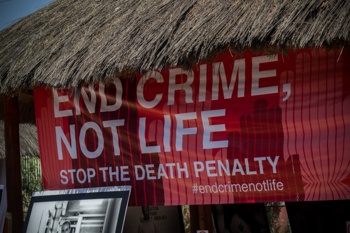
In the framework of its Partnership Instrument, the EU is pursuing action in support of the worldwide abolition of death penalty which is a top foreign policy objective and priority in the EU external human rights policy.
Asia appears as the next frontier in the international campaign against capital punishment. With eight retentionist countries of out 10 ASEAN Member States, South-East Asia (SEA) is a region where capital punishment remains a general standard, with strong roots in local history, cultures and religions/beliefs. A project "Moving away from Death Penalty in South-East Asia" has therefore been designed under the EU's Partnership Instrument. One of its components was this regional awareness campaign with the global objective to promote the abolition of death penalty in South-East Asia
Specific objectives:
- accompany the ASEAN Intergovernmental Commission on Human Rights (AICHR) death penalty study and recommendation process;
- develop and deploy a communication plan and tools in support of regional action on death penalty.
- Partners:
- Edelman Indonesia, HRWG, ICF Next
- Keywords:
- Communication & media, Human rights

Mid-Term Review of European Union Support to Higher Education in ASEAN Region
- 2017 – 2017
- under € 500,000
- Indonesia
The EU Support to Higher Education in ASEAN Region (EU SHARE) is a 48-months project which Financing
Agreement was signed 28 March 2014 with the total EU contribution of EUR 10 million.
The Programme aims at strengthening regional cooperation, enhance the quality, regional competitiveness and internationalisation of ASEAN higher education institutions contributing to an
ASEAN Community in 2015 and beyond.
The Specific objectives of the programme to be evaluated are:
1. To contribute to the harmonisation of ASEAN higher education area through the formulation of
ASEAN higher education frameworks taking into account the EU experience and
2. To support mutual recognition and student mobility among higher education institution in ASEAN to strengthen people-to-people connectivity.
The expected results are:
1. Policy dialogue on strategic issues of the harmonisation of ASEAN higher education enhanced
2. ASEAN Qualifications Reference Framework and ASEAN Regional Quality Assurance further developed and supported;
3. ASEAN Credit Transfer System (ACTS), which can also be linked to an ASEAN-EU Credit Transfer
System (AECTS) further developed and tested through mobility with scholarships.
4. An intra-ASEAN student mobility scheme as well as an ASEAN-EU student mobility scheme, which both also serve to test credit transfer.
The main objectives of this evaluation are to provide the relevant services of the European Union, the interested stakeholders with:
- an overall independent assessment of the performance of the EU Support to Higher Education in
ASEAN Region, paying particular attention to its intermediate results measured against its objectives;
- Key lessons learned and recommendations in order to improve current (if relevant) and future
Programmes.
- Assess the benefits and propose scope / contents of potential limited extension of programme.
In particular, this evaluation will serve as a means to assess the relevance, effectiveness, efficiency, impact, sustainability and visibility of the Programme.
The main users of this evaluation will be the European Union, the ASEAN Secretariat, Committee of
Permanent Representatives to ASEAN (CPR), Directorate of Human Development Directorate and Head of the Education, Youth and Sport Division (EYSD) of ASEAN Secretariat, ASEAN Member States, the Senior
Official Meeting on Education, the grant contractor and its consortium members and other relevant stakeholders.
- Partners:
- PROMAN (Lead), Lattanzio Group, Particip
- Keywords:
- Education, Monitoring & Evaluation

Identification and formulation of integrated programs in enhancing the capacity of AHA centre and role of the ASEAN emergency response and assessment team (ASEAN-ERAT)
- 2016 – 2017
- under € 500,000
- Indonesia
The global objective was to elaborate clear options and modalities of intervention for appropriate EU-ASEAN support actions in enhancing the capacity of AHA Centre (ASEAN Coordinating Centre for Humanitarian Assistance on disaster management) to achieve operational excellence in disaster monitoring and emergency response and strengthening the capacity and role of the ASEAN Emergency Response and Assessment Team (ASEAN-ERAT).
Specific objective was to identify clear intervention options for the EU to support AHA Centre and formulate detailed design of the project through the Identification and formulation of the Action Document.
Two distinct phases were foreseen under this assignment to produce one single Project Document that represents the two above mentioned Concept Notes:
Phase 1) Identification of intervention areas and work scoping. This entailed production of an Identification Document.
Phase 2) Formulation of the actions and design of combined project. This entailed production of an Action Document.
- Partners:
- Particip (Lead)
- Keywords:
- Environment, Institutional development, PCM / Logframe