Belarus
11 references

Systematic analysis of the monitoring data should result into recommendations to improve the implementation and design of assistance to civil society and to the EU monitoring to reach the overall objective to contribute to civic resilience and grassroots democracy in the Eastern Partnership. Trainings should be developed and conducted for a sustainable learning experience. The data and analysis should also be presented for communication on the achievements of the civil society assistance and contribute to various reporting exercises.
The outputs of the monitoring on the ground and analysis should enhance the ability of EU project managers to contribute to regular reviews of action progress and operational plans. The concise feedback resulting from the monitoring of an action should allow EU project managers to have more assurance in assessing the content and quality of monitoring reports from CSOs which would allow them to suggest corrective measures or to support efficient and effective implementation. Further to this, the analysis provided should guide future programming
The expected outputs of this contract are as follows:
- Monitoring system of EU-funded civil society projects that will complement existing EU systems of project monitoring maintained and improved;
- Analysis and knowledge sharing products to support decision-making generated and disseminated;
- Capacity of EU project managers, CSOs staff to monitor and implement projects strengthened.
- Partners:
- Particip (Lead), EPRD
- Keywords:
- Civil society, Monitoring & Evaluation
Results Oriented Monitoring (ROM) Systems for External aid Interventions Financed by the European Union — Neighbourhood Region
- 2021 – 2026
- over € 10 million
- ENI
Results Oriented Monitoring (ROM) reviews aim to assist the European Commission’s services and EU Delegations in monitoring of and reporting on EU financed development and cooperation projects and programmes in third countries through independent reviews of the progress of their implementation and the achievement of project results.
ROM services to be provided through this contract are clustered in three components:
** Component 1: ROM Reviews. ROM contractors will assess the performance of EU-funded interventionson the basis of the following OECD DAC evaluation criteria: relevance, efficiency, effectiveness, and sustainability.
ROM reviews will cover:
-A sample of EU funded interventions during the inception phase of implementation. The ROM review will support the OM in confirming or updating intervention logic and logframe matrix, in reviewing the monitoring system of the IP, in assessing risks and mitigation measures and fine tune the calendar of activities with a view to improve the performance of the intervention across the OECD DAC criteria.
- ROM reviews will assist the OM in adressing the main implementation problems.
-Other interventions for which Commission services request a ROM review on demand (interventions which could not be visited by EU OMs or for which there is a lack of sector expertise in the EU Delegation/operational unit in HQ).
- Blending operations, focused on asessing the value added of the EU contribution and on the performance of blending interventions in terms of socio-economic development.
** Component 2: Quality assurance and support at design stage for a sample of interventions. Provide technical support to EC services in the formulation of intervention logics and related logical frameworks matrices (logframes) and monitoring and reporting arrangements for a sample of interventions.
**Component 3: Results report (at corporate and intervention level). The Contractor will provide services to encode and quality control results data for a set of interventions subject to results reporting. TOM contractor will ensure quality control of data included in the intervention's logframes. Such quality controls will include, amongs others: verifying that the logframe is correctly encoded and up-to-date , enssuring that the latest values related to logframe indicators are available, and supporting the aggregation of intervention-level results into the EU Results Framework or other frameworks.
- Partners:
- Particip (Lead), Dev4U, Integration
- Keywords:
- Monitoring & Evaluation

The global objective of this study is to develop a methodology for assessing the economic impact of EU sanctions and to apply that methodology to a number of selected cases to demonstrate the feasibility of the proposed framework.
The specific objectives of the proposed study are to
- provide a review and critical evaluation of the existing research related to the topic of the study;
- develop a detailed methodology for analysing the economic impact of EU sanctions, including a description of the concrete steps, options and approaches, that can be replicated and adapted to different types of sanctions and sanctions combinations; and
- test this methodology on a number of selected case studies to demonstrate its usefulness and highlight the related conditions, limitations and issues identified or foreseen.
The ‘economic impact of EU sanctions’ is understood as meaning the impact of EU sanctions on: (1) the economic development of third countries with listed persons and entities directly affected by EU sanctions; (2) the wider economic sectors of which those listed persons and entities by EU sanctions are part of in those third countries; (3) the listed persons and entities themselves; (4) trade patterns between the EU and third countries directly concerned; and (5) EU companies operating in or with third countries directly affected by EU sanctions.
- Partners:
- Particip (Lead), ULB
- Keywords:
- Industry & private sector development, Macro-economic/ National policy, Monitoring & Evaluation, Trade
Technical Assistance on Impact Monitoring of EU Civil Society Support in Eastern Partnership Countries
- 2019 – 2023
- € 2 – 5 million
- ENI East
The project contributed to the introduction of results-based management in all the activities of DG NEAR. The ToR underlined the importance of taking account of all related systems and tools and of the reforms currently being introduced, which are listed exhaustively.
Indeed, the EC had embarked in a major transformation project with crucial implications on the way development cooperation is delivered and development cooperation professionals will work in the future. The aim was to introduce a performance and results culture promoting collaboration, accountability and access to knowledge, along with simplification and harmonisation of all processes and tools, combined in a holistic transparent system.
Result 1: Robust evidence was made available through the setup of an appropriate qualitative monitoring system for civil society projects in order to showcase the benefits of civil society support for citizens;
Result 2: Increased credibility of civil society projects was fostered through regular and more accurate monitoring of projects, following EU external monitoring policy.
Result 3: Increased capacity of EU staff to implement EU monitoring guidelines (and apply corrective measures, if needed) was increased through regular and structured on implementation of EU funded CS projects.
- Partners:
- Particip (Lead), EPRD
- Keywords:
- Civil society, Governance, Monitoring & Evaluation, Project implementation / Technical Assistance

Visibility and communication support for EU-funded assistance in Belarus
- 2019 – 2023
- under € 500,000
- Belarus
The EU through its Delegation to Belarus and the European External Action Service Taskforce on Strategic Communication has been re-enforcing its communication in Belarus. In 2019 the EU plans will commemorate the 10th anniversary of the EaP which includes a range of different communication events in Brussels, EU member states and within the EaP countries. In addition to EaP wide programme, the EU Delegation to Belarus envisages on the occasion of the 10th anniversary a year-long country wide communication campaign to further boost the public understanding about the EU. The campaign will build on and complement ongoing communication activities and consists of different actions overseen and implemented in direct collaboration with the EU Delegation.
The global objective is to enhance understanding about EU policies and technical and financial cooperation among Belarusian citizens, national and local authorities, civil society organisations.
The specific objective is to develop and manage the implementation of a series of communication interventions that jointly constitute a country-wide campaign under the common brand of the EaP 10th anniversary.
- Partners:
- Particip (Lead)
- Keywords:
- Communication & media
Results Oriented Monitoring (ROM) system for external aid interventions financed by the European Union - Lot 1 – Neighbourhood region
- 2019 – 2021
- € 5 – 10 million
- ENI
Results Oriented Monitoring (ROM) reviews aim to assist the European Commission’s services and EU Delegations in monitoring of and reporting on EU financed development and cooperation projects and programmes in third countries through independent reviews of the progress of their implementation and the achievement of project results.
ROM services provided through this contract were clustered in three components:
** Component 1: ROM Reviews. ROM contractors assessed the performance of EU-funded interventions on the basis of the following OECD DAC evaluation criteria: relevance, efficiency, effectiveness, and sustainability.
ROM reviews covered:
-A sample of EU funded interventions during the inception phase of implementation. The ROM review supported the OM in confirming or updating intervention logic and logframe matrix, in reviewing the monitoring system of the IP, in assessing risks and mitigation measures and fine tune the calendar of activities with a view to improve the performance of the intervention across the OECD DAC criteria.
- ROM reviews assisted the OM in adressing the main implementation problems.
-Other interventions for which Commission services requested a ROM review on demand (interventions which could not be visited by EU OMs or for which there was a lack of sector expertise in the EU Delegation/operational unit in HQ).
- Blending operations, focused on asessing the value added of the EU contribution and on the performance of blending interventions in terms of socio-economic development.
** Component 2: Quality assurance and support at design stage for a sample of interventions.The Contractor Provided technical support to EC services in the formulation of intervention logics and related logical frameworks matrices (logframes) and monitoring and reporting arrangements for a sample of interventions.
**Component 3: Results report (at corporate and intervention level). The Contractor provided services to encode and quality control results data for a set of interventions subject to results reporting. TOM contractor ensured quality control of data included in the intervention's logframes. Such quality controls included, amongs others: verifying that the logframe is correctly encoded and up-to-date , enssuring that the latest values related to logframe indicators were available, and supporting the aggregation of intervention-level results into the EU Results Framework or other frameworks.
- Partners:
- Particip (Lead), Dev4U, GOPA, Integration

Evaluation on Development Cooperation carried out by the Department for Russia, Eastern Europe and Central Asia, Including The Wider Europe Initiative (WEI)
- 2020 – 2021
- under € 500,000
- Armenia, Azerbaijan, Belarus, Georgia, Kazakhstan, Kyrgyzstan, Moldova, Tajikistan, Turkmenistan, Ukraine, Uzbekistan
The overall purpose of the evaluation was to inform the Ministry for Foreign Affairs in Finland (MFA) on the achievements of its development policy and cooperation in the region over the past decade, and to support the MFA in deciding how to best achieve its policy objectives and to enhance its management of the programme in the region at strategic level. Main sectors of cooperation in the region are i) Government and Civil Society, ii) Energy, iii) Education and iv) Environment Protection. The evaluation was mostly forward-looking but also included summative analysis to respond to the evaluation questions.
Objectives: The objectives of the evaluation were to produce evidence and present well justified conclusions on the following:
1. To assess the impact(s), if any, of Finland’s development cooperation carried out in the region by the Department for Russia, Eastern Europe and Central Asia;
2. To assess the scope of the impact(s) and their relative significance to development in the area;
3. To assess the levels of sustainability of the achieved results and impact;
4. To assess the results achieved by, and management of, the current country strategies;
5. To analyse the reasons explaining success and/or failure in performance and in reaching a lasting impact, including the operational context, human aspects and resources; and
6. To provide recommendations that serve the Ministry in developing its strategic planning, management and response in the region as well as drawing the broader lessons on how to increase impact and sustainability, in advancement of Finland’s development policy objectives.
Final report available here: https://um.fi/development-cooperation-evaluation-reports-comprehensive-evaluations/-/asset_publisher/nBPgGHSLrA13/content/evaluointiraportti-suomen-kehitysyhteisty%25C3%25B6-it%25C3%25A4-euroopassa-ja-keski-aasiassa/384998
- Partners:
- Particip (Lead), NIRAS
- Keywords:
- Civil society, Education, Energy, Environment, Human rights, Monitoring & Evaluation
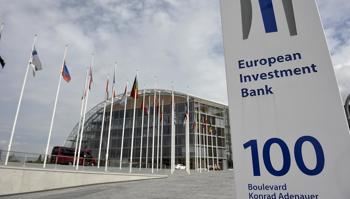
Evaluation of the Eastern Partnership Technical Assistance Trust Fund (EPTATF)
- 2020 – 2020
- under € 500,000
- ENI East
The EPTATF was set up to accelerate the origination of operations in Eastern Partnership countries, and to improve the quality and development impact of the Bank's operations in the region. The establishment of the EPTATF was based on the assumption that technical assistance available at the time was inadequate to support the Bank’s operations in the region, particularly for small projects. It was set up to be complementary to the Neighbourhood Investment Facility (NIF) instrument and resources.
The purpose of the evaluation was to determine the extent to which the EPTATF has helped to improve EIB operations in Eastern Partnership countries since its establishment. Particip was expected to analyse the functioning of the EPTATF, its decision-making process, its governance arrangement and its organisation and performed a review of the EPTATF portfolio of TA operations.
The evaluation work encompassed the following main phases:
- Structuring phase: the evaluation team took ownership of the evaluation framework and approach, further amended and developed it, if deemed necessary.
- Data collection and analysis phase: this phase entailed a thorough desk review, data collection, validation and analysis. The analysis, focussing on 10 case studies of TA operations (at least three in Ukraine, and at least one in Armenia, Georgia, and Moldova) led up to the drafting of the Evaluation Report
- Preparation of the final report: the Team Leader participated in the presentation of the evaluation’s emerging findings to IG/EV and to the Evaluation Reference Group; and then drafted and finalised the Evaluation Report under the guidance of IG/EV
- Keywords:
- Monitoring & Evaluation, Project implementation / Technical Assistance
Results Oriented Monitoring (ROM) reviews aim to assist the European Commission’s services and EU Delegations in monitoring of and reporting on EU financed development and cooperation projects and programmes in third countries through independent reviews of the progress of their implementation and the achievement of project results.
The ROM reviews and support missions to be carried out are the following:
a) +++ROM reviews of projects signalled as having implementation problems and where EC services have identified a need for an outside expert review to assist in addressing the problems, identifying causes and options for solution and making recommendations.
b) +++ ROM reviews of other projects for which such ROM reviews may have a particular usefulness, in particular for projects which could not be included in the EUDs’ planning of field visits or for which the necessary sector expertise at EUD level may not be sufficiently available at a given point of time or for innovative projects.
c) ROM reviews of BS programmes: in countries where a BS programme is signalled as having implementation problems, a ROM review may be organized focusing on the programme in question for the sector specific aspects but also covering the Public Financial Management (PFM) and macroeconomics aspects of all BS programmes financed by the EU in the country .
d) ROM support to end of project reporting on results (outputs and direct outcomes), including for BS programmes. These ROM support missions are to assist EC services and EUD in strengthening their results reporting capacities in: assisting with the recording actual results achieved by projects and programmes that have come to an end in the specified calendar year, solving technical difficulties that may occur linked to results reporting, and identifying the systemic needs and modalities for improvement which may be needed in these areas. The ROM support to end of project results reporting missions are to focus on projects of EUR 750.000 or more.
- Partners:
- Particip (Lead), GOPA, Integration
- Keywords:
- Monitoring & Evaluation

Support to the preparation of the twinning fiche for the Ministry for Emergency Situations of the Republic of Belarus
- 2018 – 2018
- under € 500,000
- Belarus
The Ministry of Emergency Situations of the Republic of Belarus is aware that an indicator of the efficiency of all services and units can only be the well-being of citizens of Belarus. For citizens to feel safe, the rescuer should be professional and show a high level of professionalism, both in emergencies and in everyday life, providing work to prevent accidents, fires and other disasters.
Therefore, the global objective was to support the EU Delegation to Belarus and the Government of Belarus in the preparation of documents needed for launching a twinning project with the Ministry of Emergency Situations to be financed under the European Neighbourhood Instrument. The purpose of this project was to strengthen the capacities of the Ministry of Emergency Situations to effectively address existing and emerging disaster risks in Belarus.
The specific objective of this contract was to draft a twinning fiche to improve civil protection and disaster risk management services of the Ministry of Emergency Situations of Belarus by applying best practices from the EU Member States in implementation of the EU Civil Protection Mechanism.
- Keywords:
- Humanitarian aid, Institutional development, Training

Final evaluation of two operations of the programme "Green Economy in Belarus"
- 2017 – 2018
- under € 500,000
- Belarus
The overall objective of the programme was the promotion in Belarus of green economy mechanisms through support to the relevant national efforts at policy, legislative, institutional, operational and international levels. This was achieved through the EU financial investments to Belarusian human, as well as natural and built capital.
The specific purposes of the Programme were the following:
- to identify and develop the main mechanisms of green economy development and to provide institutional and legislative support to the Ministry of Natural Resources in this regard;
- to extend international co-operation between Belarus and the EU, including sharing information on environmental data, and to intensify people to people contacts by transfer of EU knowledge, skills, experience and technologies to the personnel of the Ministry of Environment and its regional bodies;
- to promote green economy decision making and production/consumption patterns through support and implementation of small green initiatives, pilot projects and visibility/public awareness projects.
- Partners:
- Particip (Lead), GEOtest NL
- Keywords:
- Environment