Cape Verde
4 referencias
Human Rights Policy Support
- 2019 – 2021
- de 500.000 € a 1 millón de €
- Global
This action contributed to the effective implementation of international human rights instruments, principles and standards, primarily by means of exchange of best practices with partner countries.
The project was conceived to serve and preserve EU values and interests by means of complementary actions. It promoted policy cooperation with partner countries of strategic interest to the EU as well as enhanced the EU's visibility and coherence. This was done through the development of an analysis of the human rights situation in 13 countries, the organisation of seminars/roundtables and outreach activities. This ensured increased human rights awareness and access to human rights knowledge.
The Specific objectives were:
- 1)To ensure appropriate follow-up to political and human rights dialogues with partner countries. This includes, inter alia, facilitating south-south cooperation and exchange of ideas, knowledge and expertise on commonly identified human rights issues; providing technical assistance including in the form of trainings and roundtable discussions with governments in partner countries in order to strengthen their human rights expertise; facilitating interaction among representatives from the private sector and government representatives in partner countries to ensure compliance with the internationally recognised human rights framework; and facilitating regular interaction between partner countries with a view to building and reinforcing regional alliances which may contribute to serving EU interests in multilateral fora;
- 2)To contribute to bringing together experts from the EU and partner countries such as academics, private sector and government representatives in order to equip the EU to remain innovative and tackle emerging subjects of EU interest as a vehicle of cooperation with partner countries such as artificial intelligence, academic freedom, right to water and sanitation, economic social and cultural rights;
- 3)To support and enhance the monitoring of Generalised Scheme of Preferences (GSP) GSP+/ Everything but Arms (EBA) beneficiaries' commitments under the seven GSP core human rights conventions.
Internal studies analysing Human Rights situation in the following countries
- Armenia
- Bangladesh
- Bolivia
- Cabo Verde
- Cambodia
- Kyrgyztan
- Mongolia
- Myanmar
- Pakistan
- Philippines
- Sri Lanka
- Tajikistan
- Uzbekistan
- Socios:
- Particip (líder), SICI Dominus
- Palabras clave:
- Comunicación y medios, Derechos humanos, Seguimiento y evaluación, Sociedad civil

Mid-Term Evaluation for the PACED (Rule of Law Project) in PALOP and Timor-Leste
- 2019 – 2020
- menos de 500.000 €
- Angola, Cape Verde, Guinea-Bissau, Mozambique, São Tomé & Príncipe, Timor-leste
The main objectives of this evaluation were to provide the relevant services of the European Union and the interested stakeholders with:
- an overall independent assessment of the past performance of the PACED, paying particular attention to its intermediate results measured against its expected objectives; and the reasons underpinning such results;
- key lessons learned, conclusions and related recommendations in order to improve current and future Actions.
In particular, this evaluation served to understand the performance of the Action, its enabling factors and those hampering a proper delivery of results in order to adjust its design or implementing modalities;
The main users of this evaluation were the EU Delegations, the NAO's, the Central Banks, the ministries of Finance and Plan and other relevant national partner institutions in PALOP/TL involved in the implementation of the Action evaluated.
The specific Evaluation Questions as formulated below were indicative. Based on the latter and following initial consultations and document analysis, the evaluation team discussed them with the Evaluation Manager and proposed in their Inception Report a complete and finalised set of Evaluation Questions with indication of specific Judgement Criteria and Indicators, as well as the relevant data collection sources and tools.
Once agreed through the approval of the Inception Report, the Evaluation Questions became contractually binding.
Relevance:
To what extent activities implemented, and to be implemented, were consistent with beneficiaries' requirements and country needs?
Effectiveness:
To what extent services provided have contributed to expected results making the best use possible of the available resources?
Efficiency:
To what extent outputs were achieved with the lowest possible use of resources/inputs (funds, expertise, time, administrative costs, etc.)?
Perspectives of impact:
To what extent activities implemented had the positive and durable expected impact? Can it be said that the activities and outputs logically allowed the objectives to be achieved?
Coherence of the Action:
Were there contradictions between the different levels of objective? Were there duplications between the activities/components of the Programme? Were there duplications between the PACED and other interventions (from the beneficiary or other donors)? Were complementarities between PACED and other interventions duly capitalized?
The questions coverd the following fields of analysis:
- a)Evaluation of the preliminary results of the action, including factors that have determined its success and failures;
- b)Assessment of the impact of the activities implemented within the beneficiary institutions;
- c)Assessment of the adequacy of the measures adopted to counter delays and deadlocks in the implementation of the action;
- d)Evaluation of the index of appropriation of the results of the action by the beneficiaries;
- e)Evaluation of the beneficiaries’ perception of the results of the action (methodology applied, successes, failures, solutions encountered, etc.); Identification of measures taken by beneficiaries to ensure the sustainability of the results of the action.
- Socios:
- Particip (líder), EMI (formerly: Cardno Belgium), EuroPlus
- Palabras clave:
- Justicia / Estado de derecho, Seguimiento y evaluación
Celebration of the 25th anniversary of the PALOP-TL / EU program
- 2016 – 2018
- menos de 500.000 €
- Angola, Cape Verde, Guinea-Bissau, Mozambique, São Tomé & Príncipe, Timor-leste
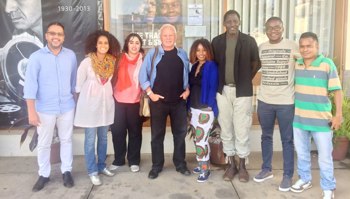
The general objective of the contract was to contribute to a strengthened common identity of the PALOP-TL by the production and diffusion of knowledge about the origins and current common ties of the PALOP-TL on the occasion of the 25th anniversary of the programme between the PALOP-TL and the EU.
- produce audio-visual material about the common history and the current common ties between the PALOP-TL through a short-film contest;
- present/diffuse of material to the public during short-film festivals and/or films about the PALOP-TL in 2017 and 2018;
- Palabras clave:
- Comunicación y medios

Post-conflict and post-disaster needs assessment (PCNA/PDNA): development of assessment capacity and tools - Phase I + II
- 2013 – 2017
- de 2 a 5 millones de €
- Global
Relevant background
Since early 2007, the Commission, the UN-family and the World Bank have worked together in setting up a platform for cooperation on post-crisis needs assessments for natural disaster (Post-Disaster Needs Assessment, PDNA) and conflict (Recovery and Peacebuilding Assessment (RPBA), previously named Post-Conflict Needs Assessment, PCNA) scenarios. This trilateral cooperation was framed and formalised through the signature of a Joint Declaration on “Post-Crisis Assessments and Recovery Planning” in September 2008. The EU/UN/WB platform covers the whole PDNA/RPBA(PCNA) process, including strategic coordination, development of joint methodologies for post-crisis assessments, joint deployment of assessment teams, joint training and joint recovery planning and monitoring.
In line with the 2008 Declaration on Joint Post-crisis Assessments and Recovery Planning, the overall objective of the project is to assist and develop third countries’ in-country capacity to gradually assume a more prominent role in Post-Disaster Needs Assessments and Post-Conflict Needs Assessments (now changed to Recovery and Peacebuilding Assessments, RPBA).
The purpose of this project was:
- to support further development of joint PDNA/RPBA(formerly PCNA) methodologies, tools, training programmes, etc.;
- to support joint PDNA/RPBA(formerly PCNA) missions in-country/in region (in coordinating with EU Heads of Delegations and with the European External Actions Service (EEAS) and European Commission). While such support could cover any relevant technical field (long-term and short-term expertise), it is foreseen that a particular emphasis is put on expertise in mission planning and development of final reports/recovery frameworks.
The two phases of the project contributed to a variety of outputs and results, including:
- Phase 1 (01/01/2013 – 31/07/2015): revision of the PDNA methodology and development of the joint EU/UN/WB PDNA Guide, development of the Disaster Recovery Framework (DRF) Guide, review of the PCNA methodology, development of training and capacity building materials, delivery of information/capacity building sessions, joint PDNA/PCNA training courses for national authorities and regional/international organisations, support to over 15 joint EU/UN/WB PDNA/PCNA missions;
- Phase 2 (10/07/2015 – 09/07/2017): revision of the PCNA methodology and development of the RPBA methodology, development of training and capacity building materials, delivery of information/capacity building sessions, joint PDNA/RPBA training courses for national authorities and regional/international organisations, support to over 10 joint EU/UN/WB PDNA/RPBA missions.
- Socios:
- Particip (líder), Dara, ECDPM, GOPA, Punto.sud
- Palabras clave:
- Ayuda humanitaria, Desarrollo institucional, Formación, Gobernanza