South Africa
16 Referenzen

Overall Objective
The overall objective of the project of which this contract will be a part is as follows: To work with the European Union Delegation in supporting its activities in and with South Africa, including partners such as the Government of South Africa, civil society and the private sector to support objectives outlined in the country’s National Development Plan, the implementation of the EU-SA MIP 2021-2027, Global Gateway and other mutual relevant priorities between South Africa, the European Union and its Member States.
Specific Objective
To establish a Programme Management Unit (PMU) composed of a Team Leader, for the duration of the contract. The PMU will pursue the overall and specific objectives directly and through the deployment of short-term experts to provide technical support for the development, design implementation and monitoring of the Delegation’s projects, programmes, ambitions and activities. The PMU shall do so through a needs-based approach, flexible in order to capture the Delegation’s evolving needs as they arise within the scope of the deliverables outlined in this TOR.
- Support the identification, formulation, implementation, audit and evaluation of actions under the MIP (through the deployment of experts, studies, research) or under other financial instruments implemented by the EU Delegation in South Africa; as well as assist Government, civil society, private sector and the Delegation in the implementation of EU funded interventions and ambitions;
- Facilitate and improve capacity for the EU-South Africa partnership, through training support, conferences and seminars, capacity-development, consultations, research and via dissemination of results achieved, as well as awareness-raising and visibility at local, regional and international levels.
- Ensure that cross-cutting issues in EU’s international cooperation and policies (as per the MIP 2021-2027), namely gender equality and women's empowerment, human rights and democracy, culture, environment and climate change, good governance, regional or continental integration, among others are adequately addressed
OUTPUTS
- The establishment of a Programme Management Unit (PMU) for the duration of the contract.
- Through the deployment of short-term experts, studies and research provide technical support for the identification, formulation, implementation, audit and evaluation of actions in support of the Delegation’s priorities in a flexible manner.
- Through the successful dissemination of results to a broader public to highlight the SA-EU partnership.
Non-key expert engagements
- Partner:
- Particip (federführend), Deloitte

Strengthening the national regional linkages in SADC (SNRL) - Consultancies on regional integration based on SADC policies, facilitation of events, communication and visibility
- 2023 – 2027
- 2 – 5 Millionen €
- SADC region
The overall objective of the project "Strengthening the national regional linkages in SADC (SNRL)" is to support the Southern African Development Community (SADC) in its efforts to promote regional integration in the member states (MS) for the benefit of the population in the SADC region.
The project is aligned with SADC's regional strategy (the Regional Indicative Strategic Development Plan 2020-30, RISDP) and supports its implementation.
In particular, it supports SADC and its MS on implementing Chapter 5 of the RISDP focusing on the strategic management objectives of the RISDP. By strengthening SADC as a regional organization and by supporting the implementation of the regional agenda RISDP, the SNRL project aims to facilitate the regional integration in the SADC region.
The objective of this contract is the provision of high-quality short-term expert (STE) advice in various topics relevant for enhancing the capacities of national stakeholders to vigorously and effectively pursue in their respective countries the regional integration protocols, policies and strategies of SADC.
The individual consultancy assignments are developed between GIZ and its partners and are based on a joint process and methodology aimed at identifying the needs in the SADC region and within individual member states.
The assignments focus on the scaling-up of best practices and should aim to share experiences and knowledge throughout the region (for example by aiming to standardize products developed as part of the assignment).
The following outputs are expected as a result of project implementation:
- Output 1: The institutional framework for the implementation of regional integration in the SADC region has improved in the member states;
- Output 2: Monitoring and evaluation systems for the implementation of regional integration are in place in selected member states;
- Output 3: The strategic communication capacities of SADC and member states for high profile communication around SADC activities and operations are strengthened.
Implemented projects include the following (project number and title):
- P1/2023 Consultancy to Support the SADC Secretariat to Develop and Pilot the Protocol Compliance Mechanism and Monitoring of the Trade Protocol;
- P2/2023 Perception Survey on the status of SADC regional integration in the Member States;
- P3/2023 Facilitator/Presenter and Group Work Moderators for Two Regional Workshops Supported by SNRL;
- P4/2023 Development of Model Law for the Establishment of SADC National Committees in Member States;
- P5/2023 Consultancy to develop communication products for publication purposes from the deliberations of SADC Member States at the Regional Learning and Exchange Symposium in Lesotho;
- P6/2023 Consultancy to develop presentation on the Status of SADC National Structures and their Financing at the Regional Learning and Exchange Symposium in Lesotho;
- P7/2023 Facilitation Operational Planning SNRL;
- P8/2023 Consultancy Services to Support the Publicity Products of The SADC Summit Public Lecture- Angola;
- P9/2023 Consultancy Services to Provide Rapporteuring of the Proceedings of The SADC Summit Public Lecture- Angola;
- P10/2023 Development of Peer Learning & Review Mechanism for national SADC coordination;
- P11/2023 Shadow monitoring on the extent of implementation of the SADC RAIP 2017 – 2022;
- P12/2023 Editing & Design of Eswatini’s New Industrial Policy;
- P13/2023 Capacity Building on SADC Regional Integration and Project Management for SADC National Contact Points Junior and Middle Staff;
- P14/2023 Updating and Finalising the Status of the SADC National Committees Desk Review Report;
- P15/2023 Consultancy Services to Support the Documentation of Proceedings at the SADC Integrated Regional Electronic Settlement System 10th Anniversary Celebrations;
- P16/2023 Consultancy Services to Support the Publicity Products of the SADC Integrated Regional Electronic Settlement Systems 10-year anniversary;
- P17/2023 Consultancy Services to Support the Rapporteuring of the SADC Integrated Regional Electronic Settlement Systems 10-year anniversary;
- P18/2023 Scoping Studies South Africa and Zimbabwe;
- P19/2023 Scoping Study Madagascar;
- P20/2023 SNRL II Operational Planning Workshop.
- P21 Team Retreat Facilitatior
- P22 Communication Guidelines
- P23 Lesotho National Policy on Regional Economic Integration
- P24 Scoping study and development of SA documentary
- P25 Production of SADC video podcasts
- P27 Development of a Resource Mobilisation Plan for the SNC of the Kingdom of Eswatini
- P28 Ops Manual, OP & Capacity Building Training on RI & PM - Eswatini
- P29 Communications Capacity Building in Botswana
- P30 SNRL II Team Retreat Refresher
- P31 CB& Strengthening Lesotho's SNCs - Project Management
- P33 Establishment of South Africa’s SADC National Committee
- P34 Graphic Design for Promotional Material - SADC Public Lecture in Zimbabwe
- P35 Rapportuering of the SADC Public Lecture Zimbabwe
- P36 Madagascar National Policy on SADC RI
- P37 Capacity Building & Strengthening SNC in Madagascar
- P38 CB & Training on SADC RI & PM for Zambia’s SNC staff
- P39 CB on Resource Mobilisation & Development of Resource Mobilisation Strategy in Zambia
- P40 Regional CB on Resource Mobilisation
- P41 Model Law on the Establishment of SNCs
- P42 Policy briefs on SADC-RTGS; role/significance of the SADC public lectures in promoting regional cooperation and integration in the SADC region.
- P43 Fact Sheets on SADC Protocols
- P44 Communications Strategy and Social Media Dissemination Plan for BGCIS in Botswana
- P46 RI Orientation & Induction for the SNC in Eswatini
- P47 SNRL II Operational Planning Workshop 2025
- P48 Rapporteur for Tanzania Event on SADC RAIP 2017-2022 Shadow Monitoring Report
- P49 Rapporteur for Malawi Event on SADC RAIP 2017-2022 Shadow Monitoring Report
- P50 Policy Brief, Factsheet & Press Release On he AML (Anti-Money Laundering) & CFT
- P51 Madagascar Resource Mobilisation Strategy and Action Plan
- P52 Piloting SNC Peer Learning and Review Mechanism (S-PLRM)
- P53 Establish Baseline Values on SADC Parliamentary Forum’s Operational Efficiency
- P54 Revise SADC Draft Communication, Awareness and Visibility Strategy
- P55 NSA Baseline Indicators
- P56 Interpretation Assignments
- P57 Facilitation of Consultation Workshop SNRL
- P58 Endline Perception Survey
- P60 Piloting M&E Framework for the SADC Protocol on Trade
- P61 SADC Parliamentary Forum M&E on Gender
- P62 Photography, Videography and Livestreaming _ Launch of SA's SNC
- P63 SADC PRU Comms Strategy Launch
- P64 Status of SNCs in the Member States
- P65 Training of Botswana SNC
- P69 Facilitation of SPLRM 1st Cycle
- P70 SPRLM Budget and Finance Plan
- P71 CfP Support
- P72 Facilitation of SNC Guidelines
- P73 SADC PF Publication and Dissemination
- P74 SADC PF Gender Assessment
- P75 SADC PF Mid-Term Evaluation
- P77 Review of Public Hearing
- P81 Communication Documentary Launch
- Partner:
- Particip (federführend), Africa Practice, DPC, Imani Development Group
- Schlagwörter:
- Handel, Industrie und Privatsektorentwicklung, Institutionelle Entwicklung, Kommunikation und Medien, Landwirtschaft, Monitoring und Evaluierung, Regierungsführung

The evaluation of the Danish Energy Partnership Programmes (DEPP) covers more than a decade of bilateral cooperation supporting the green energy transition in emerging economies. Since 2012, these programmes have engaged Denmark with key partner countries such as China, India, South Africa, Vietnam, and Mexico, whose future energy choices will significantly shape global emissions. DEPP provides technical assistance in long-term energy planning, renewable energy integration, energy efficiency, and the development of regulatory frameworks.
The overall objective of the evaluation is to strengthen accountability and learning by documenting results and assessing DEPP’s contributions to capacity strengthening, as well as their strengths and weaknesses. More specifically, the study will analyse the programmes’ relevance, coherence, effectiveness, efficiency, impact, and sustainability. By doing so, it will generate lessons learned and actionable recommendations to inform the design and implementation of future programmes, consolidating Denmark’s role as a trusted partner in advancing global climate and energy goals
.
- Partner:
- NCG Denmark (federführend), DEM, Particip

Evaluation of the African Development Bank’s Regional Integration Strategy Paper for Southern Africa (2020-2026)
- 2025 – 2026
- unter 500.000 €
- Angola, Botswana, Eswatini, Lesotho, Madagascar, Malawi, Mauritius, Mozambique, Namibia, São Tomé & Príncipe, South Africa, Zambia, Zimbabwe
The evaluation focuses on the African Development Bank’s Regional Integration Strategy for Southern Africa (SA-RISP) 2020–2026, with coverage of the period 2020–2024. Its primary purpose is to assess how far the strategy has progressed towards achieving its intended results and to provide lessons and recommendations for the design of the next regional integration strategy. The evaluation will review both lending operations, sovereign and non-sovereign, and non-lending activities such as policy dialogue, analytical work, and technical assistance.
Key objectives include examining the relevance and design of the SA-RISP as a framework for advancing regional integration, its coherence with regional and continental frameworks such as SADC, COMESA, and the AfCFTA, and its effectiveness, efficiency, impact, and sustainability. The evaluation will also analyse factors that have enabled or constrained implementation, including operational, institutional, and policy challenges, as well as cross-cutting issues. Ultimately, it aims to draw out lessons learned and practical recommendations to strengthen AfDB’s future engagement in supporting regional integration in Southern Africa.
- Schlagwörter:
- Handel, Industrie und Privatsektorentwicklung, Infrastruktur, Monitoring und Evaluierung

The Gender Equality and Women’s Empowerment (GEWE) budget support programme - Mid-Term Evaluation
- 2023 – 2023
- unter 500.000 €
- South Africa
The main objectives of this evaluation were to provide the relevant services of the European Union and, the interested stakeholders with:
- an overall independent assessment of the performance of the Gender Equality and Women Empowerment (GEWE) budget support programme in South Africa, paying particular attention to its different levels of results measured against its expected objectives; and the reasons underpinning such results.
- key lessons learned, conclusions and related recommendations in order to improve the current implementation of the Gender Equality and Women Empowerment (GEWE) budget support programme in South Africa.
In particular, this evaluation served to:
1. Monitor progress and implementation status of the GEWE programme and predict its outcomes.
2. Identify the improvements in government policies, institutional structures, processes, and administrative arrangements to be made by the DWYPD, DSD, National Treasury and DPME to maximise the implementation of activities towards increased impact of the BS program.
3. Recommend modifications to the current programme, including, where appropriate, to the timelines and the definition of variable indicators to ensure ambitious programme objectives are fully achieved.
The main users of this evaluation are the European Union Delegation in South Africa, the GEWE Program Steering Committee (PSC) and the implementers, i.e. DWYPD, DSD, National Treasury and DPME.
- Schlagwörter:
- Menschenrechte, Monitoring und Evaluierung, Öffentliche Finanzen / Haushaltsplanung

Formulation mission for a programme to support the Benguela Current Large Marine Ecosystem (BCLME) in Southern Africa
- 2022 – 2022
- unter 500.000 €
- Angola, Namibia, South Africa
The global objective was:
- to contribute to economic development and sustainable wealth creation through the preservation of Southern Africa’s rich biodiversity in the oceans namely the Benguela Current Large Marine Ecosystem (BCLME), in a way that can support job creation, improved food security and sustainable livelihoods, while preserving and restoring the ecosystems and wildlife that are vital to all.
The objective of the assignment was:
- to assist the EU to undertake the identification and formulation of an action supporting the development of the Benguela Current Large Marine Ecosystem (BCLME) in Southern Africa following a sustainable development approach.
- Partner:
- Particip (federführend), CAPA EEIG (managed by Particip), EMI (formerly: Cardno Belgium)
- Schlagwörter:
- PCM / Logframe, Umwelt
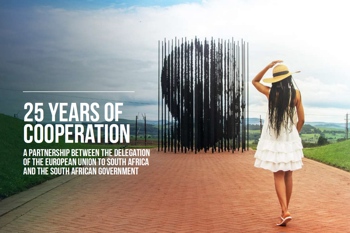
South Africa – EU cooperation visibility campaign
- 2019 – 2022
- unter 500.000 €
- South Africa
The overall objective of this project is to increase awareness, understanding and support for EU-South Africa development cooperation and its achievements in South Africa, particularly for South African audiences.
The specific objectives are:
- To communicate effectively EU-South Africa development cooperation, its activities and impact to the South African public.
- To collect and create success stories, case stories and results across sectors to enhance knowledge management and derive lessons learned for future cooperation.
- To sensitize South African partners working on Development Cooperation on the importance and practicalities of communication and visibility in the implementation of EU-SA cooperation programmes.
- To improve the impact of EU-funded project visibility activities.
- Schlagwörter:
- Kommunikation und Medien
Evaluation of Danish Funding for Climate Change Mitigation in Developing Countries
- 2020 – 2021
- unter 500.000 €
- Ethiopia, Indonesia, South Africa, Viet Nam
The objectives of the evaluation were threefold, covering both accountability and learning purposes:
- To document achievements in terms of assisting developing countries to mitigate climate change through the provision of Danish support in the period from 2013, both through the climate change envelope (CE) and through other development assistance channels;
- To analyse the outcomes of climate change mitigation funding, with due consideration of the opportunities and barriers at both national and global levels;
- On the basis of the lessons learned from the evaluation, to provide recommendations pertaining to future funding priorities.
On the basis of the above, four main evaluation questions had been identified:
- Taking into account the strategic objectives of development cooperation and the guiding principles for the CE, what are the main results of Danish funding for climate change mitigation since 2013?
- How has climate change mitigation funding responded to the aims and needs defined by developing countries in nationally determined contributions (NDCs), leading to measurable GHG emission reductions and to pro-poor low carbon development?
- How has climate change mitigation funding contributed to transformational change and the sustainable development goals in a manner consistent with Danish comparative advantages and opportunities and in terms of influencing global agendas for climate action?
- What are the main lessons learned from climate change mitigation funding that can determine strategic directions and operational considerations in the coming years?
- Partner:
- Particip (federführend), ODI
- Schlagwörter:
- Energie, Forstwirtschaft, Monitoring und Evaluierung, Umwelt

Mapping of services for survivors of violence amongst women and children
- 2019 – 2020
- unter 500.000 €
- South Africa
The specific objective of the assignment was to contribute to the implementation of the Improvement Plan by the Inter-Ministerial Technical Task Team for Violence Against Women and Children through the mapping of existing services offered by all government departments to women and children victims of violence.
As a result a comprehensive package of services responsive to the needs of women and children in all their diversity were defined and positioned to inform, in particular, the ways in which government’s response to victims of violence can be improved.
- Partner:
- PROMAN (federführend), Particip
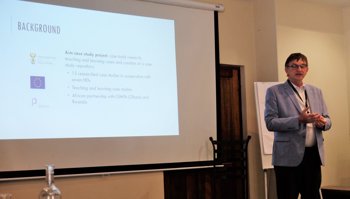
Development of research approaches to provide Case Studies for evidence-based learning
- 2018 – 2020
- unter 500.000 €
- Ghana, South Africa
The overall objective of the project was to contribute towards building a capable state, responsive to the needs of all its citizens and the promotion of national interest, accountability and transparency in service delivery, and utilising public resources in an effective and efficient way.
The specific objectives of the project were the following:
- Develop fifteen (15) researched case studies (2 from Ghana and 13 from South Africa) utilising the case method for public service teaching and learning.
- Work with at least five (5) assigned higher education institutions (HEI) in South Africa to assist and develop their capacity to develop and use the case study method for public service teaching and learning.
- Dissemination of the case studies via at least ten (15) sector workshops at the NSG
- Preparation of the materials as publications for journals / manual and book chapters so that the NSG can take these forward.
- Schlagwörter:
- Aus- und Fortbildung, Bildung, Institutionelle Entwicklung, Regierungsführung
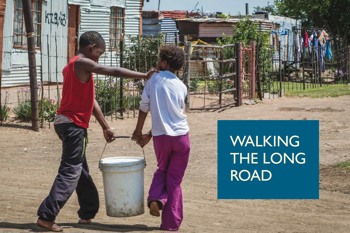
Enhancing the visibility of CSOs and of the EU support to their work in the human rights and social justice sector in South Africa
- 2017 – 2019
- unter 500.000 €
- South Africa
The overall objective of the assignment was to contribute to an enhanced communication and visibility of civil society organisations that have been supported by the EU in the human rights and social justice sectors in South Africa.
More specifically, the assignment aimed to generate a series of multi-media projects around the CSOs working in the human rights and social justice sectors, in an effort to:
- Enhance the communication around the roles played by CSOs in the field of socio economic rights and the results of their work (vis-à-vis key stakeholders, namely the authorities, but also private donors, the EU and Member States, INGOs and regional and global CS platforms, etc.) and
- Deepen capitalisation efforts by portraying a number of successful projects funded by the EU and illustrating the results achieved so far and the lessons learnt in the Road Map process.
Two key outcomes are expected from the assignment:
- The development of the text, lay-out design and printing of a booklet portraying the work of the key South African CSOs working in the socio economic-sector, as well as case studies.
- The realization of a series of short videos (10 + 1) portraying and assessing (with a special focus on the results achieved so far and lessons learnt) a number of interesting Civil Society projects funded by the EU under the SEJA programme/case studies in the human rights and social justice sector
- Schlagwörter:
- Kommunikation und Medien, Menschenrechte, Zivilgesellschaft

The Analysis of Methods of Data Collection on Incidents of Racism, Racial Discrimination, Xenophobia and Related Intolerance
- 2017 – 2018
- unter 500.000 €
- South Africa
The global objective was to provide technical assistance to Government of South Africa, and in particular the Department of Justice and Constitutional Development, to analyze the existing data sources and methods of data collection on incidents of racism, racial discrimination, xenophobia and related intolerance in the public and private sector.
Related intolerance includes discrimination on the basis of sexual orientation, gender and disability.
Data refers to any piece of information in numerical or any other form.
The requested technical assistance assisted the government of South Africa with statistical information in the design of country responses to meet its obligations in terms of the DOPA, the ICERD and other international Human Rights treaties referring to discriminations.
The specific objectives of the assignment were:
- Identify and catalogue the methods of data collection, dissemination of data and the publishing of data by existing institutions and structures in the private and public sector with regard to racism, racial discrimination, xenophobia and related intolerance.
- Determine the owners of data, how data is generated and the products/outcomes of these processes.
- Categorise the format of data collected by governmental and nongovernmental institutions including academia, think tanks and other civil society organizations
- Provide recommendations on the utilisation of the combined existing databases as a national tool to record incidents of racism, racial discrimination, xenophobia and related intolerance.
- Engage organs of state, nongovernmental sector and the private sector in establishing the sources of data and methods used to collect, analyse, disseminate and publish reliable statistical data.
- Literature review on the methods of data collection, dissemination and publishing of data at both national and local levels.
- Conduct an international comparative desktop study on similar data collection methods and processes/ mechanisms.
- Analyse all the regulatory frameworks in South Africa and identify the responsible parties and methods for the collection of data.
- Provide recommendations with regard to the link between the methods of data collection and dissemination and the implementation of the NAP and assist with reliable statistics for the compilation of upcoming country reports.
- Benchmarking and reflecting best practises in data collection, analysis, dissemination and publishing
- Partner:
- Particip (federführend), GOPA
Business Processes & Re-Engineering for the National School of Government (NSG)
- 2017 – 2018
- unter 500.000 €
- South Africa
The global objective was to support the National School of Government (NSG) by re-engineering the processes of the core business operations of the NSG, in line with the business and technical analysis already undertaken.
The specific objectives of the assignment was to re-engineer processes of the core business operations of the NSG to enable and lead to:
- Client-focused business processes that are also adaptive to changing conditions
- A seamless integration of all business processes within the current configuration
- An alignment of the business and IT initiatives within the NSG
- An increased productivity and enhanced service quality
- Improved turn-around times and reduction of operating costs
- Partner:
- Particip (federführend), Cardno UK
- Schlagwörter:
- Institutionelle Entwicklung, Regierungsführung

Short-term support on the institutionalisation of Municipal Long Term Strategic & Development Planning Models
- 2017 – 2018
- unter 500.000 €
- South Africa
The overall objective of this short-term mission was to provide support to the Governance Support Programme (GSP) partner municipalities on the institutionalisation of municipal long term strategic and development planning models and identification of policy, legislative and institutional requirements necessary for these models to succeed. Of particular interest were international experiences on how strategic planning processes have been institutionalised at a local government level in other countries and the accompanying experiences made. Furthermore, recommendations were developed on the institutionalisation and integration of long term strategic and developmental planning on a local government level across South Africa, aiming at the achievement of the national development outcomes and improvement of public service delivery on the local level.
Specific purposes of the mission were the provision of support to the GSP partner municipalities through a presentation of the research findings on international experience and recommendations in order to support the adjustment of their current planning processes to be more long term orientated and focussed;
Furthermore, recommendations were developed and delivered on key aspects and actions concerning the institutionalisation and integration of long term strategic and developmental planning at a local government level across South Africa;
The GSP’s advisory services to its partner municipalities were supported through recommendations on how to best develop and implement their long term strategic and developmental planning and assistance was provided for policy development at national level through an abstract of the research findings and recommendations on long term strategic and developmental planning.

Evaluation of the EU development cooperation support to higher education in partner countries (2007-2014)
- 2015 – 2017
- unter 500.000 €
- Global
The Evaluation of the EU development cooperation support to Higher Education in partner countries (2007-2014) evaluated the design and the implementation of policies, strategies and sector programmes of the EU’s past and current development cooperation support to higher education.
The main objectives of the evaluation were:
- to provide the relevant external co-operation services of the EU and the wider public with an independent assessment of the development cooperation support provided to higher education in partner countries over the period 2007-2014;
- to identify key lessons and forward-looking recommendations.
The evaluation used the five standard OECD/DAC evaluation criteria, namely relevance, effectiveness, efficiency, impact and sustainability. In addition, the evaluation also looked at the EU added value and the 3Cs.
The evaluation was conducted in four phases
- An Inception Phase, focusing on the design and the methodology of the evaluation including the reconstruction of the intervention logic and the compilation of a comprehensive inventory incl. monetary flow of all relevant activities between 2007 and 2014;
- A Desk Phase, focusing on gathering and analysing existing data and information (through literature/document reviews and interviews/focus groups/surveys);
- A Field Phase, including preparation of field missions, visits to the case study countries (Cameroon, the Dominican republic, Egypt, Guatemala, Kenya, Mexico, Moldova, South Africa) and drafting of country notes;
- A Synthesis Phase, producing a final report and dissemination of results to concerned stakeholders.
The report is available at: https://ec.europa.eu/europeaid/strategic-evaluation-eu-development-co-operation-support-higher-education-partner-countries-2007_en
- Partner:
- Particip (federführend), ECDPM, Ecorys B.V., LA International Cooperation S.R.L.
- Schlagwörter:
- Bildung, Institutionelle Entwicklung, Monitoring und Evaluierung, Regierungsführung

Identification and Formulation Governance/PFM MIP 2017
- 2017 – 2017
- unter 500.000 €
- South Africa
The global objective of the assignment was to assist the National Treasury and the EU Delegation to
South Africa to design (a) programme(s) aimed at improving public service delivery innovation and performance in municipalities through enhanced financial management and organisational
(institutional & human) capacity in line with the mandates of local government.
The specific objective of this assignment, was to contribute to the design of (a) multi-disciplinary programme(s), scheduled for 2017, taking into account the preliminary work done by the EU Delegation to South Africa and the Government of South Africa.
- Partner:
- Particip (federführend), Cardno UK
- Schlagwörter:
- Öffentliche Finanzen / Haushaltsplanung, Regierungsführung