
Nuestros proyectos
Explore la experiencia de Particip en proyectos desarrollados en distintos países, sectores y ámbitos de especialización.
Nuestras referencias ofrecen una visión general de las misiones finalizadas y en curso, incluidos sus objetivos, alcance geográfico, duración y valor contractual.
Mostrando 641–650 de 985 referencias

Georgia Solid Waste Management Project - Stakeholder Participation Programme, Environmental & Social Action Plan and Solid Waste Management Plans
- 2017 – 2020
- menos de 500.000 €
- Georgia
Georgia signed its Association Agreement with the European Union (“EU”) in 2014, which includes obligations to improve solid waste management throughout the country.
The assignment supported the implementation of a Stakeholder Participation Programme, the implementation of an Environmental and Social Action Plan (“ESAP”) as well as providing support to the Municipalities to prepare Municipal Waste Management Plans.
The objectives of the Assignment were to:
- Enhance public ownership and awareness of solid waste management, increasing public participation in the provision of solid waste services and raising public awareness on issues related to the project implementation. Furthermore, the SPP integrated poverty and social issues into the tariff scenario analysis.
- Provide expertise required to implement the ESAP, comply with EBRD Environmental and Social Performance Requirements and to keep EBRD updated on progress of ESAP implementation and to ensure adherence to national labour and safety regulations and standars when operating and maintaining solid waste collection vehicles
- Support the Municipalities to prepare Municipal Waste Management Plans, as required by the Waste Management Code and Ministry of Environment and Natural Resources Protection.
- Provision of trainings on the following issues: adherence to the national labour and safety regulations and standards when operating and maintaining the SW vehicles; safe driving practices; registration, investigation and reporting of all safety incidents and accidents; and safe storage of the SW vehicles
- Socios:
- Particip (líder), Enviroplan, GEO
- Palabras clave:
- Comunicación y medios, Industria y desarrollo del sector privado, Infraestructuras, Medio ambiente

Evaluation of the National Gender Policy 2009-2019 and Formulation of the new National Gender Strategy 2020-2030
- 2019 – 2020
- menos de 500.000 €
- Burkina Faso
The general objective of the study was to make a prospective assessment of the results achieved in terms of gender equality through the implementation of the National Gender Policy (NGP) 2009-2019, to specify the shortcomings, the lessons learned, to identify the perspectives and major strategic orientations in relation to the international commitments ratified by the country and to formulate a new national gender strategy 2020-2030.
Specific objectives :
Specifically, they were to:
- Examine the level of achievement of the objectives set out in the PNG
- Analyzing PNG Implementation Intervention Strategies
- Produce information relating to the results achieved, i.e. evidence/evidence of the findings that will be made.
- Analyzing the effects and impact of PNG implementation in reducing gender inequalities
- Determine PNG's level of resource mobilization and financial implementation
- Appreciate PNG's contributions to the implementation of the ongoing NESDP (in terms of prospects for the future)
- To make relevant recommendations for the formulation of the new gender strategy 2020-2030
- Elaborate the new national gender strategy 2020-2030 in coherence with Agenda 2063, Agenda 2030, the orientations of the ENP 2025 and the PNDES 2016-2020.
- Analyzing the institutional arrangements for implementing and monitoring PNG
- Identify the constraints and difficulties encountered in the implementation of PNG
- Identifying best practices in gender promotion in Burkina Faso
- Analysis of the contribution of technical and financial partners to the implementation of PNG
- Assess the level of political commitment for the implementation of the PNG
- Socios:
- Particip (líder), SICI Dominus
- Palabras clave:
- Derechos humanos, Seguimiento y evaluación

Mid-term evaluation of the Support programme to implementation of the EU- PNG Cooperation
- 2019 – 2020
- menos de 500.000 €
- Papua New Guinea
From this perspective, evaluations looked for evidence of why, whether or how these results are linked to the EU intervention and seek to identify the factors driving or hindering progress.
Evaluations provided an understanding of the cause and effect links between: inputs and activities, and outputs, outcomes and impacts. Evaluations should serve accountability, decision making, learning and management purposes.
The main objectives of this evaluation were to provide the relevant services of the European Union, the interested stakeholders with:
- an overall independent assessment of the past performance of the Support Programme to Implementation of the EU-PNG Cooperation, paying particular attention to its intermediate results measured against its expected objectives; and the reasons underpinning such results
- key lessons learned, conclusions and related recommendations in order to improve current and future Actions
In particular, this evaluation served to ensure that the objectives of the Financing Agreement (FA) are achieved at the end of implementation.
As a result, the mid-term evaluation has helped to:
- assess the role and the performance of the NAO Office in managing the different tools provided by the Action, identifying priorities, allocating the appropriate resources and ensuring proper communication and information among the stakeholders;
- assess the role and the performance of the NAO Office in the context of the phasing out of the 10th EDF programmes and the implementation of the 11th EDF programmes;
- assess the role and the performance of the NAO Office in the context of an increased use of innovative financing instruments (i.e. blending);
- assess the role and the performance of the NAO Office in organizing the coordination between the different stakeholders;
- assess the effectiveness and design of the technical assistance contract component in support of the Action
- based on the findings, amend the operational set up of the Action.
The main users of this evaluation were the Delegation of the European Union to Papua New Guinea, the National Authorising Officer and the GoPNG.
- Socios:
- Particip (líder), EuroPlus
- Palabras clave:
- Derechos humanos, Justicia / Estado de derecho

ENPARD Communication Unit phase II
- 2016 – 2020
- de 500.000 € a 1 millón de €
- Georgia
The overall objective of the project of is to raise awareness of EU support to and impact on agricultural and rural development in Georgia.
The purposes of this contract is to communicate to Georgian citizens and the international community about the EU support, the achievements in agriculture sector reform in Georgia through the ENPARD programme and the importance of agriculture sector reform in regards to the economic development of Georgia.
Results to be achieved by the Consortium are to update the ENPARD communication strategy and plan based on lessons learnt, good results and blue- prints developed under the project ENPARD Communication Unit 2013-2015, to carry out communication activities to enhance EU/ENPARD visibility and ensure that the impact of ENPARD is well understood, and to coordinate the communication of all the ENPARD’s components and implementers.
- Socios:
- Action Global (líder), Particip
- Palabras clave:
- Agricultura, Comunicación y medios

Formulation d'une stratégie d'appui à la réforme de l'administration dans le cadre du programme d'appui budgétaire Hakama II pour la bonne Gouvernance
- 2019 – 2020
- menos de 500.000 €
- Morocco
The purpose of this mission was to finalize the formulation of a strategy to support administrative reform within the framework of the Hakama II budget support programme for good governance; a formulation of the public administration reform axis.
To this end, the specific objectives of the mission were as follows:
1.Based on the available documentation and interviews with key stakeholders, to conduct an assessment of the viability and progress of government strategies in the three key areas of intervention identified to date, namely:
- The provision of public services
- The deconcentrating of public administration
- The digital transformation of public administration
2. To engage in a structured dialogue with stakeholders (Delegations, Ministries, MRAFP resident experts, SIGMA experts) to complete the missing elements of the formulation.
3. To contribute to the drafting of the action document for the PAA 2019.
- Palabras clave:
- Desarrollo institucional, Finanzas públicas / presupuestación, Gobernanza

Framework contract COM 2015 — evaluation, communication and event organisation
- 2016 – 2020
- más de 10 millones de €
- Global
The objective of the FWC was to provide, via individual assignments defined and contracted through Specific Contracts, short-term expertise which can be mobilised at very short notice. The quality of this expertise was guaranteed by the retained Framework contractors disposing of the appropriate internal resources as well as of access to external technical skills.
Technical assistance may cover any geographic area, within or outside the European Union.
The Specific Terms of Reference, part of each Specific Contract, shall describe accurately and in details the objectives and required outputs of each individual assignment.
- Palabras clave:
- Comunicación y medios
Undertaking a comprehensive review of existing institutional arrangements within SADC
- 2019 – 2020
- menos de 500.000 €
- SADC region
The overall objective of this assignment was to undertake a comprehensive review of existing institutional arrangements within SADC with a view of recommending changes in order to rationalize, streamline decision-making and enhance effectiveness and efficiency.
More specifically, this assignment was expected to examine structures within SADC including the Secretariat and the Organ and characterise, among other issues, their functions, roles and responsibilities vis-à-vis the overall SADC vision and mandate; their capacities, operational and management processes in relation to their functions, roles and responsibilities; the linkages (or lack of); and the gaps within and among with the view to recommending a more efficient and effective institutional arrangement that will drive the SADC regional integration agenda.
The Specific Objective of this assignment was to undertake a comprehensive review of existing institutional arrangements within SADC by examining the key structures with the view to recommending more effective institutional arrangements to drive the SADC regional integration agenda.
The results of this assignment contributed to the development of the implementation plan and roadmap of the Conclusions of the Strategic Ministerial Retreat. It is essential to note that running parallel to this study were other studies including that on effective mechanisms to ensure compliance to SADC Protocols and other legal instruments and regional commitments at Member State level. That study and this assignment were closely linked and therefore concerted effort at collaboration between the two was most important.
- Palabras clave:
- Desarrollo rural y urbano, Industria y desarrollo del sector privado, Infraestructuras, Seguimiento y evaluación
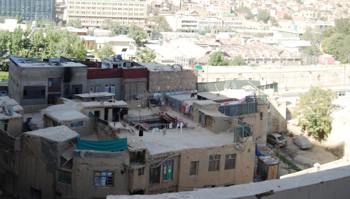
Provision of Structural and Functional Review of Independent Directorate of Local Governance – Afghanistan (IDLG)
- 2019 – 2020
- menos de 500.000 €
- Afghanistan
The United National Development Programme (UNDP) and Independent Directorate for Local Governance (IDLG) have been working on subnational governance together since the inception of the IDLG through the Afghanistan Sub National Governance Programme (ASGP).
The Local Governance Project-Afghanistan (LoGo) is a project, build upon the lessons from the ASGP. The project build on a theory of change aimed at improving service delivery by enhancing the accountability and transparency of the local governments to the women and men of Afghanistan and building the capacity of the local governments to plan, budget and monitor service delivery effectively with the ultimate aim of increasing the legitimacy of the government and the trust between the state and society.
The following areas are the main focus in this project:
• The improvement of the capacity of PGOs and Provincial Councils for the accountability and transparent service delivery.
• The ability for municipalities to generate more revenues and deliver improved services in a transparent, accountable and participatory manner. As well as the improvement of the oversight of civil society and citizens capacity of local governance.
• The improvement of IDLG’s ability to develop and implement policies to strengthen the local government accountability and service delivery
This structural and functional review is intended to be based on the future functions foreseen for IDLG in the new roadmap and those foreseen in decrees issued by the President of Afghanistan. The organizational review proposes a strategic framework in line with the new framework for sub-national governance reform for the IDLG and provides proposals for organizational and business process changes.
The results achieved are the following:
• A functional review of IDLG at the central level and local levels to prepare IDLG for the implementation of reforms foreseen in the new sub-national governance reform framework.
• Identification of new organizational structure for each directorate/department of IDLG at central, province and district level, taking into account, the new strategy and assuming zero Taskheel growth, followed by recommendations aligned with IDLG’s updated mandate.
• Identification of roles, responsibilities and business processes required at the strategic management and Unit/directorate levels, for the effective management of the modernized management of local governance affairs.
• A gap analysis that determines the extent to which IDLG is providing policy guidance and performance management for PGOs, DGOs, Municipalities and PCs.
• Identification of a performance framework for the transformed IDLG that identifies key outputs and outcomes, performance indicators and targets in line with the updated mandate.
• Provide a clear identification of the role of IDLG in the structure of the government of Afghanistan in line with its mandate, authorities and responsibilities.
• Mechanisms for the on-going development and performance management improvement of IDLG.

Completion and validation of the study on the establishment of a regional migration observatory in Central Africa
- 2019 – 2020
- menos de 500.000 €
- Africa (Central)
The general objective of this mission was to contribute to the strengthening of regional integration in Central Africa through the improvement of capacities for the management of migration flows. In other words, it involved improving the research capacities of the ECCAS General Secretariat with a view to improving the situation of migrants and strengthening the migration/development relationship.
The specific objectives of this mission were to support the beneficiaries in :
- Carry out a study with a view to establishing a regional observatory on migration in Central Africa. It complements the actions planned under the RIP, 11th EDF, aimed at strengthening the economic and commercial integration of Central Africa.
- Facilitate the sharing of experience between experts from the ECCAS General Secretariat and the CEMAC Commission with other regions in Africa or in the world which have proven experience in setting up and managing a migration observatory.
- Organize validation meetings for the study on the establishment of a migration observatory in Central Africa.
- Socios:
- Particip (líder), EMI (formerly: Cardno Belgium), EuroPlus
- Palabras clave:
- Gobernanza

Mid-Term Evaluation for the PACED (Rule of Law Project) in PALOP and Timor-Leste
- 2019 – 2020
- menos de 500.000 €
- Angola, Cape Verde, Guinea-Bissau, Mozambique, São Tomé & Príncipe, Timor-leste
The main objectives of this evaluation were to provide the relevant services of the European Union and the interested stakeholders with:
- an overall independent assessment of the past performance of the PACED, paying particular attention to its intermediate results measured against its expected objectives; and the reasons underpinning such results;
- key lessons learned, conclusions and related recommendations in order to improve current and future Actions.
In particular, this evaluation served to understand the performance of the Action, its enabling factors and those hampering a proper delivery of results in order to adjust its design or implementing modalities;
The main users of this evaluation were the EU Delegations, the NAO's, the Central Banks, the ministries of Finance and Plan and other relevant national partner institutions in PALOP/TL involved in the implementation of the Action evaluated.
The specific Evaluation Questions as formulated below were indicative. Based on the latter and following initial consultations and document analysis, the evaluation team discussed them with the Evaluation Manager and proposed in their Inception Report a complete and finalised set of Evaluation Questions with indication of specific Judgement Criteria and Indicators, as well as the relevant data collection sources and tools.
Once agreed through the approval of the Inception Report, the Evaluation Questions became contractually binding.
Relevance:
To what extent activities implemented, and to be implemented, were consistent with beneficiaries' requirements and country needs?
Effectiveness:
To what extent services provided have contributed to expected results making the best use possible of the available resources?
Efficiency:
To what extent outputs were achieved with the lowest possible use of resources/inputs (funds, expertise, time, administrative costs, etc.)?
Perspectives of impact:
To what extent activities implemented had the positive and durable expected impact? Can it be said that the activities and outputs logically allowed the objectives to be achieved?
Coherence of the Action:
Were there contradictions between the different levels of objective? Were there duplications between the activities/components of the Programme? Were there duplications between the PACED and other interventions (from the beneficiary or other donors)? Were complementarities between PACED and other interventions duly capitalized?
The questions coverd the following fields of analysis:
- a)Evaluation of the preliminary results of the action, including factors that have determined its success and failures;
- b)Assessment of the impact of the activities implemented within the beneficiary institutions;
- c)Assessment of the adequacy of the measures adopted to counter delays and deadlocks in the implementation of the action;
- d)Evaluation of the index of appropriation of the results of the action by the beneficiaries;
- e)Evaluation of the beneficiaries’ perception of the results of the action (methodology applied, successes, failures, solutions encountered, etc.); Identification of measures taken by beneficiaries to ensure the sustainability of the results of the action.
- Socios:
- Particip (líder), EMI (formerly: Cardno Belgium), EuroPlus
- Palabras clave:
- Justicia / Estado de derecho, Seguimiento y evaluación