Morocco
29 referencias

To achieve the first specific objective, the contractor will need to complete four interlinked results to ensure that the MLS in place efficiently measures overall progresses of migration related projects implemented in the Neighbourhood South.
Result 1
The first critical step is to develop a Monitoring and Learning System (MLS) methodology for the Migration Neighbourhood South portfolio - ensuring tailor made information provision and reporting services - according to corporate reporting requirements. The contractor will assess the needs and agree upon the MLS methodology with all relevant parties, including DG MENA HQ team, EU Delegations and a sensible sample of key Implementing Partners (IP) (Result 1). The main rationale is to build on the experience and knowledge from previous and ongoing MLS systems, in particular the MLS for the EUTF North of Africa window and MLS MADAD, and to foster harmonization with the current MLS approaches and methodology, ensuring continuity and comparability in MLS data and reporting.
Result 2
The second layer envisaged is developing a capacity-building strategy aimed at providing tailoredtechnical support to the EC Neighbourhood South Migration teams and Implementing Partners (IP) based on a need analysis (Result 2). This capacity-building component will be implemented over the whole duration of the contract and adjusted according to any emerging ad-hoc needs. To be noted that, if some adjustments of the MLS methodology are deemed necessary, it is critical to foresee a solid capacity-building session to foster knowledge transfer, mutual understanding and consensual agreement among all parties (MLS, EC and IP teams).
Result 3
Finally, yet importantly, the third key component is for the MLS contractor to regularly produce and disseminate monitoring reports, on one hand analysing overall progresses of the Neighbourhood South
Migration portfolio in function of the stakeholders’ needs and relevant EC results reporting exercises
(e.g. against the MIP priorities or other relevant principles of interventions as well as the Neighbourhood South intervention logic, and on the other hand summarizing, structuring and facilitating dissemination of relevant key migration facts (Result 3).
Result 4
To achieve the second specific objective and taking into account the recommendations from the of the
European Court of Auditors (ECA) Special Report 17/2024 on the EUTF for Africa and the European Commission’s replies, the contractor will develop a learning and communication strategy (Result 4), providing for cross-country analysis of MLS data, cross-regional analysis of Neighbourhood South Migration main thematic areas in the region and qualitative case studies of best practices. The reports produced will also put Neighbourhood South Migration activities into a broader contextual perspective assessing their coherence with other donor funded activities and identifying priorities and opportunities for extending current migration related activities into the next programming exercise. Particular attention should also be paid on creating a bridge between ongoing migration activities and future programming on migration to ensure that the knowledge and experience gained are integrated into policymaking and the next funding cycles, as well on assessing if and to which extent previous lessons learned have been implemented so far.
- Result 1: MLS-NoA methodology – ensuring the overall MLS stability and continuing to address
NoA specific needs – is reviewed to provide for an increased level of harmonization with the MLS in place in HoA and SLC with any necessary revisions agreed upon by all parties involved.
- Result 2: NoA capacity-building strategy – providing tailored technical support to both the EUTF teams and implementing partners – is developed and executed according to a need-based analysis.
- Result 3: NoA monitoring reports – analysing progresses of the EUTF-NOA portfolio against both
EUTF strategic objectives and principles of interventions as well as EUTF-NoA intervention logic
– are regularly produced and publically disseminated.
- Result 4: NoA learning strategy – based on cross-country analysis of MLS data, cross-regional analysis of EUTF main thematic areas, qualitative case studies of best practices and contextual analysis – is developed with its findings publically presented to the relevant audience agreed upon.
- Socios:
- InProvE EEIG (managed by Particip) (líder)
- Palabras clave:
- Seguimiento y evaluación
Results Oriented Monitoring (ROM) Systems for External aid Interventions Financed by the European Union — Neighbourhood Region
- 2021 – 2026
- más de 10 millones de €
- ENI
Results Oriented Monitoring (ROM) reviews aim to assist the European Commission’s services and EU Delegations in monitoring of and reporting on EU financed development and cooperation projects and programmes in third countries through independent reviews of the progress of their implementation and the achievement of project results.
ROM services to be provided through this contract are clustered in three components:
** Component 1: ROM Reviews. ROM contractors will assess the performance of EU-funded interventionson the basis of the following OECD DAC evaluation criteria: relevance, efficiency, effectiveness, and sustainability.
ROM reviews will cover:
-A sample of EU funded interventions during the inception phase of implementation. The ROM review will support the OM in confirming or updating intervention logic and logframe matrix, in reviewing the monitoring system of the IP, in assessing risks and mitigation measures and fine tune the calendar of activities with a view to improve the performance of the intervention across the OECD DAC criteria.
- ROM reviews will assist the OM in adressing the main implementation problems.
-Other interventions for which Commission services request a ROM review on demand (interventions which could not be visited by EU OMs or for which there is a lack of sector expertise in the EU Delegation/operational unit in HQ).
- Blending operations, focused on asessing the value added of the EU contribution and on the performance of blending interventions in terms of socio-economic development.
** Component 2: Quality assurance and support at design stage for a sample of interventions. Provide technical support to EC services in the formulation of intervention logics and related logical frameworks matrices (logframes) and monitoring and reporting arrangements for a sample of interventions.
**Component 3: Results report (at corporate and intervention level). The Contractor will provide services to encode and quality control results data for a set of interventions subject to results reporting. TOM contractor will ensure quality control of data included in the intervention's logframes. Such quality controls will include, amongs others: verifying that the logframe is correctly encoded and up-to-date , enssuring that the latest values related to logframe indicators are available, and supporting the aggregation of intervention-level results into the EU Results Framework or other frameworks.
- Socios:
- Particip (líder), Dev4U, Integration
- Palabras clave:
- Seguimiento y evaluación

Evaluation of EU support to connectivity in the enlargement and neighbourhood regions (2014-2022)
- 2023 – 2025
- menos de 500.000 €
- ENI, IPA
The evaluation covered all EU external action support to connectivity in the Enlargement and Neighbourhood regions between 2014 and 2022. It served a dual purpose of accountability and learning. The main objectives are to: i) provide an independent and evidence-based assessment of the EU’s past and current external action support in the area of connectivity in the transport and energy sectors, and ii) based on this assessment, provide lessons learnt and recommendations for decision-makers at EU level to inform ongoing and future decision making.
The specific objectives of the evaluation were:
- To assess whether the EU support on connectivity has contributed to achieve the objectives articulated in the EU’s strategic policy framework and whether those results justify and strengthen the approach followed for the current programming period;
- To assess the extent that the EU support has contributed to enhance connectivity in the energy and transport sectors at both policy and implementation level;
- To assess the EU’s toolbox especially grants, technical assistance, blending of loans, risk capital, equity and guarantees and whether it has contributed to catalysing investments on connectivity;
- To identify how the most recent engagement in connectivity supports the operationalisation of the Global Gateway, and derives lessons learnt to further strengthen Global Gateway implementation in the context of the Economic Investment Plans (EIPs);
- To assess the interplay between regional, multi country and bilateral interventions and the synergies created to stimulate regional integration;
- To assess the Working Better Together approach and the private-public dialogues and partnerships and their impact on the effectiveness, predictability and sustainability of long-term interventions;
- To assess the extent to which the EU connectivity support in energy and transport sectors have contributed to supporting the twin green and digital transitions.
The analysis covered both spending and non-spending actions and examines all funding mechanisms and modalities of implementation (including grants for investments and technical assistance, financial instruments such as guarantees, budget support) used under the Instrument for Pre-accession Assistance (IPA) II and III, the European Neighbourhood Instrument (ENI), and the Neighbourhood, Development and International Cooperation Instrument – Global Europe (NDICI-GE). This also included operations under the Western Balkans Investment Framework (WBIF), the Neighbourhood Investment Facility (NIF) and the European Fund for Sustainable Development (Plus) (EFSD / EFSD+).
- Palabras clave:
- Energía, Infraestructuras, Seguimiento y evaluación
Support for communication of the European Union in Morocco
- 2021 – 2025
- de 2 a 5 millones de €
- Morocco
General objective
The general objective of the action is to strengthen the communication of the European Union, on knowledge about the EU and on EU activities in Morocco, their challenges and their ambitions, to ensure better visibility and a greater commitment of the population in Morocco vis-à-vis the privileged partnership between the EU and the Kingdom.
Specific objectives
The specific objectives of this contract are as follows:
- O.P.1: Better knowledge of the EU and strengthening of the EU-Morocco relationship.
- O.P.2: Increased awareness of the Moroccan public about EU programs, their concrete impact on the lives of citizens and on the development of the country; as well as the opportunities to benefit from them.
- O.P.3: More structured communication from the EU to Morocco, around strategic messages, actions and communication tools.
- Socios:
- Stantec (líder), Particip
- Palabras clave:
- Comunicación y medios

Technical assistance for the implementation of the territorial development support programme – advanced regionalisation component
- 2021 – 2024
- de 2 a 5 millones de €
- Morocco
General Objective:
The general objective of the PADT programme/AT project is the sustainable improvement of living conditions and the reduction of territorial disparities in rural and mountain areas.
Specific Objectives:
- OP1: Strengthening of know-how, both at central (strategic) and regional (operational) level in key areas where a lack of conceptual and technical expertise is diagnosed;
- OP2: Capacity building of the various targeted actors involved in the implementation of AR;
- OP3: Reinforcement of the coherence of the instruments/tools of intervention and the quality of the Services;
- OP4: Support for the monitoring of program performance indicator targets, with the aim of supporting the proper implementation of Advanced Regionalization.
- Socios:
- Particip (líder), Expertise France, VNG International

Support to the identification and formulation of a complementary support (top up) to the MOUSSAWAT program
- 2022 – 2024
- menos de 500.000 €
- Morocco
The general objective of this program (2018-2024) was to contribute to gender equality in Morocco through a human rights approach, with the specific objectives of:
- increasing women's empowerment and enjoyment of their rights;
- combating violence against women and promoting a culture of equality;
- ensuring gender mainstreaming in sectoral public policies and local governance.
The general objective of the project was to contribute to the implementation of the cooperation strategy of the European Union with the Kingdom of Morocco, in particular in terms of promotion of gender equality.
The specific objectives were to proceed to the identification and formulation of a top up to the MOUSSAWAT Support Program (phase II)
SO1: Combat all forms of gender-based violence in the public and private spheres, online and in the workplace
- Support policies and programs to prevent gender-based violence
- Ensure the protection and care of victims of gender-based violence
- Strengthen the effective criminalization of gender-based violence
SO2: Contribute to the empowerment (emancipation) and realization of economic, social and labor rights of girls and women
- Promote women's access to education at all levels, to vocational training and support their professional integration
- Improve women's access to decent work
- Facilitate women's access to productive resources, financing and entrepreneurship
SO3: Contribute to women's equal rights and opportunities to participate in political processes and governance at all levels
- Support the strengthening and/or modification of legislative and regulatory frameworks for gender equality in political participation
- Support women's and girls' participation at the national and local levels
- Promote women's leadership in public administration (national and territorial) and the private sector
SO4: Promote a culture of equality
- Fight against discrimination and gender stereotypes
- Support gender responsive budgeting at the institutional level
- Palabras clave:
- Derechos humanos

Thematic evaluation of FPI.2 managed responses to Counter Terrorism and Preventing/Countering Violent Extremism (CT-P/CVE) in beneficiary countries (2017-2022)
- 2022 – 2023
- menos de 500.000 €
- Albania, Burkina Faso, Indonesia, Ivory Coast, Jordan, Kazakhstan, Kosovo, Kyrgyzstan, Lebanon, Malaysia, Maldives, Morocco, Mozambique, Niger, North Macedonia, Pakistan, Philippines, Senegal, Sri Lanka, Tajikistan, Thailand, Tunisia, Turkmenistan, Uzbekistan
The main objectives of this evaluation are to provide the relevant services of the European Union, the interested stakeholders with:
- An overall independent assessment of the performance of selected CT-P/CVE measures funded by FPI.2 during the years 2017-2022, paying particular attention to its different levels of results measured against its expected objectives; and the reasons underpinning such results
- As a particular approach to regional actions, a specific case study shall be carried out to assess the regional framework for support to CT-P/CVE measures in the Asian context, managed by the Regional Team in Bangkok. It is expected that the present evaluation assesses the relevance, added value and success of developing a model for CT and P/CVE actions, respectively, which have been replicated in different countries/contexts in Asia/Pacific (in Pakistan, Sri Lanka and Maldives for CT; and in Southeast Asia, Sri Lanka and Maldives for P/CVE). If deemed relevant, links can also be made to regional approaches in other RTs;
- Key lessons learned, conclusions and related recommendations in order to improve current and future interventions.
In particular, this evaluation will serve the contracting authority and other interested services to better understand the performance of the Intervention, its enabling factors and those hampering a proper delivery of results to inform the planning and implementation of current and future support to tackle CTP/CVE.
The main use of the results of the evaluation is expected to be
- To draw general lessons that can be used for the future approach to interventions in the sector
- To draw specific lessons that can be replicated in other similar interventions
- To draw specific lessons from the regional approaches, in particular the one applied by the Regional Team in Bangkok in terms of stocktaking, dynamics and replicability.
The main users of this evaluation will be the contracting authority, FPI.2, including its Regional Teams in Bangkok, Nairobi, Dakar, Eastern Europe and Central Asia (managed from Brussels). The Regional Team in Brasilia is less involved since they currently do not manage any CT-P/CVE projects.
- Palabras clave:
- Seguimiento y evaluación

Support to the formulation of an action to support mobility
- 2022 – 2023
- menos de 500.000 €
- Morocco
The main mission of this project was to facilitate and support the Delegation of the
European Union in Morocco (EUD) in close coordination with the services concerned for the design and the implementation of actions in connection with the bilateral programming of EU-Morocco cooperation and the mobility component of the new pact for migration and asylum (Talent Partnership initiative) according to two main axes.
This contract had the following specific objectives:
- Better knowledge and coordination of the various initiatives and support for EU-MOROCCO mobility
- The formulation of a federative action to support mobility, MOBWINWIN within the framework of the 2022 annual programming of EU-MOROCCO cooperation.
- Socios:
- PROMAN (líder), Particip

Support to the Delegation of the European Union to the Kingdom of Morocco for the identification and formulation of a sustainable and inclusive rural development programme in support of the "Generation Green" and "Forests of Morocco" strategies.
- 2020 – 2022
- menos de 500.000 €
- Morocco
The overall objective was to contribute to the implementation of the European Union's cooperation strategy with the Kingdom of Morocco in promoting sustainable and inclusive agricultural and forestry development.
The specific objective was to proceed to the identification and formulation of the support program of the EU to the strategies "Green Generation" and "Forêts du Maroc", in order to support the sustainable and and forestry development that is sustainable and inclusive, "climate smart", creates dignified jobs, and promotes social equity in rural areas, especially for young people and women.
- Socios:
- Particip (líder), CAPA EEIG (managed by Particip), Expertise Advisors (formerly: ETI Consulting)
- Palabras clave:
- Medio ambiente, Silvicultura

Mediterranean Climate Finance Strategy
- 2019 – 2021
- menos de 500.000 €
- Albania, Algeria, Bosnia & Herzegovina, Egypt, Israel, Jordan, Lebanon, Mauritania, Montenegro, Morocco, Palestine, Syria, Tunisia, Türkiye
Background
In March 2017, the UfM Climate Change Expert Group (UfM CCEG) adopted a 5-years work-program, which stress the importance to strengthen climate finance in the Euro-Mediterranean region to address climate change issues. In April 2019, UfM Member States agreed to pursue the assessment of climate finance in the UfM region, with the view of providing sound basis for a renewed climate mandate of the UfM by 2020, with the new UfM Ministerial Declaration on Climate Change.
Target Groups
Target gruops of tehis technical assistance are: UfM Institutions, UfM Member States, International Financial Institutions, International Climate Change Institutions, Civil society representatives, Private sector Organisations and Institution interested in UfM regional integration.
Objectives
- The primary objective of this technical assistance is to enhance the knowledge of UfM Member States, International Financial Institutions, civil society representatives, private sector organisations and any other institution interested in the UfM regional integration, regarding the level of financial commitments made in 2018 and in 2019 to address climate change issues in the UfM region.
- The second objective is to explore the feasibility of financial mechanisms, which could be implemented in the UfM region with the aim of enhancing the mobilisation of climate finance for specific population or sectors, while building on lessons learned in some specific sectors (in particular in the water sector) or potentially in other regions, such as Caribbean or Latin America.
Expected Results
- R1 - to have a precise figure of financial commitments made to recipients in UfM developing countries in 2018 and in 2019, by public/private donors from developed/developing countries;
- R2 - to have a precise view of commitments and disbursements made by national governments, local authorities, private sector and, if possible, households addressing climate change in UfM developing countries;
- R3 - to have the methodology and process in place for monitoring, reporting and verifying climate finance commitments made in the UfM region, especially by ensuring the involvement of all relevant actors, including the scientific community, the private sector and NGOs;
- R4 - quantitative and qualitative analysis of financial mechanisms, which could be implemented in the UfM region with the aim of enhancing the mobilisation of climate finance for specific population or sectors.
- Palabras clave:
- Medio ambiente
Final evaluation of the implementation of the SPRING Convention and related projects and formulation of recommendations
- 2020 – 2021
- menos de 500.000 €
- Morocco
Systematic and timely evaluation of its programmes and activities is an established priority of the European Commission. Evaluation focuses on the analysis of the achievements, the attainment and the quality of the results of actions, in the context of an evolving cooperation policy, with an increasing emphasis on results-oriented approaches and contribution to the implementation of the Sustainable Development Goals (SDGs).
From this perspective, evaluators should find evidence of why, where and how these results are linked to the EU intervention and try to identify the factors driving or hindering progress.
Evaluators should provide an explanation of the causal links between inputs and activities, and outputs, outcomes and impacts. The evaluators' work should encourage accountability, decision-making, learning and management.
The main purpose of this evaluation was to provide the relevant EU services and interested stakeholders (including technical and financial partners and civil society organisations) with the following information
- an overall and independent analysis of :
- the overall coherence of the Spring Convention (choice and articulation/complementarity of components, choice of partners, management modes, calls for proposals, timetable, etc). The analysis of coherence was also put into perspective with EU projects and programmes in Morocco on the professional integration of vulnerable Moroccan populations.
- the performance of the projects implemented under the latter, and more specifically the two following projects, paying particular attention to their results in comparison with the expected objectives. The factors (positive or negative) underlying these results have been identified.
- Support for the creation and development of entrepreneurship projects and cooperatives among refugees in Morocco' (UNHCR).
- Work4Integration
- The evaluation of the Work4Integration project was carried out in order to identify lessons learnt, conclusions and associated recommendations, so as to improve/guide, if necessary, the remaining actions of the Work4Integration project and to help sustain them in order to systematise good practices.
In particular, this evaluation served to understand how the programme's articulation, as well as the implementation arrangements proposed under each of the projects, have allowed the performance of the actions as demonstrated to date (response to the needs of care and training of the beneficiaries and reduction of the vulnerabilities/empowerment of the target populations), the effectiveness of the capacity building of the national actors, as well as the institutionalisation of the established cooperation mechanisms and processes.
The evaluation covered the relevance of the procedures and tools for information and selection of beneficiaries as developed and applied in each of the projects (particularly in terms of employability), the determining factors in the professional and socio-economic integration of migrants and refugees, the structural (or other) reasons underlying the delays in the deployment of certain activities and the achievement of certain results.
The evaluation of the Financing Agreement and its projects served as a basis for the planning of future EU actions and interventions in the same sector, notably in the framework of the UTF funding allocated for Morocco under phase III of the DEV-pillar of the Regional Development and Protection programme, Reference: T05-EUTF-NOA-REG-08 (the specific objective for Morocco was: Self-sufficiency of target groups and host communities is enhanced).
For the Delegation of the European Union in Morocco, the specific aspects to be assessed were
- The coherence of the programme as articulated in the Financing Agreement with i) the objectives of the Mobility Partnership, ii) the Migration Policy Support Programme and iii) the Sharaka project.
- The relevance of the guidelines of the call for proposals to the achievement of specific objective 2 of the Financing Agreement.
- The contribution of the different projects to the results of (i) the Financing Agreement and (ii) the call for proposals
- The adequacy of the response mechanisms (including awareness-raising campaigns) proposed in the projects, i) with the needs of migrants and refugees and ii) with the existing training, referral and support systems. The complementarity of the schemes has been studied.
- The relevance of the choice of project leaders (contractors and co-contractors): relevance of the roles and functions assigned to national partners (institutional and associative) in the projects as well as their adequacy with the technical capacities, mandates, sectoral and functional responsibilities. The added value of the partners selected was commented on, particularly with a view to the sustainability of the mechanisms put in place.
- The relevance of the projects' set-up in the perspective of the institutionalisation of the mechanisms of support, supervision and financing of the beneficiaries as deployed and/or supported by the projects. In this respect, the relevance of the granting of subsidies and co-financing arrangements was studied.
- The relevance, quality and effectiveness of the capacity building activities of the beneficiaries and partners as well as their anchorage in the existing institutional fabric and their coordination with other similar initiatives.
- The achievement and sustainability of planned results and the positive and negative factors underlying them.
- The performance of the management of the actions, as well as the absorption and adaptation capacity of the implementing actors to a changing environment and a restrictive legal framework.
- The calibration of financial resources versus the results obtained.
- The adequacy of funding methods (grants versus micro-finance)
- Socios:
- Particip (líder), EPRD
- Palabras clave:
- Derechos humanos, Sociedad civil
Results Oriented Monitoring (ROM) system for external aid interventions financed by the European Union - Lot 1 – Neighbourhood region
- 2019 – 2021
- de 5 a 10 millones de €
- ENI
Results Oriented Monitoring (ROM) reviews aim to assist the European Commission’s services and EU Delegations in monitoring of and reporting on EU financed development and cooperation projects and programmes in third countries through independent reviews of the progress of their implementation and the achievement of project results.
ROM services provided through this contract were clustered in three components:
** Component 1: ROM Reviews. ROM contractors assessed the performance of EU-funded interventions on the basis of the following OECD DAC evaluation criteria: relevance, efficiency, effectiveness, and sustainability.
ROM reviews covered:
-A sample of EU funded interventions during the inception phase of implementation. The ROM review supported the OM in confirming or updating intervention logic and logframe matrix, in reviewing the monitoring system of the IP, in assessing risks and mitigation measures and fine tune the calendar of activities with a view to improve the performance of the intervention across the OECD DAC criteria.
- ROM reviews assisted the OM in adressing the main implementation problems.
-Other interventions for which Commission services requested a ROM review on demand (interventions which could not be visited by EU OMs or for which there was a lack of sector expertise in the EU Delegation/operational unit in HQ).
- Blending operations, focused on asessing the value added of the EU contribution and on the performance of blending interventions in terms of socio-economic development.
** Component 2: Quality assurance and support at design stage for a sample of interventions.The Contractor Provided technical support to EC services in the formulation of intervention logics and related logical frameworks matrices (logframes) and monitoring and reporting arrangements for a sample of interventions.
**Component 3: Results report (at corporate and intervention level). The Contractor provided services to encode and quality control results data for a set of interventions subject to results reporting. TOM contractor ensured quality control of data included in the intervention's logframes. Such quality controls included, amongs others: verifying that the logframe is correctly encoded and up-to-date , enssuring that the latest values related to logframe indicators were available, and supporting the aggregation of intervention-level results into the EU Results Framework or other frameworks.
- Socios:
- Particip (líder), Dev4U, GOPA, Integration

Support for communication and visibility of Morocco's migration policy support programme and related actions
- 2018 – 2021
- menos de 500.000 €
- Morocco
The general objective of this contract was to ensure the communication and visibility of the support programme migration policies and the European Union policies underlying the objectives of this programme.
In order to achieve this goal, the specific objectives foreseen in this mission were to:
- Increase the communication and visibility of the EU's external activities on migration and share information with different audiences (including: civil society, potential and actual implementing partners, media, citizens and other stakeholders);
- developing communication materials and implementing (in complementarity with other EU-funded migration projects in Morocco and in synergy with the MDCMREAM communication plan and the communication strategy for the Trust Fund under the North Africa Window), communication and visibility activities on the objectives and results achieved by the Migration Policy Support Programme and the underlying EU policies.
- Palabras clave:
- Comunicación y medios, Sociedad civil

Evaluation of EU support to local authorities in Enlargement and Neighbourhood regions (2010-2018)
- 2019 – 2021
- menos de 500.000 €
- ENI, IPA
The purpose of this evaluation was to provide an independent assessment and evidence on the extent to which EU external action has contributed to the achievement of objectives and intended impacts of the EU’s policy towards local authorities (LAs) in enlargement and neighbourhood regions during the 2010-2018 period.
The specific objectives of this evaluation were:
- To assess the performance (relevance, efficiency, effectiveness, coherence, impact, sustainability and EU value added) of EU support (policy dialogue and financial assistance) to LAs and associations of local authorities (ALAs) in partner countries between 2010 and 2018;
- To assess the coherence, complementarity and coordination of EU interventions financed from IPAI/II and ENPI/ENI with other actions financed from other EU instruments, actions carried out by Member States, regional and international donors (state and/or international organisations) to support LAs and ALAs in partner countries;
- To provide recommendations for future programming and policy purposes, particularly on how to engage with LAs and ALAs in the next Multiannual Financial Framework (MFF) and in the context of the Commission proposals for the Neighbourhood, Development and International Cooperation Instrument (NDICI) and the Instrument for Pre-Accession III.
The results of the evaluation were used to:
- Take stock of the results achieved by the European Commission's support to local authorities and associations of local authorities in enlargement, neighbourhood regions over a large period of time (2010 to 2018) and identify the contributing (and hindering) factors;
- Consider those results against the problems and needs the EU's support to local authorities and associations of local authorities sought to address, resources deployed, as well as instrument and implementation modalities available;
- Measure the extent to which strategic orientations and principles were operationalised within the design, implementation and monitoring of the EU's support (political and policy dialogue as well as financial assistance) to local authorities and their associations;
- Identify areas of improvement for future policy and financial assistance orientations and guidelines, as well as for the future programming of interventions for the remaining period of the 2014-2020 Multi-annual Financial Framework and for the future one
- Socios:
- Particip (líder), ECDPM
- Palabras clave:
- Desarrollo institucional, Desarrollo rural y urbano, Gobernanza, Infraestructuras, Seguimiento y evaluación

Evaluation of the EU's external action support in the area of gender equality and women's and girls' empowerment (2010-2018)
- 2019 – 2021
- de 500.000 € a 1 millón de €
- ACP (Africa), ACP (Caribbean), ACP (Pacific), DCI, ENI, ENI East, ENI South, IPA
The main objective of this evaluation was to provide an independent assessment and evidence on the contribution of EU external action support in the policy area of gender equality and women empowerment (GEWE). In line with the EU policy on evaluation, this evaluation sought to be a stock- taking lesson-learning and forward-looking exercise, as well as an accurate assessment of achieved results in line with the objectives of the EU Gender Action Plan (GAP) II and other relevant overall policy frameworks for gender equality such as the new approach on Women, Peace and Security Agenda, Agenda 2030, the New European Consensus for Development.
Its specific objectives were the following:
- To assess in both qualitative and quantitative terms the relevance, conditions of implementation and performance of EU external action to promote GEWE and its mainstreaming, particularly its efficiency, effectiveness, sustainability, and the EU added value.
- To assess whether the EU's policy and operational response on GEWE in partner regions (EU Plans of Action on Gender Equality and Women’s Empowerment for 2010-2015 and 2016-2020) have triggered new approaches and rendered EU external action support more effective, targeted, gender-responsive and efficient.
- To assess: a) the coordination and complementarity of the European Commission services, the European External Action Service (EEAS) and EU Members States’ external action; b) the coordination and complementarity between EU external action support and other non-EU donors’ and actors’; c) the coherence of EU GEWE policy in external action with other relevant EU external policies; and d) the coherence of EU external action support with international commitments to GEWE.
The evaluation should lead to the identification of conclusions, lessons learnt (both positive and negative), good practices regarding the achievement of the intended GEWE-related results and the Commission, the EEAS and EU Member States with a set of targeted and useful forward-looking recommendations for the improvement of the programming and implementation.
Through the course of the evaluation, the evaluation team conducted 18 case studies (focusing on countries, regions and thematic areas) which were subject to an in-depth analysis, including 9 field visits. Both a ‘country-level’ and ‘global’ survey – covering EU services (HQ and EU Delegations/Offices worldwide), EU Member States, other development partners and Civil Society Organisations – were part of the data collection and analysis process. Findings from all evaluation activities were synthesized into a final report.
Final report available here: https://ec.europa.eu/international-partnerships/evaluation-eus-external-action-support-area-gender-equality-and-womens-and-girls-empowerment_en
- Palabras clave:
- Derechos humanos, Gobernanza, Seguimiento y evaluación

Evaluation of the EU's external action support in the area of migration (2008-2018)
- 2019 – 2021
- menos de 500.000 €
- ACP (Africa), Asia, ENI East, ENI South, IPA
The purpose of this evaluation is to provide an independent assessment and evidence on the contribution of EU external action support in aspects of the policy area of migration. Its specific objectives are the following:
- To assess in both qualitative and quantitative terms the relevance, conditions of implementation and performance of EU external action support to migration in the areas defined in the evaluation’s focal areas.
- To address coherence of the EU external action projects/programmes framed also in the international context (e.g. UN related and non-EU Member States) and achievement by the EU and the candidate countries for EU membership, the potential candidates and the partner countries of their respective commitments in these policy areas.
- To assess how EU external action support in the area of migration in the geographical focal areas, has changed in the aftermath of the 2015 structural shift associated with the so-called “refugee crisis.” The assessment shall also take into account complementarity of EU external action support with that of other donors and actors, including EU Member States.
- To assess whether the EU's policy and operational response to the external dimension on migration triggered new approaches and rendered programmes and actions more effective, targeted and efficient.
It furthermore aims to provide lessons learnt and recommendations for the improvement of the programming and implementation and shall:
- lead to the identification of conclusions based on objective, credible, reliable and valid findings;
- highlight lessons learnt;
- provide the Commission and the European External Action Service (EEAS) with a set of operational, targeted and useful forward-looking recommendations.
The three overarching thematic focal areas examined by this evaluation are the following: Legal (labour) migration, Smuggling of Migrants (SoM), and Trafficking of Human Beings (THB).
Report available here: https://ec.europa.eu/neighbourhood-enlargement/sites/default/files/eval_eu_support_migration_area_-_final_report.zip
- Socios:
- Particip (líder), ECDPM
- Palabras clave:
- Seguimiento y evaluación
Implementation of the communication strategy for the 'Making a success of advanced status' programme
- 2018 – 2020
- de 500.000 € a 1 millón de €
- Morocco
The overall objective of the project is the development and reinforcement of the communication and visibility of the 'Making a success of advanced status' programme.
Specific objectives:
- Implement the RSA communication and visibility strategy as a tool and vehicle for the regulatory convergence process towards the EU;
- Promote the benefits, challenges and opportunities of Morocco's regulatory convergence process by implementing the communication and visibility strategy for the benefit of the identified target groups;
- Engage the public sector, the private sector and the civil society related to the reforms by the RSA programme;
- Strengthen the process of consultation between the public sector, the private sector and civil society in sectors related to the RSA programme;
- Inform the RSA stakeholders about the instruments proposed by the program (TA, twinning, TAIEX, SIGMA projects) and the way to have access to these actions.
- Socios:
- Action Global (líder), A3 COMMUNICATION, Particip
- Palabras clave:
- Comunicación y medios, Desarrollo institucional

Monitoring of the EU budget support program for the reform of the justice sector in Morocco
- 2017 – 2020
- menos de 500.000 €
- Morocco
The objective of the EU’s support programme to the justice sector in Morocco was to contribute to reforming the judiciary system in Morocco in order to strengthen its efficiency.
The specific objectives of the present contract were the following :
- Contribute to ensure regular monitoring of the implementation of the programme “Support to the reform of the justice sector in Morocco”;
- Verify the conditions and measures related to the disbursement of the different tranches foreseen for the budget support;
- Support the existing dialogue between all the stakeholders in the sector (Moroccan institutions and donors);
- Participate in events in relation to the justice reform in Morocco.
The contract consisted in the implementation of five (5) monitoring missions.
- Palabras clave:
- Desarrollo institucional, Justicia / Estado de derecho, Seguimiento y evaluación

Formulation d'une stratégie d'appui à la réforme de l'administration dans le cadre du programme d'appui budgétaire Hakama II pour la bonne Gouvernance
- 2019 – 2020
- menos de 500.000 €
- Morocco
The purpose of this mission was to finalize the formulation of a strategy to support administrative reform within the framework of the Hakama II budget support programme for good governance; a formulation of the public administration reform axis.
To this end, the specific objectives of the mission were as follows:
1.Based on the available documentation and interviews with key stakeholders, to conduct an assessment of the viability and progress of government strategies in the three key areas of intervention identified to date, namely:
- The provision of public services
- The deconcentrating of public administration
- The digital transformation of public administration
2. To engage in a structured dialogue with stakeholders (Delegations, Ministries, MRAFP resident experts, SIGMA experts) to complete the missing elements of the formulation.
3. To contribute to the drafting of the action document for the PAA 2019.
- Palabras clave:
- Desarrollo institucional, Finanzas públicas / presupuestación, Gobernanza

Independent Evaluation of SDC’s Performance in Disaster Risk Reduction (DRR) 2010-2017
- 2018 – 2019
- menos de 500.000 €
- Global
The purpose of this evaluation was to build an evidence base for the implementation of the SDC’s Guidelines on Disaster Risk Reduction (DRR), and programmes and partnerships established by SDC to address DRR on global, regional and national levels.
The evaluation was designed to:
- Contribute to strategic decision-making (i.e. for the Dispatch 2021-2024).
- Derive lessons learnt in order to improve institutional performance.
- Serve as one measure of accountability towards the Parliament and the public.
The evaluation assessed the extent to which and how DRR practice is currently and should be applied across the SDC. The evaluation team identified successes, challenges and opportunities for DRR within the SDC as well as a comparison of SDC’s performance with other practices when feasible.
The temporal scope was 2010-2017, covering almost three Swiss Dispatches, including but not limited to, an estimated tentative total of approximately 461.9 million CHF, 818 projects with 1,482 ‘project phases’, identified by the DRR Portfolio Analysis. The evaluation was both backward (2010-2018) - and forward-looking (building on good practice to suggest ways SDC can reshape the future of DRR).
The geographic scope of the evaluation was global with an in-depth analysis of five geographic case studies: Peru/Bolivia, Chad, Morocco, Tajikistan and Thailand/Myanmar. In addition, three thematic case studies have been performed: 1.Climate Change and DRR: adaptation (CCA) & mitigation (CCM), 2. DRR Value for Money (V4M); and 3. Modalities: Swiss Humanitarian Aid Unit/Secondments, Network, DRR Consultative Group.
While the Whole of Government Approach (WoGA) was explored as was feasible, this was not an evaluation of any specific department, division, department, network, component or project/programme inside or outside SDC.
- Palabras clave:
- Alimentación y nutrición, Ayuda humanitaria, Finanzas públicas / presupuestación, Gobernanza, Medio ambiente, Seguimiento y evaluación, Sociedad civil
Support for the development of the National Council for Human Rights (CNDH) through the National Human Rights Training Institute DRISS BENZEKRI (INFDH)
- 2018 – 2019
- menos de 500.000 €
- Morocco
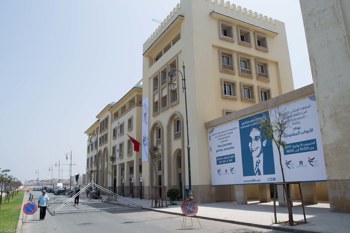
The general objective of the project was to contribute to the promotion and protection of human rights and fundamental freedoms in accordance with international standards.
The specific objective was to support the creation of a development strategy for the National Training Institute for Human Rights (INFDH), strengthening its empowerment process and its human rights training missions .
- Socios:
- Particip (líder), EuroPlus
- Palabras clave:
- Derechos humanos
Results Oriented Monitoring (ROM) reviews aim to assist the European Commission’s services and EU Delegations in monitoring of and reporting on EU financed development and cooperation projects and programmes in third countries through independent reviews of the progress of their implementation and the achievement of project results.
The ROM reviews and support missions to be carried out are the following:
a) +++ROM reviews of projects signalled as having implementation problems and where EC services have identified a need for an outside expert review to assist in addressing the problems, identifying causes and options for solution and making recommendations.
b) +++ ROM reviews of other projects for which such ROM reviews may have a particular usefulness, in particular for projects which could not be included in the EUDs’ planning of field visits or for which the necessary sector expertise at EUD level may not be sufficiently available at a given point of time or for innovative projects.
c) ROM reviews of BS programmes: in countries where a BS programme is signalled as having implementation problems, a ROM review may be organized focusing on the programme in question for the sector specific aspects but also covering the Public Financial Management (PFM) and macroeconomics aspects of all BS programmes financed by the EU in the country .
d) ROM support to end of project reporting on results (outputs and direct outcomes), including for BS programmes. These ROM support missions are to assist EC services and EUD in strengthening their results reporting capacities in: assisting with the recording actual results achieved by projects and programmes that have come to an end in the specified calendar year, solving technical difficulties that may occur linked to results reporting, and identifying the systemic needs and modalities for improvement which may be needed in these areas. The ROM support to end of project results reporting missions are to focus on projects of EUR 750.000 or more.
- Socios:
- Particip (líder), GOPA, Integration
- Palabras clave:
- Seguimiento y evaluación
Monitoring of the programme to support implementation of the government's equality agenda in Morocco.
- 2013 – 2018
- menos de 500.000 €
- Morocco
Technical assistance to monitor implementation of the programme to support the implementation of the government equality plan in Morocco.
The services will ensure both regular monitoring of the programme's implementation and examination of the conditions regarding disbursement of the different budget support tranches.
The contract will involve several monitoring assignments during implementation of the programme, to be carried out by 3 experts, 1 in the fields of (i) policies and strategies for gender equality, (ii) legal and judicial frameworks for women's rights and (iii) macroeconomics and gender-based budgeting.
- Palabras clave:
- Seguimiento y evaluación

The global objective of the assignment was to assess the EU support at regional level, bilateral level and through the blending mechanism (the NIF ) to the partner countries of the Neighbourhood South in the fields of environment (H2020 initiative, Sustainable Consumption and Production, Integrated Water Management, biodiversity and Marine Protected Areas…) over the period 2010-2017, and to propose recommendations for further EU support for the forthcoming programming period 2018-2023.
It also considered how the political relationships between the EU and its partner countries as well as relations between partner countries affect both the implementation of the EU support and the development of harmonised environment sector policies in the Mediterranean region.
- Socios:
- Particip (líder), DAI Global UK, ETI
- Palabras clave:
- Medio ambiente

Evaluation of EU support to social protection in external action 2007-2013
- 2016 – 2018
- menos de 500.000 €
- Global
The objectives of the evaluation were to:
- support the decision-making, both at EU strategic (planning) level, and at the level of the design of the action programmes /interventions;
- feed into the reflection on the revision of future development policies in view of the recent adoption of the 2030 Sustainable Development Agenda;
- demonstrate whether already on-going/planned IPA (I) II, ENPI/ENI, DCI and EDF action programmes/interventions in the area of social protection have taken on board the latest lessons learnt from the previous programming period;
- provide recommendations on the best way to approach and improve its support to the development of social protection systems, in partner countries both in terms of the use of policy dialogue and financial assistance;
- contribute to the preparation and adjustment of action programmes, namely for IPA II, ENI, DCI and EDF assistance to the extent possible;
- feed in the Mid-term Review of financial instruments;
- feed in Mid-term Reviews of country/region multi-annual indicative programmes.
The evaluation used the five standard OECD/DAC evaluation criteria, namely relevance, effectiveness, efficiency, impact and sustainability. In addition, the evaluation also looked at the EU added value and the 3Cs.
The evaluation focused on EU support (policy dialogue and financial assistance) provided for the development of social protection systems in partner countries, more specifically on the social insurance and social assistance measures to address the following risks and needs: unemployment, parental responsibilities, sickness and healthcare, work accidents/employment injuries disability, loss of a spouse or parent, old age, housing and social exclusion.
The evaluation covered:
- IPA I beneficiary countries;
- ENPI partner countries;
- Countries covered by DCI and EDF.
The evaluation was conducted in four phases
- An Inception Phase, focusing on the design and the methodology of the evaluation including the reconstruction of the intervention logic and the compilation of an inventory;
- A Desk Phase, focusing on gathering and analysing existing data and information (through literature/document reviews and interviews/focus groups/surveys);
- A Field Phase, including preparation of field missions, visits to the case study countries (Bosnia and Herzegovina, El Salvador, Ethiopia, Turkey, Kyrgyzstan, Macedonia*, Malawi, Moldova, Montenegro, Morocco, Palestine*) and drafting of country reports;
- A Synthesis Phase, producing a final report and dissemination of results to concerned stakeholders.
- Socios:
- AETS (líder), Particip
- Palabras clave:
- Alimentación y nutrición, Salud, Seguimiento y evaluación, Sociedad civil

Evaluation of the capacity building initiatives in support of Civil Society in the Neighbourhood South (2012 – 2016)
- 2016 – 2017
- menos de 500.000 €
- ENI South
The main objective of the evaluation was to analyse and evaluate the capacity building support provided to civil society by both regional and bilateral programmes during the period 2012-2016. This evaluation has focused on the efforts funded under ENPI and ENI.
The evaluation was also supposed to provide a series of recommendations to support innovative ways for contributing to building capacities of civil society organizations at a regional level in the future in complementarity with the political objectives as set out in the revised ENP and in the 2012 Communication of the European Commission - The roots of democracy and sustainable development: Europe's engagement with Civil Society in external relations and related Council Conclusions, as well as the EU Country Roadmaps for Engagement with Civil Society, a joint initiative between the European Union and Member States which aims to strengthen the strategic engagement with civil society.
Specific objectives
- to provide an overall independent assessment of the support given by the European Union to build capacities of civil society in the Neighbourhood South from both regional and national programmes - mainly through i) the Technical Assistance programme of the Civil Society Facility; ii) the Regional Grants of the Civil Society Facility; iii) bilateral support to capacity building (managed by EU Delegations) and iv) specific support to two institutions: Anna Lindh Foundation and European Endowment for Democracy. The assessment was supposed to take a look into issues related to their design, implementation and overall performance;
- Drawing up from key lessons; provide recommendations in order to inform the identification of current and future regional initiatives supporting capacities of civil society, especially in light of the complementarity and added value that can be given to efforts implemented at the national level
- Socios:
- Particip (líder), EPRD
- Palabras clave:
- Sociedad civil

The main objectives of the evaluation are the following:
- to provide an overall independent assessment of the European Union's financed project PPRD South II, its design, its implementation by the Civipol consortium as well as its overall performance;
- to identify key lessons and recommendations for the implementation of PPRD South III.
The evaluation should focus on the following specific objectives:
Assessment of the design of the project
1. Evaluate the appropriateness of the project objectives and their relevance with respect to the programme's objectives and requirements, taking into account the specific policy environment as it stood when it was decided in 2013 and as it stands at the moment;
2. Review the project's approach and methodology and assess its appropriateness for achieving the programme's objectives;
Assessment of the implementation of the project
3. Assess the overall implementation of the project;
4. Review the efficiency and effectiveness, outputs, impact and sustainability of the supported actions with respect to the project's objectives and the project's capacity to reach out to the target groups, taking into account involvement of key stakeholders across all partner countries and all EU Member States;
5. Evaluate the complementarity with other related EU and EU Member States funded programmes in the Southern Neighbourhood Region and in particular UCPM and actions funded by DG ECHO (SASPARM, eFIRECOM and IPCAM) or actions financed by the Instrument contributing to Stability and Peace (CBRN Centres of Excellence: www.cbrn-coe.eu).
6. Evaluate the relevance and stability of the project partnerships, taking into consideration partners' statute, motivation, roles and expertise and assess the local ownership of the project activities;
7. Assess the visibility of project activities.
Recommendations for future actions
On the basis of the lessons learnt and considering the latest developments in the ENP region, the final report will include recommendations for the future PPRD South III.
8. Propose recommendations for the future PPRD South III, in terms of better targeting the project and a possible re-orientation of its respective activities but also in terms of its implementation structure. These recommendations should be coherent with design included in the action document for PPRD South III.
- Palabras clave:
- Ayuda humanitaria, Seguimiento y evaluación

Support with the budgeting of the migration policies of the Kingdom of Morocco and identification-formulation of the EU programme to support migration policies
- 2015 – 2017
- menos de 500.000 €
- Morocco
The global objective is to contribute to the drafting of the EU - Kingdom of Morocco cooperation strategy on migration.
The specific objectives of this contract were as follows:
- to support the Moroccan government in preparing a medium-term, total or partial, budget for its migration policies in order to ensure that satisfactory conditions are in place for the identification and formulation work to be carried out;
- to support the Moroccan government in identifying the migration policy sectors, thereby fulfilling the requirements to benefit from EU budget support;
- to formulate a budgetary aid programme to support the Kingdom of Morocco’s migration policies;
- to carry out the identification and formulation of the areas of support to Moroccan migration policies, using the “project” approach.
- Socios:
- Particip (líder), EuroPlus
- Palabras clave:
- Finanzas públicas / presupuestación