
Unsere Projekte
Entdecken Sie, wo und wie Particip weltweit wirkt.
Unsere Referenzen geben Ihnen einen Einblick in laufende und abgeschlossene Projekte in verschiedenen Ländern, Sektoren und Fachgebieten – mit Informationen zu Zielen, geografischem Schwerpunkt, Laufzeit und Auftragsvolumen.
381–390 von 516 Referenzen

Production of the Sahel Alliance 5 years results report
- 2023 – 2023
- unter 500.000 €
- Burkina Faso, Chad, Mali, Mauritania, Niger
The members of the Sahel Alliance have chosen to concentrate their efforts in five priority sectors of intervention, in line with the development priorities established by the G5 Sahel countries: Agriculture, rural development and food security; Decentralisation and basic services; Education and youth employment; Energy; Governance.
The overall objective of this contract is to produce the 5-years Technical Report in line with the needs of the SA needs. In line with the commitments of the SA and its members, the Sahel Alliance Coordination Unit (UCA) plans to produce a SA 5 years results report in 2023.
The 5 years results report will include the following elements:
- Analysis of the evolution of the national indicators included in the Alliance results framework in relation to the target values set by the G5 Sahel countries.
- The analysis of the aggregated results of the projects included in the Alliance Sahel portfolio in line with the project indicators included in the Alliance Sahel results framework.
- Analysis of the achievements attributable to the Sahel Alliance stricto sensu will beproduced, in order to show whatthe platform has collectivelyachieved and what its membersare achieving individually.
The following elements should be taken into consideration while drafting the report:
- A qualitative analysis will be needed, particularly in terms of Sahel Alliance member organizations contribution to the provision of basic services;
- The contexts of Sahelian countries (crisis, displacement of population, COVID-19, etc.) should be taken into account in the analysis of results where possible;
- Where possible, the results obtained should be read with regard to the existing policy messages and the sectoral notes issued by the sectoral and thematic coordination groups of the SA in order to measure their operational translation

Evaluation of the strategies and programmes of the African Development Bank (AfDB) in Djibouti and Mauritania between 2011 and 2020
- 2021 – 2023
- unter 500.000 €
- Djibouti, Mauritania
The purpose of this evaluation was to assess the strategies and programmes of the African Development Bank (AfDB) in Djibouti and Mauritania. Its specific objectives were to take stock of the results achieved by the AfDB in Djibouti and Mauritania, to put them into perspective in relation to the resources deployed, and finally to identify lessons learned that could help the AfDB improve the effectiveness of its cooperation in these two countries. In line with the BDEV guidelines, the evaluation determined the relevance of the strategies and programmes adopted by the AfDB and set out in the CSPs, as well as their effectiveness, sustainability, efficiency and contribution to achieving the development objectives of each of the two countries concerned for the period 2011-2020.
The evaluation took place in a difficult political, economic and social context in both countries, marked by the effects of the COVID-19 pandemic. Indeed, the economic and social impact of the pandemic had a negative influence on the implementation of development actions supported by the AfDB, if only because of the response put in place by governments, in particular travel restrictions.
- Schlagwörter:
- Monitoring und Evaluierung
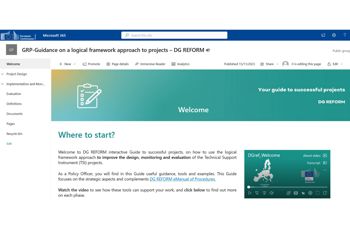
Strengthening DG REFORM's capacity of designing, monitoring and evaluating projects
- 2022 – 2023
- unter 500.000 €
- Belgium
The general objective of this service contract is to strengthen DG REFORM capacity of designing, monitoring, and evaluating projects.
The three outcomes of this contract are as follows:
Outcome 1: DG REFORM staff have developed consolidated skills and expertise in designing, implementing, monitoring and evaluating technical support projects, using the principles and methodology of the Logical Framework Approach
Outcome 2: DG REFORM policy officers have been empowered to embed evaluation concepts and tools at each step of the project management cycle (design, contracting, implementation, evaluation)
Outcome 3: DG REFORM has developed an evaluation strategy to assess outcomes and impact of groups of projects
In the medium and long run, the achievement of the outcome of this service contract should contribute towards the development of a strong evaluation culture in DG REFORM (impact)
- Schlagwörter:
- Aus- und Fortbildung, Monitoring und Evaluierung, PCM / Logframe

Evaluation of European Union's Cooperation with North Macedonia (2014-2020)
- 2021 – 2023
- unter 500.000 €
- North Macedonia
This evaluation has two overarching objectives. Firstly, to analyse the extent to which and in which manner the support of the European Union (and of the European Commission in particular) has contributed to the overall political, economic and social development in North Macedonia in the period 2014-2020. In particular, the evaluation aims to:
- assess the contribution to the reform process in the framework of the country’s EU accession process;
- assess the design, implementation, responsiveness, results and impact of the EU support.
And secondly, to identify key lessons and produce recommendations in order to inform decision makers on how to improve the European Union’s current and future strategies, programmes and actions with regard to North Macedonia, and in particular to inform future decision making choices related to the programming of Instrument for Pre-Accession Assistance (IPA) III in North Macedonia.
The thematic scope of the evaluation focus is on priority reforms in i) Democracy and Governance, ii) Rule of Law and Fundamental Rights, and iii) Economic development and Social cohesion. It will include IPA national programmes; the various implementation modalities, instruments and tools utilised; and the policy dialogue that has been taking place at different levels. The evaluation also considers the contribution of multi country programmes in the areas of transport and environment in North Macedonia
- Partner:
- Particip (federführend), Ecorys B.V.
- Schlagwörter:
- Monitoring und Evaluierung

Support to the interim evaluation of IPA II actions implemented under indirect management
- 2021 – 2023
- unter 500.000 €
- Montenegro
The overall objective of the project of which this contract is part is to support evaluation of the achieved results for activities implemented under specific projects implemented under indirect management and to identify the weaknesses in the implementation of activities as pre-condition for the long-term success of all EU funded activities.
The purposes of this contract are as follows:
- to assess the ongoing implementation of proposed projects and determine the extent to which the objectives of the projects are being achieved;
- to provide recommendations for more efficient implementation of forthcoming contracts under indirect management.
Results to be achieved by this contract are grouped into two result areas with pertaining results:
Result area 1: Interim evaluation of selected activities conducted, and evaluation reports prepared;
Result area: Evaluation reports presented to the key stakeholders and published.
- Schlagwörter:
- Monitoring und Evaluierung

Corporate Emergency Evaluation of WFP’s Response in Myanmar (2018-2022)
- 2022 – 2023
- unter 500.000 €
- Myanmar
This independent evaluation of the Corporate Emergency Evaluation of WFP’s Response in Myanmar assessed the appropriateness, effectiveness and efficiency of its emergency response in multiple crises in the country from 2017 to 2022.
The evaluation served the double purpose of providing: a) evidence and accountability (performance and result assessment) for results to WFP stakeholders; and b) provide learning (why certain results occurred or not, lessons and evidence for decision-making about a potential scale-up) on WFP’s performance in the Myanmar emergency context, specifically for developing WFP’s future engagement in Myanmar and for broader learning on WFP complex emergency responses.
The CEE‘s subject and focus followed a modular approach, including:
- Strategic positioning vis-à-vis evolving needs (incl. informed strategy, assistance adaptation to changing needs, internal coherency of CSP and budgets revisions, well targeted assistance for food insecure and vulnerable groups).
- Effectiveness in achieving CSP objectives (incl. delivering on planned activities, outputs and strategic outcomes, coverage of assistance, preparedness to respond to crisis, gender equality and empowerment of women)
- Connectedness of assistance (incl. assistance in taps into local capacities and is community-driven, transition and exit, tailored to local capacities and context, strategic linkages to establish along the triple nexus between humanitarian action, development, and contributions to peace, environmental sustainability)
- Partnerships and coordination (incl. coherent and aligned with the wider UN and humanitarian sector, developed appropriate and effective partnerships).
- Humanitarian principles, protection and AAP (incl. adherence to humanitarian principles and “Do No Harm” in all phases of its assistance, managing trade-offs between humanitarian principles, protection challenges faced personnel and its target populations, accountability to affected populations).
- Efficiency (incl. ability to mobilise adequate resources, activities and outputs delivered within the intended timeframe; activities have been cost-efficient; adequacy of corporate support during the consecutive crises; management of operational risks.
Cross-cutting themes included: humanitarian assistance in conflict and peri-urban settings, food and nutrition security, school-based programmes, nutrition-specific interventions and smallholder farmers support.
The evaluation used a mixed methods approach relying on a variety of primary and secondary sources, including desk review, key informant interviews, focus and groups discussions, additional questions to the post-distribution monitoring, phone survey, and geospatial analysis. Systematic triangulation across different sources and methods was carried out to validate findings and avoid bias in the evaluative judgement.
The final report is available at: https://www.wfp.org/publications/corporate-emergency-evaluation-wfps-response-myanmar-2018-2022
- Partner:
- Particip (federführend)
- Schlagwörter:
- Ernährung, Humanitäre Hilfe, Ländliche und städtische Entwicklung, Menschenrechte, Monitoring und Evaluierung

Evaluation of Finland's International Climate Finance
- 2022 – 2023
- unter 500.000 €
- Global
The ultimate purpose of the forward-looking evaluation was two-fold. Firstly, it informed the MFA on the effectiveness, coherence and relevance of climate finance and what kind of results had been achieved with the various development policy and cooperation instruments over the period 2016-22. Secondly, the evaluation provided information and supported the implementation and further development of the Action Plan for Finland’s Public International Climate Finance to maximize the effectiveness and impact of Finland’s climate finance, especially regarding long-term planning and coordination of climate finance as a whole.
The specific objectives of the evaluation were
- To assess the results of Finland’s international climate finance and policy influencing in directing finance, with due consideration of the opportunities and barriers at both national and global levels
- To assess the relevance and coherence of Finland’s international climate finance
- To assess the functioning of partnerships and co-operation in climate change mitigation and adaptation and whether the current balance of partnerships of Finnish influencing is optimal
- To study relevant peer countries’ experiences in order to learn best practices
- To provide well-justified and evidence-based recommendations on how the MFA together with relevant stakeholders could further improve their actions for a more effective, coherent and relevant response to developing countries’ climate finance needs and for funding priorities through the different cooperation instruments
- Partner:
- Particip (federführend), NIRAS
- Schlagwörter:
- Monitoring und Evaluierung, Öffentliche Finanzen / Haushaltsplanung, Umwelt

Mid-term evaluation of 'Support the Development and Operationalization of the Partnership for Smart and Sustainable Urbanisation for India and the EU, IUC Component IV' (IEUP)
- 2022 – 2023
- unter 500.000 €
- India
The main objectives of this evaluation was to provide the relevant services of the European Union, the interested stakeholders with:
- an overall independent assessment of the past performance of the Action ‘Support the Development and Operationalization of the Partnership for Smart and Sustainable Urbanisation for India and the EU’, paying particular attention to its intermediate results measured against its expected objectives; and the reasons underpinning such results;
- key lessons learned, conclusions and related recommendations in order to improve current and future Actions, including improving their coordination, coherence and efficiency.
The evaluation team assessed the Action using the five standard DAC evaluation criteria, namely: relevance, effectiveness, efficiency, sustainability and perspective of impact. In addition, the evaluation team assessed two EU specific evaluation criteria:
- the EU added value (the extent to which the Action brings additional benefits to what would have resulted from Member States' interventions only);
- the coherence of the Action itself; 1) with the EU strategy in India covered by the EU-India Partnership on Smart and Sustainable Urbanisation and 2) with other EU policies and EU and Member State Actions.
The evaluation team furthermore considered whether gender, environment and climate change were mainstreamed; the relevant SDGs and their interlinkages were identified; the principle of Leave No-One Behind and the rights-based approach methodology was followed in the identification/formulation documents and the extent to which they have been reflected in the implementation of the Action, its governance and monitoring.
- Schlagwörter:
- Ländliche und städtische Entwicklung, Monitoring und Evaluierung
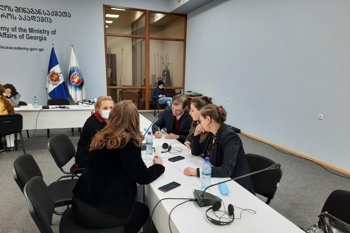
Technical assistance support for public administration reforms in Georgia
- 2019 – 2023
- 5 – 10 Millionen €
- Georgia
The purposes of this contract are as follows:
- 1.Policy development and coordination: to improve results-based approach in policy-development, coordination and implementation following the results of SIGMA baseline assessment in 2018;
- 2.Coordination and structuration of public administration: to improve efficiency of the administration by improved intra and inter-ministerial business processes related to policy making and service delivery;
- 3.Civil service reform: to streamline the implementation of the civil service reform in public institutions ;
- 4.Accountability: to increase the accessibility, accountability and transparency of the executive branch and to combat corruption by strengthened policy development and implementation of the anti-corruption and transparency national policies at all levels;
- 5.Public service delivery: to improve public service design and delivery and establish an efficient, accountable and transparent institutional and legal framework for efficiently, timely and reliably delivered public services (including electronic services);
- 6.Communication: to raise public awareness and increase visibility of the Government’s public administration reform agenda as well as on available public services.
- Partner:
- GINGER Group (ex SOFRECO) (federführend), KAS, Particip
- Schlagwörter:
- Aus- und Fortbildung, Institutionelle Entwicklung, Kommunikation und Medien, Projektdurchführung / technische Hilfe, Regierungsführung

The main objectives of this evaluation are to provide the relevant services of the European Union, the interested stakeholders with:
- an overall independent assessment of the past performance of the Partnership Instrument (PI) funded Policy Dialogues Support Facilities (PDSFs) to be evaluated, paying particular attention to the approach taken under the different PDSFs, as well as paying particular attention to the intermediate or final results measured against their expected objectives; and the reasons underpinning such results;
- key lessons learned, conclusions and related recommendations in relation to the PI approach and use of PDSFs and in order to improve current and future Actions.
The specific rationale for undertaking this evaluation is to assess the relevance, outcomes, and approach of PI funded Policy Dialogues Support Facilities (PDSFs), as well as the added value of the activities in strengthening EU’s partnerships/alliances and its position as a global player in the countries concerned, and reinforcing multilateralism, as expressed in the specific objectives of the PI.
This evaluation contract covers 13 actions. The work to be covered under this contract is a hybrid evaluation of individual actions and, drawing conclusions, recommendations and lessons learned, where possible, when looking at the package of these projects as a whole and the approaches taken on how to use the “SPDF approach” to influence effectively EU interests in the respective countries.
The focus of the evaluation is two-fold:
- On the assessment of the approach taken in relation to PDSFs under the different Actions, progress to date and, by explaining why progress is happening or is not happening as planned, provide recommendations on how to improve the approach in order to achieve the expected objectives of the PI, taking into account problems and opportunities.
- This evaluation will also serve to understand the performance of the Actions, its enabling factors and those hampering a proper delivery of results as to inform the planning of the future funded Policy Dialogues Support Facilities.
- Partner:
- Particip (federführend), Idem Concept
- Schlagwörter:
- Monitoring und Evaluierung