Georgia
30 Referenzen
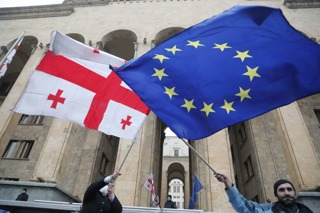
Public relations services: Strategic communication and public diplomacy of the European Union in Georgia
- 2025 – 2028
- 5 – 10 Millionen €
- Georgia
The expected outputs of this contract are as follows:
- Output 1 - Fact based and inspirational campaigns and materials explaining what the EU stands for and the EU’s partnership with the people of Georgia are accessible to the general public in Georgia;
- Output 2 - Networks of disseminators of EU values are created or reinforced, coordination between these network is ensured, and the awareness on EU values of Georgian citizens is raised;
- Output 3 - Knowledge of EU practices and support, especially among young people, women, urban populations in the regions of Georgia, and vulnerable communities, including minorities, is increased;
- Output 4 - EU-funded initiatives are more visible across Georgia and their capacities to disseminate information on the work of the EU in Georgia are developed;
- Output 5 - Journalists in Georgia are better equipped to report on EU topics.
- Partner:
- NTU (federführend), Particip
- Schlagwörter:
- Kommunikation und Medien

Systematic analysis of the monitoring data should result into recommendations to improve the implementation and design of assistance to civil society and to the EU monitoring to reach the overall objective to contribute to civic resilience and grassroots democracy in the Eastern Partnership. Trainings should be developed and conducted for a sustainable learning experience. The data and analysis should also be presented for communication on the achievements of the civil society assistance and contribute to various reporting exercises.
The outputs of the monitoring on the ground and analysis should enhance the ability of EU project managers to contribute to regular reviews of action progress and operational plans. The concise feedback resulting from the monitoring of an action should allow EU project managers to have more assurance in assessing the content and quality of monitoring reports from CSOs which would allow them to suggest corrective measures or to support efficient and effective implementation. Further to this, the analysis provided should guide future programming
The expected outputs of this contract are as follows:
- Monitoring system of EU-funded civil society projects that will complement existing EU systems of project monitoring maintained and improved;
- Analysis and knowledge sharing products to support decision-making generated and disseminated;
- Capacity of EU project managers, CSOs staff to monitor and implement projects strengthened.
- Partner:
- Particip (federführend), EPRD
- Schlagwörter:
- Monitoring und Evaluierung, Zivilgesellschaft

Development of Multi -Hazard Basin Risk Management Plans for 4 river basins in the East Side of Georgia – Mtkvari, Khrami-Ktsia, Alazani, Iori.
- 2025 – 2026
- unter 500.000 €
- Georgia
- TASK I: Preparatory/Inception Phase
In agreement with NEA and PMU (Project Management Unit) ensures that detailed workplan for the assignment (with indication of timelines, responsible parties, etc.) and stakeholder participation mechanisms are in place
- TASK II: Drafting Stakeholder consultation report
Development of the report to describe the stakeholder engagement process
(workshops, community meetings) and reflect all results which will be important information for the identification of additional prioritized hazard risk areas, where will be carried out more detailed studies (by using appropriate technical support and other suggested solutions) and to develop corresponding measures for its reduction which should be in line with stakeholder priority
- TASK III: Drafting of the Basin level MHRBMP
Working closely with central and municipal authorities during the process of
MHRM planning and to develop integrated basin-level MHRMPs for each major river basin (4 in total):
Mtkvari, Khrami-Ktsia, Alazani and Iori, River Basins, with participation of all relevant stakeholders. It is envisaged that these plans will take a bottom-up, multi-stakeholder approach which will be mainstreamed into the national on-going work on the development of the river basin management plans as per Guidance
Documents of EU Water Framework Directive and will be in line with the concept and objectives of the EU
Floods Directive
- Partner:
- Particip (federführend), GEO Outlook LLC, GeoGraphic

Development of Multi -Hazard Basin Risk Management Plans for 3 river basins in the WEST Side of Georgia - Rioni, Enguri, Chorokhi – Adjaristskali.
- 2025 – 2026
- unter 500.000 €
- Georgia
- TASK I: Preparatory/Inception Phase
In agreement with NEA and PMU (Project Management Unit) ensures that detailed workplan for the assignment (with indication of timelines, responsible parties, etc.) and stakeholder participation mechanisms are in place.
- Task II: Drafting Stakeholder consultation report
Development of the report to describe the stakeholder engagement process (workshops, community meetings) and reflect all results which will be important information for the identification of additional prioritized hazard risk areas, where will be carried out more detailed studies (by using appropriate technical support and other suggested solutions) and to develop corresponding measures for its reduction which should be in line with stakeholder priority.
- TASK III: Drafting of the Basin level MHRBMP
Working closely with central and municipal authorities during the process of
MHRM planning and to develop integrated basin-level MHRMPs for each major river basin:
Enguri, Rioni, Ajaristskali-Chorokhi, River Basins, with participation of all relevant stakeholders. It is envisaged that these plans will take a bottom-up, multi-stakeholder approach which will be mainstreamed into the national on-going work on the development of the river basin management plans as per Guidance
Documents of EU Water Framework Directive and will be in line with the concept and objectives of the EU
Floods Directive
- Partner:
- Particip (federführend), GEO Outlook LLC, GeoGraphic
Results Oriented Monitoring (ROM) Systems for External aid Interventions Financed by the European Union — Neighbourhood Region
- 2021 – 2026
- über 10 Millionen €
- ENI
Results Oriented Monitoring (ROM) reviews aim to assist the European Commission’s services and EU Delegations in monitoring of and reporting on EU financed development and cooperation projects and programmes in third countries through independent reviews of the progress of their implementation and the achievement of project results.
ROM services to be provided through this contract are clustered in three components:
** Component 1: ROM Reviews. ROM contractors will assess the performance of EU-funded interventionson the basis of the following OECD DAC evaluation criteria: relevance, efficiency, effectiveness, and sustainability.
ROM reviews will cover:
-A sample of EU funded interventions during the inception phase of implementation. The ROM review will support the OM in confirming or updating intervention logic and logframe matrix, in reviewing the monitoring system of the IP, in assessing risks and mitigation measures and fine tune the calendar of activities with a view to improve the performance of the intervention across the OECD DAC criteria.
- ROM reviews will assist the OM in adressing the main implementation problems.
-Other interventions for which Commission services request a ROM review on demand (interventions which could not be visited by EU OMs or for which there is a lack of sector expertise in the EU Delegation/operational unit in HQ).
- Blending operations, focused on asessing the value added of the EU contribution and on the performance of blending interventions in terms of socio-economic development.
** Component 2: Quality assurance and support at design stage for a sample of interventions. Provide technical support to EC services in the formulation of intervention logics and related logical frameworks matrices (logframes) and monitoring and reporting arrangements for a sample of interventions.
**Component 3: Results report (at corporate and intervention level). The Contractor will provide services to encode and quality control results data for a set of interventions subject to results reporting. TOM contractor will ensure quality control of data included in the intervention's logframes. Such quality controls will include, amongs others: verifying that the logframe is correctly encoded and up-to-date , enssuring that the latest values related to logframe indicators are available, and supporting the aggregation of intervention-level results into the EU Results Framework or other frameworks.
- Partner:
- Particip (federführend), Dev4U, Integration
- Schlagwörter:
- Monitoring und Evaluierung

Preparing the Improving Learning Outcomes in Secondary Education Sector Development Program
- 2023 – 2026
- unter 500.000 €
- Georgia
Particip provided this Transaction Technical Assistance (TRTA) to support the Government of Georgia and the ADB to prepare the Improving Learning Outcomes in Secondary Education Sector Development Program.
Through this program, the new secondary education curriculum was planned to be rolled out, and needs to increase the efficiency of the school system addressed. The program was intended to increase the effectiveness of the school funding model, the quality of teaching, and address equity and inclusion challenges in the secondary education system.
The TRTA team supported preparing a policy-based loan and a investment project loan component, further developing the program design, a detailed policy matrix, completing due diligence requirements and planning program implementation arrangements. This included analytical work, preparing technical, financial, economic, institutional, safeguards, gender and socioeconomic due diligence, as well as advise and assistance to ensure the investment project was ready for rapid start-up and smooth implementation.
- Partner:
- Particip (federführend), PMCG
- Schlagwörter:
- Bildung

The objective of this facility is to improve the overall quality of the NDICI Rapid Response and Peace, Stability and Conflict Prevention thematic areas by providing high quality research services.
We will provide the FPI with flexible and ad hoc research services and prepare literature reviews and rapid assistance reports in the thematic areas specified below.
- Partner:
- Particip (federführend), SICI Dominus
- Schlagwörter:
- Humanitäre Hilfe, Umwelt

Development of Multi-Hazard Basin Risk Management Plans
- 2023 – 2025
- unter 500.000 €
- Georgia
The main objective of this assignment was to assist with the elaboration of an integrated MHRMPs for following 4 river basins of Western Georgia: Supsa, Natanebi, Kintrishi and Khobistkali through active participation of relevant stakeholders. It was envisaged that these plans will take a bottom-up, multistakeholder approach which was mainstreamed into the national on-going work on the development of the river basin management plans as per Guidance Documents of EU Water Framework Directive and in line with the concept and objectives of the EU Floods Directive particularly for Flood Management Planning part.
- Partner:
- Particip (federführend), GEO, GEO Outlook LLC, GeoGraphic
- Schlagwörter:
- Umwelt

Evaluation of EU support to youth in the Enlargement and Neighbourhood regions (2014-2021)
- 2022 – 2024
- unter 500.000 €
- ENI East, ENI South, IPA
The main objectives of this assignment are to: i) provide an independent and evidence-based assessment of the EU’s past and current external action support in the policy area of Youth, and ii) identify lessons learnt and recommendations to inform strategic policy orientation on supporting youth, define synergy effects with the EU's political and reform objectives, and enhance the planning, design, implementation and monitoring of new interventions launched under IPA III and NDICI-GE.
The evaluation aims to assess the performance of EU assistance (spending and non-spending actions) in Enlargement and Neighbourhood regions in the following sectors:
- i)Youth engagement (including participation in policy making and youth work);
- ii)Youth economic integration (including youth employment and employability, entrepreneurship, digital skills formal and non-formal learning);
- iii)Youth social inclusion (including youth mobility, culture, school retention, sexual, reproductive and mental health);
- iv)Peace and security (regional cooperation and reconciliation).
The legal and temporal scope of the evaluation covers:
- IPA II and III, ENI, NDICI-GE, EIDHR, Erasmus+, Trust funds and the Facility for Refugees in Turkey;
- funding related to the last programming cycle (2014-2020), as well programming under the current programming cycle until 2022.
- Partner:
- Particip (federführend), ECDPM
- Schlagwörter:
- Bildung, Industrie und Privatsektorentwicklung, Monitoring und Evaluierung, Regierungsführung, Zivilgesellschaft

Evaluations of two AFD policy-based loans (Energy and health/social welfare) for the Government of Georgia and AFD
- 2023 – 2024
- unter 500.000 €
- Georgia
Two evaluations for the Government of Georgia and AFD:
- Mid-term evaluation of an AFD policy-based loan in the energy sector in Georgia.
The evaluation focussed on the formulation of the policy-based loan and its effects on policy formulation and implementation.
The purpose of the evaluation was to assess to what extent the inputs provided by AFD group and Government of Georgia under the terms of the policy-based loan (funds, policy dialogue, and technical assistance) have impacted policy formulation and/or implementation regarding health and social welfare, and the supported public institutions. The evaluation covered the period from 2017-2022. The period covered was not limited to the disbursement period; it includes the period over which policy dialogue was conducted and technical assistance was implemented.
- Joint ex-post evaluation of an AFD policy-based loan in the health and social welfare sectors in Georgia.
AFD and Government of Georgia jointly carried out this ex-post evaluation. This evaluation assessed whether some areas of policy supported through the policy-based loan (PBL) resulted in the expected outcomes and linked the changes to the PBL.
The purpose of the evaluation was to assess to what extent the inputs provided by AFD and Government nof Georgia under the terms of the policy-based loan (funds, policy dialogue, technical cooperation) have impacted policy formulation and/or implementation regarding the energy sector. The evaluation thus examined AFD’s financial contribution as well as all technical cooperation activities. The type, scope, and methods of the dialogue regarding relevant policies also fell within the scope of the support provided and required special attention during the evaluation process. The evaluation covered the period from 2018-on going. The period covered was not limited to the disbursement period; it included the period over which policy dialogue was conducted and technical cooperation was implemented.
- Schlagwörter:
- Energie, Gesundheit, Monitoring und Evaluierung, Öffentliche Finanzen / Haushaltsplanung
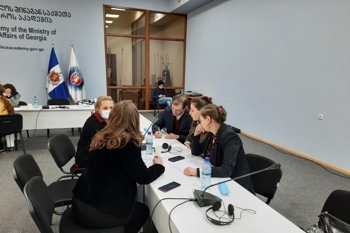
Technical assistance support for public administration reforms in Georgia
- 2019 – 2023
- 5 – 10 Millionen €
- Georgia
The purposes of this contract are as follows:
- 1.Policy development and coordination: to improve results-based approach in policy-development, coordination and implementation following the results of SIGMA baseline assessment in 2018;
- 2.Coordination and structuration of public administration: to improve efficiency of the administration by improved intra and inter-ministerial business processes related to policy making and service delivery;
- 3.Civil service reform: to streamline the implementation of the civil service reform in public institutions ;
- 4.Accountability: to increase the accessibility, accountability and transparency of the executive branch and to combat corruption by strengthened policy development and implementation of the anti-corruption and transparency national policies at all levels;
- 5.Public service delivery: to improve public service design and delivery and establish an efficient, accountable and transparent institutional and legal framework for efficiently, timely and reliably delivered public services (including electronic services);
- 6.Communication: to raise public awareness and increase visibility of the Government’s public administration reform agenda as well as on available public services.
- Partner:
- GINGER Group (ex SOFRECO) (federführend), KAS, Particip
- Schlagwörter:
- Aus- und Fortbildung, Institutionelle Entwicklung, Kommunikation und Medien, Projektdurchführung / technische Hilfe, Regierungsführung
Technical Assistance on Impact Monitoring of EU Civil Society Support in Eastern Partnership Countries
- 2019 – 2023
- 2 – 5 Millionen €
- ENI East
The project contributed to the introduction of results-based management in all the activities of DG NEAR. The ToR underlined the importance of taking account of all related systems and tools and of the reforms currently being introduced, which are listed exhaustively.
Indeed, the EC had embarked in a major transformation project with crucial implications on the way development cooperation is delivered and development cooperation professionals will work in the future. The aim was to introduce a performance and results culture promoting collaboration, accountability and access to knowledge, along with simplification and harmonisation of all processes and tools, combined in a holistic transparent system.
Result 1: Robust evidence was made available through the setup of an appropriate qualitative monitoring system for civil society projects in order to showcase the benefits of civil society support for citizens;
Result 2: Increased credibility of civil society projects was fostered through regular and more accurate monitoring of projects, following EU external monitoring policy.
Result 3: Increased capacity of EU staff to implement EU monitoring guidelines (and apply corrective measures, if needed) was increased through regular and structured on implementation of EU funded CS projects.
- Partner:
- Particip (federführend), EPRD
- Schlagwörter:
- Monitoring und Evaluierung, Projektdurchführung / technische Hilfe, Regierungsführung, Zivilgesellschaft

Mid-term evaluation of the Technical Cooperation Facilities (TCFs) in Georgia
- 2022 – 2023
- unter 500.000 €
- Georgia
The main objectives of this evaluation were to provide the relevant services of the European Union and the interested stakeholders with:
- an overall independent assessment of the past performance of the first two Technical Cooperation Facilities being implemented in Georgia, paying particular attention to its intermediate results measured against its expected objectives; and the reasons underpinning such results;
- key lessons learned, conclusions and related recommendations in order to improve current and future Interventions.
In particular, this evaluation served to assessment of planning and designing of the present interventions supporting implementation of EU-Georgia agreements, more specifically EU-Georgia Association Agreement to identify enabling factors and those hampering the design and implementation of these programmes and to deliver recommendations for planning and design of future programmes in support of EU-Georgia agreements.
The main users of this evaluation are the EU Delegation to Georgia and from the Georgian side, the Ministry of Foreign Affairs of Georgia.
- Schlagwörter:
- Menschenrechte

Evaluation of EU's Cooperation with Georgia (2014-2020)
- 2021 – 2022
- unter 500.000 €
- Georgia
This evaluation has two overarching objectives. Firstly, to provide the relevant external co-operation services of the European Union (EU) and the wider public with an overall independent assessment of the EU's past and current cooperation with Georgia during the period 2014-2020. And secondly, to identify key lessons and to produce recommendations in order to inform the responsible decision makers, notably in NEAR and the EEAS, on how to improve the current and future strategies, programmes and actions of the EU.
In addition, the specific objectives for this evaluation are:
- Assess the performance (relevance, efficiency, effectiveness, coherence, impact, sustainability and EU value added) of EU support (policy dialogue and financial assistance);
- Provide recommendations for the next programming period.
The thematic scope of the evaluation covers: public administration reform; agriculture and rural development; justice sector reform; economic development and market opportunities; strengthening institutions and good governance, including rule of law; connectivity, energy security and efficiency, environment and climate change; mobility, people-to-people contacts, education; and complementary support.
It is intended to provide advice to EU external action actors, inform them about the result and impact of EU support, and contribute to improved programming, monitoring, reporting and implementation of current EU interventions in Georgia.
Publication: https://neighbourhood-enlargement.ec.europa.eu/system/files/2022-10/GEO%20CSE%20-%20Final%20Report%20-%20September%202022.pdf
- Partner:
- Particip (federführend)

Evaluation of the EU's support to climate change and environment in Enlargement and Neighbourhood regions
- 2021 – 2022
- unter 500.000 €
- ENI East, ENI South, IPA
The purpose of this study is i) to provide an independent and evidence-based assessment of the EU's past and current external action support in the policy area of environment and climate change in Enlargement and Neighbourhood regions; and ii) based on this assessment, to provide lessons learnt and recommendations for decision-makers at EU level.
The evaluation encompasses both spending and non-spending activities between 2014 and 2020. It examines all funding mechanisms and modalities of implementation used under the Instrument for Pre-Accession (IPA) II and the European Neighbourhood Instrument (ENI) in a variety of sectors (e.g. energy, water and waste management).
The evaluation covers all thematic areas related to environment and climate change, paying special attention to i) issues of mainstreaming in EU external aid programmes and projects for the ten sectors in the environmental chapter of the acquis; and ii) the EU support provided through international organisations, in particular support aimed at strengthening environment and climate change governance at national and regional levels. Process and context factors – conducive to or hampering the performance of EU support, including in terms of the convergence with EU legislation in the regions under scope – are also systematically assessed.
The evaluation aims to contribute to ongoing EU strategic discussions on the use of innovative financing, in particular blending, which is playing an increasingly important role in EU support to environment and climate change. The evaluation results are also useful in enriching ongoing reflections on the future role of European Development Finance Institutions in EU external action. Finally, in the context of the COVID-19 pandemic, the evaluation contributes to identifying good practices that can strengthen Team Europe’s ongoing efforts to help ‘build back better’ and design ‘risk-informed and climate-smart’ recovery actions.
- Schlagwörter:
- Energie, Monitoring und Evaluierung, Regierungsführung, Umwelt
Results Oriented Monitoring (ROM) system for external aid interventions financed by the European Union - Lot 1 – Neighbourhood region
- 2019 – 2021
- 5 – 10 Millionen €
- ENI
Results Oriented Monitoring (ROM) reviews aim to assist the European Commission’s services and EU Delegations in monitoring of and reporting on EU financed development and cooperation projects and programmes in third countries through independent reviews of the progress of their implementation and the achievement of project results.
ROM services provided through this contract were clustered in three components:
** Component 1: ROM Reviews. ROM contractors assessed the performance of EU-funded interventions on the basis of the following OECD DAC evaluation criteria: relevance, efficiency, effectiveness, and sustainability.
ROM reviews covered:
-A sample of EU funded interventions during the inception phase of implementation. The ROM review supported the OM in confirming or updating intervention logic and logframe matrix, in reviewing the monitoring system of the IP, in assessing risks and mitigation measures and fine tune the calendar of activities with a view to improve the performance of the intervention across the OECD DAC criteria.
- ROM reviews assisted the OM in adressing the main implementation problems.
-Other interventions for which Commission services requested a ROM review on demand (interventions which could not be visited by EU OMs or for which there was a lack of sector expertise in the EU Delegation/operational unit in HQ).
- Blending operations, focused on asessing the value added of the EU contribution and on the performance of blending interventions in terms of socio-economic development.
** Component 2: Quality assurance and support at design stage for a sample of interventions.The Contractor Provided technical support to EC services in the formulation of intervention logics and related logical frameworks matrices (logframes) and monitoring and reporting arrangements for a sample of interventions.
**Component 3: Results report (at corporate and intervention level). The Contractor provided services to encode and quality control results data for a set of interventions subject to results reporting. TOM contractor ensured quality control of data included in the intervention's logframes. Such quality controls included, amongs others: verifying that the logframe is correctly encoded and up-to-date , enssuring that the latest values related to logframe indicators were available, and supporting the aggregation of intervention-level results into the EU Results Framework or other frameworks.
- Partner:
- Particip (federführend), Dev4U, GOPA, Integration

Evaluation on Development Cooperation carried out by the Department for Russia, Eastern Europe and Central Asia, Including The Wider Europe Initiative (WEI)
- 2020 – 2021
- unter 500.000 €
- Armenia, Azerbaijan, Belarus, Georgia, Kazakhstan, Kyrgyzstan, Moldova, Tajikistan, Turkmenistan, Ukraine, Uzbekistan
The overall purpose of the evaluation was to inform the Ministry for Foreign Affairs in Finland (MFA) on the achievements of its development policy and cooperation in the region over the past decade, and to support the MFA in deciding how to best achieve its policy objectives and to enhance its management of the programme in the region at strategic level. Main sectors of cooperation in the region are i) Government and Civil Society, ii) Energy, iii) Education and iv) Environment Protection. The evaluation was mostly forward-looking but also included summative analysis to respond to the evaluation questions.
Objectives: The objectives of the evaluation were to produce evidence and present well justified conclusions on the following:
1. To assess the impact(s), if any, of Finland’s development cooperation carried out in the region by the Department for Russia, Eastern Europe and Central Asia;
2. To assess the scope of the impact(s) and their relative significance to development in the area;
3. To assess the levels of sustainability of the achieved results and impact;
4. To assess the results achieved by, and management of, the current country strategies;
5. To analyse the reasons explaining success and/or failure in performance and in reaching a lasting impact, including the operational context, human aspects and resources; and
6. To provide recommendations that serve the Ministry in developing its strategic planning, management and response in the region as well as drawing the broader lessons on how to increase impact and sustainability, in advancement of Finland’s development policy objectives.
Final report available here: https://um.fi/development-cooperation-evaluation-reports-comprehensive-evaluations/-/asset_publisher/nBPgGHSLrA13/content/evaluointiraportti-suomen-kehitysyhteisty%25C3%25B6-it%25C3%25A4-euroopassa-ja-keski-aasiassa/384998
- Partner:
- Particip (federführend), NIRAS
- Schlagwörter:
- Bildung, Energie, Menschenrechte, Monitoring und Evaluierung, Umwelt, Zivilgesellschaft

Evaluation of EU support to local authorities in Enlargement and Neighbourhood regions (2010-2018)
- 2019 – 2021
- unter 500.000 €
- ENI, IPA
The purpose of this evaluation was to provide an independent assessment and evidence on the extent to which EU external action has contributed to the achievement of objectives and intended impacts of the EU’s policy towards local authorities (LAs) in enlargement and neighbourhood regions during the 2010-2018 period.
The specific objectives of this evaluation were:
- To assess the performance (relevance, efficiency, effectiveness, coherence, impact, sustainability and EU value added) of EU support (policy dialogue and financial assistance) to LAs and associations of local authorities (ALAs) in partner countries between 2010 and 2018;
- To assess the coherence, complementarity and coordination of EU interventions financed from IPAI/II and ENPI/ENI with other actions financed from other EU instruments, actions carried out by Member States, regional and international donors (state and/or international organisations) to support LAs and ALAs in partner countries;
- To provide recommendations for future programming and policy purposes, particularly on how to engage with LAs and ALAs in the next Multiannual Financial Framework (MFF) and in the context of the Commission proposals for the Neighbourhood, Development and International Cooperation Instrument (NDICI) and the Instrument for Pre-Accession III.
The results of the evaluation were used to:
- Take stock of the results achieved by the European Commission's support to local authorities and associations of local authorities in enlargement, neighbourhood regions over a large period of time (2010 to 2018) and identify the contributing (and hindering) factors;
- Consider those results against the problems and needs the EU's support to local authorities and associations of local authorities sought to address, resources deployed, as well as instrument and implementation modalities available;
- Measure the extent to which strategic orientations and principles were operationalised within the design, implementation and monitoring of the EU's support (political and policy dialogue as well as financial assistance) to local authorities and their associations;
- Identify areas of improvement for future policy and financial assistance orientations and guidelines, as well as for the future programming of interventions for the remaining period of the 2014-2020 Multi-annual Financial Framework and for the future one
- Partner:
- Particip (federführend), ECDPM
- Schlagwörter:
- Infrastruktur, Institutionelle Entwicklung, Ländliche und städtische Entwicklung, Monitoring und Evaluierung, Regierungsführung

Evaluation of the EU's external action support in the area of gender equality and women's and girls' empowerment (2010-2018)
- 2019 – 2021
- 500.000 € – 1 Million €
- ACP (Africa), ACP (Caribbean), ACP (Pacific), DCI, ENI, ENI East, ENI South, IPA
The main objective of this evaluation was to provide an independent assessment and evidence on the contribution of EU external action support in the policy area of gender equality and women empowerment (GEWE). In line with the EU policy on evaluation, this evaluation sought to be a stock- taking lesson-learning and forward-looking exercise, as well as an accurate assessment of achieved results in line with the objectives of the EU Gender Action Plan (GAP) II and other relevant overall policy frameworks for gender equality such as the new approach on Women, Peace and Security Agenda, Agenda 2030, the New European Consensus for Development.
Its specific objectives were the following:
- To assess in both qualitative and quantitative terms the relevance, conditions of implementation and performance of EU external action to promote GEWE and its mainstreaming, particularly its efficiency, effectiveness, sustainability, and the EU added value.
- To assess whether the EU's policy and operational response on GEWE in partner regions (EU Plans of Action on Gender Equality and Women’s Empowerment for 2010-2015 and 2016-2020) have triggered new approaches and rendered EU external action support more effective, targeted, gender-responsive and efficient.
- To assess: a) the coordination and complementarity of the European Commission services, the European External Action Service (EEAS) and EU Members States’ external action; b) the coordination and complementarity between EU external action support and other non-EU donors’ and actors’; c) the coherence of EU GEWE policy in external action with other relevant EU external policies; and d) the coherence of EU external action support with international commitments to GEWE.
The evaluation should lead to the identification of conclusions, lessons learnt (both positive and negative), good practices regarding the achievement of the intended GEWE-related results and the Commission, the EEAS and EU Member States with a set of targeted and useful forward-looking recommendations for the improvement of the programming and implementation.
Through the course of the evaluation, the evaluation team conducted 18 case studies (focusing on countries, regions and thematic areas) which were subject to an in-depth analysis, including 9 field visits. Both a ‘country-level’ and ‘global’ survey – covering EU services (HQ and EU Delegations/Offices worldwide), EU Member States, other development partners and Civil Society Organisations – were part of the data collection and analysis process. Findings from all evaluation activities were synthesized into a final report.
Final report available here: https://ec.europa.eu/international-partnerships/evaluation-eus-external-action-support-area-gender-equality-and-womens-and-girls-empowerment_en
- Schlagwörter:
- Menschenrechte, Monitoring und Evaluierung, Regierungsführung
Evaluation of the Eastern Partnership Technical Assistance Trust Fund (EPTATF)
- 2020 – 2020
- unter 500.000 €
- ENI East
The EPTATF was set up to accelerate the origination of operations in Eastern Partnership countries, and to improve the quality and development impact of the Bank's operations in the region. The establishment of the EPTATF was based on the assumption that technical assistance available at the time was inadequate to support the Bank’s operations in the region, particularly for small projects. It was set up to be complementary to the Neighbourhood Investment Facility (NIF) instrument and resources.
The purpose of the evaluation was to determine the extent to which the EPTATF has helped to improve EIB operations in Eastern Partnership countries since its establishment. Particip was expected to analyse the functioning of the EPTATF, its decision-making process, its governance arrangement and its organisation and performed a review of the EPTATF portfolio of TA operations.
The evaluation work encompassed the following main phases:
- Structuring phase: the evaluation team took ownership of the evaluation framework and approach, further amended and developed it, if deemed necessary.
- Data collection and analysis phase: this phase entailed a thorough desk review, data collection, validation and analysis. The analysis, focussing on 10 case studies of TA operations (at least three in Ukraine, and at least one in Armenia, Georgia, and Moldova) led up to the drafting of the Evaluation Report
- Preparation of the final report: the Team Leader participated in the presentation of the evaluation’s emerging findings to IG/EV and to the Evaluation Reference Group; and then drafted and finalised the Evaluation Report under the guidance of IG/EV
- Schlagwörter:
- Monitoring und Evaluierung, Projektdurchführung / technische Hilfe

External Evaluation of EU’s Support to Conflict Prevention and Peace Building (2013-2017)
- 2018 – 2020
- 500.000 € – 1 Million €
- Global
This evaluation took place in a context of a recent surge in violent conflicts and a renewed momentum on Conflict Prevention and Peacebuilding (CPPB) both at the EU and global level. Its purpose was to:
- provide the relevant EU Institutions and the wider public with an overall independent assessment of the EU support to CPPB focusing on the period 2013-2017; and
- identify key lessons, instil good practices, and produce recommendations to feed into ongoing and future approaches to EU’s engagement in the field of CPPB.
In particular, the evaluation will feed into the EU implementation of the Integrated Approach to Conflict and Crises and nurture future EU support to CPPB strategies and interventions.
The scope of the evaluation included:
- all relevant actions (including spending and non-spending activities) and all countries/regions which fall under the responsibility of DG DEVCO and DG NEAR (neighbourhood region only); and
- the work/engagement of EEAS related to them.
In terms of temporal scope, the evaluation focused on the period 2013-2018, but also took the period 2011-2012 into consideration in order to assess the evolution of EU support to CPPB.
Through the course of the evaluation, the evaluation team conducted 12 case studies (focusing on countries, regions and instruments) which were subject to an in-depth analysis, including eight field visits. Two surveys – one covering EU services in Brussels, the other covering EU Delegations/Offices worldwide – were also part of the data collection and analysis process. Findings from all evaluation activities were synthesized into a final report.
The final report is available online: https://ec.europa.eu/international-partnerships/external-evaluation-eus-support-conflict-prevention-and-peacebuilding-2013-2018_en
- Partner:
- Particip (federführend), ECDPM
- Schlagwörter:
- Monitoring und Evaluierung, Regierungsführung
Georgia Solid Waste Management Project - Stakeholder Participation Programme, Environmental & Social Action Plan and Solid Waste Management Plans
- 2017 – 2020
- unter 500.000 €
- Georgia
Georgia signed its Association Agreement with the European Union (“EU”) in 2014, which includes obligations to improve solid waste management throughout the country.
The assignment supported the implementation of a Stakeholder Participation Programme, the implementation of an Environmental and Social Action Plan (“ESAP”) as well as providing support to the Municipalities to prepare Municipal Waste Management Plans.
The objectives of the Assignment were to:
- Enhance public ownership and awareness of solid waste management, increasing public participation in the provision of solid waste services and raising public awareness on issues related to the project implementation. Furthermore, the SPP integrated poverty and social issues into the tariff scenario analysis.
- Provide expertise required to implement the ESAP, comply with EBRD Environmental and Social Performance Requirements and to keep EBRD updated on progress of ESAP implementation and to ensure adherence to national labour and safety regulations and standars when operating and maintaining solid waste collection vehicles
- Support the Municipalities to prepare Municipal Waste Management Plans, as required by the Waste Management Code and Ministry of Environment and Natural Resources Protection.
- Provision of trainings on the following issues: adherence to the national labour and safety regulations and standards when operating and maintaining the SW vehicles; safe driving practices; registration, investigation and reporting of all safety incidents and accidents; and safe storage of the SW vehicles
- Partner:
- Particip (federführend), Enviroplan, GEO
- Schlagwörter:
- Industrie und Privatsektorentwicklung, Infrastruktur, Kommunikation und Medien, Umwelt

ENPARD Communication Unit phase II
- 2016 – 2020
- 500.000 € – 1 Million €
- Georgia
The overall objective of the project of is to raise awareness of EU support to and impact on agricultural and rural development in Georgia.
The purposes of this contract is to communicate to Georgian citizens and the international community about the EU support, the achievements in agriculture sector reform in Georgia through the ENPARD programme and the importance of agriculture sector reform in regards to the economic development of Georgia.
Results to be achieved by the Consortium are to update the ENPARD communication strategy and plan based on lessons learnt, good results and blue- prints developed under the project ENPARD Communication Unit 2013-2015, to carry out communication activities to enhance EU/ENPARD visibility and ensure that the impact of ENPARD is well understood, and to coordinate the communication of all the ENPARD’s components and implementers.
- Partner:
- Action Global (federführend), Particip
- Schlagwörter:
- Kommunikation und Medien, Landwirtschaft

Evaluation of EU Support for Rule of Law in Neighbourhood Countries and Candidates and Potential Candidates of Enlargement in the period 2010-2017
- 2018 – 2019
- unter 500.000 €
- ENI, ENI East, ENI South, IPA
The purpose of this evaluation was to provide an independent assessment and evidence on the scope and performance of the implemented and on-going EU support for Rule of Law (RoL) funded by the Instrument for Pre-Accession Assistance (IPA I and II ), and the European Neighbourhood and Partnership Instrument (ENPI ) and its successor the European Neighbourhood Instrument (ENI). It also encompassed support provided by global thematic instruments, such as the European Instrument for Democracy and Human Rights (EIDHR).
The Evaluation assessed to what extent the EU support to these institutions led to strengthening of RoL in the respective countries and beneficiaries, and in particular whether essential RoL principles were applied in practice.
The evaluation also aimed to provide recommendations for the improvement of the programming and implementation of EU support to RoL. In line with the ToR, the Evaluation focused on interventions in areas such as the judiciary, fundamental rights and democracy that have aimed to strengthen the RoL, and its results will be used to:
- Provide an overall independent assessment of EU support to RoL funded by the IPA (I and II) and the ENPI/ ENI and other relevant instruments;
- Demonstrate whether already on-going and planned IPA and ENPI/ENI action programmes and interventions in the area of RoL have incorporated lessons learnt;
- Support reflection on the revision of policies and programmes in view of the 2030 Agenda for Sustainable Development and new/ current policy framework;
- Provide recommendations to the European Commission (EC) on the most appropriate manner to approach and improve its financial and policy dialogue support to RoL;
- Contribute to the preparation or adjustment of action programmes under IPA II and ENI;
- Contribute to the development of a monitoring and evaluation framework, including through proposing indicators for measuring impact in capacity building in RoL and related activities.
The report is available at: https://ec.europa.eu/neighbourhood-enlargement/sites/near/files/rol_final_evaluation_report.zip
- Schlagwörter:
- Justiz / Rechtsstaatlichkeit, Menschenrechte, Monitoring und Evaluierung
Technical assistance for awareness, information and communication to improve waste management practices in Georgia and the visibility of EU support to the sector
- 2018 – 2019
- unter 500.000 €
- Georgia
Since Georgia adopted its new Waste Code in 2015 and the development of a National Waste Management Strategy, the Georgian government has treated waste collection, safe disposal, recycling, recovery and waste management in general as top priorities. Some requirements of the new code had already been enforced, while others were expected to be enacted step-wise according to a time-bound Action Plan (2016-2020). The government’s aim was to establish a comprehensive system for waste management in line with modern standards and the EU-Georgia Association Agreement (AA) requirements.
The EU, through its Delegation in Georgia, played a significant role in supporting this field of environmental protection. However, in spite of the extensive and outstanding contribution to the waste sector development, the awareness of key target audiences and of the general public of implemented or ongoing actions in the waste sector, and of best waste management practices needed to be strengthened further.
The overall objective of this project was to increase awareness, understanding, and support for the EU and its activities in Georgia, particularly among Georgian audiences. The specific objective was to do so with particular emphasis on the EU support to improve waste management practices in the country through active participation within society.
Concretely, this has been done by raising awareness, informing, engaging and building capacity among the key audiences, and by enhancing communication and cooperation among the key stakeholders and counterparts of this initiative. This increased the visibility of the EU activities and awareness of waste related issues, while demonstrating its importance for the whole country.
- Schlagwörter:
- Kommunikation und Medien, Umwelt
Results Oriented Monitoring (ROM) reviews aim to assist the European Commission’s services and EU Delegations in monitoring of and reporting on EU financed development and cooperation projects and programmes in third countries through independent reviews of the progress of their implementation and the achievement of project results.
The ROM reviews and support missions to be carried out are the following:
a) +++ROM reviews of projects signalled as having implementation problems and where EC services have identified a need for an outside expert review to assist in addressing the problems, identifying causes and options for solution and making recommendations.
b) +++ ROM reviews of other projects for which such ROM reviews may have a particular usefulness, in particular for projects which could not be included in the EUDs’ planning of field visits or for which the necessary sector expertise at EUD level may not be sufficiently available at a given point of time or for innovative projects.
c) ROM reviews of BS programmes: in countries where a BS programme is signalled as having implementation problems, a ROM review may be organized focusing on the programme in question for the sector specific aspects but also covering the Public Financial Management (PFM) and macroeconomics aspects of all BS programmes financed by the EU in the country .
d) ROM support to end of project reporting on results (outputs and direct outcomes), including for BS programmes. These ROM support missions are to assist EC services and EUD in strengthening their results reporting capacities in: assisting with the recording actual results achieved by projects and programmes that have come to an end in the specified calendar year, solving technical difficulties that may occur linked to results reporting, and identifying the systemic needs and modalities for improvement which may be needed in these areas. The ROM support to end of project results reporting missions are to focus on projects of EUR 750.000 or more.
- Partner:
- Particip (federführend), GOPA, Integration
- Schlagwörter:
- Monitoring und Evaluierung

Compliance Review - EU Budget Support Programme - Support to the Justice Sector Reform in Georgia
- 2016 – 2018
- unter 500.000 €
- Georgia
The global objective of this Contract was to ensure implementation of the commitments made by Georgia in the FA, and in particular towards consolidation of independence, professionalism, impartiality and efficiency of the judiciary, access to justice and right to fair trial, efficiency and fairness of the criminal justice system, and improvement of private and administrative law systems.
The specific objective of this Contract was to assess the fulfilment of the general and specific conditions, criteria and verification indicators for purposes of disbursements of tranches under the 3rd Budget Support Programme (BSP) in line with the FA.
- Partner:
- Particip (federführend), EPRD
- Schlagwörter:
- Justiz / Rechtsstaatlichkeit, Öffentliche Finanzen / Haushaltsplanung

Compliance reviews of the IDP IV budget support conditions for variable tranche III and IV
- 2016 – 2017
- unter 500.000 €
- Georgia
The Financing Agreement ENPI/2011/022-671 (IDP IV) foresees under its Chapter 3, 'Monitoring, Evaluation and Audit' for the Budget support component, that the Programme will be externally reviewed prior to the release of the second, third, fourth and fifth instalments, to assess compliance with the conditions for releases. These external reviews have been and will be timed to meet the indicative disbursement schedule and have been and will be carried out by independent teams of experts specifically engaged for this purpose, to verify the indicators for disbursement and assess compliance with conditions.
The global objective of this contract was to implement the Monitoring and Evaluation provisions of the Financing Agreement IDP IV (Support to conflict affected/displaced population and host communities in Georgia) and have compliance reviews of budget support conditions undertaken by independent teams of experts.
The specific objective of this contract was to carry out the compliance reviews of the budget support conditions under Addendum 1 and Addendum 2 of the IDP IV program, in order to assess the level of disbursement for the 4th (3rd variable tranche) and 5th (4th variable tranches) Budget Support tranches against their General and Specific conditions.
- Schlagwörter:
- Humanitäre Hilfe, Öffentliche Finanzen / Haushaltsplanung

Evaluation of the European neighbourhood instrument (ENI)
- 2016 – 2017
- unter 500.000 €
- ENI
The European Neighbourhood Instrument (ENI) aims to develop closer relations between the EU and its neighbouring countries (6 in Eastern Europe and 10 in North Africa and the Middle East). To that end, the ENI evaluation was designed to assess whether ENI was fit for purpose to deliver EU resources towards EU’s external policy, both at the start of the planning period (2014) and currently, and considered the place of ENI –its complementarities and synergies – within the wider set of external financing instruments (EFIs). Together with other independent evaluations of each EFI, the ENI evaluation will feed into the Mid Term Review Report of the EFIs required by the Common Implementing Regulation (CIR) by end December 2017.
The specific objectives of the ENI evaluation were to 1) provide the relevant external relations services of the European Union and the wider public with an independent assessment of the ENI instrument, including complementarities/synergies between ENI and the other EFIs; and 2) to inform the future programming and implementation of the current EFIs, as well as the next generation of the EFIs.
The evaluation used a mixed methods approach blending quantitative and qualitative methods, with a focus on the latter. The main analytical tools consisted of rigorous assessment of documentation (policy documents, evaluations, etc.), statistical information and consultation of stakeholders (via interviews, group consultations, a telephone survey focusing on EU Delegations and the Open Public Consultation- OPC; key issues are additionally addressed by a joint-EFI survey managed by the chapeau contract). Country case studies were prepared for Egypt, Georgia, Lebanon, Tunisia and Ukraine. With the exception of Lebanon, these case studies were backed by short country visits.
The report is available at:
https://ec.europa.eu/neighbourhood-enlargement/sites/near/files/final_report_eni_evaluation.zip
- Partner:
- Particip (federführend), Ecorys B.V.
- Schlagwörter:
- Monitoring und Evaluierung

Support to the Approximation in various fields as part of the environmental provisions under the EU-Georgia Association Agreement
- 2016 – 2017
- unter 500.000 €
- Georgia
Georgia faces a number of structural environmental challenges such as inadequate environmental protection legislation, poor monitoring, inspection and enforcement systems, and insufficient awareness, knowledge and capacities to help improve policies and strategies to protect the environment. Environmental governance is therefore a priority sector necessitating support in a number of critical areas.
The overall objective to which this assignment contributes was to support the Government of Georgia in complying with the environmental governance obligations under the EU-Georgia Association Agreement.
The specific objective of this assignment is to support the Ministry of Environment and Natural Resources Protection of Georgia (MENRP) to strengthen legislation and implementation of measures in the areas of Environmental Liability, Environmental Impact Assessments / Strategic Environmental Assessments and Industrial pollution and industrial hazards, and to monitor the implementation of the Roadmaps for EU Approximation in environment and climate action fields.
The above assistance was provided in compliance with the provisions in Annex XXVI of the Association Agreement and the Roadmaps for approximation in the areas of Environmental Governance and Industrial pollution and industrial hazards.
The principal beneficiary was the MENRP. In addition, the assignment targeted all relevant stakeholders involved in the support to environment and climate action in Georgia, including government bodies, civil society, donors, financing institutions and implementing agencies.
- Partner:
- Particip (federführend), GEOtest NL
- Schlagwörter:
- Justiz / Rechtsstaatlichkeit, Umwelt