Pakistan
11 Referenzen

EU-Pakistan Private Sector Engagement
- 2024 – 2027
- 500.000 € – 1 Million €
- Pakistan
The overall objective (Impact) to which this action aims to contribute is to strengthen the economic and trade relation between the European Union and the Islamic Republic of Pakistan.
The specific objective of this contract is to contribute to the Private Sector Engagement (PSE) and Economic diplomacy strategy of the EU in Pakistan.
The expected outputs of this contract are as follows:
- Output 1: Coordinate with, and asses the other activities/interventions under the PSE strategy. Further develop the PSE strategy during the contracting years, proposing new interventions;
- Output 2: Generate knowledge on private sector development challenges, investments opportunities,
European Business situation, all centred in EU interests to be presented/disseminated during the
Business Forum;
- Output 3: Design a communication strategy that enhances the Business Forum visibility, interest, engagement and recognition;
- Output 4: Organised tailored high level business forums to discuss the situation of the sector and promote investment between Pakistan and the European Union businesses.
- Schlagwörter:
- Industrie und Privatsektorentwicklung, Kommunikation und Medien
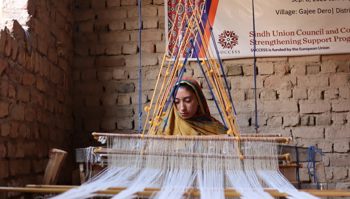
Communication and Visibility Activities on EU Cooperation in Pakistan
- 2022 – 2026
- 2 – 5 Millionen €
- Pakistan
The overall objective of the project is to promote the EU as a strong partner of Pakistan in its efforts to achieve the Sustainable Development Goals (SDGs), with a focus on socio-economic development, good governance, human rights, rule of law and sustainable management of resources.
The purpose of the project is to enhance the visibility and recognition of the EU and its Delegation to Pakistan, particularly through increased visibility of its cooperation programmes and related policy areas.
- Partner:
- Particip (federführend), M&C Saatchi, M&C Saatchi Pakistan
- Schlagwörter:
- Kommunikation und Medien
Evaluation of the McGovern-Dole Food for Education Project in Sindh, Pakistan (2025-2030)
- 2026 – 2026
- unter 500.000 €
- Pakistan
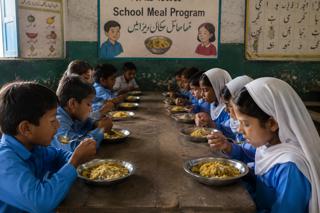
WFP Pakistan is implementing a school meals project in two districts (Malir and Keamari) of the Karachi Division in Sindh Province from 2026 to 2030. The project is funded with USD 40 million from the United States Department of Agriculture’s (USDA) McGovernDole International Food for Education and Child Nutrition Program. In addition to school meal provision, the project includes complementary and system-strengthening support in four areas: (i) literacy programming, (ii) school health, nutrition and WASH, (iii) meal delivery infrastructure, and (iv) government capacity strengthening. It expects to reach approximately 100,000 (pre-)primary students in more than 600 schools.
WFP Pakistan has commissioned a baseline study (2026), midterm evaluation (2028), and endline evaluation (2030) of the project. The midterm and endline evaluations would be implemented by the same contractor consortium based on satisfactory performance in the baseline. The evaluation series will cover the period from December 2025 to December 2030. Covering the evaluation criteria of relevance, coherence, effectiveness, efficiency, impact and sustainability, it aims to assess the performance of the project and related activities. It will serve both accountability and learning to measure and understand the effectiveness of the project in improving enrolment, attendance, literacy, health and nutrition of primary school students in government schools. It is also expected to enable WFP to strengthen implementation, document lessons learned and develop key operational procedures and guidelines along with the Sindh Education and Literacy Department to expand school meals across the province.
The evaluation will adopt an integrated mixed methods design that combines a quasi-experimental (difference-in differences) impact framework with theory-based qualitative enquiry. The quantitative component will estimate changes in outcomes and performance indicators over time and, at endline, it will identify program effects using a comparison group. The proposed sample comprises a survey with 300 schools at baseline and endline, with 12 students per school (survey of 3,600 households and students per wave). The qualitative component will contribute to the assessment of all six evaluation criteria (through document review, key informant interviews at all schools, and focus group discussions in schools).
- Partner:
- C4ED (federführend), Particip
Provision of expertise and tools to support Recovery and Peace Building Assessments and Post-Disaster Needs Assessments
- 2017 – 2024
- 2 – 5 Millionen €
- Global
The Particip-led “Post Crisis Assessment and Recovery Planning: Support Office of the EU“ provided systematic support to all stages of disaster- and conflict-related needs assessment missions.
As part of the 2008 Joint Declaration on Post-Crisis Assessments and Recovery Planning, the World Bank (WB), United Nations (UN), and European Union (EU) have committed to providing joint support for assessing, planning, and mobilising efforts toward recovery, reconstruction, and development in countries affected by crises. This tripartite agreement was executed via the mechanism of joint Recovery and Peacebuilding Assessments (RPBA), Post-Disaster Needs Assessments (PDNA), and Pandemic Recovery Needs Assessments (PRNA).
The activities of the advisory team included:
- Provision of support to EU Delegations around the world and EU Services in Brussels in the planning, undertaking and reporting of post crisis assessments: RPBA: support to peacebuilding through short- and longterm support to specific EUDs. Trainings and and workshops for local authorities, ministries and EU staff. PDNA: post-disaster assessments and support to recovery including trainings and workshops. CRNA/PRNA: COVID/pandemic recovery needs assessments and support to recovery including trainings and workshops.
- Support to third countries to build their capacity to carry out RPBAs, PDNAs, and PRNA this includes institutional strengthening and inter-institutional coordination such as the HLAG (High-level-Advisory-Group) composed of WB, UN and EU;
- Facilitate coordination of EU and tripartite input to the implementation of the joint declaration (conceptual work and RPBA/PDNA/PCNA missions);
- Elaborate a preliminary early and longer-term framework (which identifies key recovery sectors, peacebuilding priorities, etc.)– in close cooperation with the EU Delegation and other relevant EU services, including identification/definition of sectors requiring additional EU support (whether provided through short-term assistance under the present project or not), essential cross-cutting issues, a tentative recovery calendar, recovery information management systems, the existing capacity in-country and institutional and legal arrangements for national Authorities, recovery support anticipated, etc.;
- Deployment of experts in RPBA/PDNA/PRNA missions, and
- Revise and/or updating the methodologies as necessary.
Recovery and Peacebuilding Assessments (RPBAs) offered countries a standardised and internationally recognised approach to identify the underlying causes and impacts of conflict and crisis. The RPBA had three primary purposes:
- to help governments identify, prioritise and sequence recovery and peacebuilding activities,
- to provide an inclusive process to support political dialogue and participation of stakeholders,
- to coordinate international support through a joint assessment and a joint recovery and peacebuilding plan as well as a monitoring system.
Post-Disaster Needs Assessment (PDNA) assisted governments with assessing the full extent of a disaster’s impact on the affected country and, on the basis of these findings, producing an actionable and sustainable Recovery Strategy for mobilizing financial and technical resources. The internationally recognised PDNA methodology is a key commitment mentioned in the the Joint Declaration on Post-Crisis Assessments and Recovery Planning. In May 2020, in order to respond to the COVID-19 pandemic, the PDNA methodology was adapted to elaborate a COVID-19 Recovery Needs Assessment (CRNA) methodology.
Recovery and Peace Building Assessment (RPBA)
Myanmar (Jan 2018); Burkina Faso (Jun 2019-June 2021); Mozambique (RPBA Nov 2020-Nov 2021); Azerbaijan (Joint Recovery Needs Assessment - falls outside the RPBA framework, Scoping Mission March 2022); Libya (Stocktaking 2018-2019, RPBA 2022)
Post-Disaster Needs Assessment (PDNA) & Disaster Risk Framework (DRF)
Myanmar (Jan 2018); Syria (Feb 2018); Ivory Coast (July-Sept 2018); Tunisia (Oct 2018); Bangladesh (2018); Georgia (2018); Tonga (2018); Fiji (2018); Mozambique (Apr–Aug 2019);
Central African Republic/CAR (July 2019); Somalia (Drought Impact Needs Assessment/DINA, July - Aug 2018); Albania (Dec 2019-Feb 2020); Lebanon (Rapid Damage Needs Assessment/RDNA, Aug 2020); Lebanon (DRF, Sep 2020-2021); Saint Vincent and the Grenadines (June–Aug) 2021); El Salvador (June-Dec 2021); Haiti (Sep-Oct 2021); Haiti (DRF, Nov-Dec 2021); Pakistan (Sep-Nov 2022); Pakistan (DRF, Nov-Dec 2022); Belize (Jan-Feb 2023); Turkey (Feb-Mar 2023); Ukraine Khakhova dam (June 2023), Myanmar (CMRNA , Sep 2023); Libya ( RDNA, Sep 2023); Afghanistan ( Oct 2023); Afghanistan ( AFPR-PDNA like Refugee support assessment, Nov 2023)
COVID-19 Recovery Needs Assessment (CRNA)
Ecuador (July 2020-Apr 2021); El Salvador (July-Sept 2020); Dominican Republic (Dec 2020-Feb 2021); Zambia (Feb-Aug 2021); Eswatini (Dec 2020-Nov 2021)
Trainings: Recovery and Peace Building Assessment (RPBA)
Bangkok, Thailand (Dec 2017); Lebanon (Apr 2018)
Trainings: Post-Disaster Needs Assessment (PDNA) & Disaster Risk Framework (DRF)
Dominican Republic (Nov 2017); Fiji (Mar-Apr 2018); Vanuatu (Apr 2018); Somalia (May 2018); Myanmar (Aug 2018); Mauritius (Oct 2018); Djibouti & Ethiopia (Feb 2019); Chad (Apr 2019); CAR & Congo (July 2019); India (Aug 2019); Kenya (Sept 2019); Caribbean (Nov 2019); St. Lucia (Nov 2019); Balkans (Sarajevo, Bosnia & Herzegovina, Feb 2020); Mexico (Feb 2020); Liberia (Mar 2020); Senegal (May 2021); Europe and the Commonwealth of Independent States/ECIS region (Jun 2021); University of West Indies (Training of Trainers/ToT, Dec 2021); Panama (PDNA/DRF, Latin American countries/LAC, Mar 2022); Belgrade (ECIS DPPI-SEE, Jun 2022); Regional ECIS (DRF, June 2022); Columbia (PDNA/DRF, July 2022); Costa Rica (PDNA/DRF, July 2022); Barbados (Caribbean countries, Mar 2023); Training Togo Regional ECOWAS (PDNA/DRF, May 2023); Antigua and Barbuda, Saint Johns (DRF, Sept 2023)
Trainings: COVID-19 Recovery Needs Assessment (CRNA) & Pandemic Recovery Needs Assessment (PRNA)
Sahel Region Academia (Nov 2020); Sahel Region government staff and regional organisations (Dec 2020); Ghana (Mar 2021); India (PRNA, Mar 2023)
Other Events
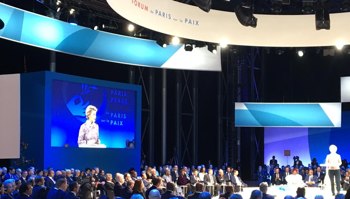
Fragility Forum (RPBA, Mar 2018); Paris Peace Forum (RPBA/PDNA 2019); Paris Peace Forum (RPBA/PDNA, Nov 2020); EU Information Session (Oct 2021); EU Information Session: Asia/Pacific Hub (April 2022); World Reconstruction Conference 5 and Global Platform for Disaster Risk Reduction/GPDRR (Apr 2022); International Society for Photogrammetry and Remote Sensing (ISPRS) Congress (satellite, June 2022); EU Information Session: Caribbean Region (online, June 2023); Slow Onset Event Damage and Loss Workshop ( Nov 2023); Cyclone Mitch 25 year Commemoration ( Oct 2023)
- Partner:
- Particip (federführend), GIZ InS
- Schlagwörter:
- Aus- und Fortbildung, Projektdurchführung / technische Hilfe, Regierungsführung, Zivilgesellschaft
Thematic evaluation of FPI.2 managed responses to Counter Terrorism and Preventing/Countering Violent Extremism (CT-P/CVE) in beneficiary countries (2017-2022)
- 2022 – 2023
- unter 500.000 €
- Albania, Burkina Faso, Indonesia, Ivory Coast, Jordan, Kazakhstan, Kosovo, Kyrgyzstan, Lebanon, Malaysia, Maldives, Morocco, Mozambique, Niger, North Macedonia, Pakistan, Philippines, Senegal, Sri Lanka, Tajikistan, Thailand, Tunisia, Turkmenistan, Uzbekistan
The main objectives of this evaluation are to provide the relevant services of the European Union, the interested stakeholders with:
- An overall independent assessment of the performance of selected CT-P/CVE measures funded by FPI.2 during the years 2017-2022, paying particular attention to its different levels of results measured against its expected objectives; and the reasons underpinning such results
- As a particular approach to regional actions, a specific case study shall be carried out to assess the regional framework for support to CT-P/CVE measures in the Asian context, managed by the Regional Team in Bangkok. It is expected that the present evaluation assesses the relevance, added value and success of developing a model for CT and P/CVE actions, respectively, which have been replicated in different countries/contexts in Asia/Pacific (in Pakistan, Sri Lanka and Maldives for CT; and in Southeast Asia, Sri Lanka and Maldives for P/CVE). If deemed relevant, links can also be made to regional approaches in other RTs;
- Key lessons learned, conclusions and related recommendations in order to improve current and future interventions.
In particular, this evaluation will serve the contracting authority and other interested services to better understand the performance of the Intervention, its enabling factors and those hampering a proper delivery of results to inform the planning and implementation of current and future support to tackle CTP/CVE.
The main use of the results of the evaluation is expected to be
- To draw general lessons that can be used for the future approach to interventions in the sector
- To draw specific lessons that can be replicated in other similar interventions
- To draw specific lessons from the regional approaches, in particular the one applied by the Regional Team in Bangkok in terms of stocktaking, dynamics and replicability.
The main users of this evaluation will be the contracting authority, FPI.2, including its Regional Teams in Bangkok, Nairobi, Dakar, Eastern Europe and Central Asia (managed from Brussels). The Regional Team in Brasilia is less involved since they currently do not manage any CT-P/CVE projects.
- Schlagwörter:
- Monitoring und Evaluierung
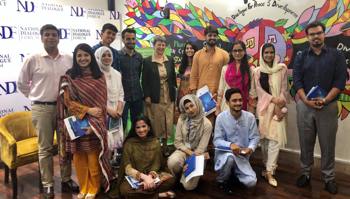
Enhance EU visibility through effective communication
- 2018 – 2022
- 1 – 2 Millionen €
- Pakistan
The overall objective of the project was to continue positioning the EU as a strong partner of Pakistan. The purpose of the project was to ensure the visibility of cooperation programmes in complementarity with the messages of the EU Delegation to Pakistan, in order to enhance the image and visibility of EU as a strong partner of Pakistan.
The following results were achieved:
- A communication strategy is developed by EUD together with the contractor
- Clear EU image and messaging is established, rooted in an agreed set of overall and specific messages.
- Comprehensive and strategically sequenced communication campaigns implemented.
- Sustained links with the media are established, with improved coverage – in terms both of quantity and quality – across print, broadcast and digital media.
- A mechanism to monitor and evaluate the progress of how the EU is monitored on a yearly basis.
- The profile of the EU and the awareness of how EU official development aid and cooperation benefits Pakistan is increased.
- Organisation of ad hoc public diplomacy events in accordance with the EU Delegation's communication strategy.
- Schlagwörter:
- Kommunikation und Medien
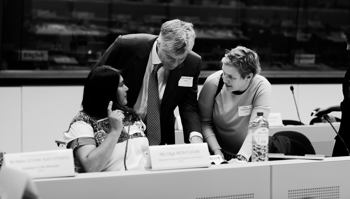
This action contributed to the effective implementation of international human rights instruments, principles and standards, primarily by means of exchange of best practices with partner countries.
The project was conceived to serve and preserve EU values and interests by means of complementary actions. It promoted policy cooperation with partner countries of strategic interest to the EU as well as enhanced the EU's visibility and coherence. This was done through the development of an analysis of the human rights situation in 13 countries, the organisation of seminars/roundtables and outreach activities. This ensured increased human rights awareness and access to human rights knowledge.
The Specific objectives were:
- 1)To ensure appropriate follow-up to political and human rights dialogues with partner countries. This includes, inter alia, facilitating south-south cooperation and exchange of ideas, knowledge and expertise on commonly identified human rights issues; providing technical assistance including in the form of trainings and roundtable discussions with governments in partner countries in order to strengthen their human rights expertise; facilitating interaction among representatives from the private sector and government representatives in partner countries to ensure compliance with the internationally recognised human rights framework; and facilitating regular interaction between partner countries with a view to building and reinforcing regional alliances which may contribute to serving EU interests in multilateral fora;
- 2)To contribute to bringing together experts from the EU and partner countries such as academics, private sector and government representatives in order to equip the EU to remain innovative and tackle emerging subjects of EU interest as a vehicle of cooperation with partner countries such as artificial intelligence, academic freedom, right to water and sanitation, economic social and cultural rights;
- 3)To support and enhance the monitoring of Generalised Scheme of Preferences (GSP) GSP+/ Everything but Arms (EBA) beneficiaries' commitments under the seven GSP core human rights conventions.
Internal studies analysing Human Rights situation in the following countries
- Armenia
- Bangladesh
- Bolivia
- Cabo Verde
- Cambodia
- Kyrgyztan
- Mongolia
- Myanmar
- Pakistan
- Philippines
- Sri Lanka
- Tajikistan
- Uzbekistan
- Partner:
- Particip (federführend), SICI Dominus
- Schlagwörter:
- Kommunikation und Medien, Menschenrechte, Monitoring und Evaluierung, Zivilgesellschaft

Identification and Formulation Mission Revival of Balochistan Water Resources Programme
- 2018 – 2019
- unter 500.000 €
- Pakistan
The global objective of this assignment is to assist the EU Delegation in identifying and formulating a realistic demand driven programme for the Revival of Balochistan Water Resources Programme.
The specific objective of this assignmnet is to assist the EU Delegation in drafting an Identification Fiche, Action Document for the Revival of Baluchistan Water Resources Programme of €65 million.
- Partner:
- Particip (federführend), Expertise Advisors (formerly: ETI Consulting)
- Schlagwörter:
- Umwelt
Communication and visibility activities on EU cooperation in Pakistan
- 2016 – 2019
- 1 – 2 Millionen €
- Pakistan
The overall objective of the project was to enhance the EU's image in Pakistan as a strong partner of Pakistan. The purpose of the project was to ensure the visibility of cooperation programmes in complementarity with the messages of the EU Delegation to Pakistan, in order to enhance the image and visibility of EU as a partner of Pakistan.
The expected results to be achieved were:
- communication strategy was developed by the contractor, approved by the EU Delegation and implemented by the contractor.
- Clear EU image and messaging was established, rooted in an agreed set of overall and specific messages.
- A comprehensive and strategically sequenced communication campaign was implemented.
- Sustained links with the media were established, with improved coverage – in terms both of quantity and quality – across print, broadcast and digital media.
- Schlagwörter:
- Kommunikation und Medien
Identification and formulation mission RoL Fata, KP and Balochistan
- 2018 – 2018
- unter 500.000 €
- Pakistan
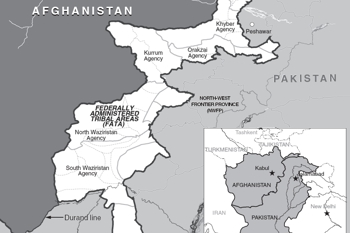
A dysfunctional justice system in urban and semi-urban areas and the lack of a formal justice system in rural areas restrict access to justice for the vast majority of the citizens of Pakistan. This applies particularly to the Federally Administered Tribal Areas (FATA) in northwest of Pakistan and its bordering provinces Khyber Pakhtunkhwa (KP) and Balochistan.
In 2012, the EU and Pakistan adopted a 5-Year Engagement Plan that reinforces the EU’s commitment to a stable, democratic and pluralistic Pakistan. In particular, the EU has supported the development of KP and FATA in the field of Good governance, Human Rights and the Rule of Law (RoL). In 2017, the EU received a request from the Pakistani government to provide technical assistance in the strengthening of the RoL in the process of the planned merger of the FATA with KP.
Therefore, the global objective of the assignment was to assist the EU Delegation in the design of a programme under the AAP 2018 to reinforce the RoL in the FATA, KP and Balochistan.
The specific objectives were to:
- Analyse the RoL sector in KP, FATA and Balochistan under consideration of potential political developments and assess feasibility of a RoL intervention in this volatile environment
- Conduct multi-stakeholder consultations to obtain a consensus and good level of ownership from all relevant counterparts for the future programme and advise on possible modalities of assistance acceptable to national stakeholders
- Propose an intervention and develop a full set of draft programming documents required for the project identification, formulation and contracting
- Partner:
- Particip (federführend), Cardno UK
- Schlagwörter:
- Justiz / Rechtsstaatlichkeit
Mid Term Review KP DGCD Programme (Khyber Pakhtunkhwa District Governance and Community Development)
- 2016 – 2017
- unter 500.000 €
- Pakistan
The main objectives of the evaluation were to provide the relevant external co-operation services of the European Union, the partner government and, when appropriate, the wider public with:
- an overall independent assessment of the past performance of the intervention of the KP DGCD programme, paying particularly attention to the results of the project against its objectives;
- key lessons and recommendations in order to improve current and future action.
The content of the evaluation included all activites undertaken within the framework of the KP DGCD budget support programme, namely:
- The budget support component with Government of Khyber Pakhtunkhwa;
- The service contract for Technical Assistance;
- The grant contract for Social Mobilisation.
- Partner:
- Particip (federführend), Cardno UK, EuroPlus
- Schlagwörter:
- Ländliche und städtische Entwicklung