Jordan
26 Referenzen

EU in Jordan Strategic Communication 2026-28
- 2026 – 2029
- 1 – 2 Millionen €
- Jordan
Communicating and raising visibility plays a key role in strengthening the EU’s role in Jordan, and demonstrating the EU’s positive contribution to people’s lives.
Despite the long-standing and strong partnership, in 2024, the EU’s perception in Jordan was affected by the consequences of the war in Gaza resulting in a loss of support and consensus in terms of public image.
The EU Delegation in Jordan recognises the need for a strategic and coherent approach to communication and visibility, with the objective of addressing existing gaps in awareness and promoting a strong, unified image of the EU.
Overall objective (Impact): to support the EU Delegation in effectively communicating the EU-Jordan partnership, by promoting a positive, coherent, and unified image of the EU, its values, and its impact in Jordan.
The contract will contribute to a better understanding and enhanced visibility of the EU and its actions among Jordanian society, with particular emphasis on youth. It will also promote the establishment of a culture of dialogue and mutual understanding between the people of the EU and Jordan, strengthening the perception of the EU as a reliable partner committed to supporting Jordan’s path towards democracy, stability, human rights, and sustainable development.
Specific objectives:
- Support the EU Delegation in the refining its Communication Strategy and contribute to achieving its strategic communication objectives.
- Support the EU Delegation in effectively communicating and raising awareness about the EU-Jordan partnership and promoting a positive, coherent, and unified image of the EU, its values, and its impact in Jordan.
- Design and implement communication campaigns that highlight the EU’s political, economic, and social contributions in Jordan, in line with the EU-Jordan Partnership.
- Create human-centric narratives and informative content that effectively showcase the real-life benefits of EU initiatives to Jordanian citizens, particularly Youth and vulnerable groups.
- Ensure coordination and synergy among communication activities across all EU-funded projects in Jordan, promoting a strong and unified EU image.
- Enhance engagement with youth, media, influencers, and non-traditional opinion shapers to amplify EU messages and increase outreach to wider audiences.
- Contribute to addressing issues related to disinformation by raising awareness across the country and promoting accurate and coherent narratives about the EU’s engagement in Jordan.
- Partner:
- Bidaya
- Schlagwörter:
- Kommunikation und Medien
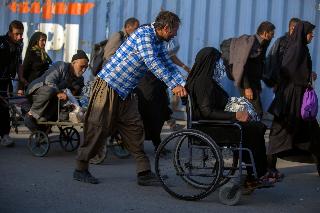
Evaluation of Disability Inclusion in EU-funded humanitarian aid operations (2020-2025)
- 2026 – 2026
- unter 500.000 €
- Global
The Evaluation of Disability Inclusion in EU-funded humanitarian aid operations (2020–2025) assesses how disability inclusion has been integrated into DG ECHO-funded humanitarian interventions five years after the publication of its 2019 Operational Guidance on the inclusion of persons with disabilities. The global objective of this evaluation is twofold:
- To provide the relevant EU services and stakeholders with an independent assessment of the extent to which DG ECHO-funded humanitarian interventions have mainstreamed disability inclusion across sectors and contexts, while also supporting disability-targeted actions and relevant policy projects;
- To identify key lessons learned, conclusions, and recommendations to inform decision-makers on how to strengthen disability inclusion in current and future EU-funded humanitarian aid operations, including through improved programming, data use, participation, and accessibility.
The specific objectives are:
- to assess the relevance of DG ECHO’s operational guidance in supporting staff and partners to mainstream disability inclusion in EU-funded humanitarian aid interventions;
- to assess the level, quality, and effectiveness of disability inclusion across all sectors, covering both mainstreaming and disability-targeted actions;
- to assess ECHO-funded policy projects on disability inclusion, including their coherence with EU policy, relevance to global priorities and needs, added value for partners and the broader humanitarian system, and achieved results;
- to assess the capacity of DG ECHO staff and partners to operationalise disability inclusion in programming, including through available requirements, tools, and practices;
- to identify barriers, enablers, gaps, lessons learned, and good practices in disability inclusion, and to develop actionable strategic and operational recommendations for future DG ECHO strategies, policies, programming priorities, guidance, and tools.
- Schlagwörter:
- Monitoring und Evaluierung
Results Oriented Monitoring (ROM) Systems for External aid Interventions Financed by the European Union — Neighbourhood Region
- 2021 – 2026
- über 10 Millionen €
- ENI
Results Oriented Monitoring (ROM) reviews aim to assist the European Commission’s services and EU Delegations in monitoring of and reporting on EU financed development and cooperation projects and programmes in third countries through independent reviews of the progress of their implementation and the achievement of project results.
ROM services to be provided through this contract are clustered in three components:
** Component 1: ROM Reviews. ROM contractors will assess the performance of EU-funded interventionson the basis of the following OECD DAC evaluation criteria: relevance, efficiency, effectiveness, and sustainability.
ROM reviews will cover:
-A sample of EU funded interventions during the inception phase of implementation. The ROM review will support the OM in confirming or updating intervention logic and logframe matrix, in reviewing the monitoring system of the IP, in assessing risks and mitigation measures and fine tune the calendar of activities with a view to improve the performance of the intervention across the OECD DAC criteria.
- ROM reviews will assist the OM in adressing the main implementation problems.
-Other interventions for which Commission services request a ROM review on demand (interventions which could not be visited by EU OMs or for which there is a lack of sector expertise in the EU Delegation/operational unit in HQ).
- Blending operations, focused on asessing the value added of the EU contribution and on the performance of blending interventions in terms of socio-economic development.
** Component 2: Quality assurance and support at design stage for a sample of interventions. Provide technical support to EC services in the formulation of intervention logics and related logical frameworks matrices (logframes) and monitoring and reporting arrangements for a sample of interventions.
**Component 3: Results report (at corporate and intervention level). The Contractor will provide services to encode and quality control results data for a set of interventions subject to results reporting. TOM contractor will ensure quality control of data included in the intervention's logframes. Such quality controls will include, amongs others: verifying that the logframe is correctly encoded and up-to-date , enssuring that the latest values related to logframe indicators are available, and supporting the aggregation of intervention-level results into the EU Results Framework or other frameworks.
- Partner:
- Particip (federführend), Dev4U, Integration
- Schlagwörter:
- Monitoring und Evaluierung
Overall objective
The Overall Objective of the project of which this contract was: to support the implementation of a comprehensive and effective Monitoring and Evaluation mechanism, established by the EU Trust Fund in Response to the Syrian Crisis.
Purposes
- 1.To provide evidence-based knowledge on progresses achieved by EUTF in Response to the Syrian Crisis financed projects, and to inform on their management, through regular and ad-hoc Results Oriented Monitoring (ROM).
- 2.To measure the effectiveness of EUTF actions, through centralized data collection and analysis, based on disaggregated quarterly results reporting.
- 3.To evaluate the sustainability, efficiency and effectiveness of EUTF-funded Programmes at thematic and geographic level and to assess potential prospects of impact, through portfolio evaluations.
The monitoring and evaluation technical services mobilised under the present multi-sector action aimed to continue assessing the extent to which the strategic objectives of the EUTF were achieved. The project built on the existing M&E system put in place by the EUTF in December 2016 and served to complement the regular M&E activities carried out by the EUTF operational team at headquarters as well as the internal monitoring conducted by EUTF local officers, at country level.
Target group
The target group of this contract were EUTF project partners, management, donors, other involved EU services, direct beneficiaries, as well as the general public.
Results achieved
- R1 An independent and real-time EUTF ROM mechanism put in place and continuously improved, in line with the increasing monitoring needs of the EUTF.
- R2 The EUTF system for regular results reporting remained in place and was continuously improved in line with the increasing reporting needs of the EUTF.
- R3 A portfolio evaluation framework remained in place and was continuously improved in line with the evolving needs of the EUTF.
- Partner:
- Particip (federführend), Integration
- Schlagwörter:
- Monitoring und Evaluierung
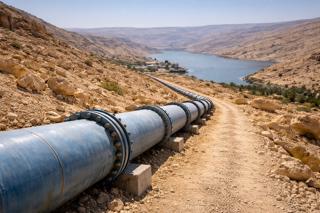
Final Evaluation of Investment Support to the Wadi Al Arab Water System II Project
- 2024 – 2025
- unter 500.000 €
- Jordan
The global objective of this evaluation is twofold. First, it aims to provide the relevant services of the European Union and interested stakeholders with an independent overall assessment of the performance of the "Investment Support to the Wadi Al Arab Water System II Project and EU support to the Water sector in Jordan," with a particular focus on the different levels of results measured against the expected objectives and the reasons behind these results. Second, the evaluation seeks to identify key lessons learned, draw conclusions, and offer related recommendations to inform decision makers on how to improve current and future interventions.
The specific objective for this evaluation are:
- To serve the EU Delegation to Jordan and the relevant services in HQ in order to conclude the Wadi
Al-Arab System II programme, and align results in existing and future support programmes.
- To draw lessons that can be replicated in other EU interventions in the water sector.
The evaluation will assess the intervention(s) using the six standard DAC evaluation criteria, namely:
relevance, coherence, efficiency, effectiveness, sustainability and impact. In addition, the evaluation will assess the intervention(s) through an EU specific evaluation criterion, which is the EU added value.
Furthermore, the evaluation team should consider whether gender equality and women’s empowerment, environment and adaptation to climate change were mainstreamed (when relevant); the relevant SDGs (SDG 6,13) and their interlinkages were identified; the principle of Leave No One Behind (this includes persons with disability, indigenous peoples, children, and the elderly) and the Human Rights Based Approach was followed during design, and the extent to which they have been reflected in the implementation of the intervention, its governance and monitoring.
- Schlagwörter:
- Infrastruktur, Ländliche und städtische Entwicklung, Monitoring und Evaluierung

Evaluation of EU support to connectivity in the enlargement and neighbourhood regions (2014-2022)
- 2023 – 2025
- unter 500.000 €
- ENI, IPA
The evaluation covered all EU external action support to connectivity in the Enlargement and Neighbourhood regions between 2014 and 2022. It served a dual purpose of accountability and learning. The main objectives are to: i) provide an independent and evidence-based assessment of the EU’s past and current external action support in the area of connectivity in the transport and energy sectors, and ii) based on this assessment, provide lessons learnt and recommendations for decision-makers at EU level to inform ongoing and future decision making.
The specific objectives of the evaluation were:
- To assess whether the EU support on connectivity has contributed to achieve the objectives articulated in the EU’s strategic policy framework and whether those results justify and strengthen the approach followed for the current programming period;
- To assess the extent that the EU support has contributed to enhance connectivity in the energy and transport sectors at both policy and implementation level;
- To assess the EU’s toolbox especially grants, technical assistance, blending of loans, risk capital, equity and guarantees and whether it has contributed to catalysing investments on connectivity;
- To identify how the most recent engagement in connectivity supports the operationalisation of the Global Gateway, and derives lessons learnt to further strengthen Global Gateway implementation in the context of the Economic Investment Plans (EIPs);
- To assess the interplay between regional, multi country and bilateral interventions and the synergies created to stimulate regional integration;
- To assess the Working Better Together approach and the private-public dialogues and partnerships and their impact on the effectiveness, predictability and sustainability of long-term interventions;
- To assess the extent to which the EU connectivity support in energy and transport sectors have contributed to supporting the twin green and digital transitions.
The analysis covered both spending and non-spending actions and examines all funding mechanisms and modalities of implementation (including grants for investments and technical assistance, financial instruments such as guarantees, budget support) used under the Instrument for Pre-accession Assistance (IPA) II and III, the European Neighbourhood Instrument (ENI), and the Neighbourhood, Development and International Cooperation Instrument – Global Europe (NDICI-GE). This also included operations under the Western Balkans Investment Framework (WBIF), the Neighbourhood Investment Facility (NIF) and the European Fund for Sustainable Development (Plus) (EFSD / EFSD+).
- Schlagwörter:
- Energie, Infrastruktur, Monitoring und Evaluierung

Early Childhood Education for Jordanian and Syrian Children in Jordan
- 2022 – 2025
- 500.000 € – 1 Million €
- Jordan
The project focused on improving access to Early Childhood Education for all children with a focus on vulnerable children: refugees and children with disabilities.
- Module objective 1 focused on supporting the public Kindergarten (KG) system to increase KG offers through MoE support, infrastructure rehabilitation and the creation of a child-friendly learning environment.
- Module objective 2 aimed to improve the preconditions for a sustained increase in KG places in private non-profit institutions through supporting them in devising sustainable strategies for expansion.
- Module objective 3’s main focus was improving the access to KG for vulnerable children aged 4-6 years in selected communities or camps. This output focused on refugee children and children with disabilities or special learning needs.
Particip set up and managed a flexible short-term expert pool to contribute to all three Outputs and to achieve defined indicators with the respective deliverables.
- Partner:
- Particip (federführend), CADER, VBJK

Support to Economic Governance and Reforms in Jordan – identification and formulation.
- 2023 – 2024
- unter 500.000 €
- Jordan
The overall objective (Impact) to which this action contributes is: the global objective of the specific contract is to contribute to reform processes in the areas of Public Finance Management (PFM), Economic and Public Administration Reforms (PAR) in Jordan.
The specific objective of the assignment is the identification and formulation of potential EU interventions for implementation of the Economic Modernisation Vision, which:
o SO 1: improve the effectiveness of public financial management systems, procedures and capacities;
o SO 2: improve revenue mobilisation and tax administration as well as service delivery; and o SO 3: define support to the implementation of the Central Bank’s (CBJ) Financial Inclusion Strategy.
To provide a clear, actionable, costed, evidence-based proposal for a project design for an EU budget support programme in the areas of Economic Governance and Reforms in Jordan.
The services will be split in two phases:
1. Phase I: Identification of possible EU intervention to support the implementation of the Economic Modernisation Vision in the areas of Economic reforms and governance (especially PFM, PAR domains);
2. Phase II: Formulation of possible EU intervention to support the implementation of the Economic Modernisation Vision in the areas of Economic Reforms and Governance (especially PFM, PAR domains).
- Partner:
- B&S Europe (federführend), ADE, Particip
- Schlagwörter:
- Institutionelle Entwicklung, Öffentliche Finanzen / Haushaltsplanung, Regierungsführung

Thematic evaluation of FPI.2 managed responses to Counter Terrorism and Preventing/Countering Violent Extremism (CT-P/CVE) in beneficiary countries (2017-2022)
- 2022 – 2023
- unter 500.000 €
- Albania, Burkina Faso, Indonesia, Ivory Coast, Jordan, Kazakhstan, Kosovo, Kyrgyzstan, Lebanon, Malaysia, Maldives, Morocco, Mozambique, Niger, North Macedonia, Pakistan, Philippines, Senegal, Sri Lanka, Tajikistan, Thailand, Tunisia, Turkmenistan, Uzbekistan
The main objectives of this evaluation are to provide the relevant services of the European Union, the interested stakeholders with:
- An overall independent assessment of the performance of selected CT-P/CVE measures funded by FPI.2 during the years 2017-2022, paying particular attention to its different levels of results measured against its expected objectives; and the reasons underpinning such results
- As a particular approach to regional actions, a specific case study shall be carried out to assess the regional framework for support to CT-P/CVE measures in the Asian context, managed by the Regional Team in Bangkok. It is expected that the present evaluation assesses the relevance, added value and success of developing a model for CT and P/CVE actions, respectively, which have been replicated in different countries/contexts in Asia/Pacific (in Pakistan, Sri Lanka and Maldives for CT; and in Southeast Asia, Sri Lanka and Maldives for P/CVE). If deemed relevant, links can also be made to regional approaches in other RTs;
- Key lessons learned, conclusions and related recommendations in order to improve current and future interventions.
In particular, this evaluation will serve the contracting authority and other interested services to better understand the performance of the Intervention, its enabling factors and those hampering a proper delivery of results to inform the planning and implementation of current and future support to tackle CTP/CVE.
The main use of the results of the evaluation is expected to be
- To draw general lessons that can be used for the future approach to interventions in the sector
- To draw specific lessons that can be replicated in other similar interventions
- To draw specific lessons from the regional approaches, in particular the one applied by the Regional Team in Bangkok in terms of stocktaking, dynamics and replicability.
The main users of this evaluation will be the contracting authority, FPI.2, including its Regional Teams in Bangkok, Nairobi, Dakar, Eastern Europe and Central Asia (managed from Brussels). The Regional Team in Brasilia is less involved since they currently do not manage any CT-P/CVE projects.
- Schlagwörter:
- Monitoring und Evaluierung

Evaluation of Jordan WFP Country Strategic Plan 2020-2022
- 2021 – 2022
- unter 500.000 €
- Jordan
This independent evaluation of WFP Country Strategic Plan (CSP) in Jordan assessed the strategic positioning, added-value and results of WFP operations in the Country from 2018 to 2021.
The evaluation served the double purpose of accountability (performance and result assessment) and learning (why certain results occurred or not, lessons and evidence for decision-making). It envisioned that the evaluation will inform the design of the new CSP for Jordan, which was scheduled for Executive Board consideration in November 2022.
CSP key sectors and activities included:
- Emergency response, including cash-based transfers
- Social protection
- Nutrition (including nutritional education) and school feeding
- Livelihoods activities, including smallholder farmer support
- Institutional capacity strengthening
Cross-cutting themes included: Gender equality and empowerment of women (GEEW), humanitarian principles and protection, accountability to affected populations (AAP), WFP partnership strategy
The evaluation employed a mixed-method approach that triangulated qualitative and quantitative data from a variety of sources. For this purpose, the evaluation team conducted interviews with different stakeholders including WFP staff at HQ, regional and country level, WFP cooperating partners, donors, UN agencies, ministries as well as focus group discussions with the beneficiaries.
Link to the publication: https://www.wfp.org/publications/evaluation-jordan-country-strategic-plan-evaluation-2020-2022
- Schlagwörter:
- Ernährung, Humanitäre Hilfe, Landwirtschaft, Monitoring und Evaluierung

Mediterranean Climate Finance Strategy
- 2019 – 2021
- unter 500.000 €
- Albania, Algeria, Bosnia & Herzegovina, Egypt, Israel, Jordan, Lebanon, Mauritania, Montenegro, Morocco, Palestine, Syria, Tunisia, Türkiye
Background
In March 2017, the UfM Climate Change Expert Group (UfM CCEG) adopted a 5-years work-program, which stress the importance to strengthen climate finance in the Euro-Mediterranean region to address climate change issues. In April 2019, UfM Member States agreed to pursue the assessment of climate finance in the UfM region, with the view of providing sound basis for a renewed climate mandate of the UfM by 2020, with the new UfM Ministerial Declaration on Climate Change.
Target Groups
Target gruops of tehis technical assistance are: UfM Institutions, UfM Member States, International Financial Institutions, International Climate Change Institutions, Civil society representatives, Private sector Organisations and Institution interested in UfM regional integration.
Objectives
- The primary objective of this technical assistance is to enhance the knowledge of UfM Member States, International Financial Institutions, civil society representatives, private sector organisations and any other institution interested in the UfM regional integration, regarding the level of financial commitments made in 2018 and in 2019 to address climate change issues in the UfM region.
- The second objective is to explore the feasibility of financial mechanisms, which could be implemented in the UfM region with the aim of enhancing the mobilisation of climate finance for specific population or sectors, while building on lessons learned in some specific sectors (in particular in the water sector) or potentially in other regions, such as Caribbean or Latin America.
Expected Results
- R1 - to have a precise figure of financial commitments made to recipients in UfM developing countries in 2018 and in 2019, by public/private donors from developed/developing countries;
- R2 - to have a precise view of commitments and disbursements made by national governments, local authorities, private sector and, if possible, households addressing climate change in UfM developing countries;
- R3 - to have the methodology and process in place for monitoring, reporting and verifying climate finance commitments made in the UfM region, especially by ensuring the involvement of all relevant actors, including the scientific community, the private sector and NGOs;
- R4 - quantitative and qualitative analysis of financial mechanisms, which could be implemented in the UfM region with the aim of enhancing the mobilisation of climate finance for specific population or sectors.
- Schlagwörter:
- Umwelt

Global objective: The overall objectives of the project were as follows:
- To hold the participants of past and future conferences on 'Supporting the future of Syria and the region’ accountable for the financial pledges made at the conference, to inform neighbouring countries of the international support they will receive as they implement their policy commitments, and to increase accurate, timely and comprehensive information on the international response to the Syrian crisis in order to inform relevant stakeholders gap analysis and programming (donors, UN & implementing partners, etc).
- To address the discrepancy between the funding of the different response plans and the commitments of the pledges in Lebanon and Jordan; and to facilitate the publication of conclusions and data with consistent methodology.
- To contribute to the monitoring of the key mutual policy commitments towards Lebanon and Jordan made by donors and partners countries on the occasion of the Brussels conferences.
- To allow the EU to communicate clearly on the support provided to Syria and the region.
Specific objectives: The purposes of this contract were as follows:
- Financial tracking:
- Collate information from various sources and other organisations that made financial pledges at the Brussels IV Conference, and triangulate this information with recipient organisations;
- Assess how much of these financial commitments will be committed and contracted to support: a) the UN appeals, b) each recipient country affected by the Syria crisis in the region (Syria, Lebanon, Jordan, Turkey, Iraq, and Egypt); and how much will be delivered to a) the various sectors and b) through the various implementing channels;
- Monitor disbursement of financial lending by institutions against statements made at the Conference, including terms of loans to determine if they are “concessional” under the revised OECD DAC principles agreed on 16 December 2014;
- Provide an explanation on the gap between various data sources on financial contributions related to the Syrian Crisis response in Lebanon and Jordan.
- Reporting on policy commitments:
- Report on progress made in Jordan and Lebanon on key mutual policy commitments taken in the series of the London and Brussels conferences as well as providing analytical reports on status and gaps.
- Describe in depth the findings including gaps analysis, and provide recommendations on the basis of the Steering Committee LCRP common monitoring framework for Lebanon and on the basis of the monitoring matrix elaborated for Jordan (by Agulhas) in 2019 and mentioned above.
- Partner:
- Particip (federführend), EMI (formerly: Cardno Belgium)
- Schlagwörter:
- Monitoring und Evaluierung
Mid term evaluation of the 'Support to the Rule of Law in Jordan' programme and formulation of a new action
- 2020 – 2021
- unter 500.000 €
- Jordan
The main objectives of this evaluation were to provide the relevant services of the European Union and the interested stakeholders with:
- an overall independent assessment of the past performance of the programme to “Support the Rule of Law in Jordan”, paying particular attention to its intermediate results measured against its expected objectives; and the reasons underpinning such results;
- key lessons learned, conclusions and related recommendations in order to improve current and formulate a new Budget Support programme.
In particular, this evaluation aimed at assessing:
1. to what extent the programme “Support to the Rule of Law in Jordan” has achieved its expected results, notably through contributing to the implementation of the partner government's sector strategies such as the Justice Sector Reform Strategy and the Criminal Justice Strategy by providing opportunities for the improvement of national policy processes and policy implementation.
2. The evaluation also specifically analysed how the budget support programme has contributed (or not) to strengthen Public Financial Management (PFM) systems, including improved transparency within government systems, improved Domestic Revenues Mobilisation and stronger accountability.
3. The evaluation also paid attention to other aid modalities (basket/common funds, projects), in order to assess the complementarity and synergy (or discrepancy) of these modalities with budget support.
4. It also assessed the effects of the budget support operation on the M&E systems in the sectors supported by the programme. Budget support should aim to strengthen the monitoring systems in the sectors it supports, in alignment with the existing national level monitoring and evaluation systems and contribute to the improved availability and credibility of data. Availability of the robust progress reports by the government, providing results information against targets set under the strategy, and the use of these reports to facilitate informed policy dialogue between the different stakeholders (CSOs, private sector, Parliament, donors) and evidence-based decision making is one indicator of the capacity of the government in the area of M&E.
- Partner:
- Particip (federführend), Coffey, EuroPlus
- Schlagwörter:
- Justiz / Rechtsstaatlichkeit, Regierungsführung

Communicating results of the EU support to the private sector development in Jordan
- 2018 – 2021
- unter 500.000 €
- Jordan
Global objective
The general objective of this assignment was to strategically and effectively communicate the results of the three components under the EU Support to Private Sector Development programme(PSD) in Jordan.
Specific objectives
The project aimed at enhancing the communication capacities of Jordanian key PSD administration to effectively promote government policies and raise their visibility, affect desired changes and maintain public interest consistent with Jordanian aspirations.
The project also aimed at enhancing EU’s support to private sector in Jordan at large and in particular the ongoing PSD programme. The project looked at establishing bridges between expert and non-expert communities and devising the most effective ways of communicating all programme components results to different audiences in formal and informal settings trough all media channels (including social media).
- Schlagwörter:
- Kommunikation und Medien
Overall objective
The Overall Objective is to establish a comprehensive Monitoring and Evaluation mechanism: for the EUTF in response to the Syrian crises, the 'MADAD Fund'.
Purpose:
The purposes of this contract are:
l. Results-Oriented Monitoring: To monitor the implementation of and develop recommendations for ongoing MADAD-financed projects and provide evidence based know ledge on the results and outputs, through the use of SMART qualitative and quantitative indicators.
2. Data Collection: To assess effectiveness of the EUTF at thematic and geographic level, through regular data collection and systematization as well as sector/country analysis.
3. Impact-focussed Evaluation: To assess the sustainability, efficiency and effectiveness of Madad-funded programs and evaluate prospects of impact.
- Partner:
- Particip (federführend), GOPA, Integration
- Schlagwörter:
- Monitoring und Evaluierung
Video production and Animation for DEVCO online Communications
- 2018 – 2019
- unter 500.000 €
- Belgium, Jordan, Madagascar, Tanzania
The objective of this contract was to provide DEVCO.C.7 with professional video and animation expertise, including production and editing.
DEVCO.C.7 wanted to make sure that EU citizens and stakeholders are informed about the EIP and its implementation, as well as the results in the context of EU international cooperation and development and neighbourhood policies. In order to do so, it needed to reflect achievements in the formats that appeal to audiences today on online channels. More and more, these include short videos, animated data visualisations and animations.
Therefore, the specific objectives of this contract were as follows:
- Regular development of short videos to feed social media channels and other online channels with the latest news about the work of the EU External Investment Plan (EIP) and its achievements in the field, mostly in English but also occasionally in other languages
- Less frequently, production of animated data visualisations and short animations to better explain to its audiences’ issues which are easier to illustrate with video or photo material. All outputs should apply a consistent visual identity in line with Commission’s Visual Identity Guidelines.
- Schlagwörter:
- Kommunikation und Medien
Results Oriented Monitoring (ROM) reviews aim to assist the European Commission’s services and EU Delegations in monitoring of and reporting on EU financed development and cooperation projects and programmes in third countries through independent reviews of the progress of their implementation and the achievement of project results.
The ROM reviews and support missions to be carried out are the following:
a) +++ROM reviews of projects signalled as having implementation problems and where EC services have identified a need for an outside expert review to assist in addressing the problems, identifying causes and options for solution and making recommendations.
b) +++ ROM reviews of other projects for which such ROM reviews may have a particular usefulness, in particular for projects which could not be included in the EUDs’ planning of field visits or for which the necessary sector expertise at EUD level may not be sufficiently available at a given point of time or for innovative projects.
c) ROM reviews of BS programmes: in countries where a BS programme is signalled as having implementation problems, a ROM review may be organized focusing on the programme in question for the sector specific aspects but also covering the Public Financial Management (PFM) and macroeconomics aspects of all BS programmes financed by the EU in the country .
d) ROM support to end of project reporting on results (outputs and direct outcomes), including for BS programmes. These ROM support missions are to assist EC services and EUD in strengthening their results reporting capacities in: assisting with the recording actual results achieved by projects and programmes that have come to an end in the specified calendar year, solving technical difficulties that may occur linked to results reporting, and identifying the systemic needs and modalities for improvement which may be needed in these areas. The ROM support to end of project results reporting missions are to focus on projects of EUR 750.000 or more.
- Partner:
- Particip (federführend), GOPA, Integration
- Schlagwörter:
- Monitoring und Evaluierung

Review of Gender Equality Findings from Middle East Evaluations
- 2019 – 2019
- unter 500.000 €
- ENI South
Following intensive consultations that took place in 2016, Canada refocused its international assistance on helping the poorest and most vulnerable people and supporting fragile states.
Within this broader context, support has been requested by the International Assistance Evaluation Division (PRA) of Global Affairs Canada for the planning of an evaluation of gender equality programming in the Middle East. In this regard, a review of evaluations by other donors of development and humanitarian assistance programmes in the region has been considered as necessary.
The purpose of this study is to review available thematic evaluations, country programme evaluations, major project evaluations and possibly other essential documents related to the achievement of gender equality outcomes in the Middle East.
The focus of the study has been on three countries: Turkey, Lebanon and Egypt. The countries were chosen on the basis of amount and quality of the available literature rather than total spending of Global Canada’s which is highest in Jordan, Syria, and Iraq.

The main objective of the evaluation was to: ‘assess how coherently Finland’s development policy and its targets relating to forced displacement have been implemented and how the coherence could be enhanced’.
The evaluation covered the period 2012 until late-2018 which includes the two last Development Policy Programmes (DPPs) of 2012 (MFA 2012) and 2016 (MFA 2016), with emphasis on the latter part of the period.
The backdrop to this evaluation was the growing complexity of the drivers of forced displacement, the historically high numbers of those displaced and the increasingly protracted nature of displacement. These conditions constitute major global challenges for peace and security, human wellbeing and the 2030 Sustainable Development Goals (SDGs) amongst many other impacts.
This evaluation was a formative evaluation, steering the outputs towards a learning process, the main purpose of which was to increase knowledge, awareness and the operationalisation of the humanitarian development nexus (HDN) and the concept of forced displacement (FD) within the MFA. Aligning development cooperation and humanitarian assistance programming more effectively in relation to forced displacement expected to enhance PCD within the MFA and with its partners.
The Evaluation also served wider policy making intentions: it contributed significantly to the preparation of the MFA’s 2020 DPP, and it also contributed to increased knowledge on how to better promote the 2030 SDGs Agenda.
The three questions sought to ascertain: the overall understanding of and approach to FD and HDN and how it has evolved over the evaluation period 2012-18 (EQ 1); its adequacy and the scope of policy influence in this context (EQ 2); and the extent of policy coherence (EQ 3).
The evaluation undertook three country/regional case studies: Afghanistan, Jordan/Lebanon/Syria (covering the Syrian refugee crisis and termed MENA (Middle East and North Africa for short) and Somalia (in view of the MFA’s engagement in long-term displacement and development contexts).
The report and other material are available at:
https://um.fi/development-cooperation-evaluation-reports-comprehensive-evaluations/-/asset_publisher/nBPgGHSLrA13/content/evaluointi-pakkomuutosta-ja-kehityspolitiikasta/384998
- Partner:
- Particip (federführend), Indufor Oy - Metsahallitus Group
- Schlagwörter:
- Humanitäre Hilfe, Menschenrechte, Monitoring und Evaluierung, Zivilgesellschaft

Evaluation, Re-formulation and Monitoring of a Decentralisation Project in Jordan
- 2016 – 2019
- unter 500.000 €
- Jordan
The overall objective was to compile and analyse the necessary information for the EU Delegation to Jordan to take an informed decision on the way forward regarding the project "Decentralisation and Local Development Support Programme".
The specific assignment included:
1. To conduct an evaluation of the above mentioned project;
2. To re-formulate the project, if deemed relevant and feasible, under a new approach
3. To monitor the remaining period of implementation of the project.
- Partner:
- Particip (federführend), EuroPlus
- Schlagwörter:
- Monitoring und Evaluierung, Regierungsführung

Monitoring, assessment and support to EU and other donor funded Education and complementary programs by the Ministry of Education to deal with the Syria crisis
- 2016 – 2018
- unter 500.000 €
- Jordan
The systematic and timely monitoring of its programmes and activities is an established priority of the European Commission. The focus of the current evaluation is on the monitoring of progress against set indicators and the assessment of achievements, the quality and the results of interventions in the context of an evolving cooperation policy with an increasing emphasis on result-oriented approaches.
Evaluations should provide an understanding of the cause and effects links between activities and results and in this case in particular the effectiveness and efficiency of the EU intervention in the basic education system in Jordan under the EU Support to the Second Phase of the Education Reform programme and in particular the school construction.
At the same time it aims to provide an overall independent assessment of the agreed benchmarks of the European Union's current cooperation under the EU Support for the Budget Support to the Ministry of Education to deal with the Syrian refugee crisis in Jordan under ENI/2014/037-650 and ENI/2015/038-501 as well as future interventions in the same field funded under the Madad program and tentatively a school construction programme funded under Madad.
The current project brings together several needs in the field of education in Jordan which are reflected in the variety of main and specific objectives of the project.
The specific purposes are to contribute to the assessment of the education sector in Jordan with especial attention to the supervision missions through:
- to assess benchmark for indicator 5 under the EUSSPER;
- to assess all benchmarks for the Budget Support to the Ministry of Education to deal with the Syrian refugee crisis in Jordan under ENI/2014/037-650 and ENI/2015/038-501;
- to assess of all benchmarks for the newly planned EU budget Support programme in the field of Basic Education for the school year 2017-2018 under the Madad programme;.
- to update the methodology for the assessment of the quality of education under Jordanian and Syrian pupils, including the design of a new sample of 30 schools
- (tentatively) to assess the school construction under Madad;
- to provide quality assessment reports based on the new sample of 30 schools as from 2017;
- to assess the Common Results Framework of the education support to the Syrian refugees through support programmes of the Ministry of Education funded by other donors under the Jordan Compact;
- to provide additional information upon request by other donors in relation to the Common Results Framework
- to assess the capacity to align the services between MOE and other agencies for the delivery of education services to Syrian refugees as well as formulate areas for improvement and further development;
- to assess the policy of the Ministry of Education in the light of the new Human Resources Development policy;
- to organize workshops;
- to provide recommendations for future interventions
- to update the education sector policy as part of the assessment of the general conditions
- Partner:
- PROMAN (federführend), Particip
- Schlagwörter:
- Bildung, Infrastruktur, Monitoring und Evaluierung

The global objective of the assignment was to assess the EU support at regional level, bilateral level and through the blending mechanism (the NIF ) to the partner countries of the Neighbourhood South in the fields of environment (H2020 initiative, Sustainable Consumption and Production, Integrated Water Management, biodiversity and Marine Protected Areas…) over the period 2010-2017, and to propose recommendations for further EU support for the forthcoming programming period 2018-2023.
It also considered how the political relationships between the EU and its partner countries as well as relations between partner countries affect both the implementation of the EU support and the development of harmonised environment sector policies in the Mediterranean region.
- Partner:
- Particip (federführend), DAI Global UK, ETI
- Schlagwörter:
- Umwelt

Evaluation of decisions ENPI 2012/023-533 and IcSP 2015/038-522
- 2017 – 2017
- unter 500.000 €
- Jordan
The main objectives of the evaluation were to provide the relevant external co-operation services of the European Union and the partner government with an overall independent assessment of the current and past performance of the EU-Funded programmes in the fields of security and safety, paying particularly attention to the results of the projects against their designed objectives and the security objectives of the EU more particular in the fields of CVE and CT. A strategical rather than operational focus was expected.
The mid-term evaluation for Decision IcSP 2015/038-522 aimed to:
- draw lessons from the first months/years of the intervention implementation;
- adjust the contents of the on-going intervention in relation to realities in the field and/or contextual developments;
- improve the intervention under way and its results;
- identify other areas of support after the end of the programme.
While for the final evaluation for Decision ENPI 2012/023-533 and all remaining projects the main aim was to :
- detect the real changes in the field and analyse the changes produced by the intervention;
- check and explain achieved results;
- identify and judge unexpected results;
- assess the sustainability of the intervention's benefits;
- report to the institutions that have allocated the resources;
- transfer acquired experiences to other countries or sectors.
The evaluation covered all evaluation criteria (relevance, effectiveness, efficiency, impact, sustainability + EU value added and coherence).
- Partner:
- Particip (federführend), EuroPlus
- Schlagwörter:
- Justiz / Rechtsstaatlichkeit, Regierungsführung

Evaluation of the capacity building initiatives in support of Civil Society in the Neighbourhood South (2012 – 2016)
- 2016 – 2017
- unter 500.000 €
- ENI South
The main objective of the evaluation was to analyse and evaluate the capacity building support provided to civil society by both regional and bilateral programmes during the period 2012-2016. This evaluation has focused on the efforts funded under ENPI and ENI.
The evaluation was also supposed to provide a series of recommendations to support innovative ways for contributing to building capacities of civil society organizations at a regional level in the future in complementarity with the political objectives as set out in the revised ENP and in the 2012 Communication of the European Commission - The roots of democracy and sustainable development: Europe's engagement with Civil Society in external relations and related Council Conclusions, as well as the EU Country Roadmaps for Engagement with Civil Society, a joint initiative between the European Union and Member States which aims to strengthen the strategic engagement with civil society.
Specific objectives
- to provide an overall independent assessment of the support given by the European Union to build capacities of civil society in the Neighbourhood South from both regional and national programmes - mainly through i) the Technical Assistance programme of the Civil Society Facility; ii) the Regional Grants of the Civil Society Facility; iii) bilateral support to capacity building (managed by EU Delegations) and iv) specific support to two institutions: Anna Lindh Foundation and European Endowment for Democracy. The assessment was supposed to take a look into issues related to their design, implementation and overall performance;
- Drawing up from key lessons; provide recommendations in order to inform the identification of current and future regional initiatives supporting capacities of civil society, especially in light of the complementarity and added value that can be given to efforts implemented at the national level
- Partner:
- Particip (federführend), EPRD
- Schlagwörter:
- Zivilgesellschaft

Post-conflict and post-disaster needs assessment (PCNA/PDNA): development of assessment capacity and tools - Phase I + II
- 2013 – 2017
- 2 – 5 Millionen €
- Global
Relevant background
Since early 2007, the Commission, the UN-family and the World Bank have worked together in setting up a platform for cooperation on post-crisis needs assessments for natural disaster (Post-Disaster Needs Assessment, PDNA) and conflict (Recovery and Peacebuilding Assessment (RPBA), previously named Post-Conflict Needs Assessment, PCNA) scenarios. This trilateral cooperation was framed and formalised through the signature of a Joint Declaration on “Post-Crisis Assessments and Recovery Planning” in September 2008. The EU/UN/WB platform covers the whole PDNA/RPBA(PCNA) process, including strategic coordination, development of joint methodologies for post-crisis assessments, joint deployment of assessment teams, joint training and joint recovery planning and monitoring.
In line with the 2008 Declaration on Joint Post-crisis Assessments and Recovery Planning, the overall objective of the project is to assist and develop third countries’ in-country capacity to gradually assume a more prominent role in Post-Disaster Needs Assessments and Post-Conflict Needs Assessments (now changed to Recovery and Peacebuilding Assessments, RPBA).
The purpose of this project was:
- to support further development of joint PDNA/RPBA(formerly PCNA) methodologies, tools, training programmes, etc.;
- to support joint PDNA/RPBA(formerly PCNA) missions in-country/in region (in coordinating with EU Heads of Delegations and with the European External Actions Service (EEAS) and European Commission). While such support could cover any relevant technical field (long-term and short-term expertise), it is foreseen that a particular emphasis is put on expertise in mission planning and development of final reports/recovery frameworks.
The two phases of the project contributed to a variety of outputs and results, including:
- Phase 1 (01/01/2013 – 31/07/2015): revision of the PDNA methodology and development of the joint EU/UN/WB PDNA Guide, development of the Disaster Recovery Framework (DRF) Guide, review of the PCNA methodology, development of training and capacity building materials, delivery of information/capacity building sessions, joint PDNA/PCNA training courses for national authorities and regional/international organisations, support to over 15 joint EU/UN/WB PDNA/PCNA missions;
- Phase 2 (10/07/2015 – 09/07/2017): revision of the PCNA methodology and development of the RPBA methodology, development of training and capacity building materials, delivery of information/capacity building sessions, joint PDNA/RPBA training courses for national authorities and regional/international organisations, support to over 10 joint EU/UN/WB PDNA/RPBA missions.
- Partner:
- Particip (federführend), Dara, ECDPM, GOPA, Punto.sud
- Schlagwörter:
- Aus- und Fortbildung, Humanitäre Hilfe, Institutionelle Entwicklung, Regierungsführung

The main objectives of the evaluation are the following:
- to provide an overall independent assessment of the European Union's financed project PPRD South II, its design, its implementation by the Civipol consortium as well as its overall performance;
- to identify key lessons and recommendations for the implementation of PPRD South III.
The evaluation should focus on the following specific objectives:
Assessment of the design of the project
1. Evaluate the appropriateness of the project objectives and their relevance with respect to the programme's objectives and requirements, taking into account the specific policy environment as it stood when it was decided in 2013 and as it stands at the moment;
2. Review the project's approach and methodology and assess its appropriateness for achieving the programme's objectives;
Assessment of the implementation of the project
3. Assess the overall implementation of the project;
4. Review the efficiency and effectiveness, outputs, impact and sustainability of the supported actions with respect to the project's objectives and the project's capacity to reach out to the target groups, taking into account involvement of key stakeholders across all partner countries and all EU Member States;
5. Evaluate the complementarity with other related EU and EU Member States funded programmes in the Southern Neighbourhood Region and in particular UCPM and actions funded by DG ECHO (SASPARM, eFIRECOM and IPCAM) or actions financed by the Instrument contributing to Stability and Peace (CBRN Centres of Excellence: www.cbrn-coe.eu).
6. Evaluate the relevance and stability of the project partnerships, taking into consideration partners' statute, motivation, roles and expertise and assess the local ownership of the project activities;
7. Assess the visibility of project activities.
Recommendations for future actions
On the basis of the lessons learnt and considering the latest developments in the ENP region, the final report will include recommendations for the future PPRD South III.
8. Propose recommendations for the future PPRD South III, in terms of better targeting the project and a possible re-orientation of its respective activities but also in terms of its implementation structure. These recommendations should be coherent with design included in the action document for PPRD South III.
- Schlagwörter:
- Humanitäre Hilfe, Monitoring und Evaluierung