Rwanda
12 Referenzen

JAP-Technical assistance to the programme
- 2024 – 2028
- 1 – 2 Millionen €
- Rwanda
To assist the Justice and Accountability Programme (JAP) deliver on its result areas: i) Improved delivery of timely, quality justice, and access to justice for the most vulnerable persons; ii) Improved use of social and economic reintegration measures for persons deprived of their liberty, by institutional and civic stakeholders and iii) Enhanced citizen’s voice and effective participation in accountability mechanisms
To assist the EUD, the Ministry of Justice (Minijust), the Judiciary, National Public Prosecution Authority (NPPA), National Commission for Human Rights (NCHR), Rwanda Correctional Services (RCS), the Police, RIB and the CSOs beneficiaries to deliver on the above-referred programme’s expected results.
The specific objectives of this contract are as follows:
Specific objective 1: to assist the Ministry of Justice (Minijust) Chair of the Steering Committee, and the EUD as co-Chair in the strategic steering and overall implementation of the programme, as well as thematic support.
Specific objective 2: to assist the following institutions in the implementation of their individual grant contracts, namely Minijust, Judiciary, National Public Prosecution Authority (NPPA), National Commission for Human Rights (NCHR), and Rwanda Correctional Service (RCS), by providing support in project and financial management ensuring good understanding, compliance and adherence to EU procedures.
Specific objective 3: to provide thematic support through short-term experts’ assistance to government institutions (to be further defined during implementation).
- Schlagwörter:
- Justiz / Rechtsstaatlichkeit, Regierungsführung, Zivilgesellschaft

Technical Assistance to support the National Agricultural Export Development Board (NAEB) for the European Union Deforestation Regulation - EUDR Compliance in Rwanda’s Coffee Sector: Eastern Province Traceability and National Governance Platform.
- 2026 – 2027
- unter 500.000 €
- Rwanda
- SO1: Support the institutionalisation of a coordinated national governance mechanism for EUDR compliance in the coffee sector.
- SO2: To contribute to Rwanda’s georeferenced data of the coffee sector in the Eastern Province.
- Schlagwörter:
- Landwirtschaft, Umwelt

Evaluation of the project Wehubit 2.0 (BEL22009)
- 2026 – 2026
- unter 500.000 €
- Africa
The Wehubit 2.0 programme is Enabel's flagship D4D/innovation programme working on Digital Social Innovations (DSIs). This independent evaluation assesses the performance of Wehubit 2.0 against its objectives, with a focus on relevance, coherence, efficiency, effectiveness, sustainability and impact. It follows Enabel’s evaluation standards and includes a field visit in Dakar (Senegal). The evaluation approach combines document review and stakeholder consultation to generate evidence-based findings and practical recommendations, and is implemented within the ToR’s fixed reporting milestones.
- Partner:
- Particip (federführend), Technopolis Group
- Schlagwörter:
- Monitoring und Evaluierung

Mid-Term Evaluation of the project Transformation towards sustainable food systems – KWIHAZA
- 2025 – 2025
- unter 500.000 €
- Rwanda
This mid-term evaluation assessed the KWIHAZA project, “Transformation towards sustainable food systems”, implemented in Rwanda and co-funded by the European Union and the Government of Luxembourg together with the Government of Rwanda. It was both summative and formative in nature, serving the dual purposes of accountability and learning. The evaluation examined the project’s overall performance at mid-term and aimed to generate lessons for the remainder of implementation and a possible second phase. More specifically, it assessed the project’s achievements and added value, identified lessons learned, best practices, obstacles and failures, and considered whether future action should be reoriented.
The evaluation was conducted against the broader backdrop of Rwanda’s efforts to transform its food system in response to persistent structural challenges, including low productivity, weak value chain linkages, limited value addition, post-harvest losses, and constrained access to finance. Within this context, it examined the extent to which KWIHAZA had progressed in supporting the transition towards socially and environmentally inclusive food systems through interventions in aquaculture, fisheries and horticulture, with particular attention to women and youth. It covered the project’s three result areas – aquaculture, fisheries and horticulture – and the full range of intervention themes, including support to smallholder organisations, SMEs and aspiring young entrepreneurs, as well as the enabling environment for inclusive value chain development and sustainable food systems.
The evaluation assessed the project against the OECD DAC criteria of effectiveness, efficiency, coherence and sustainability. It also considered unintended effects and explicitly addressed the cross-cutting themes of environment, gender and inclusion. Methodologically, the evaluation followed a theory-based framework and used a mixed-methods approach, including a mission in Rwanda.
- Partner:
- Particip (federführend), Technopolis Group
- Schlagwörter:
- Ernährung, Monitoring und Evaluierung

The purpose of this contract was to support the work of the EUD in enhancing the capacity of CSOs working in Rwanda to act as actors of development.
The specific objective of this contract was to implement a set of actions to support, among others, information sessions on calls for proposals, meetings with CSOs, mapping of CSOs, consultations, outreach and awareness raising activities, studies, seminars, trainings, publications, visibility of projects, exchanges of best practices, as well as enhancing the visibility of the in Civil Society –Human Rights instruments and impact.
Over the 23-month implementation period, the assignment provided flexible and demand-driven support to the EUD, including the planning and organisation of events, coordination with CSOs and service providers, production of audiovisual and communication materials, and support to activities promoting EU engagement with civil society in Rwanda.
The main objectives of the contract were to:
- Enhance the capacity of CSOs and relevant civil society actors through workshops, consultations, coordination meetings and networking opportunities;
- Support CSOs and media actors in strengthening their understanding of key topics, including ethical journalism, disinformation and foreign information manipulation;
- Support the EUD in engaging with civil society actors, including CSOs working on disability inclusion and human rights and development priorities;
- Increase awareness of EU support to civil society in Rwanda and improve the visibility of EU-funded projects and their impact;
- Produce communication and visibility materials showcasing tangible results of EU support, including audiovisual content featuring beneficiaries of EU-supported initiatives;
- Contribute to better public understanding of EU-Rwanda development cooperation and its contribution to civil society, creative industries and inclusive development.
- Schlagwörter:
- Menschenrechte, Zivilgesellschaft

Final Evaluation of the Cooperation program 2019-2024 between Rwanda and Belgium
- 2023 – 2024
- unter 500.000 €
- Rwanda
This Final Evaluation seeks to assess the implementation of the Belgian–Rwanda bilateral portfolio implemented by Enabel over the period 2019-2024, and the extent to which the results (output, outcomes) of its interventions have been reached. The analysis covers the global portfolio level based on the performance of the 4 sectors of intervention (Health, Agriculture, Urban Development and Public Finance Management -PFM), cross-cutting issues (gender and private sector development – PSD), and cross-cutting activities (incl. policy dialogue)
The evaluation conducted a performance analysis of the bilateral cooperation portofolio based on the DAC criteria (relevance, coherence, efficiency, effectiveness, impact and sustainability), and it assessed the quality of the collaboration between 1) Enabel and the national authorities and 2) Enabel and other developmental partners active in the country. The evaluation also included a sectoral analysis focusing on action research and gender integration in Sexual and Reproductive Health Rights for the health portfolio, and value-chain development in the agriculture and urbanisation sectors. Public Finance Management was also included in the evaluation as a cross-cutting issue. Qualitative data were collected during a three-week field mission (including stakeholder interviews, focus group discussions and direct observation) and in remote interviews. The review also drew on documents and existing quantitative M&E and survey data.
- Schlagwörter:
- Gesundheit, Landwirtschaft, Monitoring und Evaluierung

The purpose of this contract was to support the work of the Delegation of the European Union to Rwanda in enhancing the capacity of CSOs working in the country to act as actors of development through the organisation of trainings, workshops and specific events designed to build their capacity. In order to achieve this objective, the following services were provided:
- enhancing CSOs’ capacity through the organisation of capacity building workshops and creation of networking opportunities for CSOs, with a focus on enhancing their understanding of project design and EU procedures (especially for human rights projects); peer learning among CSOs; and exchange on key topics (NGO Law, the media and legal environment, UPR, Tax, etc.);
- increasing awareness of the EU and EU development cooperation programmes in Rwanda and their impact
- Schlagwörter:
- Menschenrechte, Zivilgesellschaft

Strengthening the Policy Frameworks for Transboundary Water Resources Management in the Nile Basin
- 2020 – 2022
- unter 500.000 €
- Burundi, Congo (Brazzaville), Egypt, Ethiopia, Kenya, Rwanda, South Sudan, Sudan, Tanzania, Uganda
The Nile Basin Initiative (NBI) is a partnership of the 10 Nile Basin riparian states with a shared vision objective to promote sustainable socio-economic development through the equitable utilization of and benefit from the shared Nile Basin water resources. Nile Basin countries face increasing challenges of meeting the requirements of their rapidly growing populations in the face of dwindling resources that are threatened by emerging pressures like climate change, land use change and degradation, urbanization, etc. The challenges result in increased efforts at utilization of the Nile waters for agricultural, domestic, industrial and environmental purposes. Countries are embarking on large-scale developments for water utilization and water-related use in riparian countries which have major implications for current and future availability of water resources.
The assignment took the basin perspective and looked at the transboundary governance mechanisms in place. Especially national level arrangements such as policies and Transboundary Water Management (TWM) units served the various transboundary mechanisms a country subscribes to at the same time.
The objective was to facilitate and document a joint review and learning process on provisions for transboundary cooperation in national policies and related institutional arrangements.
The primary work of the project consisted of the following tasks:
- Task 1: Finalization of the NBI Policy Handbook
- Task 2: Guidance Document on key TWM principles for national water policies
- Task 3: Review of experience and mapping of cross-border cooperation arrangements in Nile Basin
- Task 4: Review of experience of the national level organizational arrangements for TWM
- Task 5: Collaborative assessment of progress of implementation of TWM principles in
National Water Policies
- Task 6: Action plan for transboundary water policy at national and regional level
- Task 7: Policy Synthesis Report – Status of TWM governance and Implementation of
SDG 6.5.2. in the Nile Basin
- Task 8: Blended Learning Module
- Prepare and facilitate Policy Roundtables
- Schlagwörter:
- Aus- und Fortbildung, Umwelt
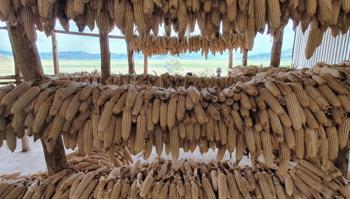
Innovative Pilot Evaluation: Aflatoxin Reduction in the Rwanda Maize Value Chain from October to December 2021
- 2021 – 2021
- unter 500.000 €
- Rwanda
This pilot evaluation, commissioned by the WFP Regional Bureau of Nairobi in cooperation with WFP Rwanda and the Farm to Market Alliance (FtMA), assessed the introduction of a new technology for enhanced food safety of maize in Rwanda.
Rwandan maize is particularly affected by aflatoxin, a carcinogen, which prevents farmers from selling their harvests to premium domestic buyers that adhere to aflatoxin regulations. In this context, AflaSight (a start-up firm based in Rwanda) uses an innovative aflatoxin reduction technology that removes aflatoxin from already infected maize kernels at industrial scale. The direct users of AflaSight are agro-processors and traders that source maize from smallholder cooperatives. The strategic objective of AflaSight is to solve the aflatoxin problem in maize in Rwanda and enable smallholder farmers to connect with premium buyers of domestically produced maize.
The evaluation covered the pilot period from October to December 2021 and served the double objectives of accountability and learning (with emphasis on the latter). It followed a theory-based mixed methods approach to answer the nine main evaluation questions linked to different evaluation criteria (relevance, effectiveness, efficiency, impact, and sustainability), streaming gender equality and empowerment of women farmers throughout. Primary data was collected through key informant interviews in Kigali, as well as interviews, focus groups, direct observation, and a large-scale survey with 400 smallholder farmers in the Southern Province of Rwanda. The team also analysed existing M&E, financial and technical data, and carried out a document review, as well as a cost-effectiveness analysis of AflaSight.
The main users of the evaluation are WFP, FtMA, Government institutions involved in agricultural production and food standards, private sector agents, and smallholder cooperatives.
The evaluation report and brief are available at: https://www.wfp.org/publications/rwanda-innovative-pilot-evaluation-aflatoxin-reduction-rwanda-maize-value-chain
- Partner:
- Particip (federführend), C4ED
- Schlagwörter:
- Ernährung, Industrie und Privatsektorentwicklung, Informationstechnologie, Landwirtschaft, Monitoring und Evaluierung

Evaluation of the action 'Support to the integrated management of water resources of Lake Kivu and the Ruzizi River' – Mid-term Evaluation
- 2020 – 2021
- unter 500.000 €
- Rwanda
The mid-term evaluation focusses on progress made to date and, explains why progress is happening or is not happening as planned, and shall provide recommendations on how to improve the Action during its residual duration in order to achieve the expected objectives, taking into account problems and opportunities. Further, the evaluation examines the mandate and capacity of ABAKIR, the intended transboundary resource management mechanism for the three states of Rwanda, Burundi and Democratic Republic of Congo.
The evaluation should also serve to prepare new Actions and encompass both forward and backward-looking perspectives including whether gender, environment and climate change were mainstreamed; the relevant SDGs and their interlinkages were identified; the principle of Leave No-One Behind and the rights-based approach methodology were followed in the identification/formulation documents and the extent to which they have been reflected in the implementation of the Action, its governance and monitoring.
1. Is the Action relevant as such and in particular in the current context (security situation in the region, the selected partner ABAKIR and its capabilities, etc)?
2. Is the method of management and of implementation applied by the contractor GIZ still appropriate in the current context and within the time remaining and the limited budget specifically dedicated to the activities?
3. Were all stakeholders appropriately involved in the preparation of the Action or were their views and expectations at least taken into consideration in the Action's design?
4. The Action is experiencing issues in terms of stakeholders' appreciation, ownership and expectations. The evaluators will analyse the reasons for these issues in view of proposing corrective measures to achieve the project objectives with a higher level of involvement and ownership of partners and beneficiaries - even by amending some terms of the Action and by redefining its objectives. Among the possible options, the evaluators will consider the following:
(1) an extension of the Action's duration without any extra budget allocation, namely a No-Cost Extension,
(2) a downsizing or a modification of some activities without altering the original Action's objectives,
(3) a suspension of the activities, as a whole or just partially, for a duration allowing some corrective actions to be taken, or
(4) an anticipated end of the Action and a termination of the contract signed with GIZ. In case this would not turn feasible, the evaluators will propose the best possible ways and conditions to terminate the Action with a limited impact on beneficiaries and stakeholders.
5. The evaluators will analyse the project achievements, all along its results chain.
6. The evaluators will consider the coordination with other Actions like the one similarly launched in favour of the Lake Tanganyika and with the GIZ-led Nexus programme.
- Partner:
- Particip (federführend), CAPA EEIG (managed by Particip)
- Schlagwörter:
- Umwelt

Evaluation of the Results-Based Financing for Low Carbon Energy Access Facility (RBFF) within Energising Development (EnDev)
- 2015 – 2020
- 500.000 € – 1 Million €
- Global
The overall objective was to evaluate the Results-Based Financing (RBF) for Low Carbon Energy Access Facility within the Energising Development (EnDev) Programme. The specific purposes of this evaluation were (i) to assess the performance of the RBF Facility over the period 2012-2020 against key OECD/DAC evaluation criteria, (ii) to understand and disseminate what had worked in which circumstances and why, and (iii) to derive lessons learned and recommendations for future programmes in RBF, energy access support through private sector development, and climate finance more broadly.
EnDev piloted an RBF scheme offering incentive payments to private sector market actors in the low-carbon off-grid energy sector in developing countries. Payments were made against pre-specified results achieved in delivery and sustainable operation of modern energy technologies and services.The aim of the RBF Facility within the global EnDev programme was to (i) increase access to modern energy services in developing countries (including vulnerable groups) (ii) through the use of decentralised renewable energy products and services, (iii) delivered as market-based approaches through private sector actors.
The scope of the evaluation encompassed 17 different RBF projects within the global EnDev programme. The evaluation focused on market changes and private sectors responses – such as market efficiency, business development, distribution strategies and technology adoption –, but also analysed the consumer perspective and the interaction with sector policies and regulation by national governments.
Outputs included:
- Inception Report.
- Baseline Report (review of existing baseline studies).
- Internal Process Review.
- A Mid-term Evaluation, including a set of project evaluations and a portfolio review.
- Deep impact studies of one selected country project in Tanzania.
- A cross-portfolio survey targeting RBF participants.
- Final Evaluation, including a set of project evaluations and a portfolio review.
- Concept notes for the various evaluation products.
- Networking conferences with individual projects to foster knowledge-sharing and learning experiences based on the above products and between projects.
Nine countries were targeted for field and remote evaluation: Bangladesh, Benin, Cambodia, Kenya, Peru, Rwanda, Tanzania, Uganda, Vietnam.
- Partner:
- Particip (federführend), Arepo Consult
- Schlagwörter:
- Energie, Industrie und Privatsektorentwicklung, Monitoring und Evaluierung

Public services contract for midterm and final evaluations of projects and programmes of the Belgian Technical Cooperation in the sector of governance
- 2013 – 2018
- 500.000 € – 1 Million €
- Africa, Asia
This 4-year framework contract has the objective to conduct all mid-term and final evaluations of projects and programmes of the Belgian Technical Cooperation (BTC-CTB) in the governance sector. Sectors targeted: Justice, security, decentralisation, local development, institutional capacity building.
The following evaluations have been carried out so far are:
- Mid-term review of the project "Appui institutionnel au MACTL pour le pilotage stratégique de la décentralisation et de la déconcentration au Mali", Mali;
- Final evaluation of the project "Appui au développement socio-économique de la Province du Nord (PADSEC)", Rwanda;
- Mid-term review of the project "PADLPC - Projet d'appui au développement local et à la participation citoyenne", Burundi;
- Final evaluation of the project "Support to capacity development in Rwanda", Rwanda;
- Mid-term review of the project "Projet d’appui institutionnel a la mise en œuvre de la politique nationale genre par le Ministere de la population, de la promotion de la femme et de la protection de l’enfant", Niger;
- Mid-term review of the project "Support to Local Government Reform and Development Programme", Palestinian Territories;
- Final evaluation of the project "Kasese District Rural Community Development Programme - Phase II", Uganda;
- Mid-term evaluation of the Common Management Support Units (CMSU) – EPSP – MINIDER - AGRI – DRC;
- Final evaluation of the institutional support to the Ministry of Planning in DRC;
- Final evaluation of the “Support to community development initiatives programme” in the District of Tshopo (Paideco-Tshopo), DRC;
- Final evaluation - Poverty reduction through institutional strengthening at provincial (Nghe An) and district (Quy Chau) levels (Vie 08 036 11) Vietnam;
- Mid-term review of the intervention “Enhancement of procurement capacity of local government authorities project”, Tanzania;
- Mid-term review of the project “Central and decentralized institutional support to the Ministry of Justice in Burundi”;
- Final review of “the support of professionalization of the National Police in Burundi”.
- End-term review of the intervention “Local Government Reform and Development Program (LGRDP)” in Palestine
- Mid-term review of the programme of studies and expertise in DRC
- Mid-term review of the Institutional support project to the regionalisation process in Mali (PAIR)
- Final reviews of the interventions “Support to the decentralization of the Koulikoro region – PADK II” and “Support to civil status – PAEC” in Mali
- Final review of the intervention "Support to the Ministry of foreign affairs, international cooperation and francophonie" in the Democratic Republic of Congo
- Yearly review of the intervention facility for front line service delivery improvement - Tirelo Bosha – in South Africa
- Mid-Term Review of the intervention “Support to the development of human resources of beneficiary organisations “SDHR” in Uganda
- MTR of the intervention Capacity Building for Planning Reform (CDPR) in Vietnam
- Mid-Term Review of the Intervention “Regeneration of Historical Centres in Local Government Units (RHC)” in Palestine
- Mid-Term Review of Rwanda Decentralization Support Programme – Enhancing the capacities of districts (RDSP-ECD)
- Final Evaluation of the Project “Enhancement of Procurement Capacity of Local Government Authorities in Tanzania”
- Final review of the intervention “Institutional support project to the Ministry of Territorial Administration and Local Government (MATDRE) for the strategic steering of decentralization and deconcentration” in Mali
- Final Review of the project "Institutional support to the process of regionalisation in Mali" (PAIR)
- Mid-term review of the support project to investments of local authorities (PAICT) in Mali
- External mid-term review of the Support Project on Expertise, Studies and Technical Assistance to the water and environment sector (PAERE) and the Project on Strengthening of Competencies of the sector water and environment (CF) in Bolivia
- Mid-term review of the project to support Burundian organizations through human resources capacity building (PAORC) in Burundi
- Mid-Term Review Of The Intervention “Facility For Capacity Building” (FCB) in Vietnam
- Final Evaluation of the Support Programme for the Implementation of Decentralised Entities in the Dosso Region, phase 2 and extension phase (PAMED II & PAMED II Extension) in Niger
- End-Term Review of the Intervention "Capacity Building for Planning Reform (CDPR)" in Vietnam
- Partner:
- Particip (federführend), MDF
- Schlagwörter:
- Institutionelle Entwicklung, Monitoring und Evaluierung, PCM / Logframe, Regierungsführung