Burundi
6 references
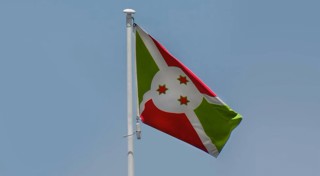
The overall objective (impact) of this contract is to strengthen the image and perception of the European Union in Burundi as a key partner, primarily within the framework of Global Gateway priorities.
More specifically, the objectives are:
- Specific Objective 1: to increase awareness and positive perception of the European Union and its Member States, their partnership and international values among target audiences;
- Specific Objective 2: to strengthen the European Union's profile as a key partner on priority issues for the citizens of Burundi.
The expected deliverables of this contract are as follows:
- Output 1: Public communication campaigns to increase understanding and awareness of the positive impact of the EU-Burundi partnership on the major concerns of the population, particularly those aged 18 to 35, are designed and implemented. The campaigns will seek to show how EU actions contribute to addressing these issues, in particular through the Global Gateway strategy and existing Team Europe initiatives.
- Output 2: Regular monitoring and reporting on the progress and impact of communication campaigns by measuring performance against clearly defined output, outcome and impact indicators, which will enable the design and implementation of a content marketing strategy focused on promoting the key priorities implemented under the development cooperation portfolio, in particular those under the Global Gateway strategy and the two Team Europe Initiatives.
- Keywords:
- Communication & media

DUKINGIRE IBIDUKIKIJE - Conservation and enhancement of natural ecosystems and their biodiversity for green growth of rural communities in Burundi
- 2022 – 2027
- € 1 – 2 million
- Burundi
This project is part of the program “DUKINGIRE IBIDUKIKIJE – Conservation and enhancement of natural ecosystems and their biodiversity for green growth of rural communities in Burundi” which supports the preservation of natural ecosystems (including two protected areas) in the context of integrated landscape management and wants to help enhance their goods and services.
This program will contribute to sustainably improving the living conditions of the population of the areas of intervention, including displaced persons and returnees, as well as economic and social development from the country. Particular attention will be given to the communities living around the areas protected so that human pressure on them is reduced and that these communities contribute to their sustainable management.
The program is structured around three components:
- Component 1 – Governance and sustainable and inclusive / participatory management of areas protected areas, in particular the Kibira and Rusizi National Parks, are improved.
- Component 2 – Integrated land restoration and management practices and mechanisms and water resources are improved.
- Component 3 – Organization, monitoring and management of the water supply service for drinking water in rural areas are improved for the benefit and thanks to the participation of local populations, with a focus on groups in vulnerable situations.
This program will be implemented in the Kibira and Rusizi National Parks, their buffer zones, as well as in micro-basins which feed the Rusizi River and which will be identified in start of the program on the basis of environmental vulnerability criteria (the program will therefore cover the provinces of Cibitoke and Bubanza, and a municipality in the province of Bujumbura rural).
The specific objective of this contract is as follows:
Contribute to strengthening the efficiency and effectiveness of actions for the protection and enhancement of ecosystem services in the Rusizi river basin, implemented under the program “DUKINGIRE IBIDUKIKIJE - Conservation and enhancement of natural ecosystems and their biodiversity for green growth of rural communities in Burundi”.
This will involve the provision of a team of experts who will accompany and support the implementation and monitoring of actions, facilitate sector coordination and provide quality technical expertise to the entire program.
- Partners:
- Particip (Lead), COWI, Expertise Advisors (formerly: ETI Consulting)
- Keywords:
- Environment, Forestry
To help strengthen democratic governance in Burundi by building the technical capacity of the National Communication Council and the Burundi Ombudsman Institution.
- 2023 – 2025
- under € 500,000
- Burundi
The general objective was to help strengthen democratic governance in Burundi by building the technical capacity of the National Communication Council and the Ombudsman Institution of the Republic of Burundi.
The specific objectives were :
- To support the National Communication Council in operationalising the implementation of its Triennial Strategic Plan (TSP) 2023-2025.
- Support the institution of the Ombudsman in the implementation of its Strategic Plan 2024-2027 and in the installation and operation of the integrated appeals management system which also takes into account the gender dimension.
- Partners:
- Particip (Lead), EuroPlus
- Keywords:
- Governance
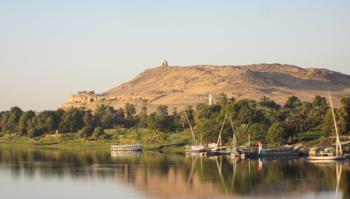
Strengthening the Policy Frameworks for Transboundary Water Resources Management in the Nile Basin
- 2020 – 2022
- under € 500,000
- Burundi, Congo (Brazzaville), Egypt, Ethiopia, Kenya, Rwanda, South Sudan, Sudan, Tanzania, Uganda
The Nile Basin Initiative (NBI) is a partnership of the 10 Nile Basin riparian states with a shared vision objective to promote sustainable socio-economic development through the equitable utilization of and benefit from the shared Nile Basin water resources. Nile Basin countries face increasing challenges of meeting the requirements of their rapidly growing populations in the face of dwindling resources that are threatened by emerging pressures like climate change, land use change and degradation, urbanization, etc. The challenges result in increased efforts at utilization of the Nile waters for agricultural, domestic, industrial and environmental purposes. Countries are embarking on large-scale developments for water utilization and water-related use in riparian countries which have major implications for current and future availability of water resources.
The assignment took the basin perspective and looked at the transboundary governance mechanisms in place. Especially national level arrangements such as policies and Transboundary Water Management (TWM) units served the various transboundary mechanisms a country subscribes to at the same time.
The objective was to facilitate and document a joint review and learning process on provisions for transboundary cooperation in national policies and related institutional arrangements.
The primary work of the project consisted of the following tasks:
- Task 1: Finalization of the NBI Policy Handbook
- Task 2: Guidance Document on key TWM principles for national water policies
- Task 3: Review of experience and mapping of cross-border cooperation arrangements in Nile Basin
- Task 4: Review of experience of the national level organizational arrangements for TWM
- Task 5: Collaborative assessment of progress of implementation of TWM principles in
National Water Policies
- Task 6: Action plan for transboundary water policy at national and regional level
- Task 7: Policy Synthesis Report – Status of TWM governance and Implementation of
SDG 6.5.2. in the Nile Basin
- Task 8: Blended Learning Module
- Prepare and facilitate Policy Roundtables
- Keywords:
- Environment, Training
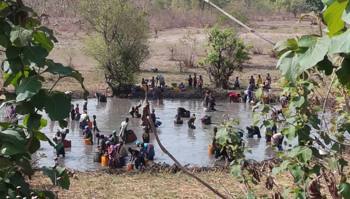
Evaluation of the Belgian Fund for Food Security (BFFS), the integration of food security and the multi-stakeholder approach within the Belgian Development Cooperation
- 2018 – 2019
- under € 500,000
- Benin, Burundi, Guinea (Conakry), Mali, Mozambique, Tanzania
The objectives of the evaluation were as follow:
- Draw lessons learned from the implementation of the FBSA from the results observed in terms of food security with its 4 dimensions (summative evaluation).
- Assess the measures that have been taken to integrate the issue of agriculture and food security into Belgian cooperation.
- Assess the specificity and added value of the multi-stakeholder and multi-dimensional approach for Belgian Cooperation in the field of food security.
Thus, the evaluation is i) backward-looking, covering the implementation of the BFFS in its multidimensional approach based on the four pillars of food security (FAO) and its multi-actor approach; and ii) forward-looking, covering the food security dimension of the new programming of Belgian cooperation. The temporal scope extends from 2010, the year of the creation of the BFFS, to the time of the evaluation in 2019.
The evaluation team conducted 6 country case studies, notably for the five countries in which a BFFS multi-actor programme was carried out from 2012 to 2019: Mali, Mozambique, Burundi, Tanzania and Benin. A sixth case study was carried out on Guinea where a new bilateral programme had been launched, in order to meet the second objective which is to assess the measures taken to integrate agriculture and food security into the new programming of Belgian cooperation. In addition, an online survey was conducted among all actors involved in the implementation of the BFFS programmes.
The published report can be found here: https://diplomatie.belgium.be/sites/default/files/downloads/fbsa-fr-digital-complet.pdf
- Keywords:
- Agriculture, Food and nutrition, Monitoring & Evaluation

Public services contract for midterm and final evaluations of projects and programmes of the Belgian Technical Cooperation in the sector of governance
- 2013 – 2018
- € 500,000 – 1 million
- Africa, Asia
This 4-year framework contract has the objective to conduct all mid-term and final evaluations of projects and programmes of the Belgian Technical Cooperation (BTC-CTB) in the governance sector. Sectors targeted: Justice, security, decentralisation, local development, institutional capacity building.
The following evaluations have been carried out so far are:
- Mid-term review of the project "Appui institutionnel au MACTL pour le pilotage stratégique de la décentralisation et de la déconcentration au Mali", Mali;
- Final evaluation of the project "Appui au développement socio-économique de la Province du Nord (PADSEC)", Rwanda;
- Mid-term review of the project "PADLPC - Projet d'appui au développement local et à la participation citoyenne", Burundi;
- Final evaluation of the project "Support to capacity development in Rwanda", Rwanda;
- Mid-term review of the project "Projet d’appui institutionnel a la mise en œuvre de la politique nationale genre par le Ministere de la population, de la promotion de la femme et de la protection de l’enfant", Niger;
- Mid-term review of the project "Support to Local Government Reform and Development Programme", Palestinian Territories;
- Final evaluation of the project "Kasese District Rural Community Development Programme - Phase II", Uganda;
- Mid-term evaluation of the Common Management Support Units (CMSU) – EPSP – MINIDER - AGRI – DRC;
- Final evaluation of the institutional support to the Ministry of Planning in DRC;
- Final evaluation of the “Support to community development initiatives programme” in the District of Tshopo (Paideco-Tshopo), DRC;
- Final evaluation - Poverty reduction through institutional strengthening at provincial (Nghe An) and district (Quy Chau) levels (Vie 08 036 11) Vietnam;
- Mid-term review of the intervention “Enhancement of procurement capacity of local government authorities project”, Tanzania;
- Mid-term review of the project “Central and decentralized institutional support to the Ministry of Justice in Burundi”;
- Final review of “the support of professionalization of the National Police in Burundi”.
- End-term review of the intervention “Local Government Reform and Development Program (LGRDP)” in Palestine
- Mid-term review of the programme of studies and expertise in DRC
- Mid-term review of the Institutional support project to the regionalisation process in Mali (PAIR)
- Final reviews of the interventions “Support to the decentralization of the Koulikoro region – PADK II” and “Support to civil status – PAEC” in Mali
- Final review of the intervention "Support to the Ministry of foreign affairs, international cooperation and francophonie" in the Democratic Republic of Congo
- Yearly review of the intervention facility for front line service delivery improvement - Tirelo Bosha – in South Africa
- Mid-Term Review of the intervention “Support to the development of human resources of beneficiary organisations “SDHR” in Uganda
- MTR of the intervention Capacity Building for Planning Reform (CDPR) in Vietnam
- Mid-Term Review of the Intervention “Regeneration of Historical Centres in Local Government Units (RHC)” in Palestine
- Mid-Term Review of Rwanda Decentralization Support Programme – Enhancing the capacities of districts (RDSP-ECD)
- Final Evaluation of the Project “Enhancement of Procurement Capacity of Local Government Authorities in Tanzania”
- Final review of the intervention “Institutional support project to the Ministry of Territorial Administration and Local Government (MATDRE) for the strategic steering of decentralization and deconcentration” in Mali
- Final Review of the project "Institutional support to the process of regionalisation in Mali" (PAIR)
- Mid-term review of the support project to investments of local authorities (PAICT) in Mali
- External mid-term review of the Support Project on Expertise, Studies and Technical Assistance to the water and environment sector (PAERE) and the Project on Strengthening of Competencies of the sector water and environment (CF) in Bolivia
- Mid-term review of the project to support Burundian organizations through human resources capacity building (PAORC) in Burundi
- Mid-Term Review Of The Intervention “Facility For Capacity Building” (FCB) in Vietnam
- Final Evaluation of the Support Programme for the Implementation of Decentralised Entities in the Dosso Region, phase 2 and extension phase (PAMED II & PAMED II Extension) in Niger
- End-Term Review of the Intervention "Capacity Building for Planning Reform (CDPR)" in Vietnam
- Partners:
- Particip (Lead), MDF
- Keywords:
- Governance, Institutional development, Monitoring & Evaluation, PCM / Logframe