Ghana
11 referencias

The objective of this facility is to improve the overall quality of the NDICI Rapid Response and Peace, Stability and Conflict Prevention thematic areas by providing high quality research services.
We will provide the FPI with flexible and ad hoc research services and prepare literature reviews and rapid assistance reports in the thematic areas specified below.
- Socios:
- Particip (líder), SICI Dominus
- Palabras clave:
- Ayuda humanitaria, Medio ambiente
Governance for Inclusive Development (GovID) in Ghana
- 2020 – 2023
- de 5 a 10 millones de €
- Ghana
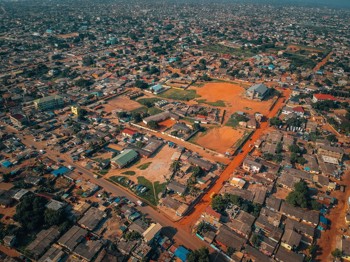
The project Governance for Inclusive Development (GovID) in Ghana aimed to contribute to the development of Governance by improving transparency, internal accountability, participation, decentralisation, and provision of public services and public finance management (PFM) so that national and sub-national Governance actors are able to finance inclusive development in Ghana.
The consultancy provided advisory services delivered by a national long-term expert, who managed a pool of international, regional and national short-term experts in the form of technical consultancy services. The key intervention areas were to:
- strengthen revenue management at the national level;
- strengthen municipal capacities for collecting internally generated funds (IGF) at the sub-national level;
- strengthen capacities for inclusive budget management at national and local levels;
- strengthen accountability mechanisms for budget execution;
- enable subnational public actors to identify and further develop local economic development potentials in cooperation with medium-sized enterprises in the agricultural and food industries.
To implement this strategy, the project combined measures in all three areas of capacity development. At the individual level, the project trained technical and managerial staff to implement the reform elements in the selected institutions and organizations. At the organizational level, the project supported the relevant stakeholders at the national, regional and local levels through organizational, strategy and process development that strengthen their mandates in the design and implementation of domestic revenue mobilisation (Ministry of Finance (MoF), Ministry of Local Government and Rural Development (MLGRD), Ghana Revenue Authority (GRA), local authorities), the evidence-based budget planning and reliable allocation of funds (MoF, selected sectoral ministries, local authorities), accountability over the use of funds (Internal Audit Agency (IAA), audit committees, Court of Auditors, local authorities, civil society), and demand-oriented regional economic development (municipalities, medium-sized enterprises of agricultural and food industry). At the cooperation and societal level, the project supported the partners in the establishment of joint working groups and cooperation procedures and the development and adaptation of regulatory frameworks.
- Socios:
- Particip (líder), GOPA
- Palabras clave:
- Agricultura, Desarrollo institucional, Ejecución de proyectos / asistencia técnica, Finanzas públicas / presupuestación, Formación, Gobernanza, Industria y desarrollo del sector privado, Macroeconomía / política nacional, Sociedad civil
Evaluation of Danida Sustainable Infrastructure Finance Programme
- 2020 – 2022
- menos de 500.000 €
- Bangladesh, Ghana, Mozambique, Viet Nam
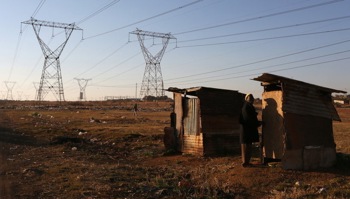
DSIF provides concessional loans for funding of sustainable infrastructure projects, which cannot otherwise be financed on commercial terms in developing countries. The projects have to be sustainable, support the national development plans and contribute to sustainable growth and employment in line with the Sustainable Development Goals. The evaluation of DSIF served learning and accountability purposes for both the Investment Fund for Developing Countries (IFU)/DSIF and the Ministry of Foreign Affairs (MFA).
This evaluation had two objectives. The first objective was to assess DSIF’s relevance, coherence, effectiveness, efficiency, development impact and sustainability as well as commercial outcomes through its investments in developing countries. The evaluation applied the updated OECD/DAC evaluation criteria to DSIF investment projects. It involved an analysis of the project portfolio in terms of geographies, sectors and types of projects and funds, and the development of the portfolio composition over time. The evaluation included all DSIF activities since the last evaluation in 2002, although with an emphasis on the last ten years of operation. It included DSIF investments and, to the extent relevant, activities related to project preparation managed by DSIF.
The second objective was to assess the policy directions of the MFA and DSIF’s mandate over the evaluation period and provide an assessment of DSIF’s envisaged future role in Danish development cooperation, and whether the organisation was fit for purpose. During the evaluation period, Danish development policy had evolved, and expectations and requirements from the MFA towards DSIF had accordingly led to adjustments in the mandate. The evaluation took into account these changes in development policy and adjusted DSIF mandate when assessing its performance during the evaluation period, including changes in CSR/sustainability polices and the commercial framework under which this development finance instrument worked. The evaluation assessed the extent to which policy-driven initiatives derived from the Danish development policies had the potential to influence DSIFs portfolio, which was otherwise based on client demand. In this context the evaluation assessed the relevance of the adjustments made to the DSIF-mandate and, to the extent possible also, assessed whether the DSIF organisational set-up was Fit for Purpose, including risk management as well as results measurement and communication.
Case studies, including field visits were implemented in Bangladesh, Ghana, Mozambique, and Vietnam.
- Socios:
- Particip (líder)
- Palabras clave:
- Energía, Industria y desarrollo del sector privado, Infraestructuras, Seguimiento y evaluación
Monitoring and Reporting under the SDG-Contract to promote Investment and Job Creation in Ghana
- 2019 – 2022
- menos de 500.000 €
- Ghana
The European Union (EU) and the Government of Ghana (GoG) jointly implemented a new budget support contract that aimed to support the implementation of Ghana's Medium-Term National Development Policy Framework ('The Agenda for Jobs: Creating Prosperity and Opportunity for All) with a view of achieving the Sustainable Development Goals (SDG). The following specific objectives had been identified as priorities: 1) Promote domestic and foreign private investment and enable all businesses to spearhead economic transformation and create more employment and decent work opportunities; and 2) Strengthen public financial governance and fight against corruption, and boost domestic revenue mobilisation.
As a response to the COVID-19 pandemic, the EU and the GoG agreed on a new single fixed tranche “Emergency EU Budget Support in response to COVID-19 crisis in Ghana” State Building and Resilience Contract (COVID-19 Emergency Response programme). This tranche was also supposed to absorb inter alia the undisbursed funds of the SDG-Contract.
The project services were hence extended to include support for the EU's disbursement decision for the COVID-19 Emergency Response programme, while continuing the monitoring of the Government's performance with respect to the SDG-Contract indicators, included as a commitment under the new Programme, and ongoing support for related policy dialogue on SDG-Contract and related budget support issues.
The global objective of this assignment was to support the GoG and the EU Delegation in the implementation of the SDG-Contract to promote sustainable investment and employment and to support the EU Delegation in the management of subsequent budget support interventions, including specifically the COVID-19 Emergency Response.
The specific objective of this contract was to provide support in three areas:
- Strengthening the monitoring and reporting for the disbursement of fixed and variable tranches of the SDG-Contract and the COVID-19 Emergency Response programmes;;
- Continued monitoring of, and reporting on, progress in the Government's achievement of the SDG-Contract indicators agreed for 2021 and 2022;
- Guidance for and contribution to an effective and efficient policy dialogue between the EU Delegation and the Government of Ghana in the context of the implementation of the SDG-Contract indicators and further agreed areas of support related to implementation of the "Agenda for Jobs";
- Improvement of communication and visibility around the SDG-Contract and the COVID-19 Emergency Response programmes indicators and related policy dialogue..
- Socios:
- Particip (líder), ADE, GOPA PACE (ex B&S Europe SA)
- Palabras clave:
- Comunicación y medios, Finanzas públicas / presupuestación, Seguimiento y evaluación

The purpose of this assignment is to collect, collate and systematically present, in the form of Evaluation Portraits and Country Evaluation Briefs, findings from existing evaluations and other documents of development interventions in five Norwegian partner countries: Colombia, Ghana, Uganda, Indonesia and Niger. The first four countries are characterised as partners “for long-term development” while Niger is characterised as a partner “for stabilisation and conflict prevention”.
The objective of this assignment is to provide accessible and relevant knowledge about Norwegian and other donors’ development efforts in Norway’s partner countries through systematising findings from existing evaluations of development interventions. The exercise emphasises learning, supplementing a growing database of systematised, relevant, context-specific and accessible information. Beyond its intrinsic value, this knowledge forms a basis for development policies and strategies, contributes to development efforts in the field and reveals knowledge gaps that could be covered by future evaluations.
The main target groups for the study are the Norwegian Ministry of Foreign Affairs, Norad and Norwegian embassies in the selected partner countries and elsewhere.
The assignment is guided by the following questions:
- What are the key contextual features characterising each of the studied case countries, and how do these contextual features affect development and/or humanitarian interventions in the respective country/-ies?
- What is the nature of the programmes and projects studied, including levels and trends of development/humanitarian support?
- What are the major findings in the assessed material concerning the goals, methods, challenges, results and sustainability of the interventions studied?
- How do the studied interventions perform in terms of such cross-cutting issues as human rights; women’s rights and gender equality; climate and environment; and anti-corruption?
- Which intended and, if any, unintended effects of the interventions, positive and negative, direct or indirect, can be identified?
Report available here: https://www.norad.no/en/front/evaluation/about-evaluation-department/evaluation-series/country-evaluation-briefs/
- Palabras clave:
- Seguimiento y evaluación
Development of research approaches to provide Case Studies for evidence-based learning
- 2018 – 2020
- menos de 500.000 €
- Ghana, South Africa
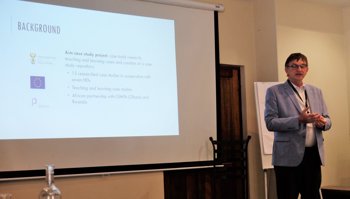
The overall objective of the project was to contribute towards building a capable state, responsive to the needs of all its citizens and the promotion of national interest, accountability and transparency in service delivery, and utilising public resources in an effective and efficient way.
The specific objectives of the project were the following:
- Develop fifteen (15) researched case studies (2 from Ghana and 13 from South Africa) utilising the case method for public service teaching and learning.
- Work with at least five (5) assigned higher education institutions (HEI) in South Africa to assist and develop their capacity to develop and use the case study method for public service teaching and learning.
- Dissemination of the case studies via at least ten (15) sector workshops at the NSG
- Preparation of the materials as publications for journals / manual and book chapters so that the NSG can take these forward.
- Palabras clave:
- Desarrollo institucional, Educación, Formación, Gobernanza

Good Financial Governance in Ghana
- 2016 – 2020
- de 1 a 2 millones de €
- Ghana
The Good Financial Governance (GFG) Program was to support the Government of Ghana in three focal areas of public finance, namely Revenue management, Budget management (PFM, with a focus on budget preparation), and Domestic accountability & Resource governance. As a crosscutting area the Program supported human resource development within the Ministry of Finance (MoF) and the Ghana Revenue Authority (GRA) with a focus on gender mainstreaming. The consultancy involved the delivery and management of advisory services within the GFG Program. Advisory work was delivered by a long-term expert and short-term experts in the form of technical consultancy services related to the above mentioned areas of intervention, training, soft skills, and in the area of process management.
Process management refered to improvement of decision making and business processes with the relevant partner institutions; soft skills include communication, management, negotiation, presentation, time management and problem solving skills, human resource development with focus on gender mainstreaming (including development of training curricula, guidelines, strategies, and procedures), and organizational development. The technical areas included support to the public budget formulation process and execution, tax policy, revenue administration, domestic accountability including resource governance, and external budgetary oversight. The long-term expert was responsible for the management of the pool of short-term experts and assessed the needs for consultancy services in close collaboration with the GFG program management.
- Socios:
- Particip (líder), EY Ghana
- Palabras clave:
- Desarrollo institucional, Ejecución de proyectos / asistencia técnica, Finanzas públicas / presupuestación, Gobernanza, Macroeconomía / política nacional
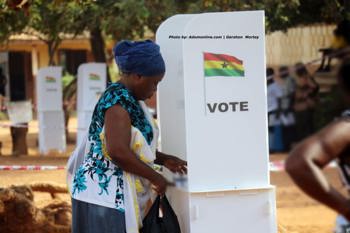
European Union Electoral Follow-Up Mission (EU EFM) to Ghana, 2019
- 2019 – 2019
- menos de 500.000 €
- Africa (Western)
Ghana is commended for its good democratic track record, respect of human rights and economic performance over recent years. Following the successful referendum on the creation of six new regions, the administrative regions in Ghana increased from 10 to 16. Elections for the local councils in old and new regions are scheduled for December 2019, in parallel with a second referendum to change the system of election of these councils. These will be followed by presidential and parliamentary elections in December 2020.
An EU EOM was deployed to observe the closely contested Presidential and Parliamentary elections held in December 2016. The preliminary findings of the EOM stressed that the elections delivered to the Ghanaian citizens a well-administered and transparent vote. However, the EU EOM also pointed to the misuse of incumbency including unequal access to state media.
Having in mind the local election of 2019, as well as the reccomendations that resulted from the EOM in 2016, a Follow Up mission was deplyed in order to:
- Generate additional impetus for – or contribute to ongoing debates on – electoral reform;
- Identify areas of agreement and disagreement on EU EOM recommendations among the stakeholders and any political, technical, financial obstacles to electoral reform;
- Propose actions to overcome obstacles to electoral reform, including measures to develop support for and national ownership of the recommendations;
- Identify which EOM recommendations are most relevant to the prevailing country situation and the current phase of the electoral cycle;
- Assess any electoral reforms adopted/considered or planned since the last EOM and the degree to which these reflect EOM recommendations and their alignment with international standards for democratic elections;
- Assist the EU Delegation, EEAS and DEVCO in their assessment on whether ongoing cooperation and conflict prevention projects are addressing the recommendations made by EU EOMs.
Based on a brief overview of existing programmes provide needed information to support identification of potential additional election/democracy support action which could contribute to strengthening the implementation of the recommendations and/or to the overall improvement of the electoral framework;
- Suggest any other possible EU actions that could contribute to strengthening the implementation of the recommendations and/or to the overall improvement of the electoral framework.
- Palabras clave:
- Desarrollo institucional, Elecciones, Justicia / Estado de derecho

Identification and Formulation of Support to West Africa Peace, Security and Stability: Complementary action combatting other main threats
- 2016 – 2017
- menos de 500.000 €
- Africa (Western)
This assignment provided a coherent proposal to ECOWAS and EU for the strengthening of coordination and cooperation in security in West Africa and the implementation of programmes dealing with specific threats.
It gave sufficient background information and justifications to enable the ECOWAS and EU to make an informed decision on specific objectives and of the projects' implementation modalities.
The specific objective of this assignment was to prepare all the necessary elements of 4 different Action Documents to implement 4 potential projects covering respectively areas A, B, C and D.(Area A: Border Management, Area B: Enhancing Cybersecurity in ECOWAS region, Area C: Support to GIABA, Area D: Fighting against illicit trafficking).
For each area A,B,C and D, it was required to proceed to:
- an identification of issues, strategical orientations and priority intervention areas
- a formulation of the project under 11th EDF (Phase II).
- Socios:
- Particip (líder), EuroPlus
- Palabras clave:
- GCP / marco lógico

Joint Evaluation of Budget Support to Ghana
- 2016 – 2017
- menos de 500.000 €
- Ghana
The main objective of the evaluation was “to assess to what extent General Budget Support (GBS) and Sector Budget Support (SBS) in Ghana contributed to achieve their expected results, notably by assisting the partner government to implement its national / sector strategies, and to enhance the efficiency and effectiveness of its policies, strategies and spending actions.” The evaluation also analysed how GBS and SBS have contributed to improved transparency within national systems and stronger accountability. The evaluation took stock of what had been achieved to identify lessons learnt and propose recommendations to inform on:
- the conditions under which GBS/SBS has an effect (or not) and the possible intensity and nature (positive or negative) of such an effect in Ghana;
- the design and implementation of future operations, taking into account the added value from contributions of/interrelations between different elements of the BS package;
- the impact of withholding BS by several partners from 2013-2015;
- recommendations for the Government of Ghana and its partners to maximise BS impacts;
- constraints in government policies, institutional structures and administrative arrangements in Ghana, which might impede the effectiveness and impact of public policy, and therefore of BS.
The evaluation covered 11 years of BS to Ghana, from 2005 until 2015. It encompassed all BS operations financed during this period and considered other aid modalities (basket/common funds, projects) to assess the complementarity and synergy between them.
The evaluation included an in depth analysis of the contribution of BS to development outcomes in three sectors: Health, Environment and Agriculture. The evaluation also analysed the role of governance, especially decentralisation and justice, as well as Private Sector Development in the context of BS. In addition to that, it assessed how and to what extent gender was mainstreamed in both BS and the supported policies.
The evaluation was carried out by a joint EU-IEG team. The IEG evaluators focused on the analysis of PFM, macroeconomics and agriculture. The EU evaluators (Particip team) covered all other topics and assumed the overall coordinating role and leadership in drafting the reports.
The report is available at:
https://ec.europa.eu/europeaid/joint-strategic-evaluation-budget-support-ghana-2005-2015_en
- Palabras clave:
- Finanzas públicas / presupuestación, Gobernanza, Industria y desarrollo del sector privado, Medio ambiente, Salud, Seguimiento y evaluación

Post-conflict and post-disaster needs assessment (PCNA/PDNA): development of assessment capacity and tools - Phase I + II
- 2013 – 2017
- de 2 a 5 millones de €
- Global
Relevant background
Since early 2007, the Commission, the UN-family and the World Bank have worked together in setting up a platform for cooperation on post-crisis needs assessments for natural disaster (Post-Disaster Needs Assessment, PDNA) and conflict (Recovery and Peacebuilding Assessment (RPBA), previously named Post-Conflict Needs Assessment, PCNA) scenarios. This trilateral cooperation was framed and formalised through the signature of a Joint Declaration on “Post-Crisis Assessments and Recovery Planning” in September 2008. The EU/UN/WB platform covers the whole PDNA/RPBA(PCNA) process, including strategic coordination, development of joint methodologies for post-crisis assessments, joint deployment of assessment teams, joint training and joint recovery planning and monitoring.
In line with the 2008 Declaration on Joint Post-crisis Assessments and Recovery Planning, the overall objective of the project is to assist and develop third countries’ in-country capacity to gradually assume a more prominent role in Post-Disaster Needs Assessments and Post-Conflict Needs Assessments (now changed to Recovery and Peacebuilding Assessments, RPBA).
The purpose of this project was:
- to support further development of joint PDNA/RPBA(formerly PCNA) methodologies, tools, training programmes, etc.;
- to support joint PDNA/RPBA(formerly PCNA) missions in-country/in region (in coordinating with EU Heads of Delegations and with the European External Actions Service (EEAS) and European Commission). While such support could cover any relevant technical field (long-term and short-term expertise), it is foreseen that a particular emphasis is put on expertise in mission planning and development of final reports/recovery frameworks.
The two phases of the project contributed to a variety of outputs and results, including:
- Phase 1 (01/01/2013 – 31/07/2015): revision of the PDNA methodology and development of the joint EU/UN/WB PDNA Guide, development of the Disaster Recovery Framework (DRF) Guide, review of the PCNA methodology, development of training and capacity building materials, delivery of information/capacity building sessions, joint PDNA/PCNA training courses for national authorities and regional/international organisations, support to over 15 joint EU/UN/WB PDNA/PCNA missions;
- Phase 2 (10/07/2015 – 09/07/2017): revision of the PCNA methodology and development of the RPBA methodology, development of training and capacity building materials, delivery of information/capacity building sessions, joint PDNA/RPBA training courses for national authorities and regional/international organisations, support to over 10 joint EU/UN/WB PDNA/RPBA missions.
- Socios:
- Particip (líder), Dara, ECDPM, GOPA, Punto.sud
- Palabras clave:
- Ayuda humanitaria, Desarrollo institucional, Formación, Gobernanza