Niger
13 referencias
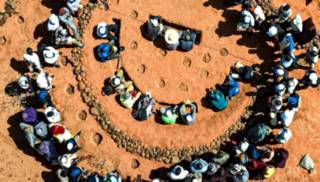
Final evaluation of 2 projects to strengthen social cohesion between displaced populations and host communities in Burkina Faso and Niger (WFP)
- 2024 – 2024
- menos de 500.000 €
- Burkina Faso, Niger
The overall objectives of this evaluation were twofold:
- To provide the relevant services of the European Union and interested stakeholders with an independent overall assessment of the performance of the 2 projects, paying particular attention to its different levels of results measured against its intended objectives and the reasons behind these results; and
- To identify key lessons learned, conclusions and associated recommendations to inform decision-makers on how to improve future interventions.
The specific objectives of this evaluation were:
- To understand the performance of these interventions in strengthening social cohesion, their determining factors and those that hindered the achievement of results, so as to modify their design or implementation modalities and serve as a basis for planning future EU interventions in the same sector.
- To analyse whether and how these interventions have helped to operationalise the HDP Nexus in innovative ways for the benefit of beneficiary communities.
- To inform decision-making on the relevance and thematic priorities of a second phase of these interventions.
- To explore the follow-up questions proposed in the IFPRI study, ‘Sahel Social Cohesion Research in Burkina Faso and Niger’:
- Deepen understanding of issues of intra- and inter-community equity and distributive justice.
- Assess the role of extrinsic versus intrinsic community motivation
- Identify key FFA activities that promote social cohesion
- Socios:
- Particip (líder)
- Palabras clave:
- Ayuda humanitaria, Seguimiento y evaluación
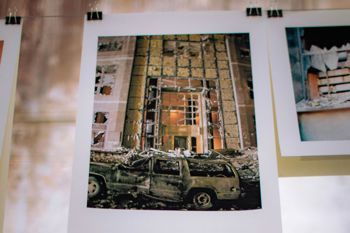
Thematic evaluation of FPI.2 managed responses to Counter Terrorism and Preventing/Countering Violent Extremism (CT-P/CVE) in beneficiary countries (2017-2022)
- 2022 – 2023
- menos de 500.000 €
- Albania, Burkina Faso, Indonesia, Ivory Coast, Jordan, Kazakhstan, Kosovo, Kyrgyzstan, Lebanon, Malaysia, Maldives, Morocco, Mozambique, Niger, North Macedonia, Pakistan, Philippines, Senegal, Sri Lanka, Tajikistan, Thailand, Tunisia, Turkmenistan, Uzbekistan
The main objectives of this evaluation are to provide the relevant services of the European Union, the interested stakeholders with:
- An overall independent assessment of the performance of selected CT-P/CVE measures funded by FPI.2 during the years 2017-2022, paying particular attention to its different levels of results measured against its expected objectives; and the reasons underpinning such results
- As a particular approach to regional actions, a specific case study shall be carried out to assess the regional framework for support to CT-P/CVE measures in the Asian context, managed by the Regional Team in Bangkok. It is expected that the present evaluation assesses the relevance, added value and success of developing a model for CT and P/CVE actions, respectively, which have been replicated in different countries/contexts in Asia/Pacific (in Pakistan, Sri Lanka and Maldives for CT; and in Southeast Asia, Sri Lanka and Maldives for P/CVE). If deemed relevant, links can also be made to regional approaches in other RTs;
- Key lessons learned, conclusions and related recommendations in order to improve current and future interventions.
In particular, this evaluation will serve the contracting authority and other interested services to better understand the performance of the Intervention, its enabling factors and those hampering a proper delivery of results to inform the planning and implementation of current and future support to tackle CTP/CVE.
The main use of the results of the evaluation is expected to be
- To draw general lessons that can be used for the future approach to interventions in the sector
- To draw specific lessons that can be replicated in other similar interventions
- To draw specific lessons from the regional approaches, in particular the one applied by the Regional Team in Bangkok in terms of stocktaking, dynamics and replicability.
The main users of this evaluation will be the contracting authority, FPI.2, including its Regional Teams in Bangkok, Nairobi, Dakar, Eastern Europe and Central Asia (managed from Brussels). The Regional Team in Brasilia is less involved since they currently do not manage any CT-P/CVE projects.
- Palabras clave:
- Seguimiento y evaluación
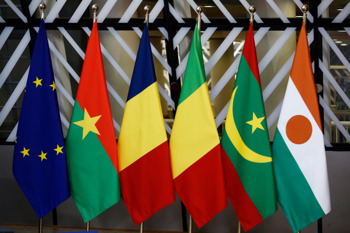
Production of the Sahel Alliance 5 years results report
- 2023 – 2023
- menos de 500.000 €
- Burkina Faso, Chad, Mali, Mauritania, Niger
The members of the Sahel Alliance have chosen to concentrate their efforts in five priority sectors of intervention, in line with the development priorities established by the G5 Sahel countries: Agriculture, rural development and food security; Decentralisation and basic services; Education and youth employment; Energy; Governance.
The overall objective of this contract is to produce the 5-years Technical Report in line with the needs of the SA needs. In line with the commitments of the SA and its members, the Sahel Alliance Coordination Unit (UCA) plans to produce a SA 5 years results report in 2023.
The 5 years results report will include the following elements:
- Analysis of the evolution of the national indicators included in the Alliance results framework in relation to the target values set by the G5 Sahel countries.
- The analysis of the aggregated results of the projects included in the Alliance Sahel portfolio in line with the project indicators included in the Alliance Sahel results framework.
- Analysis of the achievements attributable to the Sahel Alliance stricto sensu will beproduced, in order to show whatthe platform has collectivelyachieved and what its membersare achieving individually.
The following elements should be taken into consideration while drafting the report:
- A qualitative analysis will be needed, particularly in terms of Sahel Alliance member organizations contribution to the provision of basic services;
- The contexts of Sahelian countries (crisis, displacement of population, COVID-19, etc.) should be taken into account in the analysis of results where possible;
- Where possible, the results obtained should be read with regard to the existing policy messages and the sectoral notes issued by the sectoral and thematic coordination groups of the SA in order to measure their operational translation

Evaluation of the European Union support to Rule of Law and anticorruption in Partner Countries (2010-2021)
- 2021 – 2023
- de 500.000 € a 1 millón de €
- Burkina Faso, Congo (Kinshasa), Guatemala, Jamaica, Kenya, Kyrgyzstan, Mali, Myanmar, Niger, Nigeria, Philippines, Viet Nam
The general objective of this evaluation is to provide an independent assessment of the performance of EU support to the Rule of Law (RoL) and Anticorruption in the period 2010-2021 in INTPA partner countries, funded under DCI, EDF, EIDHR, IcSP, CSO and relevant Trust Funds. The evaluation seeks to be a stock-taking and forward-looking exercise but will focus on learning i.e. the identification of key lessons on what has and has not worked and why.
In addition, the specific objectives for this evaluation are:
- To assess the EU support to independent, effective and efficient justice systems, notably a) legislative processes (legality), b) legal certainty and access to justice; and c) equality and accountability before the law, in terms of its impact on good governance (including stability, human rights and democracy, environmental governance and business climate).
- To look at actions aimed at promoting anti-corruption, public accountability and transparency, improving the justice systems and enforcing the principle of separation of powers.
- To pay specific attention to the inclusion of different groups (political, ethnic, religious, etc.), women and youth in decision making at all levels.
- To gather insights on the extent to which the different tools, instruments and modalities used in the EU response have been beneficial in providing effective support to partner countries and the interactions and coherence of those, notably of policy and political dialogue.
- To evaluate the rationale of the EU in these supports to RoL, as well as risk mitigation measures and the impact of policy dialogue, not least on societal and state resilience.
- To produce recommendations for decision-makers in DG INTPA, FPI, DG NEAR, DG ECHO, DG Trade, DG JUST and EEAS on how to improve the EU’s policy strategy and implementation.
The temporal scope of the evaluation is 2010 to 2021, with a particular focus on the previous MMF (2014-2020). The evaluation will focus on the support provided to core state institutions and civil society organisations, specifically: state institutions and oversight bodies, justice institutions, anti-corruption agencies, civil society and human rights institutions.
- Socios:
- Particip (líder), ECDPM
- Palabras clave:
- Justicia / Estado de derecho, Seguimiento y evaluación

The main purpose of this exercise is to produce an independent assessment of the past and current support of the EU in food and nutrition security, sustainable agriculture and fisheries at country, regional and global levels. The evaluation aims more specifically at:
- Informing strategic decisions on the implementation and future mid-term review of the new Multi-annual Financial Framework (MFF);
- Improving cooperation with EU partners under the new MFF and in the light of the new EU Sustainable Agri-Food Systems (SAFS) approach;
- Nurturing the design of new interventions in support of Agri-Food Systems transformations;
- Guiding choices for scaling up and replicating innovative/pilot approaches.
The evaluation covers non-spending (e.g., policy dialogue and advocacy) and spending activities funded under geographic (DCI Latin America, DCI Asia, EDF for Africa and Pacific and Caribbean) and thematic financing instruments (DCI-FOOD, DCI-ENV/DCI-GPGC, etc). The analysis considers interventions financed through other thematic budget lines such as the DCI-CSO&LA, and the Trust funds (e.g. the EU Trust Fund for Africa, Trust Fund Bêkou, Trust Fund for Colombia).
The temporal scope focuses on the MFF 2014-2020 and considers any major developments that occurred in 2021.
The geographical scope of the evaluation is essentially worldwide, but in practice will focus on 59 partner countries for which food and nutrition security or sustainable agriculture have been a priority sector in the previous MFF (2014-2020). A thorough selection of case studies identified a representative and evaluable sample of countries: Niger, Kenya, Malawi, Colombia, Haiti and Cambodia.
Following the 2020 4th Biennial Report and the 2019 EU Achievements Report, four EU priorities for addressing the challenges of food and nutrition security, as well as sustainable agriculture, are at the heart of the evaluation:
- Enhancing the resilience of the most vulnerable to food crises;
- Fostering specific nutrition outcomes;
- Increasing responsible investments in agriculture and food systems;
- Stimulating innovations for sustainable agri-food systems.
- Socios:
- Particip (líder), AKADEMIYA2063, ECDPM, KIT - Royal Tropical Institute
- Palabras clave:
- Agricultura, Alimentación y nutrición, Gobernanza, Medio ambiente
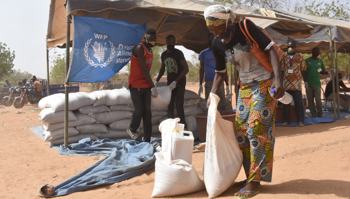
Evaluation Series on Emergency School Feeding in the Democratic Republic of Congo, Lebanon, Niger and Syria (2015-2019)
- 2019 – 2022
- de 500.000 € a 1 millón de €
- Congo (Kinshasa), Lebanon, Niger, Syria
The evaluation series was commissioned by the WFP School-based Programmes Unit in Rome and covered WFP emergency school feeding (ESF) programmes during 2015-2019. It encompassed four country-specific evaluations in the Democratic Republic of Congo (focus on North Kivu region), Lebanon, Niger (focus on Diffa region) and Syria, as well as a global synthesis report. It covers the period 2015-2019.
The evaluation was financed from a multi-year Canadian contribution to WFP that also covered the costs of the ESF activities in the last years of the evaluation period. In 2018, these activities had reached nearly 1 million children in Syria and 17,000-71,000 children in each of the other three countries.
The findings of the evaluation series were meant to strengthen the global evidence base on ESF with specific guidance on school feeding in crisis and humanitarian settings. The findings will be used by Country offices to design future ESF activities.
All evaluations in this series used a mixed-method, theory-driven approach based on a set of reconstructed, country-specific Theories of Change. The country evaluation reports were based on document reviews, key informant interviews, focus groups discussions, and large-scale field surveys of schools, children, and households. The synthesis report was based on the four country reports of the evaluation series, a literature review, an online survey among WFP offices, and key informant interviews.
The country evaluation reports are available at:
https://www.wfp.org/publications/democratic-republic-congo-school-feeding-emergencies-evaluation https://www.wfp.org/publications/lebanon-school-feeding-emergencies-evaluation https://www.wfp.org/publications/niger-school-feeding-emergencies-evaluation https://www.wfp.org/publications/syrian-arab-republic-school-feeding-emergencies-evaluation
- Socios:
- Particip (líder)
- Palabras clave:
- Alimentación y nutrición, Ayuda humanitaria, Educación, Seguimiento y evaluación

The purpose of this assignment is to collect, collate and systematically present, in the form of Evaluation Portraits and Country Evaluation Briefs, findings from existing evaluations and other documents of development interventions in five Norwegian partner countries: Colombia, Ghana, Uganda, Indonesia and Niger. The first four countries are characterised as partners “for long-term development” while Niger is characterised as a partner “for stabilisation and conflict prevention”.
The objective of this assignment is to provide accessible and relevant knowledge about Norwegian and other donors’ development efforts in Norway’s partner countries through systematising findings from existing evaluations of development interventions. The exercise emphasises learning, supplementing a growing database of systematised, relevant, context-specific and accessible information. Beyond its intrinsic value, this knowledge forms a basis for development policies and strategies, contributes to development efforts in the field and reveals knowledge gaps that could be covered by future evaluations.
The main target groups for the study are the Norwegian Ministry of Foreign Affairs, Norad and Norwegian embassies in the selected partner countries and elsewhere.
The assignment is guided by the following questions:
- What are the key contextual features characterising each of the studied case countries, and how do these contextual features affect development and/or humanitarian interventions in the respective country/-ies?
- What is the nature of the programmes and projects studied, including levels and trends of development/humanitarian support?
- What are the major findings in the assessed material concerning the goals, methods, challenges, results and sustainability of the interventions studied?
- How do the studied interventions perform in terms of such cross-cutting issues as human rights; women’s rights and gender equality; climate and environment; and anti-corruption?
- Which intended and, if any, unintended effects of the interventions, positive and negative, direct or indirect, can be identified?
Report available here: https://www.norad.no/en/front/evaluation/about-evaluation-department/evaluation-series/country-evaluation-briefs/
- Palabras clave:
- Seguimiento y evaluación
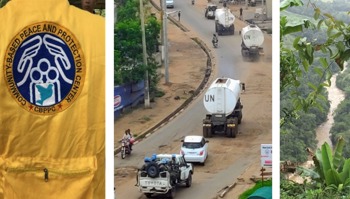
External Evaluation of EU’s Support to Conflict Prevention and Peace Building (2013-2017)
- 2018 – 2020
- de 500.000 € a 1 millón de €
- Global
This evaluation took place in a context of a recent surge in violent conflicts and a renewed momentum on Conflict Prevention and Peacebuilding (CPPB) both at the EU and global level. Its purpose was to:
- provide the relevant EU Institutions and the wider public with an overall independent assessment of the EU support to CPPB focusing on the period 2013-2017; and
- identify key lessons, instil good practices, and produce recommendations to feed into ongoing and future approaches to EU’s engagement in the field of CPPB.
In particular, the evaluation will feed into the EU implementation of the Integrated Approach to Conflict and Crises and nurture future EU support to CPPB strategies and interventions.
The scope of the evaluation included:
- all relevant actions (including spending and non-spending activities) and all countries/regions which fall under the responsibility of DG DEVCO and DG NEAR (neighbourhood region only); and
- the work/engagement of EEAS related to them.
In terms of temporal scope, the evaluation focused on the period 2013-2018, but also took the period 2011-2012 into consideration in order to assess the evolution of EU support to CPPB.
Through the course of the evaluation, the evaluation team conducted 12 case studies (focusing on countries, regions and instruments) which were subject to an in-depth analysis, including eight field visits. Two surveys – one covering EU services in Brussels, the other covering EU Delegations/Offices worldwide – were also part of the data collection and analysis process. Findings from all evaluation activities were synthesized into a final report.
The final report is available online: https://ec.europa.eu/international-partnerships/external-evaluation-eus-support-conflict-prevention-and-peacebuilding-2013-2018_en
- Socios:
- Particip (líder), ECDPM
- Palabras clave:
- Gobernanza, Seguimiento y evaluación
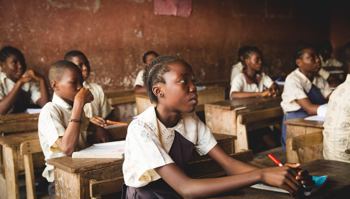
Strengthening education statisitcs in Niger: correction of inconsistencies observed, diagnosis and plan to strengthen the education management information system (EMIS)
- 2019 – 2019
- menos de 500.000 €
- Niger
The National Statistical System (SSN) in Niger is composed, according to Law No. 2004-011 of 30 March 2004 and its implementing decrees, of all public and parapublic services and organizations that produce and disseminate statistical data. Since an amendment to the law in November 2014, the INS has been institutionally anchored at the level of the Ministry in charge of the Plan. The main tasks of the INS are to collect, centralize, process and disseminate the statistical data necessary for the formulation, implementation and evaluation of the government's economic and social policies and the cooperation programmes of Niger's various development partners.
Statistics Departments existed at the level of each ministerial department. However, the organizational structure of the Nigerian national statistical system was not yet complete. The availability of human, material and financial resources within these directorates was far from satisfactory.
Sectoral statistical production remained insufficient, not only in terms of thematic coverage and regularity but also and above all in terms of quality. In addition, Niger's administrative, political, institutional, economic and even socio-cultural environment was changing rapidly, creating new needs in terms of statistical data.
In this context, it seemed necessary and urgent: (i) to verify and correct the data for the 2016-2017 school year in order to ensure the reliability and quality of the data from the last two school years and their official validation, and (ii) to carry out this complete diagnosis of the EMIS in order to put in place any palliative measures required to obtain quality data. This dual exercise contributed to the preparation of the ETP but also ensured the availability of data to allow for a possible disbursement of European budget support.
- Socios:
- Particip (líder), ADE, GOPA PACE (ex B&S Europe SA)
- Palabras clave:
- Desarrollo institucional, Educación, Ejecución de proyectos / asistencia técnica
Request for Evaluation of Grant Applications Received under the PASOC III Call for Proposals
- 2019 – 2019
- menos de 500.000 €
- Niger
Overall objective:
In this case, the aim was to contribute to the implementation of the civil society support programme by supporting the Ministry of Finance, EDF National Authorising Officer and the Delegation of the European Union in the evaluation process of grant applications received under the EuropeAID/163-741IH/ACT/NE call for proposals.
Specific objectives:
This was particularly the evaluation of short notes in the first instance and full applications in the second instance. These were validated and approved by the parties involved, mainly within the Evaluation Committee and during the ex-ante control of the Delegation of the European Union.
The assessors carried out the technical evaluation of the summary notes provided by the contracting administration of the programme (PASOC III) in accordance with the guidelines of the call for proposals.
The assessors were also be responsible for evaluating complete applications (technical and budget evaluation).
The assessors had to write the technical evaluation grids at each step.
The evaluation of each note or complete application was the subject of two readings and did thus involve at least two assessors. The Head of Mission was responsible, among other things, for arbitrations in the event of evaluations (between assessors), the consistency and quality of all evaluations, and thus equal treatment of all applications. On the basis of the assessments by the assessors and following its arbitration in the event of divergent scores, the Head of Mission drafted response letters which were sent to each applicant. These letters were made available to the evaluation committee at the debriefing session.
- Socios:
- Particip (líder), EMI (formerly: Cardno Belgium), EuroPlus
- Palabras clave:
- Sociedad civil

Public services contract for midterm and final evaluations of projects and programmes of the Belgian Technical Cooperation in the sector of governance
- 2013 – 2018
- de 500.000 € a 1 millón de €
- Africa, Asia
This 4-year framework contract has the objective to conduct all mid-term and final evaluations of projects and programmes of the Belgian Technical Cooperation (BTC-CTB) in the governance sector. Sectors targeted: Justice, security, decentralisation, local development, institutional capacity building.
The following evaluations have been carried out so far are:
- Mid-term review of the project "Appui institutionnel au MACTL pour le pilotage stratégique de la décentralisation et de la déconcentration au Mali", Mali;
- Final evaluation of the project "Appui au développement socio-économique de la Province du Nord (PADSEC)", Rwanda;
- Mid-term review of the project "PADLPC - Projet d'appui au développement local et à la participation citoyenne", Burundi;
- Final evaluation of the project "Support to capacity development in Rwanda", Rwanda;
- Mid-term review of the project "Projet d’appui institutionnel a la mise en œuvre de la politique nationale genre par le Ministere de la population, de la promotion de la femme et de la protection de l’enfant", Niger;
- Mid-term review of the project "Support to Local Government Reform and Development Programme", Palestinian Territories;
- Final evaluation of the project "Kasese District Rural Community Development Programme - Phase II", Uganda;
- Mid-term evaluation of the Common Management Support Units (CMSU) – EPSP – MINIDER - AGRI – DRC;
- Final evaluation of the institutional support to the Ministry of Planning in DRC;
- Final evaluation of the “Support to community development initiatives programme” in the District of Tshopo (Paideco-Tshopo), DRC;
- Final evaluation - Poverty reduction through institutional strengthening at provincial (Nghe An) and district (Quy Chau) levels (Vie 08 036 11) Vietnam;
- Mid-term review of the intervention “Enhancement of procurement capacity of local government authorities project”, Tanzania;
- Mid-term review of the project “Central and decentralized institutional support to the Ministry of Justice in Burundi”;
- Final review of “the support of professionalization of the National Police in Burundi”.
- End-term review of the intervention “Local Government Reform and Development Program (LGRDP)” in Palestine
- Mid-term review of the programme of studies and expertise in DRC
- Mid-term review of the Institutional support project to the regionalisation process in Mali (PAIR)
- Final reviews of the interventions “Support to the decentralization of the Koulikoro region – PADK II” and “Support to civil status – PAEC” in Mali
- Final review of the intervention "Support to the Ministry of foreign affairs, international cooperation and francophonie" in the Democratic Republic of Congo
- Yearly review of the intervention facility for front line service delivery improvement - Tirelo Bosha – in South Africa
- Mid-Term Review of the intervention “Support to the development of human resources of beneficiary organisations “SDHR” in Uganda
- MTR of the intervention Capacity Building for Planning Reform (CDPR) in Vietnam
- Mid-Term Review of the Intervention “Regeneration of Historical Centres in Local Government Units (RHC)” in Palestine
- Mid-Term Review of Rwanda Decentralization Support Programme – Enhancing the capacities of districts (RDSP-ECD)
- Final Evaluation of the Project “Enhancement of Procurement Capacity of Local Government Authorities in Tanzania”
- Final review of the intervention “Institutional support project to the Ministry of Territorial Administration and Local Government (MATDRE) for the strategic steering of decentralization and deconcentration” in Mali
- Final Review of the project "Institutional support to the process of regionalisation in Mali" (PAIR)
- Mid-term review of the support project to investments of local authorities (PAICT) in Mali
- External mid-term review of the Support Project on Expertise, Studies and Technical Assistance to the water and environment sector (PAERE) and the Project on Strengthening of Competencies of the sector water and environment (CF) in Bolivia
- Mid-term review of the project to support Burundian organizations through human resources capacity building (PAORC) in Burundi
- Mid-Term Review Of The Intervention “Facility For Capacity Building” (FCB) in Vietnam
- Final Evaluation of the Support Programme for the Implementation of Decentralised Entities in the Dosso Region, phase 2 and extension phase (PAMED II & PAMED II Extension) in Niger
- End-Term Review of the Intervention "Capacity Building for Planning Reform (CDPR)" in Vietnam
- Socios:
- Particip (líder), MDF
- Palabras clave:
- Desarrollo institucional, GCP / marco lógico, Gobernanza, Seguimiento y evaluación

Final Evaluation of the Support Programme for the Implementation of Decentralised Entities in the Dosso Region, phase 2 and extension phase (PAMED II & PAMED II Extension)
- 2018 – 2018
- menos de 500.000 €
- Niger
The evaluation focused on the "learning" and "accountability" dimensions with a focus on the former. The first required particular attention in order to draw useful lessons for other interventions or for new policies, strategies and programmes.
The review used the "Performance" evaluation grid to carry out the analyses relating to the traditional evaluation criteria which are "effectiveness", "impact" and "sustainability".
The specific evaluation questions used in this review focus on:
- The improvement of communal governance and its contribution to the sustainable improvement food security as well as the options for ensuring the sustainability of the structures put in place;
- Capacity building of local development to
- Lessons and practices learned that could be used as a basis for future interventions, particularly in sectors benefiting from the transfer of skills and resources to local authorities;
- The sustainability risks of investments made under PAMED II and how to miate the
- The conditions for success in terms of utility and sustainability of infrastructure management in public-private partnerships (PPP).
The team followed the methodology proposed in the TOR. Thus, the evaluation questions identified by the TOR guided the data collection in four communes. At least one commune was chosen in each of the four intervention departments, all representing the different levels of performance defined on the basis of the criteria established by the programme. In consultation with the UGAT team and other informants, the mission team selected the communes of Douméga (with the highest score of 91%), Fabidji (86%), Kiéché (74%) and Sokorbé (64%).
- Socios:
- Particip (líder)
- Palabras clave:
- Gobernanza, Seguimiento y evaluación

Identification and Formulation of Support to West Africa Peace, Security and Stability: Complementary action combatting other main threats
- 2016 – 2017
- menos de 500.000 €
- Africa (Western)
This assignment provided a coherent proposal to ECOWAS and EU for the strengthening of coordination and cooperation in security in West Africa and the implementation of programmes dealing with specific threats.
It gave sufficient background information and justifications to enable the ECOWAS and EU to make an informed decision on specific objectives and of the projects' implementation modalities.
The specific objective of this assignment was to prepare all the necessary elements of 4 different Action Documents to implement 4 potential projects covering respectively areas A, B, C and D.(Area A: Border Management, Area B: Enhancing Cybersecurity in ECOWAS region, Area C: Support to GIABA, Area D: Fighting against illicit trafficking).
For each area A,B,C and D, it was required to proceed to:
- an identification of issues, strategical orientations and priority intervention areas
- a formulation of the project under 11th EDF (Phase II).
- Socios:
- Particip (líder), EuroPlus
- Palabras clave:
- GCP / marco lógico