
Unsere Projekte
Entdecken Sie, wo und wie Particip weltweit wirkt.
Unsere Referenzen geben Ihnen einen Einblick in laufende und abgeschlossene Projekte in verschiedenen Ländern, Sektoren und Fachgebieten – mit Informationen zu Zielen, geografischem Schwerpunkt, Laufzeit und Auftragsvolumen.
521–530 von 986 Referenzen
Technical Assistance for EU Joint Programming strategy and aid effectiveness agenda in Madagascar
- 2020 – 2021
- unter 500.000 €
- Madagascar
To enhance the overall effectiveness of the European aid to Madagascar in support of the achievement of the Sustainable Development Goals (SDGs) through the development of EU Joint Cooperation Strategy Paper 2021-2027.
We undertook an assessment of the key lessons learnt, progress, achievements and challenges from the first phase of Joint Programming process in Madagascar (diagnosis and structuring of the framework).
- Assist the DUE and the EU MS involved in developing a Joint Programming in Madagascar to finalise the Joint analysis, the strategic response documents, the implementation of EU Division of Labor (DoL) and prepare the Joint Programming Strategy for the 2021-2027 period.
- Increase the impact of the European aid to Madagascar, through increased coordination, harmonisation and alignment among EU Member States and the European Delegation and with other development partners (DPs), leading to greater aid effectiveness and visibility of European joint support.
- Partner:
- Particip (federführend), Cardno UK
- Schlagwörter:
- Management, Projektdurchführung / technische Hilfe, Zivilgesellschaft

Mediterranean Climate Finance Strategy
- 2019 – 2021
- unter 500.000 €
- Albania, Algeria, Bosnia and Herzegovina, Egypt, Israel, Jordan, Lebanon, Mauritania, Montenegro, Morocco, Palestine, Syria, Tunisia, Türkiye
Background
In March 2017, the UfM Climate Change Expert Group (UfM CCEG) adopted a 5-years work-program, which stress the importance to strengthen climate finance in the Euro-Mediterranean region to address climate change issues. In April 2019, UfM Member States agreed to pursue the assessment of climate finance in the UfM region, with the view of providing sound basis for a renewed climate mandate of the UfM by 2020, with the new UfM Ministerial Declaration on Climate Change.
Target Groups
Target gruops of tehis technical assistance are: UfM Institutions, UfM Member States, International Financial Institutions, International Climate Change Institutions, Civil society representatives, Private sector Organisations and Institution interested in UfM regional integration.
Objectives
- The primary objective of this technical assistance is to enhance the knowledge of UfM Member States, International Financial Institutions, civil society representatives, private sector organisations and any other institution interested in the UfM regional integration, regarding the level of financial commitments made in 2018 and in 2019 to address climate change issues in the UfM region.
- The second objective is to explore the feasibility of financial mechanisms, which could be implemented in the UfM region with the aim of enhancing the mobilisation of climate finance for specific population or sectors, while building on lessons learned in some specific sectors (in particular in the water sector) or potentially in other regions, such as Caribbean or Latin America.
Expected Results
- R1 - to have a precise figure of financial commitments made to recipients in UfM developing countries in 2018 and in 2019, by public/private donors from developed/developing countries;
- R2 - to have a precise view of commitments and disbursements made by national governments, local authorities, private sector and, if possible, households addressing climate change in UfM developing countries;
- R3 - to have the methodology and process in place for monitoring, reporting and verifying climate finance commitments made in the UfM region, especially by ensuring the involvement of all relevant actors, including the scientific community, the private sector and NGOs;
- R4 - quantitative and qualitative analysis of financial mechanisms, which could be implemented in the UfM region with the aim of enhancing the mobilisation of climate finance for specific population or sectors.
- Schlagwörter:
- Umwelt
Evaluation of R4 Rural Resilience Initiative in Masvingo and Rushinga Districts in Zimbabwe (2018-2021)
- 2021 – 2021
- unter 500.000 €
- Zimbabwe
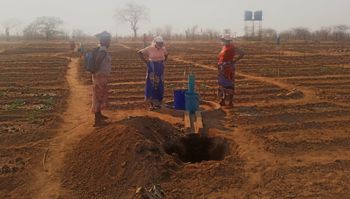
The decentralized evaluation of the R4 Rural Resilience Initiative was commissioned by WFP Zimbabwe. The R4 Initiative managed climate-related risk to enhance the food and nutrition security of farming households. Its integrated risk management strategy relied on four pillars: risk reduction (through a food for assets scheme and improved agricultural practices), risk transfer (through drought insurance), risk reserves and prudent risk taking (through village savings and loan groups, and market access for smallholder farmers).
The evaluation period covered the first phase of the R4 Initative in Zimbabwe, which ran from January 2018 to June 2021 and targeted 6,000 beneficiaries in the rural districts of Masvingo and Rushinga.
The evaluation served the double purpose of accountability and learning (with emphasis on the latter) and addressed the evaluation criteria of relevance, efficiency, effectiveness, impact, and sustainability, mainstreaming gender equality and empowerment of women throughout.
The mixed methods approach of the evaluation combined qualitative methods (document review, remote key informant interviews with national stakeholders, as well as field-based in-depth interviews with local stakeholders, focus group discussions with beneficiaries, and direct observation) and quantitative methods (a phone survey with beneficiaries, and analysis of existing M&E data).
The evaluation report is available at: https://www.wfp.org/publications/zimbabwe-r4-rural-resilience-initiative-masvingo-and-rushinga-evaluation
- Partner:
- Particip (federführend), JIMAT Consult Ltd
- Schlagwörter:
- Ernährung, Infrastruktur, Landwirtschaft, Monitoring und Evaluierung, Umwelt
Visibility & Communication for the European Union Development Cooperation in Bangladesh
- 2020 – 2021
- 500.000 € – 1 Million €
- Bangladesh
The overall objective of the project was to enhance the visibility of EU development cooperation in Bangladesh.
The specific objectives were:
- The EU is perceived as an important and longstanding partner of development cooperation in Bangladesh.
- The EU is perceived as an important strategic partner for Bangladesh (beyond development).
- EU development cooperation is seen as making a difference in people's daily life in Bangladesh in the long term, in particular with regard to the priority sectors in the Multi-annual Indicative Programme (MIP) 2014-2020, i.e. democratic governance, food & nutrition security, and education & skills development.
- EU development cooperation in Bangladesh is perceived as a good investment/win-win option for the beneficiary country and the EU.
- Partner:
- Particip (federführend)
- Schlagwörter:
- Kommunikation und Medien
Montenegro-Podgorica: IPA - Development of Vocational Education Qualifications in Line with Labour Market Need
- 2019 – 2021
- unter 500.000 €
- Western Balkans
The purpose of this project was to contribute to the modernization of the vocational education and training system of Montenegro by equipping learners for lifelong learning and employment in line with modern rapid technological development, new labour market jobs and thereby overcomes the lack of skills needed in the labour market.
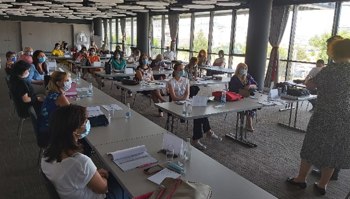
These objectives were achieved through the development of professional qualifications and training of VET teachers and in-company trainers in vocational and practical education as well as through the improvement of student-centred learning and practical teaching and learning.
The development of qualifications and programmes enabled an adaptation to current labour market and societal needs, in line with the National Qualifications Framework (NQF). The modernization of the curriculum and increase in the scope and quality of work-based learning empowers youth and young adults to take up the labour market challenges and it facilitates the transition from school to work and/or further education and lifelong learning.
- Partner:
- Particip (federführend), involas (formerly INBAS GmbH)
- Schlagwörter:
- Aus- und Fortbildung, Bildung, Projektdurchführung / technische Hilfe
Global objective: The overall objectives of the project were as follows:
- To hold the participants of past and future conferences on 'Supporting the future of Syria and the region’ accountable for the financial pledges made at the conference, to inform neighbouring countries of the international support they will receive as they implement their policy commitments, and to increase accurate, timely and comprehensive information on the international response to the Syrian crisis in order to inform relevant stakeholders gap analysis and programming (donors, UN & implementing partners, etc).
- To address the discrepancy between the funding of the different response plans and the commitments of the pledges in Lebanon and Jordan; and to facilitate the publication of conclusions and data with consistent methodology.
- To contribute to the monitoring of the key mutual policy commitments towards Lebanon and Jordan made by donors and partners countries on the occasion of the Brussels conferences.
- To allow the EU to communicate clearly on the support provided to Syria and the region.
Specific objectives: The purposes of this contract were as follows:
- Financial tracking:
- Collate information from various sources and other organisations that made financial pledges at the Brussels IV Conference, and triangulate this information with recipient organisations;
- Assess how much of these financial commitments will be committed and contracted to support: a) the UN appeals, b) each recipient country affected by the Syria crisis in the region (Syria, Lebanon, Jordan, Turkey, Iraq, and Egypt); and how much will be delivered to a) the various sectors and b) through the various implementing channels;
- Monitor disbursement of financial lending by institutions against statements made at the Conference, including terms of loans to determine if they are “concessional” under the revised OECD DAC principles agreed on 16 December 2014;
- Provide an explanation on the gap between various data sources on financial contributions related to the Syrian Crisis response in Lebanon and Jordan.
- Reporting on policy commitments:
- Report on progress made in Jordan and Lebanon on key mutual policy commitments taken in the series of the London and Brussels conferences as well as providing analytical reports on status and gaps.
- Describe in depth the findings including gaps analysis, and provide recommendations on the basis of the Steering Committee LCRP common monitoring framework for Lebanon and on the basis of the monitoring matrix elaborated for Jordan (by Agulhas) in 2019 and mentioned above.
- Partner:
- Particip (federführend), EMI (formerly: Cardno Belgium)
- Schlagwörter:
- Monitoring und Evaluierung

Support for Gender Mainstreaming in European Cooperation in Tunisia
- 2019 – 2021
- unter 500.000 €
- Tunisia
The general objective of this contract was to improve information on equality between women and men in Tunisia and its inclusion in development policies with a view to supporting the Tunisian Government and the European Union in mainstreaming gender equality issues in development programmes and projects.
This consultation was expected to provide an in-depth analysis with strategic and specific recommendations on how to use EU resources to improve gender equality and women's empowerment, as well as an analysis of the sectors and themes of intervention with a view to supporting the definition of gender-based indicators for future multiannual programming and for the annual programmes 2021 and 2022.
The specific objectives for this application were as follows:
- 1.Elaborate a gender profile of Tunisia, and on this basis, monitor and propose recommendations for gender mainstreaming in the post-2020 multiannual national programme.
- 2.Elaborate sectoral gender analyses in Tunisia that present in a concise manner and based on statistical evidence the state of gender and women's empowerment, as well as the existing gaps, both at the level of institutional response and women's acquired rights.
The analyses focused in particular on the sectors of intervention in the annual programming for 2021 and 2022.
- 3.Draw up recommendations for the identification of objectives and indicators on gender equality in programmes in the identification and formulation phase (projects and budget support) and in the implementation and monitoring phase of programmes financed by the European Union.
- 4.To report the results and support the programming and implementation of public policies, programmes and projects in favour of gender equality.
Gender analysis made possible to understand whether inequalities between women and men persist in the various sectors specified and to learn about their causes, how they interact with other inequalities, their impact on human rights and/or the benefits of development efforts and access to them, and the commitment of the Government of Tunisia and its capacity to address issues relating to equality between women and men and the empowerment of women.
The result of this analysis were a practical guide with concrete and oriented recommendations for decision-making, including operational decisions.
The information was elaborated and presented in such a way that Tunisian and European decision-makers had clear information (at macro, meso and micro levels) on the economic and social stakes of the gender issue on policies, the legal framework, the participation of actors (public and civil society) and the availability of statistics. It enabled the European Union cooperation strategy being formulated (post-2020) to take account of gender issues in the programming of the areas of intervention selected and the cooperation objectives and approaches defined.
- Schlagwörter:
- Aus- und Fortbildung, Menschenrechte
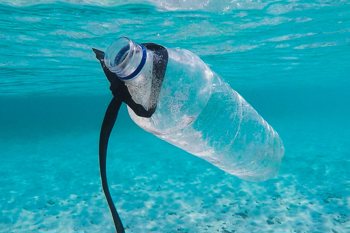
Systematic and timely evaluation of its programmes and activities is an established priority of the European Commission.
The focus of evaluations is on the assessment of achievements, the quality and the results of Actions in the context of an evolving cooperation policy with an increasing emphasis on result-oriented approaches and the contribution towards EU foreign policy objectives and the implementation of the SDGs.
From this perspective, evaluations should look for evidence of why, whether or how these results are linked to the EU intervention and seek to identify the factors driving or hindering progress.
Evaluations should provide an understanding of the cause and effect links between: inputs and activities, and outputs, outcomes and impacts. Evaluations should serve accountability, decision making, learning and management purposes.
The main objectives of this evaluation are to provide the relevant services of the European Union and the interested stakeholders with:
- an overall independent assessment of the past performance of the Action ‘Reducing plastic wast and marine litter in East and South East Asia – Supporting a transition to a circular economy in the region’ (PI/2019/405-400), paying particular attention to its intermediate results measured against its expected objectives; and the reasons underpinning such results;
- key lessons learned, conclusions and related recommendations in order to improve current and future Actions.
- Schlagwörter:
- Monitoring und Evaluierung, Umwelt
Technical Assistance for LAIF Programme
- 2018 – 2021
- 500.000 € – 1 Million €
- Latin America & Caribbean
LAIF is enabling the Commission to engage in more complex environments, such as higher income countries, sectors (infrastructure,) and projects (size, complexity) which would have been out of reach through the classic cooperation. It has great potential also to be a very effective instrument of policy dialogue when Delegations are able to use it as a strategic complement to their bilateral envelope and in countries without a bilateral envelope. More than EUR8bn in investment have been mobilised through 35 projects.
In order to continue aligning LAIF with the policies of the external engagement of the European Union and promote the objectives of the EIP, additional efforts have to be done to increase LAIF offer to the private sector, in particular for risk sectors such as RDT, start up, renewable energy and to ensure that LAIF projects effectively contribute to job creation and inclusive growth.
The overall objective of the assignment was to improve the quality the projects financed by LAIF, the overall visibility of the Latin American Investment Facility Programme (LAIF) in particular in the region which in turn should contribute to poverty reduction.
The purpose of this contract was as follows:
- to provide technical expertise for monitoring existing LAIF projects, facilitating the preparation of project proposals advising on project pipeline;
- to improve the understanding of the Facility functioning, the knowledge of the project financed by relevant actors namely in the region, the availability and visibility of the project outputs and results
- to support G2 in the coordination and promotion of technical meetings and discussion among the Programme's stakeholders.
- Partner:
- TAS Europrojects (federführend), Particip, Quality Institute
Identification and Formulation of a National Support Project on Green Economic Recovery through an Integrated Circular Economy Approach for the Philippines
- 2021 – 2021
- unter 500.000 €
- Philippines
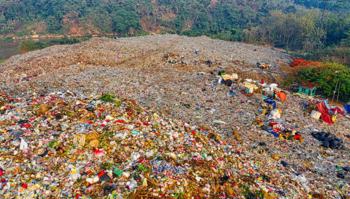
General Objective: Ensure that application of Circular Economy principles and practices in the Philippines are strengthened and embedded as part of the national strategy for post-Covid green economic recovery.
Specific Objective: Identification and formulation of a national support project steered by private sector and supervised by Government implementing Circular Economy approaches for improved plastic waste management with jobs creation, environment safeguard and climate change response co-benefits.
Tasks:
- In alignment with the provisions of the EU Circular Economy Action Plan and EU Plastic Strategy identify and formulate an industry-led and Government-steered national project for the Philippines addressing niche areas of comparative advantage for the EU to lead and be transformative in the area of plastic waste management and marine litter. The project focussed on promoting the enhancement of sustainability in the plastics supply chain and the reduction of its environmental and carbon footprint, the development of appropriate substitutions to single use plastics, job creation, and the advancement of Extended Producer Responsibility.
- The project proposed methods, investments and approaches to contribute to an improved waste management according to national climate change mitigation and adaptation targets underscored in the Philippine Nationally Determined Contribution (NDC). It took a synergetic approach to green recovery through policy support and improved waste management infrastructures, resources, enabling strategies, plans and procedures. This was linked to the broader mitigation and adaptation agenda of the Government, including through targeted policy support and capacity building.
- The project incorporated an active and comprehensive role of Civil Society, representing all segments of society in appropriate areas of engagement (e.g. awareness raising and educational initiatives, recycling, media campaigns etc.) In this context the needs of a comprehensive range of vulnerable groups, including women, children and youth, people with disabilities, indigenous people etc. were taken into consideration.
- The project secured the involvement of the Philippine Department of Environment and Natural Resources (DENR) as well as other key Government departments and facilitated a dialogue with selected EU regional Delegations.
- The availability of EU funds were modest with respect to the scale required for the intervention to be truly transformative. For this reason, a strategic approach leveraging EU funds to mobilise larger blending financing from selected E-IFIs was sought.
- Beyond co-funding of specific activities the project took stock and aligned with planned activities under the EU Team Europe Initiative (EU TEI) for the Philippines and the EU TEI for ASEAN. In addition, synergy with relevant initiatives spearheaded by EU MS and other strategic development partners in the Philippines (e.g. World Bank, Asian Development Bank and the UNDP) were included in a close dialogue.
- Partner:
- Particip (federführend), CAPA EEIG (managed by Particip), EMI (formerly: Cardno Belgium), Expertise Advisors (formerly: ETI Consulting)
- Schlagwörter:
- Industrie und Privatsektorentwicklung, Umwelt