Palestine
25 Referenzen
Corporate Emergency Evaluation of WFP’s Response in the State of Palestine
- 2026 – 2027
- unter 500.000 €
- MENA
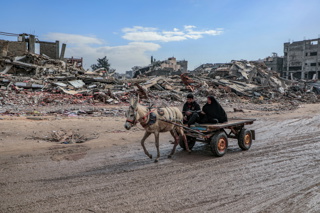
This independant Corporate Emergency Evaluation of WFP’s Response in the State of Palestine assesses WFP's emergency response strategy and interventions since the corporate scale up activation in 2023 until 2026.
The evaluation serves the double purpose of accountability (performance and result assessment) and learning (why certain results occurred or not, lessons and evidence for decision-making). It is envisioned that the evaluation will inform the design of the future engagement in the State of Palestine, which is scheduled for Executive Board consideration in June 2027.
Key sectors and activities include:
- Emergency preparedness and response, including cash-based transfers
- Nutrition and school feeding
- Social protection
- Livelihoods activities
- Institutional capacity strengthening
- Logistics, supply chains and on-demand services
Cross-cutting themes included: Gender equality and empowerment of women (GEEW), inclusion, accountability to affected populations (AAP), protection, conflict-sensitivity, and humanitarian principles.
The evaluation employs a mixed-method approach that triangulates qualitative and quantitative data from a variety of sources. For this purpose, the evaluation team is conducting interviews and focus group discussions with different stakeholders including WFP staff at HQ, regional and country level, WFP cooperating partners, donors, UN agencies, government entities and final beneficiaries.
- Schlagwörter:
- Ernährung, Humanitäre Hilfe, Monitoring und Evaluierung
Evaluation of Disability Inclusion in EU-funded humanitarian aid operations (2020-2025)
- 2026 – 2026
- unter 500.000 €
- Global
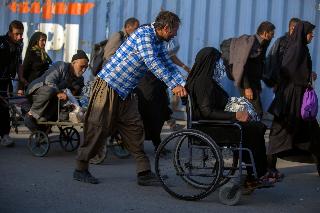
The Evaluation of Disability Inclusion in EU-funded humanitarian aid operations (2020–2025) assesses how disability inclusion has been integrated into DG ECHO-funded humanitarian interventions five years after the publication of its 2019 Operational Guidance on the inclusion of persons with disabilities. The global objective of this evaluation is twofold:
- To provide the relevant EU services and stakeholders with an independent assessment of the extent to which DG ECHO-funded humanitarian interventions have mainstreamed disability inclusion across sectors and contexts, while also supporting disability-targeted actions and relevant policy projects;
- To identify key lessons learned, conclusions, and recommendations to inform decision-makers on how to strengthen disability inclusion in current and future EU-funded humanitarian aid operations, including through improved programming, data use, participation, and accessibility.
The specific objectives are:
- to assess the relevance of DG ECHO’s operational guidance in supporting staff and partners to mainstream disability inclusion in EU-funded humanitarian aid interventions;
- to assess the level, quality, and effectiveness of disability inclusion across all sectors, covering both mainstreaming and disability-targeted actions;
- to assess ECHO-funded policy projects on disability inclusion, including their coherence with EU policy, relevance to global priorities and needs, added value for partners and the broader humanitarian system, and achieved results;
- to assess the capacity of DG ECHO staff and partners to operationalise disability inclusion in programming, including through available requirements, tools, and practices;
- to identify barriers, enablers, gaps, lessons learned, and good practices in disability inclusion, and to develop actionable strategic and operational recommendations for future DG ECHO strategies, policies, programming priorities, guidance, and tools.
- Schlagwörter:
- Monitoring und Evaluierung
Results Oriented Monitoring (ROM) Systems for External aid Interventions Financed by the European Union — Neighbourhood Region
- 2021 – 2026
- über 10 Millionen €
- ENI
Results Oriented Monitoring (ROM) reviews aim to assist the European Commission’s services and EU Delegations in monitoring of and reporting on EU financed development and cooperation projects and programmes in third countries through independent reviews of the progress of their implementation and the achievement of project results.
ROM services to be provided through this contract are clustered in three components:
** Component 1: ROM Reviews. ROM contractors will assess the performance of EU-funded interventionson the basis of the following OECD DAC evaluation criteria: relevance, efficiency, effectiveness, and sustainability.
ROM reviews will cover:
-A sample of EU funded interventions during the inception phase of implementation. The ROM review will support the OM in confirming or updating intervention logic and logframe matrix, in reviewing the monitoring system of the IP, in assessing risks and mitigation measures and fine tune the calendar of activities with a view to improve the performance of the intervention across the OECD DAC criteria.
- ROM reviews will assist the OM in adressing the main implementation problems.
-Other interventions for which Commission services request a ROM review on demand (interventions which could not be visited by EU OMs or for which there is a lack of sector expertise in the EU Delegation/operational unit in HQ).
- Blending operations, focused on asessing the value added of the EU contribution and on the performance of blending interventions in terms of socio-economic development.
** Component 2: Quality assurance and support at design stage for a sample of interventions. Provide technical support to EC services in the formulation of intervention logics and related logical frameworks matrices (logframes) and monitoring and reporting arrangements for a sample of interventions.
**Component 3: Results report (at corporate and intervention level). The Contractor will provide services to encode and quality control results data for a set of interventions subject to results reporting. TOM contractor will ensure quality control of data included in the intervention's logframes. Such quality controls will include, amongs others: verifying that the logframe is correctly encoded and up-to-date , enssuring that the latest values related to logframe indicators are available, and supporting the aggregation of intervention-level results into the EU Results Framework or other frameworks.
- Partner:
- Particip (federführend), Dev4U, Integration
- Schlagwörter:
- Monitoring und Evaluierung

Evaluation of the project: Youth Economic Empowerment in Palestine (YEP)
- 2025 – 2025
- unter 500.000 €
- Palestine
The purpose of this Final Evaluation was to assess the relevance, coherence, efficiency, effectiveness, sustainability, and impact of YEP implemented by Enabel under the EU-funded Palestinian Youth Empowerment Programme. It aimed to support accountability for results, inform institutional learning, and generate strategic recommendations to guide future youth employment programming in Palestine and comparable fragile contexts.
The evaluation examined project design, implementation, and results across the three interlinked components of YEP:
• the First Employment Facility (FEF);
• demand-driven TVET and work-based learning interventions; and
• entrepreneurship support for vulnerable youth.
It assessed the performance of the project as a whole and the contribution of each component to the project’s overall objectives.
The scope of the evaluation included all YEP activities implemented in the West Bank and those undertaken in Gaza prior to the suspension of operations in October 2023, through secondary sources. Primary data collection was conducted exclusively in the West Bank, while results from Gaza were reviewed based on available documentation and monitoring data. A survey targeting the beneficiaires of the First Employment Facility (R1) and the Work-Based Learning (WBL) was also conducted to collect and integrate their perspective into the final report.
- Schlagwörter:
- Bildung, Industrie und Privatsektorentwicklung, Monitoring und Evaluierung

Meta-analysis of Country Programmes 2021–2024
- 2023 – 2024
- unter 500.000 €
- Global
The purpose of the meta-analysis of the 2021-2024 Country Programmes in Finland's 10 partner countries was to support the achievement of Finland’s development policy objectives in the partner countries, and to provide information for the further development of the Country Programmes and their implementation at the strategic level. The meta-analysis and its recommendations supported the regional departments in the programming of the next generation of Country Programmes, and in their subsequent management.
The meta-analysis comprised a desk review of available information and stakeholder feedback (phase 1) as well as self-assessment workshops with each country team, to assess contributions to results and to discuss further scenarios.
The specific objectives of the analysis were:
1. To synthesise key developments in the 10 partner countries with relevance for the respective Country Programmes
2. To assess the degree and usefulness of adaptive management of the Country Programmes during the current programme cycle
3. To assess the degree to which Country Programmes have contributed to intended (or unintended) Country Programme results and to analyse the factors explaining these contributions (or the absence of contributions)
4. To assess the sustainability of Country Programme results
5. To assess the value-add of Country Programmes compared to planning and implementing separate projects
6. To support the preparation of the next cycle of Country Programmes
- Partner:
- Particip (federführend), NIRAS
- Schlagwörter:
- Monitoring und Evaluierung

Evaluation of EU support to youth in the Enlargement and Neighbourhood regions (2014-2021)
- 2022 – 2024
- unter 500.000 €
- ENI East, ENI South, IPA
The main objectives of this assignment are to: i) provide an independent and evidence-based assessment of the EU’s past and current external action support in the policy area of Youth, and ii) identify lessons learnt and recommendations to inform strategic policy orientation on supporting youth, define synergy effects with the EU's political and reform objectives, and enhance the planning, design, implementation and monitoring of new interventions launched under IPA III and NDICI-GE.
The evaluation aims to assess the performance of EU assistance (spending and non-spending actions) in Enlargement and Neighbourhood regions in the following sectors:
- i)Youth engagement (including participation in policy making and youth work);
- ii)Youth economic integration (including youth employment and employability, entrepreneurship, digital skills formal and non-formal learning);
- iii)Youth social inclusion (including youth mobility, culture, school retention, sexual, reproductive and mental health);
- iv)Peace and security (regional cooperation and reconciliation).
The legal and temporal scope of the evaluation covers:
- IPA II and III, ENI, NDICI-GE, EIDHR, Erasmus+, Trust funds and the Facility for Refugees in Turkey;
- funding related to the last programming cycle (2014-2020), as well programming under the current programming cycle until 2022.
- Partner:
- Particip (federführend), ECDPM
- Schlagwörter:
- Bildung, Industrie und Privatsektorentwicklung, Monitoring und Evaluierung, Regierungsführung, Zivilgesellschaft

End Term Evaluation of the Project "Skilled Young Palestine - Improving Resilience and Job Creation for Youth"
- 2024 – 2024
- unter 500.000 €
- Palestine
End-Term Evaluation of the Enabel-funded 'Skilled Young Palestine - Improving Resilience and Employment Opportunities for Youth' (SYP) project which aimed to strengthen the resilience of Palestinian youth in vulnerable areas by improving their employability and entrepreneurship skills (2019-2024, EUR 7 million).
The evaluation guided future strategic and operational decisions with evidence-based recommendations. Its findings, conclusions and recommendations were drawn from a comprehensive desk analysis and from key informant interviews and focus group discussions with implementing partners and beneficiaries across the West Bank and East Jerusalem.
- Schlagwörter:
- Bildung, Industrie und Privatsektorentwicklung, Monitoring und Evaluierung

The global objective is to enhance the capacities of civil society organisations involved in the EUPI to contribute to a sustainable resolution of the Israeli-Palestinian conflict.
The specific objectives are:
- Increasing the capacity of EUPI beneficiary organizations to monitor, evaluate, and adjust activities and outputs in service of results.
- Leveraging the EUPI, as a platform, to identify opportunities for coordination and cooperation between beneficiary organizations
- Increasing the capacity of EUPI beneficiaries to advocate to their respective publics and decision makers.
- Partner:
- Particip (federführend), SICI Dominus, TANA Copenhagen
- Schlagwörter:
- Aus- und Fortbildung, Monitoring und Evaluierung, Zivilgesellschaft

Mid-term evaluation of the implementation of the EU Gender Action Plan III (2021-2025)
- 2022 – 2023
- unter 500.000 €
- Global
The main objectives of this assignment are to: i) provide an independent evidence-based assessment of the contribution of EU external action support in the policy area of Gender Equality and Women’s Empowerment (GEWE), including achieved results in line with the objectives of the GAP III, the EU Gender Equality Strategy 2020-2025 and other relevant overall policy frameworks for gender equality such as the Agenda 2030, CEDAW, the Beijing Platform for Action, and ii) based on the above, identify lessons learnt and recommendations to inform the EU programming process in order to improve the implementation of future EU external action.
In particular, this evaluation aims to:
- measure the level of effectiveness of mainstreaming GEWE into the 2021-2027 bilateral, multi-country/regional, and thematic programming (including MIPs and, for the Enlargement Region, Strategic Responses);
- assess the added value of GAP III requirements for the EU and EU Member States (EU MS) to develop GAP III Country Level Implementation Plans (CLIPs);
- assess the progress in the implementation of the EU Action Plan on WPS including in the EU's Common Foreign and Security Policy (CFSP)/ Common Security and Defence Policy (CSDP) context;
- assess results achieved on Women’s Economic Empowerment (WEE), which is part of GAP III’s third pillar on key thematic areas of engagement;
- identify lessons learnt and best good practices that can help improve the effective implementation of GAP III at global, regional and country level;
- provide recommendations to ensure a coherent EU approach on supporting WEE, as well as the effectiveness of the EU actions.
- Schlagwörter:
- Menschenrechte, Monitoring und Evaluierung, Zivilgesellschaft
Evaluation of the European Union’s humanitarian interventions in disaster preparedness (2015-2020)
- 2021 – 2022
- unter 500.000 €
- Global
The main objectives of the evaluation are to provide: i) an independent, retrospective assessment of the performance and results of the EU's contributions to disaster preparedness within its humanitarian action; and ii) strategic recommendations to support DG ECHO future actions in this field. The evaluation will generate lessons and insights to inform how DG ECHO and its partners continue to deliver effective and life-saving preparedness activities worldwide. The evaluation covers all disaster preparedness activities, both targeted preparedness and mainstreaming. Its geographical scope covers all countries in which DG ECHO carries out humanitarian interventions. In terms of temporal scope, the evaluation covers the six years from 2015-2020.
Consistent with the EC’s Better Regulation Guidelines, the evaluation will serve a dual purpose of accountability and learning:
- Accountability: the evaluation will assess the results of EU interventions against its aims and expectations, coherence with humanitarian principles, relevance of DG ECHO interventions in targeting the most vulnerable beneficiaries, addressing gaps and contribution to DG ECHO overall mission
- Learning: the evaluation will support DG ECHO internal learning by identifying best practices and areas for improvement, but also aims at sharing learning and knowledge within DG ECHO partners and the wider humanitarian and development sector.
Report available here: https://op.europa.eu/en/publication-detail/-/publication/bf6a3cc9-751f-11ed-9887-01aa75ed71a1/language-en
- Partner:
- Particip (federführend), ICF Consulting
- Schlagwörter:
- Humanitäre Hilfe, Monitoring und Evaluierung

Mediterranean Climate Finance Strategy
- 2019 – 2021
- unter 500.000 €
- Albania, Algeria, Bosnia & Herzegovina, Egypt, Israel, Jordan, Lebanon, Mauritania, Montenegro, Morocco, Palestine, Syria, Tunisia, Türkiye
Background
In March 2017, the UfM Climate Change Expert Group (UfM CCEG) adopted a 5-years work-program, which stress the importance to strengthen climate finance in the Euro-Mediterranean region to address climate change issues. In April 2019, UfM Member States agreed to pursue the assessment of climate finance in the UfM region, with the view of providing sound basis for a renewed climate mandate of the UfM by 2020, with the new UfM Ministerial Declaration on Climate Change.
Target Groups
Target gruops of tehis technical assistance are: UfM Institutions, UfM Member States, International Financial Institutions, International Climate Change Institutions, Civil society representatives, Private sector Organisations and Institution interested in UfM regional integration.
Objectives
- The primary objective of this technical assistance is to enhance the knowledge of UfM Member States, International Financial Institutions, civil society representatives, private sector organisations and any other institution interested in the UfM regional integration, regarding the level of financial commitments made in 2018 and in 2019 to address climate change issues in the UfM region.
- The second objective is to explore the feasibility of financial mechanisms, which could be implemented in the UfM region with the aim of enhancing the mobilisation of climate finance for specific population or sectors, while building on lessons learned in some specific sectors (in particular in the water sector) or potentially in other regions, such as Caribbean or Latin America.
Expected Results
- R1 - to have a precise figure of financial commitments made to recipients in UfM developing countries in 2018 and in 2019, by public/private donors from developed/developing countries;
- R2 - to have a precise view of commitments and disbursements made by national governments, local authorities, private sector and, if possible, households addressing climate change in UfM developing countries;
- R3 - to have the methodology and process in place for monitoring, reporting and verifying climate finance commitments made in the UfM region, especially by ensuring the involvement of all relevant actors, including the scientific community, the private sector and NGOs;
- R4 - quantitative and qualitative analysis of financial mechanisms, which could be implemented in the UfM region with the aim of enhancing the mobilisation of climate finance for specific population or sectors.
- Schlagwörter:
- Umwelt
Results Oriented Monitoring (ROM) system for external aid interventions financed by the European Union - Lot 1 – Neighbourhood region
- 2019 – 2021
- 5 – 10 Millionen €
- ENI
Results Oriented Monitoring (ROM) reviews aim to assist the European Commission’s services and EU Delegations in monitoring of and reporting on EU financed development and cooperation projects and programmes in third countries through independent reviews of the progress of their implementation and the achievement of project results.
ROM services provided through this contract were clustered in three components:
** Component 1: ROM Reviews. ROM contractors assessed the performance of EU-funded interventions on the basis of the following OECD DAC evaluation criteria: relevance, efficiency, effectiveness, and sustainability.
ROM reviews covered:
-A sample of EU funded interventions during the inception phase of implementation. The ROM review supported the OM in confirming or updating intervention logic and logframe matrix, in reviewing the monitoring system of the IP, in assessing risks and mitigation measures and fine tune the calendar of activities with a view to improve the performance of the intervention across the OECD DAC criteria.
- ROM reviews assisted the OM in adressing the main implementation problems.
-Other interventions for which Commission services requested a ROM review on demand (interventions which could not be visited by EU OMs or for which there was a lack of sector expertise in the EU Delegation/operational unit in HQ).
- Blending operations, focused on asessing the value added of the EU contribution and on the performance of blending interventions in terms of socio-economic development.
** Component 2: Quality assurance and support at design stage for a sample of interventions.The Contractor Provided technical support to EC services in the formulation of intervention logics and related logical frameworks matrices (logframes) and monitoring and reporting arrangements for a sample of interventions.
**Component 3: Results report (at corporate and intervention level). The Contractor provided services to encode and quality control results data for a set of interventions subject to results reporting. TOM contractor ensured quality control of data included in the intervention's logframes. Such quality controls included, amongs others: verifying that the logframe is correctly encoded and up-to-date , enssuring that the latest values related to logframe indicators were available, and supporting the aggregation of intervention-level results into the EU Results Framework or other frameworks.
- Partner:
- Particip (federführend), Dev4U, GOPA, Integration
Evaluation of Finland's Country Strategy Modality in Fragile Situations
- 2019 – 2020
- 500.000 € – 1 Million €
- Afghanistan, Myanmar, Palestine, Somalia, Syria
The evaluation assessed the applicability and feasibility of the Country Strategy instrument in fragile contexts, given their specific challenges and requirements. It will draw evidence from the experience of Country Strategies in five contexts, namely Afghanistan, Myanmar, the Occupied Palestinian Territory, Somalia and Syria/Iraq, to draw wider findings and conclusions. It will cover the period 2012-2020, with the emphasis on more recent activity (2016 onwards) and its main body of work will be completed during the period March 2019-April 2020.
The evaluation’s specific objectives are as follows:
- To assess the coherence between the five country strategies and MFA internal strategies and multilateral influencing plans, as well as with the Finnish Development Policy Programme 2016;
- To assess the relevance of Finland’s co-operation in fragile situations, as supported by Country Strategies, to the needs of beneficiaries and to the complexities of the context, including adaptation over time (e.g. the ‘triple nexus’);To assess role of Country Strategies in supporting the appropriateness and feasibility of Finland’s policy dialogue in fragile contexts;
- To assess the appropriateness of multi-bi cooperation as the main channel for delivery in fragile contexts;
- To assess the extent to which Finnish development priorities, as articulated in Country Strategies, are prioritised within planning and implementation of multi-bi co-operation, including in ensuring that crosscutting objectives (the rights of the most vulnerable, gender equality and climate change preparedness and mitigation) are integrated as appropriate/feasible;
- To assess the extent to which Country Strategies have supported co-operation to be conflict sensitive and to adhere to international commitments relevant to fragile situations, such as the International Humanitarian Principles, Do No Harm and Accountability to Affected Populations;
- To assess the role of Country Strategies in supporting results achieved by Finnish co-operation, as far as they can be determined;
- To assess the role of Country Strategies in supporting Finland’s approach to partnership (including relationship-building, predictability and the adoption of a principled approach) in fragile contexts, particularly as perceived by external partners.
The report and other material are available at: https://um.fi/development-cooperation-evaluation-reports-comprehensive-evaluations/-/asset_publisher/nBPgGHSLrA13/content/evaluointiraportti-ulkoministeri-c3-b6n-maaohjelmien-soveltuvuus-hauraissa-maissa-ja-konfliktiymp-c3-a4rist-c3-b6iss-c3-a4-teht-c3-a4v-c3-a4-c3-a4n-ke/384998
- Schlagwörter:
- Monitoring und Evaluierung

Design of PEGASE visibility strategy and communication plan 2019-2021
- 2018 – 2019
- unter 500.000 €
- Palestine
The main goal of this contract was to raise awareness about the EU and Member States long-lasting support to the Palestinian Authority's budget through the PEGASE programmes and its contribution to the state building process and inclusive social development.
In order to achieve this goal, the specific objectives of this particular mission were as follows:
- The development of a comprehensive visibility strategy for PEGASE 2019-2021 and related communication plan
- The preparation of Draft Terms of Reference for the tendering process for the implementation of the PEGASE 2019-2021 visibility strategy and related communication plan
- Schlagwörter:
- Kommunikation und Medien
Results Oriented Monitoring (ROM) reviews aim to assist the European Commission’s services and EU Delegations in monitoring of and reporting on EU financed development and cooperation projects and programmes in third countries through independent reviews of the progress of their implementation and the achievement of project results.
The ROM reviews and support missions to be carried out are the following:
a) +++ROM reviews of projects signalled as having implementation problems and where EC services have identified a need for an outside expert review to assist in addressing the problems, identifying causes and options for solution and making recommendations.
b) +++ ROM reviews of other projects for which such ROM reviews may have a particular usefulness, in particular for projects which could not be included in the EUDs’ planning of field visits or for which the necessary sector expertise at EUD level may not be sufficiently available at a given point of time or for innovative projects.
c) ROM reviews of BS programmes: in countries where a BS programme is signalled as having implementation problems, a ROM review may be organized focusing on the programme in question for the sector specific aspects but also covering the Public Financial Management (PFM) and macroeconomics aspects of all BS programmes financed by the EU in the country .
d) ROM support to end of project reporting on results (outputs and direct outcomes), including for BS programmes. These ROM support missions are to assist EC services and EUD in strengthening their results reporting capacities in: assisting with the recording actual results achieved by projects and programmes that have come to an end in the specified calendar year, solving technical difficulties that may occur linked to results reporting, and identifying the systemic needs and modalities for improvement which may be needed in these areas. The ROM support to end of project results reporting missions are to focus on projects of EUR 750.000 or more.
- Partner:
- Particip (federführend), GOPA, Integration
- Schlagwörter:
- Monitoring und Evaluierung

Mid-term evaluation of the project ENPI/2012/23-779 - Sustainable management of natural resources in Gaza
- 2017 – 2018
- unter 500.000 €
- Palestine
The overall objective defined under the FA was to improve health and environmental conditions in the Gaza Strip.
The specific objectives were: improve water supply quality and quantity in Southern Gaza and improve solid waste management in the whole Gaza Strip.
- Partner:
- Particip (federführend), GEOtest CZ
- Schlagwörter:
- Umwelt

Public services contract for midterm and final evaluations of projects and programmes of the Belgian Technical Cooperation in the sector of governance
- 2013 – 2018
- 500.000 € – 1 Million €
- Africa, Asia
This 4-year framework contract has the objective to conduct all mid-term and final evaluations of projects and programmes of the Belgian Technical Cooperation (BTC-CTB) in the governance sector. Sectors targeted: Justice, security, decentralisation, local development, institutional capacity building.
The following evaluations have been carried out so far are:
- Mid-term review of the project "Appui institutionnel au MACTL pour le pilotage stratégique de la décentralisation et de la déconcentration au Mali", Mali;
- Final evaluation of the project "Appui au développement socio-économique de la Province du Nord (PADSEC)", Rwanda;
- Mid-term review of the project "PADLPC - Projet d'appui au développement local et à la participation citoyenne", Burundi;
- Final evaluation of the project "Support to capacity development in Rwanda", Rwanda;
- Mid-term review of the project "Projet d’appui institutionnel a la mise en œuvre de la politique nationale genre par le Ministere de la population, de la promotion de la femme et de la protection de l’enfant", Niger;
- Mid-term review of the project "Support to Local Government Reform and Development Programme", Palestinian Territories;
- Final evaluation of the project "Kasese District Rural Community Development Programme - Phase II", Uganda;
- Mid-term evaluation of the Common Management Support Units (CMSU) – EPSP – MINIDER - AGRI – DRC;
- Final evaluation of the institutional support to the Ministry of Planning in DRC;
- Final evaluation of the “Support to community development initiatives programme” in the District of Tshopo (Paideco-Tshopo), DRC;
- Final evaluation - Poverty reduction through institutional strengthening at provincial (Nghe An) and district (Quy Chau) levels (Vie 08 036 11) Vietnam;
- Mid-term review of the intervention “Enhancement of procurement capacity of local government authorities project”, Tanzania;
- Mid-term review of the project “Central and decentralized institutional support to the Ministry of Justice in Burundi”;
- Final review of “the support of professionalization of the National Police in Burundi”.
- End-term review of the intervention “Local Government Reform and Development Program (LGRDP)” in Palestine
- Mid-term review of the programme of studies and expertise in DRC
- Mid-term review of the Institutional support project to the regionalisation process in Mali (PAIR)
- Final reviews of the interventions “Support to the decentralization of the Koulikoro region – PADK II” and “Support to civil status – PAEC” in Mali
- Final review of the intervention "Support to the Ministry of foreign affairs, international cooperation and francophonie" in the Democratic Republic of Congo
- Yearly review of the intervention facility for front line service delivery improvement - Tirelo Bosha – in South Africa
- Mid-Term Review of the intervention “Support to the development of human resources of beneficiary organisations “SDHR” in Uganda
- MTR of the intervention Capacity Building for Planning Reform (CDPR) in Vietnam
- Mid-Term Review of the Intervention “Regeneration of Historical Centres in Local Government Units (RHC)” in Palestine
- Mid-Term Review of Rwanda Decentralization Support Programme – Enhancing the capacities of districts (RDSP-ECD)
- Final Evaluation of the Project “Enhancement of Procurement Capacity of Local Government Authorities in Tanzania”
- Final review of the intervention “Institutional support project to the Ministry of Territorial Administration and Local Government (MATDRE) for the strategic steering of decentralization and deconcentration” in Mali
- Final Review of the project "Institutional support to the process of regionalisation in Mali" (PAIR)
- Mid-term review of the support project to investments of local authorities (PAICT) in Mali
- External mid-term review of the Support Project on Expertise, Studies and Technical Assistance to the water and environment sector (PAERE) and the Project on Strengthening of Competencies of the sector water and environment (CF) in Bolivia
- Mid-term review of the project to support Burundian organizations through human resources capacity building (PAORC) in Burundi
- Mid-Term Review Of The Intervention “Facility For Capacity Building” (FCB) in Vietnam
- Final Evaluation of the Support Programme for the Implementation of Decentralised Entities in the Dosso Region, phase 2 and extension phase (PAMED II & PAMED II Extension) in Niger
- End-Term Review of the Intervention "Capacity Building for Planning Reform (CDPR)" in Vietnam
- Partner:
- Particip (federführend), MDF
- Schlagwörter:
- Institutionelle Entwicklung, Monitoring und Evaluierung, PCM / Logframe, Regierungsführung

The global objective of the assignment was to assess the EU support at regional level, bilateral level and through the blending mechanism (the NIF ) to the partner countries of the Neighbourhood South in the fields of environment (H2020 initiative, Sustainable Consumption and Production, Integrated Water Management, biodiversity and Marine Protected Areas…) over the period 2010-2017, and to propose recommendations for further EU support for the forthcoming programming period 2018-2023.
It also considered how the political relationships between the EU and its partner countries as well as relations between partner countries affect both the implementation of the EU support and the development of harmonised environment sector policies in the Mediterranean region.
- Partner:
- Particip (federführend), DAI Global UK, ETI
- Schlagwörter:
- Umwelt
The global objective was to recruit assessors to assist the Contracting Authority in the evaluation and selection of the best proposals under "EU Peacebuilding Initiative" (Ref: EuropeAid/154474/DD/ACT/Multi) and to achieve high quality, complete and coherent selection process of projects in line with the criteria set in the guidelines for grant applicants.
The specific objective was to provide technical support to the services of the Contracting Authority in the technical and financial assessment of the proposals received in accordance with guidelines provided by the Contracting Authority which were based on the published evaluation grids. These assessments will be used by the Contracting Authority in process of selecting the best proposals.
- Schlagwörter:
- Zivilgesellschaft

Evaluation of EU support to social protection in external action 2007-2013
- 2016 – 2018
- unter 500.000 €
- Global
The objectives of the evaluation were to:
- support the decision-making, both at EU strategic (planning) level, and at the level of the design of the action programmes /interventions;
- feed into the reflection on the revision of future development policies in view of the recent adoption of the 2030 Sustainable Development Agenda;
- demonstrate whether already on-going/planned IPA (I) II, ENPI/ENI, DCI and EDF action programmes/interventions in the area of social protection have taken on board the latest lessons learnt from the previous programming period;
- provide recommendations on the best way to approach and improve its support to the development of social protection systems, in partner countries both in terms of the use of policy dialogue and financial assistance;
- contribute to the preparation and adjustment of action programmes, namely for IPA II, ENI, DCI and EDF assistance to the extent possible;
- feed in the Mid-term Review of financial instruments;
- feed in Mid-term Reviews of country/region multi-annual indicative programmes.
The evaluation used the five standard OECD/DAC evaluation criteria, namely relevance, effectiveness, efficiency, impact and sustainability. In addition, the evaluation also looked at the EU added value and the 3Cs.
The evaluation focused on EU support (policy dialogue and financial assistance) provided for the development of social protection systems in partner countries, more specifically on the social insurance and social assistance measures to address the following risks and needs: unemployment, parental responsibilities, sickness and healthcare, work accidents/employment injuries disability, loss of a spouse or parent, old age, housing and social exclusion.
The evaluation covered:
- IPA I beneficiary countries;
- ENPI partner countries;
- Countries covered by DCI and EDF.
The evaluation was conducted in four phases
- An Inception Phase, focusing on the design and the methodology of the evaluation including the reconstruction of the intervention logic and the compilation of an inventory;
- A Desk Phase, focusing on gathering and analysing existing data and information (through literature/document reviews and interviews/focus groups/surveys);
- A Field Phase, including preparation of field missions, visits to the case study countries (Bosnia and Herzegovina, El Salvador, Ethiopia, Turkey, Kyrgyzstan, Macedonia*, Malawi, Moldova, Montenegro, Morocco, Palestine*) and drafting of country reports;
- A Synthesis Phase, producing a final report and dissemination of results to concerned stakeholders.
- Partner:
- AETS (federführend), Particip
- Schlagwörter:
- Ernährung, Gesundheit, Monitoring und Evaluierung, Zivilgesellschaft

Evaluation of the capacity building initiatives in support of Civil Society in the Neighbourhood South (2012 – 2016)
- 2016 – 2017
- unter 500.000 €
- ENI South
The main objective of the evaluation was to analyse and evaluate the capacity building support provided to civil society by both regional and bilateral programmes during the period 2012-2016. This evaluation has focused on the efforts funded under ENPI and ENI.
The evaluation was also supposed to provide a series of recommendations to support innovative ways for contributing to building capacities of civil society organizations at a regional level in the future in complementarity with the political objectives as set out in the revised ENP and in the 2012 Communication of the European Commission - The roots of democracy and sustainable development: Europe's engagement with Civil Society in external relations and related Council Conclusions, as well as the EU Country Roadmaps for Engagement with Civil Society, a joint initiative between the European Union and Member States which aims to strengthen the strategic engagement with civil society.
Specific objectives
- to provide an overall independent assessment of the support given by the European Union to build capacities of civil society in the Neighbourhood South from both regional and national programmes - mainly through i) the Technical Assistance programme of the Civil Society Facility; ii) the Regional Grants of the Civil Society Facility; iii) bilateral support to capacity building (managed by EU Delegations) and iv) specific support to two institutions: Anna Lindh Foundation and European Endowment for Democracy. The assessment was supposed to take a look into issues related to their design, implementation and overall performance;
- Drawing up from key lessons; provide recommendations in order to inform the identification of current and future regional initiatives supporting capacities of civil society, especially in light of the complementarity and added value that can be given to efforts implemented at the national level
- Partner:
- Particip (federführend), EPRD
- Schlagwörter:
- Zivilgesellschaft

Establishment and operation of the Water Sector Regulatory Council (Wastewater and desalination monitoring program)
- 2016 – 2017
- unter 500.000 €
- Palestine
Global Objectives
The overall aim of this project / assignment is to ensure water and wastewater service quality and efficiency to consumers in Palestine at affordable prices.
Specific Objectives
The specific objectives of project / assignment were:
SO1: Conduct a baseline survey on the existing wastewater and desalination systems and operations in Palestine
SO2: Develop monitoring indicators, tools and procedures for wastewater and desalination in Palestine
The Palestinian Water Law of 2014 has established the WSRC. The overall aim of the WSRC was to ensure water and wastewater service quality and efficiency to consumers in Palestine at affordable prices. The WSRC’s role is to monitor operational processes related to water and those of wastewater management including wastewater collection, treatment and disposal, and reuse of treated wastewater for irrigation.
To be in full readiness the WSRC needs some other tools to be completed including the establishment of baseline data and situational report on the operational processes of water and wastewater (WW) services.
The WSRC has already prepared a number of tools for water related activities, but not for wastewater or desalination operations. In addition, the Council is to set the necessary quality standards for WW and desalination (DS) water services.
As part of its support to the WSRC, EU funded a project to develop and enhance the Council's capacity, through the development of performance indicators, as well as standards and tools for WW and DS water services.
- Partner:
- Particip (federführend), GEOtest NL
- Schlagwörter:
- Institutionelle Entwicklung, Monitoring und Evaluierung, Umwelt

Post-conflict and post-disaster needs assessment (PCNA/PDNA): development of assessment capacity and tools - Phase I + II
- 2013 – 2017
- 2 – 5 Millionen €
- Global
Relevant background
Since early 2007, the Commission, the UN-family and the World Bank have worked together in setting up a platform for cooperation on post-crisis needs assessments for natural disaster (Post-Disaster Needs Assessment, PDNA) and conflict (Recovery and Peacebuilding Assessment (RPBA), previously named Post-Conflict Needs Assessment, PCNA) scenarios. This trilateral cooperation was framed and formalised through the signature of a Joint Declaration on “Post-Crisis Assessments and Recovery Planning” in September 2008. The EU/UN/WB platform covers the whole PDNA/RPBA(PCNA) process, including strategic coordination, development of joint methodologies for post-crisis assessments, joint deployment of assessment teams, joint training and joint recovery planning and monitoring.
In line with the 2008 Declaration on Joint Post-crisis Assessments and Recovery Planning, the overall objective of the project is to assist and develop third countries’ in-country capacity to gradually assume a more prominent role in Post-Disaster Needs Assessments and Post-Conflict Needs Assessments (now changed to Recovery and Peacebuilding Assessments, RPBA).
The purpose of this project was:
- to support further development of joint PDNA/RPBA(formerly PCNA) methodologies, tools, training programmes, etc.;
- to support joint PDNA/RPBA(formerly PCNA) missions in-country/in region (in coordinating with EU Heads of Delegations and with the European External Actions Service (EEAS) and European Commission). While such support could cover any relevant technical field (long-term and short-term expertise), it is foreseen that a particular emphasis is put on expertise in mission planning and development of final reports/recovery frameworks.
The two phases of the project contributed to a variety of outputs and results, including:
- Phase 1 (01/01/2013 – 31/07/2015): revision of the PDNA methodology and development of the joint EU/UN/WB PDNA Guide, development of the Disaster Recovery Framework (DRF) Guide, review of the PCNA methodology, development of training and capacity building materials, delivery of information/capacity building sessions, joint PDNA/PCNA training courses for national authorities and regional/international organisations, support to over 15 joint EU/UN/WB PDNA/PCNA missions;
- Phase 2 (10/07/2015 – 09/07/2017): revision of the PCNA methodology and development of the RPBA methodology, development of training and capacity building materials, delivery of information/capacity building sessions, joint PDNA/RPBA training courses for national authorities and regional/international organisations, support to over 10 joint EU/UN/WB PDNA/RPBA missions.
- Partner:
- Particip (federführend), Dara, ECDPM, GOPA, Punto.sud
- Schlagwörter:
- Aus- und Fortbildung, Humanitäre Hilfe, Institutionelle Entwicklung, Regierungsführung

Wastewater tariff and update of Operational & Maintenance study in support of the Wastewater Treatment Plant for Tubas-Tayasir
- 2016 – 2017
- unter 500.000 €
- Palestine
Specific objectives of the study were to support the development of the Tubas – Joint Water sanitation Service Council (T-JWSSC) as future manager of the waste water treatment plant (WWTP) and the identification and formulation of WWTP Operation and Maintenance activity.
- Partner:
- Particip (federführend), GEOtest CZ

Mid-Term Review of the Intervention “Regeneration of Historical Centres in Local Government Units (RHC)”
- 2017 – 2017
- unter 500.000 €
- Palestine
The project “Regeneration of Historical Centres in Local Government Units (RHC)” aimed at improving the social, cultural and economic development of Local Government Units and Municipalities in Palestine by regenerating their Historic Centres and support sustainable local development in these areas.
The Mid-term Review provided answered to "how" and "why" questions and was essential for assessing the value of the achieved results and of the implementation process of the whole intervention.
The review served the following functions:
- To support steering. On the basis of in-depth analyses, the review offered useful recommendations that are based on data (evidence-based).
- To contribute to learning. By analysing the development process, the review allowed to explain what works, what does not work and why, and to thus draw lessons for other interventions or for the elaboration of new policies, strategies and programmes.
- Accountability to the donor, partner and other internal actors by supplying an external assessment of the progress made and the results achieved.
- Partner:
- Particip (federführend), MDF Brussels
- Schlagwörter:
- Institutionelle Entwicklung, Monitoring und Evaluierung, Regierungsführung