Moldova
26 Referenzen

Systematic analysis of the monitoring data should result into recommendations to improve the implementation and design of assistance to civil society and to the EU monitoring to reach the overall objective to contribute to civic resilience and grassroots democracy in the Eastern Partnership. Trainings should be developed and conducted for a sustainable learning experience. The data and analysis should also be presented for communication on the achievements of the civil society assistance and contribute to various reporting exercises.
The outputs of the monitoring on the ground and analysis should enhance the ability of EU project managers to contribute to regular reviews of action progress and operational plans. The concise feedback resulting from the monitoring of an action should allow EU project managers to have more assurance in assessing the content and quality of monitoring reports from CSOs which would allow them to suggest corrective measures or to support efficient and effective implementation. Further to this, the analysis provided should guide future programming
The expected outputs of this contract are as follows:
- Monitoring system of EU-funded civil society projects that will complement existing EU systems of project monitoring maintained and improved;
- Analysis and knowledge sharing products to support decision-making generated and disseminated;
- Capacity of EU project managers, CSOs staff to monitor and implement projects strengthened.
- Partner:
- Particip (federführend), EPRD
- Schlagwörter:
- Monitoring und Evaluierung, Zivilgesellschaft

Capacity-building for the Implementation of Interreg and Cohesion Policy
- 2025 – 2026
- unter 500.000 €
- ENI, EU, IPA
The EU Cohesion Policy is a key investment strategy aimed at reducing regional disparities and fostering smart, sustainable, and inclusive growth across the EU. It operates through national, regional, and Interreg cooperation programmes to support infrastructure, the green transition, connectivity, and social inclusion in the EU Member States, while preparing candidate countries for EU membership by building administrative capacity through Interreg and tailored training programmes.
The overall objective of the project is to prepare candidate countries for implementing cohesion policy in the lead up to and upon accession.
The project specifically aims to:
- Train staff from national administrations at central and local/regional level participating in Interreg programmes (and IPA III programmes, if staff overlaps), to reinforce their capacities for participating in and later on implementing cohesion policy programmes.
- Organise study visits (and cover related travel and accommodation costs and per diem) for short-term work experience in selected Member States’ managing or audit authorities, thereby increasing the skills for benefitting better from their participation in existing programmes and preparing future ones.
- Partner:
- Particip (federführend), SZPO
- Schlagwörter:
- Aus- und Fortbildung, Institutionelle Entwicklung, Monitoring und Evaluierung, Öffentliche Finanzen / Haushaltsplanung, PCM / Logframe, Regierungsführung

Evaluation of EU support to connectivity in the enlargement and neighbourhood regions (2014-2022)
- 2023 – 2025
- unter 500.000 €
- ENI, IPA
The evaluation covered all EU external action support to connectivity in the Enlargement and Neighbourhood regions between 2014 and 2022. It served a dual purpose of accountability and learning. The main objectives are to: i) provide an independent and evidence-based assessment of the EU’s past and current external action support in the area of connectivity in the transport and energy sectors, and ii) based on this assessment, provide lessons learnt and recommendations for decision-makers at EU level to inform ongoing and future decision making.
The specific objectives of the evaluation were:
- To assess whether the EU support on connectivity has contributed to achieve the objectives articulated in the EU’s strategic policy framework and whether those results justify and strengthen the approach followed for the current programming period;
- To assess the extent that the EU support has contributed to enhance connectivity in the energy and transport sectors at both policy and implementation level;
- To assess the EU’s toolbox especially grants, technical assistance, blending of loans, risk capital, equity and guarantees and whether it has contributed to catalysing investments on connectivity;
- To identify how the most recent engagement in connectivity supports the operationalisation of the Global Gateway, and derives lessons learnt to further strengthen Global Gateway implementation in the context of the Economic Investment Plans (EIPs);
- To assess the interplay between regional, multi country and bilateral interventions and the synergies created to stimulate regional integration;
- To assess the Working Better Together approach and the private-public dialogues and partnerships and their impact on the effectiveness, predictability and sustainability of long-term interventions;
- To assess the extent to which the EU connectivity support in energy and transport sectors have contributed to supporting the twin green and digital transitions.
The analysis covered both spending and non-spending actions and examines all funding mechanisms and modalities of implementation (including grants for investments and technical assistance, financial instruments such as guarantees, budget support) used under the Instrument for Pre-accession Assistance (IPA) II and III, the European Neighbourhood Instrument (ENI), and the Neighbourhood, Development and International Cooperation Instrument – Global Europe (NDICI-GE). This also included operations under the Western Balkans Investment Framework (WBIF), the Neighbourhood Investment Facility (NIF) and the European Fund for Sustainable Development (Plus) (EFSD / EFSD+).
- Schlagwörter:
- Energie, Infrastruktur, Monitoring und Evaluierung
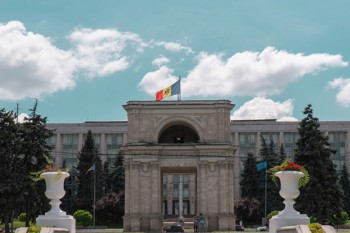
Thematic evaluation of the EU support to Confidence Building Measures
- 2023 – 2024
- unter 500.000 €
- Moldova
The main objectives of this evaluation were to provide the relevant services of the European Union, the interested stakeholders with:
- an overall independent assessment of the performance of the interventions ENPI/2013/024-401 Confidence Building Measures (Moldova AAP 2013), ENI/2018/041-309 EU Support to Confidence Building Measures V (2019-2022), ENI/2020/042-967 Scale up EU Support to Confidence Building Measures V (2019-2022), paying particular attention to the levels of achievement of results measured against its expected objectives;
- key lessons learned, conclusions and related recommendations in order to improve current and future interventions in the same domain.
In particular, this evaluation served the purpose to assess the impact of the last 10 years of EU support to Confidence Building Measures, from 2013 to 2023. As per EU Logical Framework approach, aligned with the OECD-DAC definition, the impact was “the overall objective of the Action entailing positive and negative, primary and secondary long-term effects produced by a development intervention, directly or indirectly, intended or unintended.” The impact was the long-term expected effect of the action fulfilling the overall objective to which the action contributes at country, regional or sector level, in the political, social, economic and environmental global context which will stem from interventions of all relevant actors and stakeholders.
The evaluation reported comprehensively and transparently on EU support to Confidence Building Measures in the Republic of Moldova.
It drew lessons that can be replicated in other EU interventions to support Confidence Building Measures in Moldova, and potentially in other countries in the Eastern Partnership Region. It informed decision-making on the appropriateness and thematic priorities of future phases of the same (or similar) intervention in the Republic of Moldova.
- Partner:
- Particip (federführend), EuroPlus, SICI Dominus
- Schlagwörter:
- Monitoring und Evaluierung
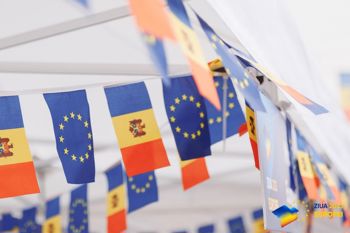
Visibility of EU and EU assistance in the Republic of Moldova in 2023
- 2023 – 2023
- unter 500.000 €
- Moldova
The overall objective to which this action contributed was to achieve increased visibility of the EU and the EU assistance provided to the Republic of Moldova, while providing targeted information on tangible results for the Moldovan citizens. The focus of this contract were the EU values and assistance provided to the country, taking as reference the framework of the Association Agreement (AA) and the Deep and Comprehensive Free Trade Agreement (DCFTA). In addition to this, increased focus was placed on visibility of the European Neighbourhood Policy (ENP), the Neighbourhood, Development and International Cooperation Instrument (Global Europe), the Eastern Partnership (EaP), EU regional policies and the status of the Republic of Moldova as EU candidate country.
This objective was implemented via three key areas:
1. Europe Day events
2. High-level communication events, cultural events and ad-hoc events
3. Communication tools of EU Delegation
Last but not least, a special focus was placed on the role and importance of European values and culture, thus providing a pivotal role to communication activities focused around cultural aspects, both of the EU and the Republic of Moldova.
Technical Assistance on Impact Monitoring of EU Civil Society Support in Eastern Partnership Countries
- 2019 – 2023
- 2 – 5 Millionen €
- ENI East
The project contributed to the introduction of results-based management in all the activities of DG NEAR. The ToR underlined the importance of taking account of all related systems and tools and of the reforms currently being introduced, which are listed exhaustively.
Indeed, the EC had embarked in a major transformation project with crucial implications on the way development cooperation is delivered and development cooperation professionals will work in the future. The aim was to introduce a performance and results culture promoting collaboration, accountability and access to knowledge, along with simplification and harmonisation of all processes and tools, combined in a holistic transparent system.
Result 1: Robust evidence was made available through the setup of an appropriate qualitative monitoring system for civil society projects in order to showcase the benefits of civil society support for citizens;
Result 2: Increased credibility of civil society projects was fostered through regular and more accurate monitoring of projects, following EU external monitoring policy.
Result 3: Increased capacity of EU staff to implement EU monitoring guidelines (and apply corrective measures, if needed) was increased through regular and structured on implementation of EU funded CS projects.
- Partner:
- Particip (federführend), EPRD
- Schlagwörter:
- Monitoring und Evaluierung, Projektdurchführung / technische Hilfe, Regierungsführung, Zivilgesellschaft
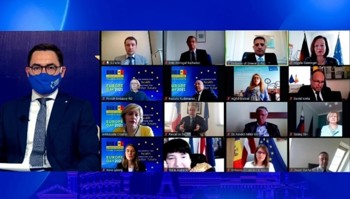
Visibility of EU and EU assistance in the Republic of Moldova in 2022
- 2022 – 2022
- unter 500.000 €
- Moldova
The overall objective of the project was to achieve increased visibility of EU and the EU assistance provided to the Republic of Moldova, while providing targeted information on tangible results for the Moldovan citizens. The focus of this contract were EU values and assistance provided to the country, taking as reference the framework of the Association Agreement (AA) and the Deep and Comprehensive Free Trade Agreement (DCFTA). In addition to this, increased focus was placed on visibility of the European Neighbourhood Policy (ENP), the European Neighbourhood Instrument (ENI), the Eastern Partnership (EaP) and EU regional policies.
This objective was implemented via three key areas:
1. Europe Day events
2. High-level communication events, cultural events and ad-hoc events
3. Communication tools of EU Delegation
Last but not least, a special focus was placed on the role and importance of European values and culture, thus providing a pivotal role to communication activities focused around cultural aspects, both of the EU and the Republic of Moldova.
- Schlagwörter:
- Kommunikation und Medien

Final evaluation of the Citizens' Empowerment in the Republic of Moldova project
- 2022 – 2022
- unter 500.000 €
- Moldova
This final evaluation of the “Citizens' Empowerment in the Republic of Moldova” intervention was implemented between 28/12/2018 and 31/12/2021 with a budget of 4,900,000.00 EUR. The evaluation intended to contribute to i) accountability – by providing an assessment of the results achieved; and ii) learning – by understanding what have been the factors that made possible or created obstacles to the achievement of results and by identifying any key lessons that would lead to improved future Action in the region.
The main objectives of this evaluation were to provide the relevant services of the European Union, the interested stakeholders and the wider public with:
- an overall independent assessment of the past performance of the Citizens' Empowerment in the Republic of Moldova project, paying particular attention to its results measured against its expected objectives; and the reasons underpinning such results;
- key lessons learned, conclusions and related recommendations in order to improve future
Interventions.
The evaluation team furthermore considered whether gender, environment and climate change were mainstreamed; the relevant SDGs and their interlinkages identified; the principle of Leave No-One Behind and the rights-based approach methodology followed in the identification/formulation documents and the extent to which they were reflected in the implementation of the Intervention, its governance and monitoring.
The main users of this evaluation will be the relevant EU services and the other stakeholders involved in the implementation of the Action. In particular, the:
- EU Delegation to the Republic of Moldova,
- European Commission DG NEAR C.1,
- Ministry of Infrastructure and Regional Development,
- GIZ.
- Schlagwörter:
- Monitoring und Evaluierung, Regierungsführung, Zivilgesellschaft
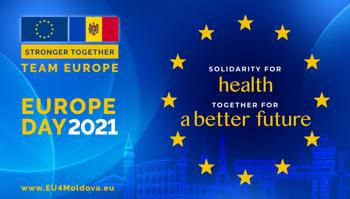
Visibility of EU and EU assistance in the Republic of Moldova in 2021
- 2021 – 2021
- unter 500.000 €
- Moldova
The overall objective of the project was to achieve increased visibility of EU and the EU assistance provided to the Republic of Moldova, while providing targeted information on tangible results for the Moldovan citizens. The focus of this contract was EU values and assistance provided to the country, taking as reference the framework of the Association Agreement (AA) and the Deep and Comprehensive Free Trade Agreement (DCFTA). In addition to this, increased focus was placed on visibility of the European Neighbourhood Policy (ENP), the European Neighbourhood Instrument (ENI), the Eastern Partnership (EaP) and EU regional policies.This objective was implemented via three key areas:
1. Europe Day events
2. High-level communication events, cultural events and ad-hoc events
3. Communication tools of EU Delegation
Last but not least, a special focus was placed on the role and importance of European values and culture, thus providing a pivotal role to communication activities focused around cultural aspects, both of the EU and the Republic of Moldova.
- Schlagwörter:
- Kommunikation und Medien
Results Oriented Monitoring (ROM) system for external aid interventions financed by the European Union - Lot 1 – Neighbourhood region
- 2019 – 2021
- 5 – 10 Millionen €
- ENI
Results Oriented Monitoring (ROM) reviews aim to assist the European Commission’s services and EU Delegations in monitoring of and reporting on EU financed development and cooperation projects and programmes in third countries through independent reviews of the progress of their implementation and the achievement of project results.
ROM services provided through this contract were clustered in three components:
** Component 1: ROM Reviews. ROM contractors assessed the performance of EU-funded interventions on the basis of the following OECD DAC evaluation criteria: relevance, efficiency, effectiveness, and sustainability.
ROM reviews covered:
-A sample of EU funded interventions during the inception phase of implementation. The ROM review supported the OM in confirming or updating intervention logic and logframe matrix, in reviewing the monitoring system of the IP, in assessing risks and mitigation measures and fine tune the calendar of activities with a view to improve the performance of the intervention across the OECD DAC criteria.
- ROM reviews assisted the OM in adressing the main implementation problems.
-Other interventions for which Commission services requested a ROM review on demand (interventions which could not be visited by EU OMs or for which there was a lack of sector expertise in the EU Delegation/operational unit in HQ).
- Blending operations, focused on asessing the value added of the EU contribution and on the performance of blending interventions in terms of socio-economic development.
** Component 2: Quality assurance and support at design stage for a sample of interventions.The Contractor Provided technical support to EC services in the formulation of intervention logics and related logical frameworks matrices (logframes) and monitoring and reporting arrangements for a sample of interventions.
**Component 3: Results report (at corporate and intervention level). The Contractor provided services to encode and quality control results data for a set of interventions subject to results reporting. TOM contractor ensured quality control of data included in the intervention's logframes. Such quality controls included, amongs others: verifying that the logframe is correctly encoded and up-to-date , enssuring that the latest values related to logframe indicators were available, and supporting the aggregation of intervention-level results into the EU Results Framework or other frameworks.
- Partner:
- Particip (federführend), Dev4U, GOPA, Integration

Evaluation on Development Cooperation carried out by the Department for Russia, Eastern Europe and Central Asia, Including The Wider Europe Initiative (WEI)
- 2020 – 2021
- unter 500.000 €
- Armenia, Azerbaijan, Belarus, Georgia, Kazakhstan, Kyrgyzstan, Moldova, Tajikistan, Turkmenistan, Ukraine, Uzbekistan
The overall purpose of the evaluation was to inform the Ministry for Foreign Affairs in Finland (MFA) on the achievements of its development policy and cooperation in the region over the past decade, and to support the MFA in deciding how to best achieve its policy objectives and to enhance its management of the programme in the region at strategic level. Main sectors of cooperation in the region are i) Government and Civil Society, ii) Energy, iii) Education and iv) Environment Protection. The evaluation was mostly forward-looking but also included summative analysis to respond to the evaluation questions.
Objectives: The objectives of the evaluation were to produce evidence and present well justified conclusions on the following:
1. To assess the impact(s), if any, of Finland’s development cooperation carried out in the region by the Department for Russia, Eastern Europe and Central Asia;
2. To assess the scope of the impact(s) and their relative significance to development in the area;
3. To assess the levels of sustainability of the achieved results and impact;
4. To assess the results achieved by, and management of, the current country strategies;
5. To analyse the reasons explaining success and/or failure in performance and in reaching a lasting impact, including the operational context, human aspects and resources; and
6. To provide recommendations that serve the Ministry in developing its strategic planning, management and response in the region as well as drawing the broader lessons on how to increase impact and sustainability, in advancement of Finland’s development policy objectives.
Final report available here: https://um.fi/development-cooperation-evaluation-reports-comprehensive-evaluations/-/asset_publisher/nBPgGHSLrA13/content/evaluointiraportti-suomen-kehitysyhteisty%25C3%25B6-it%25C3%25A4-euroopassa-ja-keski-aasiassa/384998
- Partner:
- Particip (federführend), NIRAS
- Schlagwörter:
- Bildung, Energie, Menschenrechte, Monitoring und Evaluierung, Umwelt, Zivilgesellschaft

Visibility of EU and EU assistance in the Republic of Moldova in 2020
- 2020 – 2021
- unter 500.000 €
- Moldova
The overall objective of the project was to achieve increased visibility of EU and the EU assistance provided to the Republic of Moldova, while providing targeted information on tangible results for the Moldovan citizens. The contract focused on EU values and assistance provided to the country, taking as reference the framework of the Association Agreement (AA) and the Deep and Comprehensive Free Trade Agreement (DCFTA). In addition to this, increased focus was placed on visibility of the European Neighbourhood Policy (ENP), the European Neighbourhood Instrument (ENI), the Eastern Partnership (EaP) and EU regional policies.
Last but not least, a special focus was placed on the role and importance of European values and culture, thus providing a pivotal role to communication activities around cultural aspects, both of the EU and the Republic of Moldova.
The specific objectives of this contract were:
- 1.Organisation of Europe Day events
- 2.Management of online communication tools of the EU Delegation
- 3.Provision of support to the EU Delegation in light of high-level communication events, cultural events and ad-hoc events
- 4.Provision of support for the promotion and participation of the EU Delegation in culture related events.
- Partner:
- Particip (federführend), BDR Associates
- Schlagwörter:
- Kommunikation und Medien

Evaluation of the EU's external action support in the area of migration (2008-2018)
- 2019 – 2021
- unter 500.000 €
- ACP (Africa), Asia, ENI East, ENI South, IPA
The purpose of this evaluation is to provide an independent assessment and evidence on the contribution of EU external action support in aspects of the policy area of migration. Its specific objectives are the following:
- To assess in both qualitative and quantitative terms the relevance, conditions of implementation and performance of EU external action support to migration in the areas defined in the evaluation’s focal areas.
- To address coherence of the EU external action projects/programmes framed also in the international context (e.g. UN related and non-EU Member States) and achievement by the EU and the candidate countries for EU membership, the potential candidates and the partner countries of their respective commitments in these policy areas.
- To assess how EU external action support in the area of migration in the geographical focal areas, has changed in the aftermath of the 2015 structural shift associated with the so-called “refugee crisis.” The assessment shall also take into account complementarity of EU external action support with that of other donors and actors, including EU Member States.
- To assess whether the EU's policy and operational response to the external dimension on migration triggered new approaches and rendered programmes and actions more effective, targeted and efficient.
It furthermore aims to provide lessons learnt and recommendations for the improvement of the programming and implementation and shall:
- lead to the identification of conclusions based on objective, credible, reliable and valid findings;
- highlight lessons learnt;
- provide the Commission and the European External Action Service (EEAS) with a set of operational, targeted and useful forward-looking recommendations.
The three overarching thematic focal areas examined by this evaluation are the following: Legal (labour) migration, Smuggling of Migrants (SoM), and Trafficking of Human Beings (THB).
Report available here: https://ec.europa.eu/neighbourhood-enlargement/sites/default/files/eval_eu_support_migration_area_-_final_report.zip
- Partner:
- Particip (federführend), ECDPM
- Schlagwörter:
- Monitoring und Evaluierung
Evaluation of the Eastern Partnership Technical Assistance Trust Fund (EPTATF)
- 2020 – 2020
- unter 500.000 €
- ENI East
The EPTATF was set up to accelerate the origination of operations in Eastern Partnership countries, and to improve the quality and development impact of the Bank's operations in the region. The establishment of the EPTATF was based on the assumption that technical assistance available at the time was inadequate to support the Bank’s operations in the region, particularly for small projects. It was set up to be complementary to the Neighbourhood Investment Facility (NIF) instrument and resources.
The purpose of the evaluation was to determine the extent to which the EPTATF has helped to improve EIB operations in Eastern Partnership countries since its establishment. Particip was expected to analyse the functioning of the EPTATF, its decision-making process, its governance arrangement and its organisation and performed a review of the EPTATF portfolio of TA operations.
The evaluation work encompassed the following main phases:
- Structuring phase: the evaluation team took ownership of the evaluation framework and approach, further amended and developed it, if deemed necessary.
- Data collection and analysis phase: this phase entailed a thorough desk review, data collection, validation and analysis. The analysis, focussing on 10 case studies of TA operations (at least three in Ukraine, and at least one in Armenia, Georgia, and Moldova) led up to the drafting of the Evaluation Report
- Preparation of the final report: the Team Leader participated in the presentation of the evaluation’s emerging findings to IG/EV and to the Evaluation Reference Group; and then drafted and finalised the Evaluation Report under the guidance of IG/EV
- Schlagwörter:
- Monitoring und Evaluierung, Projektdurchführung / technische Hilfe
Strengthening of the policy development process in the context of the implementation of the Association Agreement
- 2018 – 2020
- 1 – 2 Millionen €
- Moldova
The overall objective of the project was to enhance the institutional and human resource capacity of the central and local public administrations in Moldova to elaborate and implement evidence-based policy and to ensure the efficient and effective delivery of high quality administrative services in line with the European Principles of Public Administration.
This was achieved by contributing to the horizontal Public Administration Reform process in Moldova in order to improve policy development process of the Government of the Republic of Moldova. Furthermore, the administrative capacity and the operational coordination of the three main institutions within the Centre of Government: State Chancellery as policy coordinator, Ministry of Finance as budgetary authority and Ministry of Foreign Affairs and European Integration (MFAEI) as coordinator of the monitoring of the Association Agreement are strengthened.
The project delivered the following results:
- Result 1: Capacity of the Government of Moldova to approximate EU Acquis and to implement the Association Agreement is supported and planning of the Association Agenda by the MFAEI in alignment with the State Chancellery and the Ministry of Finance is strengthened
- Result 2: Evidence-based Policy Development is promoted and capacity to develop legislation is supported with a unified procedure for ex-ante economic and social impact assessments, including strategic planning based on macroeconomic projections and an assessment of available internal and external sources of financing
- Results 3: Policy coordination capacities, procedures and information mechanisms are upgraded through compatible or unified communication systems and rules (rules of procedures) and roles and responsibilities between the functions of Government are demarcated
- Result 4: Public consultation mechanisms in the context of the policy development are improved for increased transparency and accountability of the Government towards citizens
The project directly supported three main institutions (MFAEI, State Chancellery and Ministry of Finance) to perform the tasks related to policy development, which entails all stages of policy-making process, starting by the identification of needs, the policy drafting, costing, draft budgeting, and the endorsement of legal acts necessary for its effective implementation. Policies pursued could be funded by State Budget or could request outputs provided by Development Partners in the context of the external assistance provided to Moldova
- Partner:
- LA International Cooperation S.R.L. (federführend), AESA - Agriconsulting Europe S.A., Linpico, Particip

EU Border Assistance Mission to the Republic of Moldova/Ukraine Phase 11 (Extension) and Phase 12 – Mid-term evaluation
- 2019 – 2020
- unter 500.000 €
- ENI East
The main objectives of this evaluation were to provide the relevant services of the European Union and the interested stakeholders with:
- an overall independent assessment of the past performance of the EUBAM MD/UA Phase 11 (extension) and EUBAM 12, paying particular attention to its intermediate results measured against its expected objectives, the reasons underpinning such results and lessons learned in view of future programming;
- key lessons learned, conclusions and related recommendations in order to improve current and future Actions.
In particular, this evaluation served to understand the performance of the action, its enabling factors and those hampering a proper delivery of results to take into account during the planning of the future EU interventions and actions in the same sector.
The main users of this evaluation were the relevant EU services (Delegations of the European Union to the Republic of Moldova and Ukraine, EC/DG NEAR and EEAS) and other stakeholders, such as the International Organization for Migration (IOM), that were involved in the implementation of the Action to be evaluated as well the Customs Service of the Republic of Moldova, Border Police of the Republic of Moldova, State Border Guard Service of Ukraine, the Bureau of Reintegration Policies (Moldova) and State Border Guard Service of Ukraine.
- Partner:
- Particip (federführend), EMI (formerly: Cardno Belgium), TANA Copenhagen
- Schlagwörter:
- Regierungsführung

Government Advice on Economic Development
- 2016 – 2019
- unter 500.000 €
- Moldova
“Government Advice on Economic Development” Programme, which was implemented by GIZ and structured into two components, aimed at the objective: “Public policy-makers promote private sector investment geared towards boosting employment”. The Consortium of Particip GmbH and Avensa Romania & Moldova was supporting through the provision of high level advice the implementation of component 1, Investment Climate. Component 1 was geared towards improving the existing legal framework, which regulates the investment and business activity in the country, stimulates direct investment thereby contributing to its economic development and further approximation to the EU market. Investment promotion should spur inclusive economic growth, the creation of jobs and contribute to increasing local labor force qualification. To this end, the component 1 aimed at supporting the development of economic policy reform proposals with the participation of private sector stakeholders.
The following short-term missions have been provided:
- Consultancy on investment contracts between Government and private investors
- Developing proposals to streamline Republic of Moldova’s Policy Documents Structure
- Partner:
- Particip (federführend), Avensa, IM Avensa
Results Oriented Monitoring (ROM) reviews aim to assist the European Commission’s services and EU Delegations in monitoring of and reporting on EU financed development and cooperation projects and programmes in third countries through independent reviews of the progress of their implementation and the achievement of project results.
The ROM reviews and support missions to be carried out are the following:
a) +++ROM reviews of projects signalled as having implementation problems and where EC services have identified a need for an outside expert review to assist in addressing the problems, identifying causes and options for solution and making recommendations.
b) +++ ROM reviews of other projects for which such ROM reviews may have a particular usefulness, in particular for projects which could not be included in the EUDs’ planning of field visits or for which the necessary sector expertise at EUD level may not be sufficiently available at a given point of time or for innovative projects.
c) ROM reviews of BS programmes: in countries where a BS programme is signalled as having implementation problems, a ROM review may be organized focusing on the programme in question for the sector specific aspects but also covering the Public Financial Management (PFM) and macroeconomics aspects of all BS programmes financed by the EU in the country .
d) ROM support to end of project reporting on results (outputs and direct outcomes), including for BS programmes. These ROM support missions are to assist EC services and EUD in strengthening their results reporting capacities in: assisting with the recording actual results achieved by projects and programmes that have come to an end in the specified calendar year, solving technical difficulties that may occur linked to results reporting, and identifying the systemic needs and modalities for improvement which may be needed in these areas. The ROM support to end of project results reporting missions are to focus on projects of EUR 750.000 or more.
- Partner:
- Particip (federführend), GOPA, Integration
- Schlagwörter:
- Monitoring und Evaluierung
Final evaluation of 4 Technical Assistance projects (Support to the Justice Sector Policy Reforms in Moldova (AAP 2011))
- 2018 – 2019
- unter 500.000 €
- Moldova
The overall objective of this Final Evaluation is to analyse the compliance of four Technical Assistance projects with the Objectives and Expected Results defined by their Terms of Reference.
The specific objectives are to provide the relevant services of the European Union, the interested stakeholders and the wider public with an overall independent assessment of the past performance of the Support to the Justice Sector Policy Reforms in Moldova (Annual Action Programme 2011) package, paying particular attention to:
- Its final results measured against its objectives
- Key lessons and recommendations in order to improve current (where relevant) and future actions.
In particular, this final evaluation will serve to evaluate the relevance, effectiveness, efficiency, coherence and EU-added value of the EU assistance provided until now to the sector.
- Schlagwörter:
- Institutionelle Entwicklung, Justiz / Rechtsstaatlichkeit, Monitoring und Evaluierung
Assistance to the implementation of the European Union High Level Advisors' Mission
- 2016 – 2019
- über 10 Millionen €
- Moldova
The overall objective of the project is to support the Government of Moldova to implement its reform Agenda and in particular to assist the government in developing the capacities required for the implementation of the Association Agreement (AA), including the Deep and Comprehensive Free Trade Area (DCFTA), as well as to ensure the necessary follow-up for the post Visa Liberalisation stage.
The project supported the deployment of EU High Level Advisers in the Republic of Moldova.
The High Level Advisors, selected by the European Commission, assisted the ministries and State agencies involved in the implementation of EU – Moldova agreements.
The activities making up this project included the contracting of the designated EU High Level Advisers, providing them with logistical support (such as travel, installation, conference organisation) and with local office support (project manager, assistants, interpreters, translators).
The locally-based project coordinator from the Contractor's team was responsible for organising events, logistics, visibility, coordination, reporting, steering committees and liaison with the EU Delegation
- Partner:
- GOPA PACE (ex B&S Europe SA) (federführend), AO CdR, Archidata, Integration, Particip
- Schlagwörter:
- Aus- und Fortbildung, Institutionelle Entwicklung, Kommunikation und Medien, Projektdurchführung / technische Hilfe, Regierungsführung
Production of multi-media materials and publications in the context of EU and EU assistance visibility in the Republic of Moldova
- 2017 – 2018
- unter 500.000 €
- Moldova
Global objective of the assignment:
- Contribute to improved visibility of EU and EU assistance through a series of engaging multi-media materials and publications show-casing tangible results of EU funds provided for the development of the Republic of Moldova and its people.
- Ensure promotion and dissemination of the multi-media materials and publications produced in the framework of this contract.
The visibility of the EU and EU assistance in the Republic of Moldova is among key priorities of EU actions in country. An effective and strategic communication, in light of increasing awareness about the results of EU funds provided for the development of the country and its people, is envisaged. Increased communication and visiblity of EU and EU assistance is important to provide the target groups with accessible, easily understandable and relevant information on the different tools and channels of EU assistance.
- Schlagwörter:
- Kommunikation und Medien
Preparation of Technical Assistance projects for developing the Annual Action Programme (AAP) 2015 in the field of Public Administration Reform (PAR) and preparation of the Annual Action Programme (AAP) 2016 for Public Administration Reform (PAR) and Technical Cooperation Facility (TCF).
- 2015 – 2018
- unter 500.000 €
- Moldova
The global objective was to promote Public Administration Reform process in the Republic of Moldova and to support the preparation of the Annual Action Programme 2016 in the field of complementary Technical Cooperation Facility. An other objective was to draft four Terms of Reference for the individual activities foreseen in the Annual Action Programme 2015 for Public Administration Reform, one Technical Specifications for the Action on National Bureau of Statistics and support to the tendering procedure.
- Partner:
- Particip (federführend), Cardno UK, EuroPlus
- Schlagwörter:
- Informationstechnologie, Regierungsführung

Evaluation of EU support to social protection in external action 2007-2013
- 2016 – 2018
- unter 500.000 €
- Global
The objectives of the evaluation were to:
- support the decision-making, both at EU strategic (planning) level, and at the level of the design of the action programmes /interventions;
- feed into the reflection on the revision of future development policies in view of the recent adoption of the 2030 Sustainable Development Agenda;
- demonstrate whether already on-going/planned IPA (I) II, ENPI/ENI, DCI and EDF action programmes/interventions in the area of social protection have taken on board the latest lessons learnt from the previous programming period;
- provide recommendations on the best way to approach and improve its support to the development of social protection systems, in partner countries both in terms of the use of policy dialogue and financial assistance;
- contribute to the preparation and adjustment of action programmes, namely for IPA II, ENI, DCI and EDF assistance to the extent possible;
- feed in the Mid-term Review of financial instruments;
- feed in Mid-term Reviews of country/region multi-annual indicative programmes.
The evaluation used the five standard OECD/DAC evaluation criteria, namely relevance, effectiveness, efficiency, impact and sustainability. In addition, the evaluation also looked at the EU added value and the 3Cs.
The evaluation focused on EU support (policy dialogue and financial assistance) provided for the development of social protection systems in partner countries, more specifically on the social insurance and social assistance measures to address the following risks and needs: unemployment, parental responsibilities, sickness and healthcare, work accidents/employment injuries disability, loss of a spouse or parent, old age, housing and social exclusion.
The evaluation covered:
- IPA I beneficiary countries;
- ENPI partner countries;
- Countries covered by DCI and EDF.
The evaluation was conducted in four phases
- An Inception Phase, focusing on the design and the methodology of the evaluation including the reconstruction of the intervention logic and the compilation of an inventory;
- A Desk Phase, focusing on gathering and analysing existing data and information (through literature/document reviews and interviews/focus groups/surveys);
- A Field Phase, including preparation of field missions, visits to the case study countries (Bosnia and Herzegovina, El Salvador, Ethiopia, Turkey, Kyrgyzstan, Macedonia*, Malawi, Moldova, Montenegro, Morocco, Palestine*) and drafting of country reports;
- A Synthesis Phase, producing a final report and dissemination of results to concerned stakeholders.
- Partner:
- AETS (federführend), Particip
- Schlagwörter:
- Ernährung, Gesundheit, Monitoring und Evaluierung, Zivilgesellschaft

Evaluation of the EU development cooperation support to higher education in partner countries (2007-2014)
- 2015 – 2017
- unter 500.000 €
- Global
The Evaluation of the EU development cooperation support to Higher Education in partner countries (2007-2014) evaluated the design and the implementation of policies, strategies and sector programmes of the EU’s past and current development cooperation support to higher education.
The main objectives of the evaluation were:
- to provide the relevant external co-operation services of the EU and the wider public with an independent assessment of the development cooperation support provided to higher education in partner countries over the period 2007-2014;
- to identify key lessons and forward-looking recommendations.
The evaluation used the five standard OECD/DAC evaluation criteria, namely relevance, effectiveness, efficiency, impact and sustainability. In addition, the evaluation also looked at the EU added value and the 3Cs.
The evaluation was conducted in four phases
- An Inception Phase, focusing on the design and the methodology of the evaluation including the reconstruction of the intervention logic and the compilation of a comprehensive inventory incl. monetary flow of all relevant activities between 2007 and 2014;
- A Desk Phase, focusing on gathering and analysing existing data and information (through literature/document reviews and interviews/focus groups/surveys);
- A Field Phase, including preparation of field missions, visits to the case study countries (Cameroon, the Dominican republic, Egypt, Guatemala, Kenya, Mexico, Moldova, South Africa) and drafting of country notes;
- A Synthesis Phase, producing a final report and dissemination of results to concerned stakeholders.
The report is available at: https://ec.europa.eu/europeaid/strategic-evaluation-eu-development-co-operation-support-higher-education-partner-countries-2007_en
- Partner:
- Particip (federführend), ECDPM, Ecorys B.V., LA International Cooperation S.R.L.
- Schlagwörter:
- Bildung, Institutionelle Entwicklung, Monitoring und Evaluierung, Regierungsführung

Organization of information and training sessions on communicating about EU and EU assistance
- 2016 – 2017
- unter 500.000 €
- Moldova
Global objective:
To promote increased visibility for the EU and the EU assistance provided to the Republic of Moldova, through the development of communication abilities of key actors involved in this process.
Specific objectives:
1. Identification of communication requirements related to EU and EU assistance of the seven target groups
- Civil servants from the line Ministries;
- Press-officer or communication focal points from the line Ministries;
- Representatives of NGOs and civil society
- Team leaders of EU projects (1st group)
- Team leaders of EU projects (2nd group)
- Representative of the Moldovan mass-media
- Staff of the EU Delegation to Moldova
2. Development of targeted training modules on communicating about EU and EU assistance
3. Organization of training and information sessions on communicating about EU and EU assistance (seven workshops of two days each)
- Schlagwörter:
- Aus- und Fortbildung, Kommunikation und Medien

Support to the Identification and Formulation of the Annual Action Programme 2016 in favour of the Republic of Moldova
- 2015 – 2017
- unter 500.000 €
- Moldova
Global objective: Assist the Government of Moldova to:
1) improve the financial capability of the government to achieve development policy objectives;
2) promote structural policies and reforms;
3) improve service delivery in rural areas;
4) improve governance.
The specific objectives included assisting in the programming exercise of the Annual Action Programme 2016 in favour of Republic of Moldova and to enhance the programming capabilities of the Moldovan beneficiaries.
- Partner:
- NIRAS (federführend), IBF International Consulting S.A., Particip
- Schlagwörter:
- Institutionelle Entwicklung, Ländliche und städtische Entwicklung, Landwirtschaft, Regierungsführung