Azerbaijan
13 Referenzen

Systematic analysis of the monitoring data should result into recommendations to improve the implementation and design of assistance to civil society and to the EU monitoring to reach the overall objective to contribute to civic resilience and grassroots democracy in the Eastern Partnership. Trainings should be developed and conducted for a sustainable learning experience. The data and analysis should also be presented for communication on the achievements of the civil society assistance and contribute to various reporting exercises.
The outputs of the monitoring on the ground and analysis should enhance the ability of EU project managers to contribute to regular reviews of action progress and operational plans. The concise feedback resulting from the monitoring of an action should allow EU project managers to have more assurance in assessing the content and quality of monitoring reports from CSOs which would allow them to suggest corrective measures or to support efficient and effective implementation. Further to this, the analysis provided should guide future programming
The expected outputs of this contract are as follows:
- Monitoring system of EU-funded civil society projects that will complement existing EU systems of project monitoring maintained and improved;
- Analysis and knowledge sharing products to support decision-making generated and disseminated;
- Capacity of EU project managers, CSOs staff to monitor and implement projects strengthened.
- Partner:
- Particip (federführend), EPRD
- Schlagwörter:
- Monitoring und Evaluierung, Zivilgesellschaft
Results Oriented Monitoring (ROM) Systems for External aid Interventions Financed by the European Union — Neighbourhood Region
- 2021 – 2026
- über 10 Millionen €
- ENI
Results Oriented Monitoring (ROM) reviews aim to assist the European Commission’s services and EU Delegations in monitoring of and reporting on EU financed development and cooperation projects and programmes in third countries through independent reviews of the progress of their implementation and the achievement of project results.
ROM services to be provided through this contract are clustered in three components:
** Component 1: ROM Reviews. ROM contractors will assess the performance of EU-funded interventionson the basis of the following OECD DAC evaluation criteria: relevance, efficiency, effectiveness, and sustainability.
ROM reviews will cover:
-A sample of EU funded interventions during the inception phase of implementation. The ROM review will support the OM in confirming or updating intervention logic and logframe matrix, in reviewing the monitoring system of the IP, in assessing risks and mitigation measures and fine tune the calendar of activities with a view to improve the performance of the intervention across the OECD DAC criteria.
- ROM reviews will assist the OM in adressing the main implementation problems.
-Other interventions for which Commission services request a ROM review on demand (interventions which could not be visited by EU OMs or for which there is a lack of sector expertise in the EU Delegation/operational unit in HQ).
- Blending operations, focused on asessing the value added of the EU contribution and on the performance of blending interventions in terms of socio-economic development.
** Component 2: Quality assurance and support at design stage for a sample of interventions. Provide technical support to EC services in the formulation of intervention logics and related logical frameworks matrices (logframes) and monitoring and reporting arrangements for a sample of interventions.
**Component 3: Results report (at corporate and intervention level). The Contractor will provide services to encode and quality control results data for a set of interventions subject to results reporting. TOM contractor will ensure quality control of data included in the intervention's logframes. Such quality controls will include, amongs others: verifying that the logframe is correctly encoded and up-to-date , enssuring that the latest values related to logframe indicators are available, and supporting the aggregation of intervention-level results into the EU Results Framework or other frameworks.
- Partner:
- Particip (federführend), Dev4U, Integration
- Schlagwörter:
- Monitoring und Evaluierung

Support to implementation of Covenant of Mayor East and M4EG regional projects in Azerbaijan
- 2023 – 2025
- unter 500.000 €
- Azerbaijan
Task 1. Provided technical support to the CoM signatories to develop and implement SECAPs:
The project provided support to five selected CoM signatories on the step-by-step preparation of SECAPs through seminars/webinars, on-line/face-to-face consultation, site workshops. Detailed action plan with certain milestones, phases, implementation responsibilities, and implementation timeline were prepared for each municipality. Municipalities in Azerbaijan did not have the technical or financial capacity to implement all actions stipulated in their SECAP. The project supported pilot activities for Mingachevir municipality to show how it can effectively turn its SECAP into practical action and play an active role in greening processes at local levels. Lessons from these pilot projects helped other municipalities to identify possible solutions for rolling out their own SECAPs.
Task 2: Provided technical support to the M4EG signatories to develop LEDPs:
The project provided support to ten selected M4EG signatories on the step-by-step preparation of LEDPs through seminars/webinars, on-line/face-to-face consultation, site workshops. Detailed action plan with certain milestones, phases, implementation responsibilities, and implementation timeline were prepared for each municipality. The project also aimed to disseminate amongst the signatory municipalities a successful experience in development of the LEDPs.
- Partner:
- Particip (federführend), CAPA EEIG (managed by Particip), Expertise Advisors (formerly: ETI Consulting)
- Schlagwörter:
- Regierungsführung, Umwelt

The objective of this facility is to improve the overall quality of the NDICI Rapid Response and Peace, Stability and Conflict Prevention thematic areas by providing high quality research services.
We will provide the FPI with flexible and ad hoc research services and prepare literature reviews and rapid assistance reports in the thematic areas specified below.
- Partner:
- Particip (federführend), SICI Dominus
- Schlagwörter:
- Humanitäre Hilfe, Umwelt
Technical Assistance on Impact Monitoring of EU Civil Society Support in Eastern Partnership Countries
- 2019 – 2023
- 2 – 5 Millionen €
- ENI East
The project contributed to the introduction of results-based management in all the activities of DG NEAR. The ToR underlined the importance of taking account of all related systems and tools and of the reforms currently being introduced, which are listed exhaustively.
Indeed, the EC had embarked in a major transformation project with crucial implications on the way development cooperation is delivered and development cooperation professionals will work in the future. The aim was to introduce a performance and results culture promoting collaboration, accountability and access to knowledge, along with simplification and harmonisation of all processes and tools, combined in a holistic transparent system.
Result 1: Robust evidence was made available through the setup of an appropriate qualitative monitoring system for civil society projects in order to showcase the benefits of civil society support for citizens;
Result 2: Increased credibility of civil society projects was fostered through regular and more accurate monitoring of projects, following EU external monitoring policy.
Result 3: Increased capacity of EU staff to implement EU monitoring guidelines (and apply corrective measures, if needed) was increased through regular and structured on implementation of EU funded CS projects.
- Partner:
- Particip (federführend), EPRD
- Schlagwörter:
- Monitoring und Evaluierung, Projektdurchführung / technische Hilfe, Regierungsführung, Zivilgesellschaft
Results Oriented Monitoring (ROM) system for external aid interventions financed by the European Union - Lot 1 – Neighbourhood region
- 2019 – 2021
- 5 – 10 Millionen €
- ENI
Results Oriented Monitoring (ROM) reviews aim to assist the European Commission’s services and EU Delegations in monitoring of and reporting on EU financed development and cooperation projects and programmes in third countries through independent reviews of the progress of their implementation and the achievement of project results.
ROM services provided through this contract were clustered in three components:
** Component 1: ROM Reviews. ROM contractors assessed the performance of EU-funded interventions on the basis of the following OECD DAC evaluation criteria: relevance, efficiency, effectiveness, and sustainability.
ROM reviews covered:
-A sample of EU funded interventions during the inception phase of implementation. The ROM review supported the OM in confirming or updating intervention logic and logframe matrix, in reviewing the monitoring system of the IP, in assessing risks and mitigation measures and fine tune the calendar of activities with a view to improve the performance of the intervention across the OECD DAC criteria.
- ROM reviews assisted the OM in adressing the main implementation problems.
-Other interventions for which Commission services requested a ROM review on demand (interventions which could not be visited by EU OMs or for which there was a lack of sector expertise in the EU Delegation/operational unit in HQ).
- Blending operations, focused on asessing the value added of the EU contribution and on the performance of blending interventions in terms of socio-economic development.
** Component 2: Quality assurance and support at design stage for a sample of interventions.The Contractor Provided technical support to EC services in the formulation of intervention logics and related logical frameworks matrices (logframes) and monitoring and reporting arrangements for a sample of interventions.
**Component 3: Results report (at corporate and intervention level). The Contractor provided services to encode and quality control results data for a set of interventions subject to results reporting. TOM contractor ensured quality control of data included in the intervention's logframes. Such quality controls included, amongs others: verifying that the logframe is correctly encoded and up-to-date , enssuring that the latest values related to logframe indicators were available, and supporting the aggregation of intervention-level results into the EU Results Framework or other frameworks.
- Partner:
- Particip (federführend), Dev4U, GOPA, Integration

Evaluation on Development Cooperation carried out by the Department for Russia, Eastern Europe and Central Asia, Including The Wider Europe Initiative (WEI)
- 2020 – 2021
- unter 500.000 €
- Armenia, Azerbaijan, Belarus, Georgia, Kazakhstan, Kyrgyzstan, Moldova, Tajikistan, Turkmenistan, Ukraine, Uzbekistan
The overall purpose of the evaluation was to inform the Ministry for Foreign Affairs in Finland (MFA) on the achievements of its development policy and cooperation in the region over the past decade, and to support the MFA in deciding how to best achieve its policy objectives and to enhance its management of the programme in the region at strategic level. Main sectors of cooperation in the region are i) Government and Civil Society, ii) Energy, iii) Education and iv) Environment Protection. The evaluation was mostly forward-looking but also included summative analysis to respond to the evaluation questions.
Objectives: The objectives of the evaluation were to produce evidence and present well justified conclusions on the following:
1. To assess the impact(s), if any, of Finland’s development cooperation carried out in the region by the Department for Russia, Eastern Europe and Central Asia;
2. To assess the scope of the impact(s) and their relative significance to development in the area;
3. To assess the levels of sustainability of the achieved results and impact;
4. To assess the results achieved by, and management of, the current country strategies;
5. To analyse the reasons explaining success and/or failure in performance and in reaching a lasting impact, including the operational context, human aspects and resources; and
6. To provide recommendations that serve the Ministry in developing its strategic planning, management and response in the region as well as drawing the broader lessons on how to increase impact and sustainability, in advancement of Finland’s development policy objectives.
Final report available here: https://um.fi/development-cooperation-evaluation-reports-comprehensive-evaluations/-/asset_publisher/nBPgGHSLrA13/content/evaluointiraportti-suomen-kehitysyhteisty%25C3%25B6-it%25C3%25A4-euroopassa-ja-keski-aasiassa/384998
- Partner:
- Particip (federführend), NIRAS
- Schlagwörter:
- Bildung, Energie, Menschenrechte, Monitoring und Evaluierung, Umwelt, Zivilgesellschaft
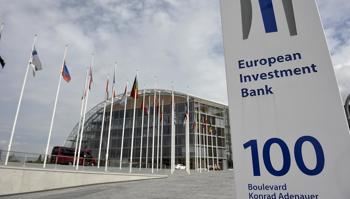
Evaluation of the Eastern Partnership Technical Assistance Trust Fund (EPTATF)
- 2020 – 2020
- unter 500.000 €
- ENI East
The EPTATF was set up to accelerate the origination of operations in Eastern Partnership countries, and to improve the quality and development impact of the Bank's operations in the region. The establishment of the EPTATF was based on the assumption that technical assistance available at the time was inadequate to support the Bank’s operations in the region, particularly for small projects. It was set up to be complementary to the Neighbourhood Investment Facility (NIF) instrument and resources.
The purpose of the evaluation was to determine the extent to which the EPTATF has helped to improve EIB operations in Eastern Partnership countries since its establishment. Particip was expected to analyse the functioning of the EPTATF, its decision-making process, its governance arrangement and its organisation and performed a review of the EPTATF portfolio of TA operations.
The evaluation work encompassed the following main phases:
- Structuring phase: the evaluation team took ownership of the evaluation framework and approach, further amended and developed it, if deemed necessary.
- Data collection and analysis phase: this phase entailed a thorough desk review, data collection, validation and analysis. The analysis, focussing on 10 case studies of TA operations (at least three in Ukraine, and at least one in Armenia, Georgia, and Moldova) led up to the drafting of the Evaluation Report
- Preparation of the final report: the Team Leader participated in the presentation of the evaluation’s emerging findings to IG/EV and to the Evaluation Reference Group; and then drafted and finalised the Evaluation Report under the guidance of IG/EV
- Schlagwörter:
- Monitoring und Evaluierung, Projektdurchführung / technische Hilfe
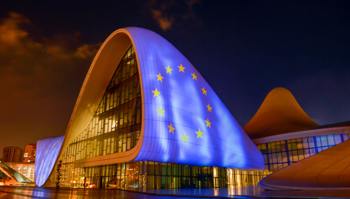
Visibility of EU activities in regional/rural development and institutional capacity in Azerbaijan
- 2018 – 2020
- unter 500.000 €
- Azerbaijan
The Government of Azerbaijan declared the development of the non-oil economy and the reduction of socio- economic regional disparities as the main priorities for the coming years, as clearly outlined in the Strategy Vision 2020 and other strategic government documents. In order to support the Government in its efforts to develop regions and to implement reforms under the current EU-Azerbaijan agreements and future agreements under the Eastern Partnership, the EU identified two components under the Annual Action Programme:
Component 1. Support Regional and Rural Development in Azerbaijan (SRRD)
The overall objective of this programme was to contribute to the diversification of the economy and sustainable regional development in Azerbaijan, while reducing socio-economic disparities between regions.
Component 2. Framework programme in support of EU-Azerbaijan Agreements
The overall objective of this framework programme was to build the institutional capacity of selected public administration institutions in Azerbaijan. Main activities foreseen included technical assistance and Twinning projects in support to the implementation of the EU- Azerbaijan ENP Action Plan and the implementation of CIB.
To ensure adequate visibility, each project implementing the programme had its own communication and visibility component and budget, according to the Communication and Visibility Manual for EU External Actions. In addition, funds were reserved to ensure overall visibility of the actions under this present project.
The overall objective of the present contract therefore was to increase the visibility of EU-funded projects in Azerbaijan in general, with a specific focus on
- Increasing the visibility of the EU assistance in regional and rural development in Azerbaijan, and
- Awareness raising about the EU activities in institutional capacity building in Azerbaijan through Institution Building Instruments: Twinning/TAIEX/Sigma.
These visibility goals were achieved by using a large variety of communication tools over a duration of 2 years. Activities are carefully planned to ensure a harmonised approach where all elements and campaigns build upon each other. This will maximise the impact and ensure a continued presence of relevant information on EU activities in the Azerbaijani media.
The requested services were split up into three groups:
- Component 1. Support Regional and Rural Development in Azerbaijan (SRRD)
- Component 2. Framework programme in support of EU-Azerbaijan Agreements
- Component 3. General visibility measures
- Schlagwörter:
- Kommunikation und Medien
Results Oriented Monitoring (ROM) reviews aim to assist the European Commission’s services and EU Delegations in monitoring of and reporting on EU financed development and cooperation projects and programmes in third countries through independent reviews of the progress of their implementation and the achievement of project results.
The ROM reviews and support missions to be carried out are the following:
a) +++ROM reviews of projects signalled as having implementation problems and where EC services have identified a need for an outside expert review to assist in addressing the problems, identifying causes and options for solution and making recommendations.
b) +++ ROM reviews of other projects for which such ROM reviews may have a particular usefulness, in particular for projects which could not be included in the EUDs’ planning of field visits or for which the necessary sector expertise at EUD level may not be sufficiently available at a given point of time or for innovative projects.
c) ROM reviews of BS programmes: in countries where a BS programme is signalled as having implementation problems, a ROM review may be organized focusing on the programme in question for the sector specific aspects but also covering the Public Financial Management (PFM) and macroeconomics aspects of all BS programmes financed by the EU in the country .
d) ROM support to end of project reporting on results (outputs and direct outcomes), including for BS programmes. These ROM support missions are to assist EC services and EUD in strengthening their results reporting capacities in: assisting with the recording actual results achieved by projects and programmes that have come to an end in the specified calendar year, solving technical difficulties that may occur linked to results reporting, and identifying the systemic needs and modalities for improvement which may be needed in these areas. The ROM support to end of project results reporting missions are to focus on projects of EUR 750.000 or more.
- Partner:
- Particip (federführend), GOPA, Integration
- Schlagwörter:
- Monitoring und Evaluierung

Supporting the development of the judicial system and improving the services provided by the agencies that implement criminal court orders in Azerbaijan
- 2016 – 2018
- 1 – 2 Millionen €
- Azerbaijan
In its 21 years of independence, Azerbaijan had made significant progress in terms of socio-economic development. However, although some important results had been achieved in the justice sector, inter alia through an EC financed budget support programme, the justice systems needed to be further modernized.
In line with this approach, the global objective of the assignment was to contribute to strengthening the rule of law in Azerbaijan. The specific objectives were to provide technical assistance to the Government of Azerbaijan by supporting the development of an independent, professional, impartial and fair judicial system and improving the services provided by the agencies that implement criminal court orders.
This project was developed as part of the Institutional Reform Programmes (IRPs) on rule of law, aiming to strengthen the institutional capacity of key actors involved in justice reform, in particular the Ministry of Justice (including the Penitentiary Administration), the Judicial Legal Council and the Anti-Corruption Department within the General Prosecutor’s Office.
The project was made up of two components:
- Component 1: Judicial Reform
Results to be achieved for component 1
1. The core elements of judicial independence were analysed and relevant measures were addressed.
2. Anti-Corruption legislation and practices were strengthened.
3. The level of public trust in the Court system was increased.
The project supported the Judicial Legal Council in its role as guarantor of judicial independence. More specifically, the role and functions of the Judicial Legal Council and modernization of current legislation were analysed. Open debates and discussions on European and International standards on judicial independence were held at national level.
Close collaboration with the Ministry of Justice was ensured and the Head Department on Anti-Corruption within the General Prosecutor’s Office was institutionally strengthened.
Taking a rights-based perspective, the project fostered the legal education at grass-roots level (in 3 rural areas), and surveys amongst Court users, including the development of several sets of surveys/indicators. The project contributed to building the institutional capacity of the Head Department on Anti-Corruption within the General Prosecutor’s Office in order to properly enforce the integrity measures for the judiciary, including conflict of interest, and to modernize the techniques of criminal investigation and pursuit.
- Component 2: Offender Management System
Results to be achieved for component 2:
1. Preparations to introduce a Probation Service were significantly advanced.
2. Pilot projects demonstrated key aspects of a modern probation service.
3. The offender management agencies worked in closer cooperation.
The first task in offender management was to invigorate efforts to establish a probation service in Azerbaijan. Alternatives to prison sentences for mid-range offenders, and supervised early release schemes for more serious offenders, were considered essential aspects of effective offender management. The second part of this component involved demonstrating selected aspects of a modern probation service. Pilot projects were therefore established in cooperation with the Ministry of Justice, other government departments and civil society. Moreover, this project introduced leaders of the penal agencies to methods of integration used in other countries, and supported practical action.
Coordination between the main agencies for penal services (i.e. police, prosecutors, courts and prisons) were improved.
- Partner:
- Particip (federführend), Icon Institute, PRI
- Schlagwörter:
- Justiz / Rechtsstaatlichkeit
EU Bus Tour to Regions in Azerbaijan
- 2016 – 2018
- unter 500.000 €
- Azerbaijan
Global objective: Raise awareness about the EU, its values and activities in Azerbaijan
Specific objectives:
1) Develop and implement large scale visibility and communication activities for the EUD, namely a one-week bus-tour to main urban centres outside of Baku: Ismayilli, Gakh, Zagatala and Sheki.
2) Design, implement, follow-up, monitor and ensure quality control of visibility/communication activities
These objectives are in line with the political committments in place between the EU and Azerbaijan: The adhesion of Azerbaijan to the Eastern Partnership in 2009 was a commitment from both sides to develop closer ties - the visa facilitation and readmission agreement in September 2014 a concrete sign that this process is moving forward. Subsequently the aim was to also inform the local populations of EU activities and the perspectives that these open for Azerbaijani target groups.
- Schlagwörter:
- Kommunikation und Medien

Public relation support to the EU Delegation in Azerbaijan
- 2015 – 2017
- unter 500.000 €
- Azerbaijan
The global objective of this assignment was to improve the visibility of EU activities in Azerbaijan.
The specific objective of this assignment was to update the EU Delegation's communication strategy and to develop and implement large scale visibility and communication activities for the EUD, namely:
Organisation and Implementation of two large scale open air events for about 5,000-10,000 participants each, in 2015 (Eurovillage Baku) and 2016 (EU Bus Tour incl. Eurovillage in Ganja).
Eurovillage was organised in a prominent public space in the cities, with stands for the EU Delegation and Member States, information booths, and various activity stands such as photo booth, face painting, dance lessons of European dances and karaoke of European songs. A stage was built up for performances and an entertainment programme. Quizzes and games were proposed and the visitors could win EU goodies. Caterers provided various European food and drinks. Walk around artists, dressed as European fairy tale characters entertained the participants.
The target group of the Eurovillages was the large public, but mainly families with children and young adults.
Particip supported the EU Delegation in developing the event concept and in all steps of its implementation, including (but not limited to):
- Managing and overseeing the event preparation and implementation
- Establishing a detailed event proposal, provision of all necessary authorisations from local administration
- Rent of venue, rent or production of all equipment (tents, banners, tables, chairs, umbrellas, stage with large screen etc.), contracting work force for security, first aid, build-up, dismantling and transport of materials before, during and after the event.
- Establishing detailed programme for the main stage, liaising with and contracting European artists for various performances. Examples of personalities or artists who have been present at the Eurovillage: Joan Franka and band (singer from the Netherlands), Ana Rucner (cello player from Croatia), Berti Vogts (football personality from Germany), Traffic (band from Estonia), Iza Zaro (street artist from France) etc.
- Liaison and contracting of local staff for the activity stands (face painting, karaoke, dances etc.)
- Liaison and contracting of various local caterers providing European food and drinks
- Liaison and coordination of volunteers supporting the event (as support staff for stands etc.), including various briefing meetings and a thank-you event after each Euro-village
- Developing visual identity for the events and its application to all of the promotional items and communication material of the activity
- Provision of video footage of the events and post-event videos in English and Azerbaijani
- Design and production of information and promotion materials used in the context of the events. Items included: balloons, t-shirts, baseball caps, keyrings, stamps
- Design and production of “Eurovillage passports”, a booklet with a foreword from the EU Ambassador. With this booklet, participants could collect points at all stands and obtain a present once completed.
- Provision of comprehensive media outreach to ensure media coverage of the events.
- Survey amongst the visitors to collect information about their impressions and knowledge of the EU.
- Financial management with all involved stakeholders and reporting to the EU Delegation as per ToR.
- The EU Delegation's stand was designed to highlight EU involvement in Azerbaijan and especially the region where the bus tour was conducted.
- Furthermore the project designed and prepared visibility materials, to serve during and beyond the events:four project videos, a web-page template for EU projects and various promotional items.
- Schlagwörter:
- Kommunikation und Medien