Guinea (Conakry)
12 Referenzen

Strategic Evaluation of the EU partnership with Guinea (2014-2024)
- 2025 – 2026
- unter 500.000 €
- Guinea (Conakry)
This evaluation has two overarching objectives. Firstly, it aims to provide an independent and comprehensive assessment of the performance and strategic relevance of the EU’s partnership with the Republic of Guinea. Secondly, it seeks to identify key lessons and produce forward-looking recommendations to inform responsible decision-makers – particularly within the European External Action Service and the Directorate-General for International Partnerships – on how to enhance the quality, coherence, and impact of the EU’s current and future strategies, programming, and actions in Guinea.
Its specific objectives are as follows:
- To assess how the EU’s overall engagement in Guinea has contributed to its strategic objectives at the country level, through political dialogue, development cooperation, trade, and investment initiatives;
- To provide EU external cooperation services and the broader public with an independent assessment of the EU’s cooperation with the Republic of Guinea over the period 2014-2024.
The evaluation will focus on six priority sectors: i) return to constitutional order; ii) south-north migration; iii) natural resource exploitation and public finance; iv) energy; v) climate change; and vi) health.
The evaluation will deliver findings, conclusions, and lessons regarding the effectiveness, coherence, and sustainability of the EU support in Guinea. It will also provide targeted, practical, and forward-looking recommendations to improve the design and implementation of current and future EU interventions in Guinea under the 2021-2027 programming period
- Partner:
- Particip (federführend), ECDPM
- Schlagwörter:
- Energie, Forstwirtschaft, Gesundheit, Industrie und Privatsektorentwicklung, Institutionelle Entwicklung, Makroökonomie / nationale Politik, Menschenrechte, Monitoring und Evaluierung, Öffentliche Finanzen / Haushaltsplanung, Regierungsführung, Umwelt, Wahlen, Zivilgesellschaft

Evaluation of the project Wehubit 2.0 (BEL22009)
- 2026 – 2026
- unter 500.000 €
- Africa
The Wehubit 2.0 programme is Enabel's flagship D4D/innovation programme working on Digital Social Innovations (DSIs). This independent evaluation assesses the performance of Wehubit 2.0 against its objectives, with a focus on relevance, coherence, efficiency, effectiveness, sustainability and impact. It follows Enabel’s evaluation standards and includes a field visit in Dakar (Senegal). The evaluation approach combines document review and stakeholder consultation to generate evidence-based findings and practical recommendations, and is implemented within the ToR’s fixed reporting milestones.
- Partner:
- Particip (federführend), Technopolis Group
- Schlagwörter:
- Monitoring und Evaluierung

Formulation Regional Transnational Organised Crime Programme WCA
- 2023 – 2024
- unter 500.000 €
- Africa (Western)
The contractor undertook the formulation of an Action Document (AD) to implement a regional program addressing illicit trafficking and transnational organized crime in selected West African and neighboring Central African countries. This included providing all necessary inputs and conducting comprehensive analysis, documentation review, fact-finding work, and consultations to propose possible options/scenarios for program focus and intervention logic. This work identified key strategic questions/issues to support informed discussions with relevant EU Delegations and other key stakeholders
- Partner:
- Particip (federführend), EuroPlus
- Schlagwörter:
- Menschenrechte, Regierungsführung

Study on the spread of radicalization attempts in Liberia and Guinea Conakry
- 2022 – 2023
- unter 500.000 €
- Guinea (Conakry), Liberia
The global objective of this study was to enhance the understanding of the reported recent attempts to radicalise and recruit individuals (including, but not limited to, dynamics of recruitment, motivations, target groups and threat posed) in the countries covered by the scope of the study, and of the threats they pose. To achieve this, the study looked into the interrelated relevant phenomena (including grievances, political dynamics and foreign religious influences). The final aim was to contribute to the development of potential EU support to address these challenges and build resilience and social cohesion.
The specific objectives of the project were:
- To investigate the dynamics of the reported growth of radicalisation and recruitment efforts in Liberia and in Guinea- Conakry (possibly linked to the expansion of Wahhabism/Salafism in the region).
- To assess the threat posed by such potential expansion and its interrelations with relevant national and regional causes of fragility.
- To assess the gaps, needs and interest for a possible EU intervention, complementing existing efforts. This assessment should consider opportunities, challenges and risks of such an intervention.
- Partner:
- Particip (federführend), ECDPM, EuroPlus
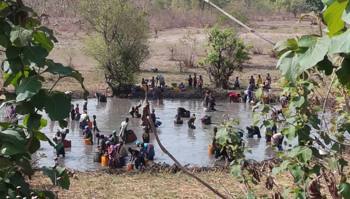
Evaluation of the Belgian Fund for Food Security (BFFS), the integration of food security and the multi-stakeholder approach within the Belgian Development Cooperation
- 2018 – 2019
- unter 500.000 €
- Benin, Burundi, Guinea (Conakry), Mali, Mozambique, Tanzania
The objectives of the evaluation were as follow:
- Draw lessons learned from the implementation of the FBSA from the results observed in terms of food security with its 4 dimensions (summative evaluation).
- Assess the measures that have been taken to integrate the issue of agriculture and food security into Belgian cooperation.
- Assess the specificity and added value of the multi-stakeholder and multi-dimensional approach for Belgian Cooperation in the field of food security.
Thus, the evaluation is i) backward-looking, covering the implementation of the BFFS in its multidimensional approach based on the four pillars of food security (FAO) and its multi-actor approach; and ii) forward-looking, covering the food security dimension of the new programming of Belgian cooperation. The temporal scope extends from 2010, the year of the creation of the BFFS, to the time of the evaluation in 2019.
The evaluation team conducted 6 country case studies, notably for the five countries in which a BFFS multi-actor programme was carried out from 2012 to 2019: Mali, Mozambique, Burundi, Tanzania and Benin. A sixth case study was carried out on Guinea where a new bilateral programme had been launched, in order to meet the second objective which is to assess the measures taken to integrate agriculture and food security into the new programming of Belgian cooperation. In addition, an online survey was conducted among all actors involved in the implementation of the BFFS programmes.
The published report can be found here: https://diplomatie.belgium.be/sites/default/files/downloads/fbsa-fr-digital-complet.pdf
- Schlagwörter:
- Ernährung, Landwirtschaft, Monitoring und Evaluierung
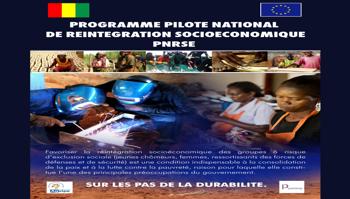
Technical Assistance for the Implementation of the Socio-economic Reintegration Component of the Programme to Support the Reform of the Security Sector (PARSS-RSE) in the Republic of Guinea
- 2014 – 2019
- 2 – 5 Millionen €
- Guinea (Conakry)
The socio-economic reintegration component of the Programme to Support the Security Sector Reform (PSSSR-SER) focused on the socio-economic reintegration of vulnerable populations that have emerged including defence and security forces that were restructured. Thus, the technical assistance supported the implementation of the National Programme for Socio-economic Reintegration (NPSER) .
The NPSER formed part of the Security Sector Reform and was in keeping with the goal of helping to stabilise the country, to smooth the path towards peace consolidation. The NPSER was designed using an innovative approach, targeting sustainability and resilience by (i) integrating the most vulnerable members of the community at risk of being socially excluded (former defence and security forces), into the target group, and (ii) rehabilitating the target group by getting them involved in economic activities at community level, initiated and supervised by partner civil society organisations.
The approach involved the following steps:
- social dialogue, social cohesion and reconciliation,
- rehabilitation and socio-economic reintegration of vulnerable populations, including ex-combatants, in partnership with civil society organisations working in the programme intervention areas
- economic recovery in local communities, and
- capacity building for participants, local actors, and the institutional partnership, sensitisation, provision of security, and communication.
The NPSER strategy involved creating temporary jobs and sustainable economic opportunities for the populations at risk from social exclusion, through the rebuilding of communities, promotion of social cohesion and setting up tools to encourage saving. This strategy aimed at the socio-economic reintegration of populations at risk and contributes to local development. The micro-projects for creating temporary jobs were initiated and supported by 13 civil society organisations, with which the project contracted and accompanied throughout the implementation of activities. CSOs were therefore the main implementing partners with the microfinance institution.
The implementation of the NPSER was divided into three (3) phases, supporting the participants for a four-year period.
Phase 1 (inclusion) :
- creation of temporary jobs and of individual capital for the participants
- rebuilding of the communities with a commitment from all parties concerned (participants, local authorities, civil society organisations, the private sector).
Phase 2 (ownership) :
- choice of participants in manufacturing or service activities,
- self-help by creating sustainable jobs and reviving income-generating activities.
Phase 3 (towards sustainability):
- consolidation of the jobs created and the initatives taken by the participants through networking
- help in creating associations and cooperatives to better manage the value chains.
- Partner:
- Particip (federführend), AOAV, EMI (formerly: Cardno Belgium)
- Schlagwörter:
- Aus- und Fortbildung, Institutionelle Entwicklung, Regierungsführung, Zivilgesellschaft

Urban Sanitation Support Formulation
- 2018 – 2019
- unter 500.000 €
- Guinea (Conakry)
General objectives:
- The mission provided relevant information to the Government of Guinea and the European Commission justifying support for solid and liquid waste management in certain secondary cities and/or regional capitals.
Specific objectives:
The specific objectives of this project were as follows:
- To formulate an integrated strategic approach to support liquid and solid sanitation in certain cities in Guinea;
- To develop a proposal for an action document (including the financing of secondary cities and key infrastructures in Conakry, such as a water treatment plant and a technical landfill center) in accordance with the model and including its annexes (cross-cutting issues, implementation form, logical framework, budget).
- Partner:
- Particip (federführend), NIRAS
- Schlagwörter:
- Umwelt

Technical assistance in the field of human rights
- 2017 – 2018
- unter 500.000 €
- Guinea (Conakry)
The overall objective of the mission was to assist the Ministry of National Unity and Citizenship in the preparation of program strategy papers and action plans in the fields of human rights, responsible citizenship, conflict prevention and peacebuilding.
The specific objectives of the mission were as follows:
1. To take stock of the strategic orientations of the results of the state of Human Rights and to produce the Letter of National Policy for the Promotion and Protection of Human Rights and a five-year quantified action plan.
2. Develop an action plan to promote responsible citizenship;
3. Develop a national strategy to promote a culture of tolerance and peace in Guinea and an action plan for its implementation;
4. Assist the Ministry's executives in the preparation of projects in human rights, promotion of citizenship and responsible citizenship, prevention and conflict management;
5. Propose a strategy for mobilizing partners.
- Schlagwörter:
- Institutionelle Entwicklung, Menschenrechte, Regierungsführung

Feasibility Study for the Development of an Industrial Landfill Center
- 2017 – 2018
- unter 500.000 €
- Guinea (Conakry)
The study provided relevant information to the Government of Guinea and the European Commission justifying the development of a technical landfill center (TLC) within the framework of the Urban Development and Sanitation Program in Guinea (SANITA) to be financed by the 11th FED.
The specific objectives of this contract included:
- Identify and make a comparative analysis of the sites of a TLC.
- Evaluate the technical, economic and financial feasibility for setting up a TLC.
- Evaluate the environmental and social impact and propose a management plan to remedy it.
- Develop the 'Design and Build' tender dossier.
- Develop the terms of reference for technical assistance for the examination of offers related to the Design & Build contract, the contractualization with the successful tenderer as well as the control mission for monitoring the rehabilitation.
- Partner:
- Particip (federführend), ETI
- Schlagwörter:
- Umwelt

Final evaluation of the IfS/IcSP support under Article 3 and 4 to Security Sector Reform in beneficiary countries (2007-2016)
- 2017 – 2017
- unter 500.000 €
- Belgium, Guinea (Conakry)
The purpose of this evaluation was to provide an assessment and evidence on the scope and performance of the implemented and on-going EU support for Security Sector Reform (SSR) provided by the IfS and the IcSP from 2007 to 2016. The project aimed at providing recommendations for the improvement of the design and the implementation of EU support to SSR in line with the principles laid down in the joint communication JOIN (2016)31 final - "Elements for an EU-wide strategic framework to support security sector reform" and the Global Strategy for the European Union's Foreign and Security Policy.
The evaluation has provided the European Commission, the European External Action Service, and other relevant stakeholders with:
- an independent assessment of the overall IfS/IcSP support to SSR (2007-2016), paying particularly attention to the results achieved against its objectives;
- key lessons and recommendations to FPI.2 in order to improve current and future support for SSR financed under the IcSP;
- recommendations to the European Commission on the best way to approach and improve its support to SSR both in terms of the use of policy dialogue and financial assistance following the adoption of the new EU SSR policy framework.
The results of the evaluation will be used to:
- demonstrate whether already on-going/planned IcSP interventions in the area of SSR have taken on board the past lessons learned;
- feed into the future overall evaluation or impact assessment of the IcSP.
This evaluation aimed to:
a) assess the performance (relevance, efficiency, effectiveness, coherence, impact, sustainability and EU added value) of the IfS/IcSP support to SSR between 2007-
2016;
b) assess the coherence, complementarity and coordination of EU interventions financed from IfS/IcSP with other actions financed from other EU instruments, CFSP/CSDP actions and actions carried out by Member States, regional and international donors (state and/or international organisations) for SSR in the beneficiary countries;
c) identify and document key lessons learned;
d) provide conclusions and recommendations both at policy and financial instrument level on how to further improve the support provided to SSR under the IcSP, including cross-fertilisation with other instruments.
- Schlagwörter:
- Monitoring und Evaluierung

Post-conflict and post-disaster needs assessment (PCNA/PDNA): development of assessment capacity and tools - Phase I + II
- 2013 – 2017
- 2 – 5 Millionen €
- Global
Relevant background
Since early 2007, the Commission, the UN-family and the World Bank have worked together in setting up a platform for cooperation on post-crisis needs assessments for natural disaster (Post-Disaster Needs Assessment, PDNA) and conflict (Recovery and Peacebuilding Assessment (RPBA), previously named Post-Conflict Needs Assessment, PCNA) scenarios. This trilateral cooperation was framed and formalised through the signature of a Joint Declaration on “Post-Crisis Assessments and Recovery Planning” in September 2008. The EU/UN/WB platform covers the whole PDNA/RPBA(PCNA) process, including strategic coordination, development of joint methodologies for post-crisis assessments, joint deployment of assessment teams, joint training and joint recovery planning and monitoring.
In line with the 2008 Declaration on Joint Post-crisis Assessments and Recovery Planning, the overall objective of the project is to assist and develop third countries’ in-country capacity to gradually assume a more prominent role in Post-Disaster Needs Assessments and Post-Conflict Needs Assessments (now changed to Recovery and Peacebuilding Assessments, RPBA).
The purpose of this project was:
- to support further development of joint PDNA/RPBA(formerly PCNA) methodologies, tools, training programmes, etc.;
- to support joint PDNA/RPBA(formerly PCNA) missions in-country/in region (in coordinating with EU Heads of Delegations and with the European External Actions Service (EEAS) and European Commission). While such support could cover any relevant technical field (long-term and short-term expertise), it is foreseen that a particular emphasis is put on expertise in mission planning and development of final reports/recovery frameworks.
The two phases of the project contributed to a variety of outputs and results, including:
- Phase 1 (01/01/2013 – 31/07/2015): revision of the PDNA methodology and development of the joint EU/UN/WB PDNA Guide, development of the Disaster Recovery Framework (DRF) Guide, review of the PCNA methodology, development of training and capacity building materials, delivery of information/capacity building sessions, joint PDNA/PCNA training courses for national authorities and regional/international organisations, support to over 15 joint EU/UN/WB PDNA/PCNA missions;
- Phase 2 (10/07/2015 – 09/07/2017): revision of the PCNA methodology and development of the RPBA methodology, development of training and capacity building materials, delivery of information/capacity building sessions, joint PDNA/RPBA training courses for national authorities and regional/international organisations, support to over 10 joint EU/UN/WB PDNA/RPBA missions.
- Partner:
- Particip (federführend), Dara, ECDPM, GOPA, Punto.sud
- Schlagwörter:
- Aus- und Fortbildung, Humanitäre Hilfe, Institutionelle Entwicklung, Regierungsführung

Evaluation of Election Observation Missions
- 2016 – 2017
- unter 500.000 €
- Afghanistan, Bolivia, Guinea (Conakry), Honduras, Kenya, Mozambique, Sri Lanka, Tunisia
The global objectives of the evaluation were:
a) to provide the relevant external and co-operation services and other impacted services of the EU (FPI, EEAS, DEVCO, NEAR) with an independent assessment of the achievement of the intended results of EU election observation missions and b) to identify key lessons and forward looking recommendations in order to improve future actions in this field.
The specific objectives of the evaluation were as follows:
a) The evaluation will assess EU election observation activities worldwide during the period January 2012–June 2016, using two of the standard five DAC criteria for evaluating Development Assistance, namely those of effectiveness and impact. As the evaluation should reflect a results-oriented management approach, these two DAC criteria were selected being the most relevant for this purpose.
b) The difference of this evaluation, compared to the wider one on the EIDHR in the context of the Mid Term Review Report, is that it is more focused on effectiveness and impact and takes also into consideration the beneficiaries' side with field visits of the evaluators in countries in which EU election observation has been conducted. This evaluation has also a shorter time span.
- Partner:
- GOPA
- Schlagwörter:
- Monitoring und Evaluierung, Regierungsführung