
Our projects
Explore Particip’s project experience across countries, sectors and areas of expertise.
Our references provide an overview of completed and ongoing assignments, including their objectives, geographic scope, duration and contract value.
Showing 461–470 of 511 references
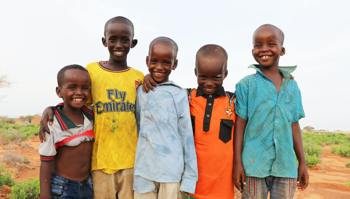
Promotion of the return of Somali refugees with a community oriented reintegration approach: Consultancy for Third Party Monitoring and Evaluation in Somalia
- 2021 – 2022
- under € 500,000
- Somalia
In January 2015, the German Federal Ministry for Economic Cooperation and Development (BMZ) contracted GIZ to assist the Government of Somalia with the social and economic (re-) integration of returnees, internally displaced persons (IDPs) as well as members of the host community of Kismayo in Jubaland. This project has been extended to run until 12/ 2022, under the title “Somali Reintegration Program” (SRP) with the aim of supporting returnees, IDPs and host community members of Kismayo to establish and secure sustainable livelihoods through a community-based approach of (re-)integration.
The main objective of this assignment was to provide primary data and analysis by conducting independent monitoring and evaluation of project activities to draw conclusions on outcomes, impacts and sustainability of project activities. To that end, the consultant collected data by observations, key informant interviews, and other methods he or she deems necessary to provide an accurate overview of the implementation progress in order to ensure compliance with the contractual arrangements of implementing partners.
The project was implemented in five fields of action: (1) improving the functioning of social and economic infrastructure; (2) promoting income-generating opportunities through business support, employment promotion, and the provision of employment services; (3) qualifying selected local authorities and institutions in managing the (re-)integration of returnees and IDPs; (4) providing basic psycho-social support (not to be included in the TPM) as well as (5) providing short-term services to strengthen the resilience of the population to COVID- 19.
The project followed a participatory approach: activities were closely developed, implemented and monitored through GIZ’s cooperation with target beneficiaries, governmental, international and national partners. Harmonization with other sectors including agencies and other coordination structures was imperative to ensure synergies and project success. The modes of deliveries were grant agreements with national and international NGOS, financial agreements with governmental agencies and consultancies. Less than 10 % were implemented by GIZ personnel. The main task of the GIZ personnel was the provision of capacity development of public institutions/ partners, the conceptualization of the contracts with governmental and non-governmental partners, guidance of NGOS, and mentoring.
- Partners:
- Particip (Lead), Dansom
Consultant to Develop a Draft SADC Regional Competition and Consumer Policy Framework.
- 2021 – 2022
- under € 500,000
- SADC region
The overall objective of the project of which this contract will be to deepen integration by developing a regional competition policy framework to enhance convergence and harmonisation of laws and enforcement practices.
Development of a regional competition policy framework to provide policy guidelines and facilitate development and implementation of the regional policy at national level, encourage common measures, common approaches, and common enforcement practices. The regional policy framework will also strengthen the network of national competition and consumer protection authorities to promote cooperation and harmonisation of competition regulation in the region as well as assist countries to implement competition and consumer laws in conformity with the goals of the SADC region.
- Partners:
- Particip (Lead), DMI, EY Belgium
- Keywords:
- Governance, Industry & private sector development, Justice/Rule of Law, Trade

Project Implementation and Monitoring Support (PIMS)
- 2020 – 2022
- under € 500,000
- Global
The main objectives of the Project implementation and monitoring support PIMS is to further strengthen the capacity of the staff of the EC (including FPI, line DGs, EEAS and EUDs) and the implementing partners involved in the design, monitoring and implementation of PI funded actions in line with results based management principles. The project has two main objectives: (1) Increase the capacity of EC and implementing partners' staff to design, implement and monitor PI funded actions; (2) Improve the quality of actions and the achievement and reporting of results.
The project will:
- Deliver a hands-on training as regards PI common indicators, logical frameworks and monitoring arrangements to be implemented by PI funded actions, in order to enable PI project managers and implementing partners, including framework contactors, to become acquainted with the system and to be able to use it.
- Coach PI project managers and implementing partners to identify and/or refine indicators for new or already ongoing actions so that all those involved in the project implementation take on board relevant common PI indicators, ensure common understanding by all stakeholders as well as to help them select indicators for actions where implementation is in its inception.
- Provide ad hoc guidance through a helpdesk which will consist of replies to specific questions asked by PI project managers and implementing partners and hands on support to PI project managers and implementing partners with specific tasks, on a demand driven basis.
- Provide technical assistance to FPI.4 in the roll out OPSYS and implementation of the system in relation to the PI as well as in relation to the changes likely to take place following the approval of the new MFF.
- Partners:
- Particip (Lead), Idem Concept, Tetra Tech Europe Ltd
- Keywords:
- Monitoring & Evaluation, PCM / Logframe

TA: media and freedom of expression in the framework of EU democracy support 'Media4Democracy'
- 2017 – 2022
- € 2 – 5 million
- Global
Media4Democracy was an EU-funded Technical Assistance Facility strengthening the European Union Delegations’ ability to implement the EU Human Rights Guidelines on Freedom of Expression Online and Offline.
Our mission was to support the EU Delegations’ broad and coherent implementation of the EU Guidelines on Freedom of Expression and to help them to identify, design and implement appropriate near-, medium- and long-term actions.
The TA team ‘Media4Democracy’ was based in Brussels and provided advocacy support and capacity building services to all EU Delegations (EUDs) worldwide, as well as customised technical support to individual EU Delegations.
The team of three senior experts also utilised and deployed a global network of leading freedom of expression and media professionals, working together to provide tailored support and expertise to EU Delegations.
Media4Democracy was backed by a Consortium of prominent European organisations, led by Particip, from the field of freedom of expression, media development and democracy support: Article19, Deutsche Welle Akademie, European Partnership for Democracy, Free Press Unlimited and the Thomson Foundation.
Media4Democracy was established by the European Commission’s Directorate-General for International Cooperation and Development (DEVCO) in January 2017 under the European Instrument for Democracy & Human Rights (EIDHR).
List of assignments:
March - May 2017: Development of Advocacy material related to World Press Freedom day 2017
June - Nov 2017: Honduras assignment - advocacy expert, data mining expert
July - August 2017: EU Advocacy and Action in Support of Universal Access to Information and the International Day for the Universal Access to Information
June - Nov 2017: November training 2017
March 2018 : Support to EIDHR focal point meeting
March – May 2018 : Development of A19 Package Elements
January – April 2018: Fellowship development
March – June 2018: ToR and CVs for Ghana assignment WPFD 2018
Oct 2017 - July 2018: Practical Guide Access to Information
Sep 2017 - Aug 2018: Assignment support to EU Delegation Laos
Sep 2017 - Aug 2018: Strengthening FoE and Media Pluralism in The Gambia within the Transitional Justice Framework
Sep 2017 - Aug 2018: Set-up and maintenance of website & Copy writer
May – August 2018: TA to the EUD to Botswana and the SADC Media Institutions as Drivers of Democracy: strengthening freedom of expression and media pluralism
May – Sept 2018: Development of FPU Package Elements - Media, Information Access and the Empowerment of Women & Girls + Participation in Gender Focal Point Meeting & Materials
June – Oct 2018: Technical Assistance to the EUD to Rwanda, Media Institutions as Drivers of Democracy: strengthening freedom of expression and media pluralism
Sept - Nov 2018:TA to DEVCO B1: Support to delivery of Brussels-based November training
April 2017-Dec 2018: Services of Junior Graphic designer for continious support
April – Dec 2018: TA to Zambia: Strengthening law and policy in support of FoE and media pluralism: support for EUD strategic advocacy and programme development
Sept - Dec 2018: TA to the EUD to Malaysia: Acting in the context of democratisation - Targeted media pluralism and FoE situation assessment
November – December 2018: TA to the EUD to Vietnam - Targeted Legal Analysis of Cyber Law and Draft Implementing Decree
Jan 2018 - Jan 2019: Communication and Proof-reading Activities
July 2018 – Jan 2019: Handbook on Safety of Journalists and Advocacy Support to EUDs to Mark IIDEIAJ 2018
July 2018 - Jan 2019: Supporting capacity of Media4Democracy Core Expert Team
March 2018 – Feb 2019: ToR and CV for Fellowship implementation- Fellowship Strengthening Institutional Leaders in Support of Pluralistic Media - Collaboration with the EUD of Tanzania
July 2018 – February 2019: Technical Assistance to EU Delegation to Indonesia: Supporting EU – Indonesian Government Joint Seminar “Addressing Hate Speech and Disinformation”
November 2018 - February 2019: TA to the EUD to Kyrgyzstan - Media Institutions as Drivers of Democracy: strengthening FoE and media pluralism
October 2018 - March 2019: Development of TF Package Elements Supporting AtI
October 2018 - March 2019: TA to the EUD to Malaysia: Acting in the context of democratisation - Media, Access to Information and ICT and the Empowerment of Women and Girls; Fighting cyber bullying of women and girls -FPU pilot
Dec 2018 - March 2019 : TA to the EUD to Burundi -Targeted Media Assessment within the Context of 2020 Presidential Elections
Jan - March 2019: Development of Global Webinar for EUDs -EU Guidelines on Freedom of Expression: Policy Essentials Webinar - together with TF
February - June 2019: TA to the EUD to Burkina Faso: Media, AtI and ICT and the Empowerment of Women and Girls; including consideration of issues linked to female genital mutilation and women’s participation in elections
April – June 2018: Development of EPD Package Elements - Media Institutions as Drivers of Democracy
Nov 2018 - July 2019: Fellowship: Strengthening Institutional Leaders in Support of Pluralistic Media - Collaboration with the EUD of Rwanda
Jan - July 2019: Development of Global Handbook for EUDs - EU Human Rights Guidelines on Freedom of Expression Online and Offline: Policy Essentials Handbook
March - July 2019: TA to the EUD to Sri Lanka and Maldives -. Media Institutions as Drivers of Democracy: strengthening FoE and media pluralism
April - July 2019 : TA to the EUD to Nicaragua and SICA: Support FoE and Media in Highly Complex, Closed and Dangerous Context
Feb 2019 - Jan 2020: Supporting capacity of Media4Democracy Core Expert Team - phase II
April 2019 - January 2020: Fellowship: Strengthening Institutional Leaders in Support of Pluralistic Media - Collaboration with the EU Delegation of Kyrgyzstan
- Partners:
- Particip (Lead), Article 19, DW, EPD Germany, FPU, TF
- Keywords:
- Civil society, Communication & media, Human rights, Management, Project implementation / Technical Assistance, Training
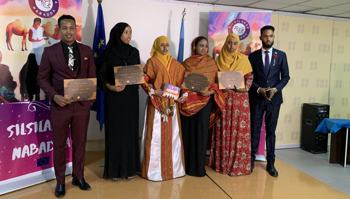
EU visibility and communication contract for Somalia
- 2018 – 2022
- € 1 – 2 million
- Somalia
After 25 years of state disintegration, conflict and people’s displacement, Somalia was on a path to become a peaceful, stable and democratic country. It was no more a failing state but a recovering state, emerging from fragility with the support of the international community, and more particularly the European Union which had been a lead actor over the past decade.
The overall objective of the assignment was to enhance visibility and communication of the European Union in Somalia and improve awareness and recognition of the EU-Somalia partnership in all relevant sectors of cooperation (political economic, development and other major policy areas of common interest) and in line with the EEAS communication guidelines.
Objective 1 was to support the staff of the EU Delegation to Somalia to review its work on communication and visibility by recommending how to improve the planning, design and implementation of information, communication and visibility activities and events.
Objective 2 was to increase awareness of the EU-Somalia partnership and the level of familiarity with the EU and its degree of recognition within and outside Somalia, as well as the visibility of the actions under the EDF and EUTF decisions funding of this contract.
- Keywords:
- Communication & media

Evaluation of Jordan WFP Country Strategic Plan 2020-2022
- 2021 – 2022
- under € 500,000
- Jordan
This independent evaluation of WFP Country Strategic Plan (CSP) in Jordan assessed the strategic positioning, added-value and results of WFP operations in the Country from 2018 to 2021.
The evaluation served the double purpose of accountability (performance and result assessment) and learning (why certain results occurred or not, lessons and evidence for decision-making). It envisioned that the evaluation will inform the design of the new CSP for Jordan, which was scheduled for Executive Board consideration in November 2022.
CSP key sectors and activities included:
- Emergency response, including cash-based transfers
- Social protection
- Nutrition (including nutritional education) and school feeding
- Livelihoods activities, including smallholder farmer support
- Institutional capacity strengthening
Cross-cutting themes included: Gender equality and empowerment of women (GEEW), humanitarian principles and protection, accountability to affected populations (AAP), WFP partnership strategy
The evaluation employed a mixed-method approach that triangulated qualitative and quantitative data from a variety of sources. For this purpose, the evaluation team conducted interviews with different stakeholders including WFP staff at HQ, regional and country level, WFP cooperating partners, donors, UN agencies, ministries as well as focus group discussions with the beneficiaries.
Link to the publication: https://www.wfp.org/publications/evaluation-jordan-country-strategic-plan-evaluation-2020-2022
- Keywords:
- Agriculture, Food and nutrition, Humanitarian aid, Monitoring & Evaluation
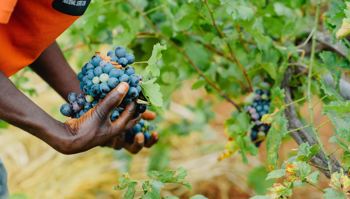
Final Evaluation of Support to Food Security and Nutrition in Tanzania
- 2022 – 2022
- under € 500,000
- Tanzania
Systematic and timely evaluation of its programmes and activities is an established priority of the European Commission. The focus of evaluations was on the assessment of achievements, the quality and the results of Interventions in the context of an evolving cooperation policy with an increasing emphasis on result-oriented approaches and the contribution towards the implementation of the SDGs.
The main objectives of this evaluation were to provide the relevant services of the European Union, the interested stakeholders and the wider public with:
- an overall independent assessment of the past performance of the project: Improving food and nutrition security in Dodoma and Singida Regions, Tanzania - Boresha Lishe, paying particular attention to its results measured against its expected objectives; and the reasons underpinning such results;
- key lessons learned, conclusions and related recommendations in order to improve future interventions.
The main users of this evaluation were the EU Delegation to Tanzania, WFP, Save the Children and the Government of Tanzania being the PMO’s Office, PORALG, Ministry of Agriculture, TFNC and the Ministry of Finance and Planning NAO office.
- Partners:
- EMI (formerly: Cardno Belgium) (Lead), CAPA EEIG (managed by Particip), Expertise Advisors (formerly: ETI Consulting), Particip
- Keywords:
- Food and nutrition, Monitoring & Evaluation

Mid Term evaluation of projects SEN/031 (Programme Santé et Protection sociale du PIC IV) and SEN/032 (Programme « Formation professionnelle et technique et Employabilité)
- 2021 – 2022
- under € 500,000
- Senegal
The main objective of the mission is to carry out an interim and indpendent evaluation of SEN/031 and SEN/032
In this context, the mission should
- analyze whether planned activities to achieve expected results are on track;
- analyze the results achieved by the interventions in terms of capacity building (CB);
- analyze the management and monitoring of projects/programmes;
- analyze the interventions according to the evaluation criteria (relevance, coherence, effectiveness, efficiency, sustainability) and cross-cutting themes (governance for development, gender equality, environment and climate change).
- Keywords:
- Monitoring & Evaluation
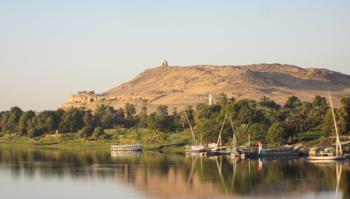
Strengthening the Policy Frameworks for Transboundary Water Resources Management in the Nile Basin
- 2020 – 2022
- under € 500,000
- Burundi, Congo (Brazzaville), Egypt, Ethiopia, Kenya, Rwanda, South Sudan, Sudan, Tanzania, Uganda
The Nile Basin Initiative (NBI) is a partnership of the 10 Nile Basin riparian states with a shared vision objective to promote sustainable socio-economic development through the equitable utilization of and benefit from the shared Nile Basin water resources. Nile Basin countries face increasing challenges of meeting the requirements of their rapidly growing populations in the face of dwindling resources that are threatened by emerging pressures like climate change, land use change and degradation, urbanization, etc. The challenges result in increased efforts at utilization of the Nile waters for agricultural, domestic, industrial and environmental purposes. Countries are embarking on large-scale developments for water utilization and water-related use in riparian countries which have major implications for current and future availability of water resources.
The assignment took the basin perspective and looked at the transboundary governance mechanisms in place. Especially national level arrangements such as policies and Transboundary Water Management (TWM) units served the various transboundary mechanisms a country subscribes to at the same time.
The objective was to facilitate and document a joint review and learning process on provisions for transboundary cooperation in national policies and related institutional arrangements.
The primary work of the project consisted of the following tasks:
- Task 1: Finalization of the NBI Policy Handbook
- Task 2: Guidance Document on key TWM principles for national water policies
- Task 3: Review of experience and mapping of cross-border cooperation arrangements in Nile Basin
- Task 4: Review of experience of the national level organizational arrangements for TWM
- Task 5: Collaborative assessment of progress of implementation of TWM principles in
National Water Policies
- Task 6: Action plan for transboundary water policy at national and regional level
- Task 7: Policy Synthesis Report – Status of TWM governance and Implementation of
SDG 6.5.2. in the Nile Basin
- Task 8: Blended Learning Module
- Prepare and facilitate Policy Roundtables
- Keywords:
- Environment, Training

The purpose of this evaluation was to build an evidence base regarding SDC’s engagement in climate change adaptation and mitigation, including partnerships established by SDC to address climate change adaptation and mitigation at global, regional and national level.
The evaluation was designed to:
- Contribute to strategic decision-making (i.e. for the Dispatch 2021-2024).
- Derive lessons learnt in order to improve institutional performance.
- Serve as one measure of accountability towards the Parliament and the public.
The evaluation : i) assessed the successes, difficulties / challenges (including failures) of programmes and projects in Climate Change Adaptation and Mitigation implemented by SDC; ii) identified ‘good practices’ and determined how they could be systematically applied within SDC; iii) conducted a comparison / benchmarking of SDC’s performance compared to international practices; and iv) assessed the effectiveness and rate of achievement of projects and programmes.
The evaluation covered activities implemented during a period of six years (2015-2020) from all domains of SDC (i.e. South Cooperation; Global Cooperation; Humanitarian Aid; and Cooperation with Eastern Europe). It concentrated on projects in the area of climate change adaptation (CCA) and climate change mitigation (CCM) that SDC steers or co-steers. This includes direct implemented projects, mandates and contributions to trust or basket funds, etc. It excludes core contributions to multilateral organizations, large Funds (GCF, IDA, etc.) and NGOs.
- Keywords:
- Environment, Monitoring & Evaluation