Nepal
17 referencias
Framework Agreement for Decentralized Evaluations and Reviews (FADER) - Lot 1
- 2023 – 2027
- de 2 a 5 millones de €
- Ethiopia, Indonesia, Kyrgyzstan, Nepal, Tajikistan, Tanzania, Ukraine, Uzbekistan, Viet Nam
The Framework Agreement for Decentralized Evaluations and Reviews (FADER) LOT 1 covers different types of appraisals, evaluations and reviews of development cooperation projects and programmes funded by the Ministry for Foreign Affairs of Finland (MFA).
The main users of the FADER are the regional departments of the MFA, which have regional and country specific development cooperation programmes/projects in Africa, the Middle East, Asia, Eastern Europe and Central Asia.
The following assignments are implemented by Particip GmbH:
- Project appraisal: Strengthening inclusive education system in support of Ethiopia's general education sectoral programme,
- Appraisal of the Local Adaptation to Climate Change- Project in Nepal,
- Project appraisal: Rural Economic Development (RED) Phase I in Ethiopia,
- Appraisal of the “Forestry, Land Use and Value Chains Development in Tanzania” (FORLAND) programme,
- Appraisal of Tax Sector Support to Tanzania (TAXTAN) programme.
- Palabras clave:
- Agricultura, Desarrollo rural y urbano, Educación, Gobernanza, Medio ambiente, Seguimiento y evaluación, Silvicultura

Mid-Term Evaluation of the Youth Action Plan in EU External Action (2022-2027)
- 2025 – 2026
- ACP (Africa), ASEAN region, Latin America & Caribbean
The Youth Action Plan (YAP) in EU External Action 2022–2027, adopted in October 2022, aims to promote meaningful youth participation and empowerment in EU external action for sustainable development, equality, and peace. The global objective of this evaluation is twofold:
- To provide the relevant EU services and stakeholders with an independent assessment of the performance of the YAP, ensuring accountability by examining results at different levels against expected objectives and analysing the factors underpinning those results.
- To identify key lessons learned, conclusions, and recommendations regarding the YAP in order to inform decision-makers on how to improve current and future interventions on youth mainstreaming in EU policies, dialogues, and actions, notably within Global Gateway initiatives.
The specific objectives are:
- To assess the performance of the YAP to date in achieving its objectives and expected results, identifying best practices and gaps in implementation.
- To assess the relevance, coherence, efficiency, effectiveness, sustainability, and prospects for impact of DG INTPA’s youth-targeted actions and youth mainstreaming (at country, regional, and global levels) in relation to YAP objectives.
- To assess the relevance, coherence, efficiency, effectiveness, sustainability, and prospects for impact of EU initiatives undertaken to enhance institutional youth engagement.
- To inform decision-making on the implementation and further development of youth policy and priorities in EU external action up to 2027 and into the next programming cycle (possible YAP II), contributing to EU priorities and, in particular, the implementation of Global Gateway.
- Socios:
- Particip (líder), ECDPM
- Palabras clave:
- Seguimiento y evaluación

Evaluation of ICI cooperation in Asia
- 2024 – 2025
- menos de 500.000 €
- Indonesia, Kyrgyzstan, Nepal, Tajikistan, Uzbekistan, Viet Nam
The evaluation provided an assessment of the support delivered through Finland’s Ministry for Foreign Affairs' (MFA) Institutional Cooperation Instrument (ICI) in Central Asia (Uzbekistan, Tajikistan, Kyrgyzstan), Vietnam, Nepal, and Indonesia. By applying the OECD DAC criteria, the evaluation examined 12 ICI-funded projects, offering insights into both their individual achievements and challenges, as well as insights into the instrument as a whole.
The primary aim of the evaluation was to provide objective and impartial insights that would enhance accountability, promote learning, and support informed decision-making. It specifically focused on assessing the effectiveness, impact, and sustainability of the projects under the ICI programme.
A key aspect of the evaluation was identifying valuable lessons learned that could guide future cooperation efforts and contribute to a broader evaluation of Finland’s development cooperation instruments. Beyond assessing individual projects, the evaluation also explored the efficiency of MFA Finland and ICI consultant support, examining how effectively these contributions facilitated successful project implementation. Additionally, it assessed the sustainability and long-term impact of capacity-building efforts, while addressing important policy considerations for the Government of Finland.
Key focus areas were:
- Project-Level Evaluation: All 12 projects were assessed using the OECD evaluation criteria. Within the scope of available resources, a select few projects received a more comprehensive review, ensuring representation from each of the key Finnish institutions involved in the projects.
- Programme-Level Evaluation: The evaluation explored the long-term sustainability and impact of capacity-building initiatives and other investments made through the ICI Asia programme.
- Formative Evaluation: The study also assessed how the MFA and ICI consultants could better support the implementation of ICI projects, with a focus on improving operational efficiency.
- Policy and Strategic Consideration: The evaluation addressed several broader policy aspects, such as: i) The effectiveness of the ICI Asia programme in leveraging market access and opportunities for Finnish actors, including the private sector; ii) The potential for Finnish private sector actors to access Public Investment Fund (PIF) resources or other funding sources beyond ICI funding; iii) The role of linkages between ICI projects and other Finnish entities, including universities and civil society organisations (CSOs), and the perceived benefits and challenges of such connections.
- Palabras clave:
- Desarrollo institucional, Medio ambiente, Seguimiento y evaluación, Silvicultura

EU-Nepal Policy Dialogue Support Facility
- 2023 – 2025
- de 500.000 € a 1 millón de €
- Nepal
The Delegation of the European Union to Nepal aims to strengthen EU-Nepal relations by taking up diverse roles, it functions as an official channel of bilateral relations, be it political, development, economic (including trade) or cultural. As such, it plays an essential part in its political, economic, and commercial relations with Nepal.
The present contract will support the promotion of EU policies and priorities. It will provide the EU with adequate, timely and professionally competent technical assistance through consultancy in specialized areas and logistics support, ensuring that activities are programmed and implemented in an efficient and effective manner and that foreseen results are achieved contributing to the realization of the overall objective
Meta-analysis of Country Programmes 2021–2024
- 2023 – 2024
- menos de 500.000 €
- Global
The purpose of the meta-analysis of the 2021-2024 Country Programmes in Finland's 10 partner countries was to support the achievement of Finland’s development policy objectives in the partner countries, and to provide information for the further development of the Country Programmes and their implementation at the strategic level. The meta-analysis and its recommendations supported the regional departments in the programming of the next generation of Country Programmes, and in their subsequent management.
The meta-analysis comprised a desk review of available information and stakeholder feedback (phase 1) as well as self-assessment workshops with each country team, to assess contributions to results and to discuss further scenarios.
The specific objectives of the analysis were:
1. To synthesise key developments in the 10 partner countries with relevance for the respective Country Programmes
2. To assess the degree and usefulness of adaptive management of the Country Programmes during the current programme cycle
3. To assess the degree to which Country Programmes have contributed to intended (or unintended) Country Programme results and to analyse the factors explaining these contributions (or the absence of contributions)
4. To assess the sustainability of Country Programme results
5. To assess the value-add of Country Programmes compared to planning and implementing separate projects
6. To support the preparation of the next cycle of Country Programmes
- Socios:
- Particip (líder), NIRAS
- Palabras clave:
- Seguimiento y evaluación

Evaluation of the European Union’s cooperation with the Federal Democratic Republic of Nepal (2014-2021)
- 2022 – 2024
- menos de 500.000 €
- Nepal
This evaluation had two overarching objectives. Firstly, it aimed to provide the relevant external cooperation services of the European Union (EU) and the broader public with an independent assessment of the EU's past and current cooperation with the Federal Democratic Republic of Nepal from 2014 to 2021. Secondly, it sought to identify key lessons and produce recommendations to inform responsible decision-makers, particularly in the European External Action Service and the Directorate-General for International Partnerships, on how to improve the EU’s current and future strategies, programmes, and actions.
Its specific objectives were as follows:
- To measure how the combination of different interventions and modalities contributed to the expected objectives of the Multi-Indicative Programme (MIP) 2014-2020 at the country level, taking into consideration policy dialogue and financial assistance (including budget support);
- To assess the extent to which budget support in Nepal achieved its expected results in the education sector. This included evaluating how sectoral budget support enhanced the efficiency and effectiveness of policies, strategies, spending actions, and administrative capacities in the education sector;
- To evaluate how EU external actions have supported and continue to support Nepal’s overarching priorities under the 2021-2027 MIP, particularly implementing the federalism reform and graduating from the status of least developed countries; and,
- To assess the impact of the COVID-19 pandemic on the evaluated sectors and the EU’s support as a response to the pandemic.
The evaluation focussed on the areas of i) sustainable rural development (incl. nutrition); ii) education (incl. technical and vocational education and training)); iii) federalism reform, strengthening democracy, decentralisation; as well as cross-cutting issues related to gender equality, climate change, and human rights.
The evaluation identified conclusions, lessons learned, and examples of good practices regarding the achievement of the EU’s support to Nepal. It also provided a set of targeted and practical forward-looking recommendations for the improvement of the programming, assistance, and implementation of current and future EU interventions in Nepal under the new multi-annual financial period 2021-2027.
- Palabras clave:
- Agricultura, Alimentación y nutrición, Educación, Finanzas públicas / presupuestación, Gobernanza, Macroeconomía / política nacional, Seguimiento y evaluación, Sociedad civil

Appraisal of the Local Adaptation to Climate Change- Project in Nepal
- 2023 – 2024
- menos de 500.000 €
- Nepal
The appraisal served two primary purposes. Firstly, it aimed to provide an independent assessment of the feasibility and implementation potential of the Local Adaptation to Climate Change (LACC) project, finalizing the Project Document (PD). This involved evaluating project relevance, implementation strategy, organizational structures, resource allocation, sustainability, and effectiveness in the given context. It also assessed the integration of cross-cutting objectives into the PD and addressed specific issues identified during the planning process, considering recommendations from the Quality Assurance Group of MFA Finland. Possible problem areas were pointed out, and workable solutions to the problems were presented. The Appraisal team collaborated with MFA and the Government of Nepal to make necessary PD revisions based on their decisions.
Secondly, the appraisal reviewed opportunities to broaden cooperation between Finland and Nepal beyond traditional development cooperation, particularly under Finland's Country Programme. This review contributed to the appraisal and finalization of the LACC PD, emphasizing practical proposals for the implementation strategy. The appraisal explored possibilities for cooperation in various sectors like natural resources management, WASH, climate solutions, green economy, circular economy, bio- and agro-technology, aiming to diversify cooperation modalities and partnerships involving the public and private sectors, academia, and civil society. The appraisal team presented comprehensive recommendations to support Team Finland's efforts, utilizing ODA instruments to assist Nepal's transition from Least Developed Country status by 2026 to a Lower Middle Income Country by 2030. This review aided Finland in supporting Nepal's graduation and navigating the post-graduation landscape to achieve its national sustainable development priorities. The relevant recommendations were translated into practical steps and activities to be included in the LACC PD, as applicable, taking into account the scope and modality of the Project.
- Palabras clave:
- Desarrollo rural y urbano, Medio ambiente, Seguimiento y evaluación

Evaluation of Nepal WFP Country Strategic Plan 2019-2023
- 2022 – 2023
- menos de 500.000 €
- Nepal
This independant evaluation of WFP Country Strategic Plan (CSP) in Nepal assessed the strategic positionning, added-value and results of WFP operations in the Country from 2018 to 2022.
The evaluation served the double purpose of accountability (performance and result assessment) and learning (why certain results occurred or not, lessons and evidence for decision-making). It is envisioned that the evaluation will inform the design of the new CSP for Nepal, which was scheduled for Executive Board consideration in November 2023.
CSP key sectors and activities included:
- Emergency preparedness and response, including cash-based transfers
- Nutrition and school feeding
- Social protection
- Livelihoods activities, including smallholder farmer support
- Resilience, disaster risk reduction and climate change
- Institutional capacity strengthening
Cross-cutting themes included: Gender equality and empowerment of women (GEEW), humanitarian principles and protection, accountability to affected populations (AAP), WFP partnership strategy
The evaluation employed a mixed-method approach that triangulates qualitative and quantitative data from a variety of sources. For this purpose, the evaluation team conducted interviews with different stakeholders including WFP staff at HQ, regional and country level, WFP cooperating partners, donors, UN agencies, government entities as well as focus group discussions with the beneficiaries.
Link to the publication: https://www.wfp.org/publications/evaluation-nepal-wfp-country-strategic-plan-2019-2023
- Palabras clave:
- Agricultura, Alimentación y nutrición, Ayuda humanitaria, Seguimiento y evaluación

Evaluation of the Finnish Development Policy Influencing in the European Union
- 2021 – 2022
- menos de 500.000 €
- Global
The Ministry for Foreign Affairs of Finland (MFA) commissioned an evaluation of Finnish Development Policy Influencing in the European Union. The purpose of this evaluation was to assess the relevance, effectiveness and coherence of the different development policy influencing activities of the Finnish MFA in relation to the EU and its institutions, and to provide guidance to the Ministry on further strengthening of the influencing activities for the future. The evaluation was mostly forward-looking and utilization focused, providing strategic information to inform future developments of the influencing agenda.
The objectives of this evaluation were:
- To assess how Finland has managed to promote Agenda2030, Building Back Better (and Greener), and Finland’s Development Policy objectives in the EU, as well as the common development cooperation practices and principles by the member states.
- To assess the effectiveness of various influencing activities, means and channels and Finland’s best opportunities to influence (intuitions and bodies, country delegations, interventions etc.) taking into account available human and financial resources.
- To analyze the factors (structures, processes, tools, capacity, other) that have facilitated/enabled or hindered the positive results of the influencing activities.
- To provide insight on the best opportunities and ways to engage and influence in the future, especially under the new EU funding instrument and the evolving development cooperation scene.
- To provide insight on how the Ministry together with other relevant stakeholders could develop their practices in order to maximize influence for the future, taking into account available human and financial resources.
- Socios:
- Particip (líder), Niras Finland Oy
- Palabras clave:
- Derechos humanos, Educación, Gobernanza, Medio ambiente, Seguimiento y evaluación, Silvicultura

Final Evaluation of Rural Village Water Resources Management Project (RVWRMP) 2006-2022 and Post-evaluation of Rural Water Supply and Sanitation Western Nepal Project (RWSSP-WN) 2008-2019
- 2021 – 2022
- menos de 500.000 €
- Nepal
The scope of the evaluations was to carry out an analysis and assessment of the relevance, coherence, effectiveness, efficiency, sustainability and impact of the two projects to guide MFA's future involvement in the identification, formulation, design, appraisal, funding and implementation of similar but more impactful projects.
The ex-post evaluation of the RWSSP-WN covered the duration of the project phases from 2008-2019, and the final evaluation of RVWRMP covered the period from 2006 until the moment of the evaluation. The scope of both evaluations was WASH and livelihoods, with linkages to poverty reduction, climate change adaptation and mitigation, environment, agriculture/forestry, local governance processes and GESI.
- Socios:
- Niras Finland Oy (líder), Particip
- Palabras clave:
- Agricultura, Alimentación y nutrición, Medio ambiente, Seguimiento y evaluación, Silvicultura

Evaluation of ICI-Projects for the Department for the Americas and Asia
- 2021 – 2021
- menos de 500.000 €
- Afghanistan, Bhutan, India, Nepal
The objective of the evaluation was to produce and provide objective and impartial information about five ICI (Institutional Cooperation Instrument) projects implemented in 2011 – 2020 in Afghanistan, Bhutan, India and Nepal. The evaluation covered a range of evaluation criteria and questions to be used by different evaluation stakeholders for the purposes of accountability, learning and informed decision-making.
The evaluation focused on the following projects:
- Capacity Buidling for Emission Measurements in India,
- Climate Modelling and Observations (CLIMOB) in India,
- Meteorology Sector Cooperation in Bhutan,
- Finnish-Nepalese Project for Improved capability of the Government of Nepal to respond to the increased risks related to the weather-related natural disasters caused by climate change (phase II and III)
- Geological Survey of Finland’s Support to Afghanistan Geological Survey (AGS, Afghanistan)
- Socios:
- Particip (líder), Niras Finland Oy
- Palabras clave:
- Desarrollo institucional, Medio ambiente, Seguimiento y evaluación
Evaluation of Finnish Development Policy Influencing Activities in Multilateral Organisations
- 2019 – 2020
- menos de 500.000 €
- UN
The purpose of this evaluation was to assess the relevance and effectiveness of different types of multilateral influencing activities implemented by the Ministry for Foreign Affairs of Finland (MFA), and to provide guidance on how to further strengthen them.
The evaluation used a theory-based approach which allowed for systematic analysis of multi-causal relationships between influencing activities, effects, and further changes in Multilaterals. Overall, 23 multilateral partner institutions of the MFA were covered, and eight of those were studied in more depth: the World Bank Group (WBG), the United Nations Population Fund (UNFPA), the United Nations Children’s Fund (UNICEF), the World Food Programme (WFP), the United Nations Entity for Gender Equality and the Empowerment of Women (UN Women), the International Fund for Agricultural Development (IFAD), the Food and Agriculture Organisation of the United Nations (FAO), and the International Trade Centre (ITC).
The evaluation’s specific objectives were as follows:
- to assess how Finland has managed to promote Agenda2030 and Finland’s Development Policy objectives in the multilateral partner organisations;
- to assess the influencing activities, means and ways used;
- to provide guidance in elaborating the new influencing plans (work in progress);
- to assess the human and financial resources available for influencing activities;
- to assess the usefulness and feasibility of having the influencing plans;
- to assess various influencing means and Finland’s best opportunities to influence (Headquarters of multilateral organisations, country offices, multi-bi projects etc.) taking into account available resources;
- to assess the Theories of Change of the influencing strategy plan (when available) and give guidance for the possible revision to better meet the objectives of Finnish Development Policy.
The final report is available here: https://um.fi/publications/-/asset_publisher/TVOLgBmLyZvu/content/evaluointiraportti-ulkoministeri-c3-b6-vaikuttaa-monenkeskisten-j-c3-a4rjest-c3-b6jen-toimintaan-1/384998
- Socios:
- Particip (líder), Niras Finland Oy
- Palabras clave:
- Desarrollo institucional, Gestión, Seguimiento y evaluación
Mid-Term Evaluation: Rural Village Water Resources Management Project Phase III
- 2019 – 2019
- menos de 500.000 €
- Nepal
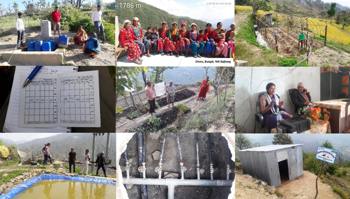
The Rural Village Water Resources Management Project (RVWRMP) is supported by the Government of Nepal (GoN), the European Union (EU) and the Government of Finland (GoF). The core interventions of RVWRMP III provides the population of Sudur Paschim and Karnali Provinces access to water supply, energy, improved food security and improved management of their water resources.
The Mid-Term Evaluation looked at the implementation of RVWRMP III to give advice and suggestions on what changes might be needed to achieve the goals of the project.
The overall objective of the Mid-Term Evaluation was to provide an independent analysis for the decision making with regard to continued validity of the impact, outcome and outputs as set out in the project document.
The evaluation covered the RVWRMP, Phase III since the beginning of its implementation period, March 2016. The key issues and subjects were clustered as follows:
- Governance, especially the impacts and opportunities resulting from adaptation to the federal structure
- Effectiveness, sustainability and exit strategies for Water supply, Irrigation and Microhydro facilities
- Livelihoods interventions, their place in the project and the chosen approaches
- Effectiveness and added value of chosen approach to support holistic way of planning water resources and their use.
Final report available here: https://um.fi/development-cooperation-evaluation-reports-project-and-programme-evaluations/-/asset_publisher/nBPgGHSLrA13/content/valiarviointi-nepalin-maaseudun-vesivarojen-hallintahankkeesta/384998
- Socios:
- Particip (líder), Niras Finland Oy
- Palabras clave:
- Alimentación y nutrición, Energía, Gobernanza, Medio ambiente, Seguimiento y evaluación

The purpose of this assignment is to collect, collate and systematically present, in the form of Evaluation Portraits and Country Evaluation Briefs, findings from existing evaluations and other documents of development interventions in five Norwegian partner countries: Ethiopia, Haiti, Mali, Myanmar, Nepal and Tanzania.
The objective of this assignment is to provide accessible and relevant knowledge about Norwegian and other donors’ development efforts in Norway’s partner countries through systematising findings from existing evaluations of development interventions. The exercise emphasises learning, supplementing a growing database of systematised, relevant, context-specific and accessible information. Beyond its intrinsic value, this knowledge forms a basis for development policies and strategies, contributes to development efforts in the field and reveals knowledge gaps that could be covered by future evaluations.
The main target groups for the study are the Norwegian Ministry of Foreign Affairs, Norad and Norwegian embassies in the selected partner countries and elsewhere.
The assignment is guided by the following questions:
- What are the key contextual features characterising each of the studied case countries?
- How do these contextual features affect development interventions in the respective country/-ies?
- What is the nature of the programmes and projects studied, including levels of development support?
- What are the major obstacles/challenges faced by those interventions?
- What are the major findings in the assessed material concerning the goals, methods, challenges, results and sustainability of the interventions studied?
- How do the programmes and projects perform in terms of such cross-cutting issues as gender equality, environmental concerns and anti-corruption?
- Which, intended and, if any, unintended effects of the programmes and projects, positive and negative, can be identified?
- Socios:
- Particip (líder), Menon
- Palabras clave:
- Seguimiento y evaluación
Final evaluation Nepal Peace Trust Fund
- 2018 – 2018
- menos de 500.000 €
- Nepal
Nepal went through a violent armed conflict starting in 1996 which led to the signature of the Comprehensive Peace Accord (CPA) in 2006. The Nepal Peace Trust Fund (NPTF) was designed to support the CPA since its establishment in 2007. The NPTF was originally set up under a Joint Financing Arrangement (JFA) between the Government of Nepal (GoN) and a Donor Group, which initially included both the EU and a number of EU Member States, together with others.
The general objective of this evaluation was to contribute to stability and peace in Nepal for its sustainable development and ultimately towards economic progress in the long term. This included to assist the Ministry of Peace and Reconstruction through sector budget support and to reinforce the capacity of the actors for the implementation of the peace agreements in general and of the Ministry of Peace Secretariat in particular through capacity development in peace building.
The purpose of this evaluation was to make an overall independent assessment of the past performance of the NPTF, paying particular attention to its results measured against its objectives and to draw key lessons and recommendations in order to improve current and future programmes related to governance and restoration of the rule of law. Moreover, it served as reference for future interventions in Nepal. Therefore, it focussed on the implementation modalities that have been used, the visibility and communication factors, the pertinence and effectiveness of the projects selected and implemented and the impact that the NPTF could have had on the Peace Process.
- Palabras clave:
- Derechos humanos, Gobernanza, Seguimiento y evaluación

This evaluation assessed Finland’s development co-operation activities and policy influencing on gender equality and commitment to enhance the rights of women and girls as a cross cutting objective as well as the priority objective of funding. The emphasis in this evaluation was on co-operation where gender equality is the priority objective.
The main objective of this evaluation was to assess the value and merit of programmes and policy influencing in those initiatives where Gender equality, especially rights of women and girls has been the main objective of the initiative, or the mainstreaming has been prioritised in the initiative or it has been a condition for Finland’s engagement with an organization.
This evaluation covered the activities under the two last development policies from 2012 until the end of 2017.
The evaluation was divided into five phases:
- Planning phase: Identification of Team Leader and finalisation of ToR,
- Start-up phase: Development of first draft approach and methodology
- Inception phase: Desk analysis and preparation of a detailed evaluation matrix. The desk study included a comprehensive context and document analysis. It also included a mapping of programs and their different sources of funding.
- Implementation phase: Included visits at the HQ offices of UNFPA and UN Women in New York, EU HQ in Brussels and three bilateral cooperation countries (Nepal, Kenya and Somalia).
- Reporting and dissemination phase: Drafting of final report and dissemination of final results.
The report is available at: https://um.fi/documents/384998/0/Evaluation_Women_and_Girls_rights_NETTI_2018+%281%29.pdf/eec54c45-a96e-c084-4ada-8c9056548d04
- Socios:
- Particip (líder), Indufor Oy - Metsahallitus Group
- Palabras clave:
- Derechos humanos, Seguimiento y evaluación, Sociedad civil

Post-conflict and post-disaster needs assessment (PCNA/PDNA): development of assessment capacity and tools - Phase I + II
- 2013 – 2017
- de 2 a 5 millones de €
- Global
Relevant background
Since early 2007, the Commission, the UN-family and the World Bank have worked together in setting up a platform for cooperation on post-crisis needs assessments for natural disaster (Post-Disaster Needs Assessment, PDNA) and conflict (Recovery and Peacebuilding Assessment (RPBA), previously named Post-Conflict Needs Assessment, PCNA) scenarios. This trilateral cooperation was framed and formalised through the signature of a Joint Declaration on “Post-Crisis Assessments and Recovery Planning” in September 2008. The EU/UN/WB platform covers the whole PDNA/RPBA(PCNA) process, including strategic coordination, development of joint methodologies for post-crisis assessments, joint deployment of assessment teams, joint training and joint recovery planning and monitoring.
In line with the 2008 Declaration on Joint Post-crisis Assessments and Recovery Planning, the overall objective of the project is to assist and develop third countries’ in-country capacity to gradually assume a more prominent role in Post-Disaster Needs Assessments and Post-Conflict Needs Assessments (now changed to Recovery and Peacebuilding Assessments, RPBA).
The purpose of this project was:
- to support further development of joint PDNA/RPBA(formerly PCNA) methodologies, tools, training programmes, etc.;
- to support joint PDNA/RPBA(formerly PCNA) missions in-country/in region (in coordinating with EU Heads of Delegations and with the European External Actions Service (EEAS) and European Commission). While such support could cover any relevant technical field (long-term and short-term expertise), it is foreseen that a particular emphasis is put on expertise in mission planning and development of final reports/recovery frameworks.
The two phases of the project contributed to a variety of outputs and results, including:
- Phase 1 (01/01/2013 – 31/07/2015): revision of the PDNA methodology and development of the joint EU/UN/WB PDNA Guide, development of the Disaster Recovery Framework (DRF) Guide, review of the PCNA methodology, development of training and capacity building materials, delivery of information/capacity building sessions, joint PDNA/PCNA training courses for national authorities and regional/international organisations, support to over 15 joint EU/UN/WB PDNA/PCNA missions;
- Phase 2 (10/07/2015 – 09/07/2017): revision of the PCNA methodology and development of the RPBA methodology, development of training and capacity building materials, delivery of information/capacity building sessions, joint PDNA/RPBA training courses for national authorities and regional/international organisations, support to over 10 joint EU/UN/WB PDNA/RPBA missions.
- Socios:
- Particip (líder), Dara, ECDPM, GOPA, Punto.sud
- Palabras clave:
- Ayuda humanitaria, Desarrollo institucional, Formación, Gobernanza