Myanmar
15 referencias
Strategic Communication and Public Diplomacy of the European Union Delegation to Myanmar.
- 2025 – 2028
- de 2 a 5 millones de €
- Myanmar
Specific objective (Outcome) 1: Strategic Communication: Measurably increase awareness, understanding and perception of the EU’s partnership priorities in the country, by emphasising impact and added-value of EU actions in Myanmar.
Specific objective (Outcome) 2: Public Diplomacy: Strengthen and expand networks in and outside Myanmar to engage in long-term, people-to-people connections that can help build trust and facilitate future cooperation.
The expected outputs of this contract are as follows:
- Output 1 to Outcome 1: Content marketing strategy designed and implemented, focusing on cooperation priorities, to ensure the role of the EU in Myanmar is better understood and supported in the country and in Europe.
- Output 2 to Outcome 1: Strategic communication activities and conflict-sensitive public campaigns are designed and implemented to make the EU´s brand positioning more understandable, visible and influential to target audiences.
- Output 1 to Outcome 2: A coordinated series of public diplomacy activities, aligned with and supporting the strategic communication priorities and activities, are designed and implemented to strengthen relations with key audiences, and expand and reinforce networks both in Myanmar and in Europe.
- Socios:
- Altair Asesores (líder), Particip
Meta-analysis of Country Programmes 2021–2024
- 2023 – 2024
- menos de 500.000 €
- Global
The purpose of the meta-analysis of the 2021-2024 Country Programmes in Finland's 10 partner countries was to support the achievement of Finland’s development policy objectives in the partner countries, and to provide information for the further development of the Country Programmes and their implementation at the strategic level. The meta-analysis and its recommendations supported the regional departments in the programming of the next generation of Country Programmes, and in their subsequent management.
The meta-analysis comprised a desk review of available information and stakeholder feedback (phase 1) as well as self-assessment workshops with each country team, to assess contributions to results and to discuss further scenarios.
The specific objectives of the analysis were:
1. To synthesise key developments in the 10 partner countries with relevance for the respective Country Programmes
2. To assess the degree and usefulness of adaptive management of the Country Programmes during the current programme cycle
3. To assess the degree to which Country Programmes have contributed to intended (or unintended) Country Programme results and to analyse the factors explaining these contributions (or the absence of contributions)
4. To assess the sustainability of Country Programme results
5. To assess the value-add of Country Programmes compared to planning and implementing separate projects
6. To support the preparation of the next cycle of Country Programmes
- Socios:
- Particip (líder), NIRAS
- Palabras clave:
- Seguimiento y evaluación
Provision of expertise and tools to support Recovery and Peace Building Assessments and Post-Disaster Needs Assessments
- 2017 – 2024
- de 2 a 5 millones de €
- Global
The Particip-led “Post Crisis Assessment and Recovery Planning: Support Office of the EU“ provided systematic support to all stages of disaster- and conflict-related needs assessment missions.
As part of the 2008 Joint Declaration on Post-Crisis Assessments and Recovery Planning, the World Bank (WB), United Nations (UN), and European Union (EU) have committed to providing joint support for assessing, planning, and mobilising efforts toward recovery, reconstruction, and development in countries affected by crises. This tripartite agreement was executed via the mechanism of joint Recovery and Peacebuilding Assessments (RPBA), Post-Disaster Needs Assessments (PDNA), and Pandemic Recovery Needs Assessments (PRNA).
The activities of the advisory team included:
- Provision of support to EU Delegations around the world and EU Services in Brussels in the planning, undertaking and reporting of post crisis assessments: RPBA: support to peacebuilding through short- and longterm support to specific EUDs. Trainings and and workshops for local authorities, ministries and EU staff. PDNA: post-disaster assessments and support to recovery including trainings and workshops. CRNA/PRNA: COVID/pandemic recovery needs assessments and support to recovery including trainings and workshops.
- Support to third countries to build their capacity to carry out RPBAs, PDNAs, and PRNA this includes institutional strengthening and inter-institutional coordination such as the HLAG (High-level-Advisory-Group) composed of WB, UN and EU;
- Facilitate coordination of EU and tripartite input to the implementation of the joint declaration (conceptual work and RPBA/PDNA/PCNA missions);
- Elaborate a preliminary early and longer-term framework (which identifies key recovery sectors, peacebuilding priorities, etc.)– in close cooperation with the EU Delegation and other relevant EU services, including identification/definition of sectors requiring additional EU support (whether provided through short-term assistance under the present project or not), essential cross-cutting issues, a tentative recovery calendar, recovery information management systems, the existing capacity in-country and institutional and legal arrangements for national Authorities, recovery support anticipated, etc.;
- Deployment of experts in RPBA/PDNA/PRNA missions, and
- Revise and/or updating the methodologies as necessary.
Recovery and Peacebuilding Assessments (RPBAs) offered countries a standardised and internationally recognised approach to identify the underlying causes and impacts of conflict and crisis. The RPBA had three primary purposes:
- to help governments identify, prioritise and sequence recovery and peacebuilding activities,
- to provide an inclusive process to support political dialogue and participation of stakeholders,
- to coordinate international support through a joint assessment and a joint recovery and peacebuilding plan as well as a monitoring system.
Post-Disaster Needs Assessment (PDNA) assisted governments with assessing the full extent of a disaster’s impact on the affected country and, on the basis of these findings, producing an actionable and sustainable Recovery Strategy for mobilizing financial and technical resources. The internationally recognised PDNA methodology is a key commitment mentioned in the the Joint Declaration on Post-Crisis Assessments and Recovery Planning. In May 2020, in order to respond to the COVID-19 pandemic, the PDNA methodology was adapted to elaborate a COVID-19 Recovery Needs Assessment (CRNA) methodology.
Recovery and Peace Building Assessment (RPBA)
Myanmar (Jan 2018); Burkina Faso (Jun 2019-June 2021); Mozambique (RPBA Nov 2020-Nov 2021); Azerbaijan (Joint Recovery Needs Assessment - falls outside the RPBA framework, Scoping Mission March 2022); Libya (Stocktaking 2018-2019, RPBA 2022)
Post-Disaster Needs Assessment (PDNA) & Disaster Risk Framework (DRF)
Myanmar (Jan 2018); Syria (Feb 2018); Ivory Coast (July-Sept 2018); Tunisia (Oct 2018); Bangladesh (2018); Georgia (2018); Tonga (2018); Fiji (2018); Mozambique (Apr–Aug 2019);
Central African Republic/CAR (July 2019); Somalia (Drought Impact Needs Assessment/DINA, July - Aug 2018); Albania (Dec 2019-Feb 2020); Lebanon (Rapid Damage Needs Assessment/RDNA, Aug 2020); Lebanon (DRF, Sep 2020-2021); Saint Vincent and the Grenadines (June–Aug) 2021); El Salvador (June-Dec 2021); Haiti (Sep-Oct 2021); Haiti (DRF, Nov-Dec 2021); Pakistan (Sep-Nov 2022); Pakistan (DRF, Nov-Dec 2022); Belize (Jan-Feb 2023); Turkey (Feb-Mar 2023); Ukraine Khakhova dam (June 2023), Myanmar (CMRNA , Sep 2023); Libya ( RDNA, Sep 2023); Afghanistan ( Oct 2023); Afghanistan ( AFPR-PDNA like Refugee support assessment, Nov 2023)
COVID-19 Recovery Needs Assessment (CRNA)
Ecuador (July 2020-Apr 2021); El Salvador (July-Sept 2020); Dominican Republic (Dec 2020-Feb 2021); Zambia (Feb-Aug 2021); Eswatini (Dec 2020-Nov 2021)
Trainings: Recovery and Peace Building Assessment (RPBA)
Bangkok, Thailand (Dec 2017); Lebanon (Apr 2018)
Trainings: Post-Disaster Needs Assessment (PDNA) & Disaster Risk Framework (DRF)
Dominican Republic (Nov 2017); Fiji (Mar-Apr 2018); Vanuatu (Apr 2018); Somalia (May 2018); Myanmar (Aug 2018); Mauritius (Oct 2018); Djibouti & Ethiopia (Feb 2019); Chad (Apr 2019); CAR & Congo (July 2019); India (Aug 2019); Kenya (Sept 2019); Caribbean (Nov 2019); St. Lucia (Nov 2019); Balkans (Sarajevo, Bosnia & Herzegovina, Feb 2020); Mexico (Feb 2020); Liberia (Mar 2020); Senegal (May 2021); Europe and the Commonwealth of Independent States/ECIS region (Jun 2021); University of West Indies (Training of Trainers/ToT, Dec 2021); Panama (PDNA/DRF, Latin American countries/LAC, Mar 2022); Belgrade (ECIS DPPI-SEE, Jun 2022); Regional ECIS (DRF, June 2022); Columbia (PDNA/DRF, July 2022); Costa Rica (PDNA/DRF, July 2022); Barbados (Caribbean countries, Mar 2023); Training Togo Regional ECOWAS (PDNA/DRF, May 2023); Antigua and Barbuda, Saint Johns (DRF, Sept 2023)
Trainings: COVID-19 Recovery Needs Assessment (CRNA) & Pandemic Recovery Needs Assessment (PRNA)
Sahel Region Academia (Nov 2020); Sahel Region government staff and regional organisations (Dec 2020); Ghana (Mar 2021); India (PRNA, Mar 2023)
Other Events
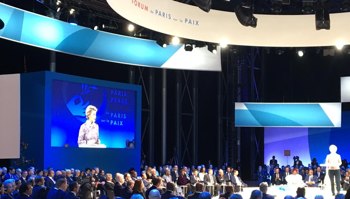
Fragility Forum (RPBA, Mar 2018); Paris Peace Forum (RPBA/PDNA 2019); Paris Peace Forum (RPBA/PDNA, Nov 2020); EU Information Session (Oct 2021); EU Information Session: Asia/Pacific Hub (April 2022); World Reconstruction Conference 5 and Global Platform for Disaster Risk Reduction/GPDRR (Apr 2022); International Society for Photogrammetry and Remote Sensing (ISPRS) Congress (satellite, June 2022); EU Information Session: Caribbean Region (online, June 2023); Slow Onset Event Damage and Loss Workshop ( Nov 2023); Cyclone Mitch 25 year Commemoration ( Oct 2023)
- Socios:
- Particip (líder), GIZ InS
- Palabras clave:
- Ejecución de proyectos / asistencia técnica, Formación, Gobernanza, Sociedad civil
Corporate Emergency Evaluation of WFP’s Response in Myanmar (2018-2022)
- 2022 – 2023
- menos de 500.000 €
- Myanmar
This independent evaluation of the Corporate Emergency Evaluation of WFP’s Response in Myanmar assessed the appropriateness, effectiveness and efficiency of its emergency response in multiple crises in the country from 2017 to 2022.
The evaluation served the double purpose of providing: a) evidence and accountability (performance and result assessment) for results to WFP stakeholders; and b) provide learning (why certain results occurred or not, lessons and evidence for decision-making about a potential scale-up) on WFP’s performance in the Myanmar emergency context, specifically for developing WFP’s future engagement in Myanmar and for broader learning on WFP complex emergency responses.
The CEE‘s subject and focus followed a modular approach, including:
- Strategic positioning vis-à-vis evolving needs (incl. informed strategy, assistance adaptation to changing needs, internal coherency of CSP and budgets revisions, well targeted assistance for food insecure and vulnerable groups).
- Effectiveness in achieving CSP objectives (incl. delivering on planned activities, outputs and strategic outcomes, coverage of assistance, preparedness to respond to crisis, gender equality and empowerment of women)
- Connectedness of assistance (incl. assistance in taps into local capacities and is community-driven, transition and exit, tailored to local capacities and context, strategic linkages to establish along the triple nexus between humanitarian action, development, and contributions to peace, environmental sustainability)
- Partnerships and coordination (incl. coherent and aligned with the wider UN and humanitarian sector, developed appropriate and effective partnerships).
- Humanitarian principles, protection and AAP (incl. adherence to humanitarian principles and “Do No Harm” in all phases of its assistance, managing trade-offs between humanitarian principles, protection challenges faced personnel and its target populations, accountability to affected populations).
- Efficiency (incl. ability to mobilise adequate resources, activities and outputs delivered within the intended timeframe; activities have been cost-efficient; adequacy of corporate support during the consecutive crises; management of operational risks.
Cross-cutting themes included: humanitarian assistance in conflict and peri-urban settings, food and nutrition security, school-based programmes, nutrition-specific interventions and smallholder farmers support.
The evaluation used a mixed methods approach relying on a variety of primary and secondary sources, including desk review, key informant interviews, focus and groups discussions, additional questions to the post-distribution monitoring, phone survey, and geospatial analysis. Systematic triangulation across different sources and methods was carried out to validate findings and avoid bias in the evaluative judgement.
The final report is available at: https://www.wfp.org/publications/corporate-emergency-evaluation-wfps-response-myanmar-2018-2022
- Socios:
- Particip (líder)
- Palabras clave:
- Alimentación y nutrición, Ayuda humanitaria, Derechos humanos, Desarrollo rural y urbano, Seguimiento y evaluación

Evaluation of the European Union support to Rule of Law and anticorruption in Partner Countries (2010-2021)
- 2021 – 2023
- de 500.000 € a 1 millón de €
- Burkina Faso, Congo (Kinshasa), Guatemala, Jamaica, Kenya, Kyrgyzstan, Mali, Myanmar, Niger, Nigeria, Philippines, Viet Nam
The general objective of this evaluation is to provide an independent assessment of the performance of EU support to the Rule of Law (RoL) and Anticorruption in the period 2010-2021 in INTPA partner countries, funded under DCI, EDF, EIDHR, IcSP, CSO and relevant Trust Funds. The evaluation seeks to be a stock-taking and forward-looking exercise but will focus on learning i.e. the identification of key lessons on what has and has not worked and why.
In addition, the specific objectives for this evaluation are:
- To assess the EU support to independent, effective and efficient justice systems, notably a) legislative processes (legality), b) legal certainty and access to justice; and c) equality and accountability before the law, in terms of its impact on good governance (including stability, human rights and democracy, environmental governance and business climate).
- To look at actions aimed at promoting anti-corruption, public accountability and transparency, improving the justice systems and enforcing the principle of separation of powers.
- To pay specific attention to the inclusion of different groups (political, ethnic, religious, etc.), women and youth in decision making at all levels.
- To gather insights on the extent to which the different tools, instruments and modalities used in the EU response have been beneficial in providing effective support to partner countries and the interactions and coherence of those, notably of policy and political dialogue.
- To evaluate the rationale of the EU in these supports to RoL, as well as risk mitigation measures and the impact of policy dialogue, not least on societal and state resilience.
- To produce recommendations for decision-makers in DG INTPA, FPI, DG NEAR, DG ECHO, DG Trade, DG JUST and EEAS on how to improve the EU’s policy strategy and implementation.
The temporal scope of the evaluation is 2010 to 2021, with a particular focus on the previous MMF (2014-2020). The evaluation will focus on the support provided to core state institutions and civil society organisations, specifically: state institutions and oversight bodies, justice institutions, anti-corruption agencies, civil society and human rights institutions.
- Socios:
- Particip (líder), ECDPM
- Palabras clave:
- Justicia / Estado de derecho, Seguimiento y evaluación
Facilitated assessment of Finnish peace, democratization and sustainable livelihoods support in Myanmar
- 2021 – 2022
- menos de 500.000 €
- Myanmar
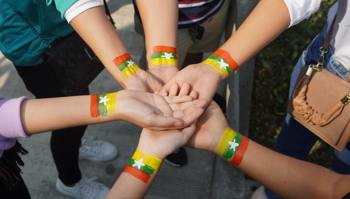
As a result of the February 2021 Coup d'état in Myanmar and the subsequent need to rethink the Finnish support to the peace and democratization efforts in the country, the Ministry for Foreign Affairs of Finland (MFA) commissioned an assessment to provide inputs to its future programming in Myanmar. It assesses the achievements of five projects under the Finnish Peace Support Programme, including their ability to adapt to the post-coup situation, as well as provide inputs and recommendations for a continuous engagement in Myanmar. The assessment covers the three year period from 2019 to 2021.
The five identified projects subject to the assessment are:
- Joint Peace Fund (JPF) 2019-2022 - implemented by UNOPS/NIS;
- “Strengthening Peace and Dialogue Processes in Myanmar 2019-2021” - implemented by Finnish Evangelical Lutheran Mission (Felm) and Euro Burma Office (EBO);
- “Unlocking peace potential through the security sector in Myanmar 2019-2021” - implemented by Crisis Management Initiative (CMI);
- “MyConstitution” 2019-2022 - implemented by International IDEA;
- “Sustainable Livelihoods and Development”/”Alternative Development Programme in Shan State, Myanmar” Phase II 2019-2022 - implemented by UNODC;
- Socios:
- NIRAS (líder), Particip
- Palabras clave:
- Seguimiento y evaluación
Human Rights Policy Support
- 2019 – 2021
- de 500.000 € a 1 millón de €
- Global
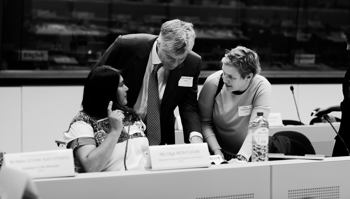
This action contributed to the effective implementation of international human rights instruments, principles and standards, primarily by means of exchange of best practices with partner countries.
The project was conceived to serve and preserve EU values and interests by means of complementary actions. It promoted policy cooperation with partner countries of strategic interest to the EU as well as enhanced the EU's visibility and coherence. This was done through the development of an analysis of the human rights situation in 13 countries, the organisation of seminars/roundtables and outreach activities. This ensured increased human rights awareness and access to human rights knowledge.
The Specific objectives were:
- 1)To ensure appropriate follow-up to political and human rights dialogues with partner countries. This includes, inter alia, facilitating south-south cooperation and exchange of ideas, knowledge and expertise on commonly identified human rights issues; providing technical assistance including in the form of trainings and roundtable discussions with governments in partner countries in order to strengthen their human rights expertise; facilitating interaction among representatives from the private sector and government representatives in partner countries to ensure compliance with the internationally recognised human rights framework; and facilitating regular interaction between partner countries with a view to building and reinforcing regional alliances which may contribute to serving EU interests in multilateral fora;
- 2)To contribute to bringing together experts from the EU and partner countries such as academics, private sector and government representatives in order to equip the EU to remain innovative and tackle emerging subjects of EU interest as a vehicle of cooperation with partner countries such as artificial intelligence, academic freedom, right to water and sanitation, economic social and cultural rights;
- 3)To support and enhance the monitoring of Generalised Scheme of Preferences (GSP) GSP+/ Everything but Arms (EBA) beneficiaries' commitments under the seven GSP core human rights conventions.
Internal studies analysing Human Rights situation in the following countries
- Armenia
- Bangladesh
- Bolivia
- Cabo Verde
- Cambodia
- Kyrgyztan
- Mongolia
- Myanmar
- Pakistan
- Philippines
- Sri Lanka
- Tajikistan
- Uzbekistan
- Socios:
- Particip (líder), SICI Dominus
- Palabras clave:
- Comunicación y medios, Derechos humanos, Seguimiento y evaluación, Sociedad civil
Evaluation of the EU's external action support in the area of gender equality and women's and girls' empowerment (2010-2018)
- 2019 – 2021
- de 500.000 € a 1 millón de €
- ACP (Africa), ACP (Caribbean), ACP (Pacific), DCI, ENI, ENI East, ENI South, IPA
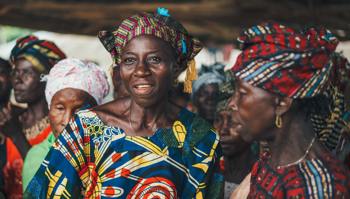
The main objective of this evaluation was to provide an independent assessment and evidence on the contribution of EU external action support in the policy area of gender equality and women empowerment (GEWE). In line with the EU policy on evaluation, this evaluation sought to be a stock- taking lesson-learning and forward-looking exercise, as well as an accurate assessment of achieved results in line with the objectives of the EU Gender Action Plan (GAP) II and other relevant overall policy frameworks for gender equality such as the new approach on Women, Peace and Security Agenda, Agenda 2030, the New European Consensus for Development.
Its specific objectives were the following:
- To assess in both qualitative and quantitative terms the relevance, conditions of implementation and performance of EU external action to promote GEWE and its mainstreaming, particularly its efficiency, effectiveness, sustainability, and the EU added value.
- To assess whether the EU's policy and operational response on GEWE in partner regions (EU Plans of Action on Gender Equality and Women’s Empowerment for 2010-2015 and 2016-2020) have triggered new approaches and rendered EU external action support more effective, targeted, gender-responsive and efficient.
- To assess: a) the coordination and complementarity of the European Commission services, the European External Action Service (EEAS) and EU Members States’ external action; b) the coordination and complementarity between EU external action support and other non-EU donors’ and actors’; c) the coherence of EU GEWE policy in external action with other relevant EU external policies; and d) the coherence of EU external action support with international commitments to GEWE.
The evaluation should lead to the identification of conclusions, lessons learnt (both positive and negative), good practices regarding the achievement of the intended GEWE-related results and the Commission, the EEAS and EU Member States with a set of targeted and useful forward-looking recommendations for the improvement of the programming and implementation.
Through the course of the evaluation, the evaluation team conducted 18 case studies (focusing on countries, regions and thematic areas) which were subject to an in-depth analysis, including 9 field visits. Both a ‘country-level’ and ‘global’ survey – covering EU services (HQ and EU Delegations/Offices worldwide), EU Member States, other development partners and Civil Society Organisations – were part of the data collection and analysis process. Findings from all evaluation activities were synthesized into a final report.
Final report available here: https://ec.europa.eu/international-partnerships/evaluation-eus-external-action-support-area-gender-equality-and-womens-and-girls-empowerment_en
- Palabras clave:
- Derechos humanos, Gobernanza, Seguimiento y evaluación

The objective of the desk review was provide guidance on electoral matters and technical support to EEAS and FPI in order to support them in assessing the electoral, political and legal framework in the light of international commitments and national legislation of the Union of Myanmar.
- Palabras clave:
- Elecciones
Evaluation of Finland's Country Strategy Modality in Fragile Situations
- 2019 – 2020
- de 500.000 € a 1 millón de €
- Afghanistan, Myanmar, Palestine, Somalia, Syria
The evaluation assessed the applicability and feasibility of the Country Strategy instrument in fragile contexts, given their specific challenges and requirements. It will draw evidence from the experience of Country Strategies in five contexts, namely Afghanistan, Myanmar, the Occupied Palestinian Territory, Somalia and Syria/Iraq, to draw wider findings and conclusions. It will cover the period 2012-2020, with the emphasis on more recent activity (2016 onwards) and its main body of work will be completed during the period March 2019-April 2020.
The evaluation’s specific objectives are as follows:
- To assess the coherence between the five country strategies and MFA internal strategies and multilateral influencing plans, as well as with the Finnish Development Policy Programme 2016;
- To assess the relevance of Finland’s co-operation in fragile situations, as supported by Country Strategies, to the needs of beneficiaries and to the complexities of the context, including adaptation over time (e.g. the ‘triple nexus’);To assess role of Country Strategies in supporting the appropriateness and feasibility of Finland’s policy dialogue in fragile contexts;
- To assess the appropriateness of multi-bi cooperation as the main channel for delivery in fragile contexts;
- To assess the extent to which Finnish development priorities, as articulated in Country Strategies, are prioritised within planning and implementation of multi-bi co-operation, including in ensuring that crosscutting objectives (the rights of the most vulnerable, gender equality and climate change preparedness and mitigation) are integrated as appropriate/feasible;
- To assess the extent to which Country Strategies have supported co-operation to be conflict sensitive and to adhere to international commitments relevant to fragile situations, such as the International Humanitarian Principles, Do No Harm and Accountability to Affected Populations;
- To assess the role of Country Strategies in supporting results achieved by Finnish co-operation, as far as they can be determined;
- To assess the role of Country Strategies in supporting Finland’s approach to partnership (including relationship-building, predictability and the adoption of a principled approach) in fragile contexts, particularly as perceived by external partners.
The report and other material are available at: https://um.fi/development-cooperation-evaluation-reports-comprehensive-evaluations/-/asset_publisher/nBPgGHSLrA13/content/evaluointiraportti-ulkoministeri-c3-b6n-maaohjelmien-soveltuvuus-hauraissa-maissa-ja-konfliktiymp-c3-a4rist-c3-b6iss-c3-a4-teht-c3-a4v-c3-a4-c3-a4n-ke/384998
- Palabras clave:
- Seguimiento y evaluación
Independent Evaluation of SDC’s Performance in Disaster Risk Reduction (DRR) 2010-2017
- 2018 – 2019
- menos de 500.000 €
- Global
The purpose of this evaluation was to build an evidence base for the implementation of the SDC’s Guidelines on Disaster Risk Reduction (DRR), and programmes and partnerships established by SDC to address DRR on global, regional and national levels.
The evaluation was designed to:
- Contribute to strategic decision-making (i.e. for the Dispatch 2021-2024).
- Derive lessons learnt in order to improve institutional performance.
- Serve as one measure of accountability towards the Parliament and the public.
The evaluation assessed the extent to which and how DRR practice is currently and should be applied across the SDC. The evaluation team identified successes, challenges and opportunities for DRR within the SDC as well as a comparison of SDC’s performance with other practices when feasible.
The temporal scope was 2010-2017, covering almost three Swiss Dispatches, including but not limited to, an estimated tentative total of approximately 461.9 million CHF, 818 projects with 1,482 ‘project phases’, identified by the DRR Portfolio Analysis. The evaluation was both backward (2010-2018) - and forward-looking (building on good practice to suggest ways SDC can reshape the future of DRR).
The geographic scope of the evaluation was global with an in-depth analysis of five geographic case studies: Peru/Bolivia, Chad, Morocco, Tajikistan and Thailand/Myanmar. In addition, three thematic case studies have been performed: 1.Climate Change and DRR: adaptation (CCA) & mitigation (CCM), 2. DRR Value for Money (V4M); and 3. Modalities: Swiss Humanitarian Aid Unit/Secondments, Network, DRR Consultative Group.
While the Whole of Government Approach (WoGA) was explored as was feasible, this was not an evaluation of any specific department, division, department, network, component or project/programme inside or outside SDC.
- Palabras clave:
- Alimentación y nutrición, Ayuda humanitaria, Finanzas públicas / presupuestación, Gobernanza, Medio ambiente, Seguimiento y evaluación, Sociedad civil

The purpose of this assignment is to collect, collate and systematically present, in the form of Evaluation Portraits and Country Evaluation Briefs, findings from existing evaluations and other documents of development interventions in five Norwegian partner countries: Ethiopia, Haiti, Mali, Myanmar, Nepal and Tanzania.
The objective of this assignment is to provide accessible and relevant knowledge about Norwegian and other donors’ development efforts in Norway’s partner countries through systematising findings from existing evaluations of development interventions. The exercise emphasises learning, supplementing a growing database of systematised, relevant, context-specific and accessible information. Beyond its intrinsic value, this knowledge forms a basis for development policies and strategies, contributes to development efforts in the field and reveals knowledge gaps that could be covered by future evaluations.
The main target groups for the study are the Norwegian Ministry of Foreign Affairs, Norad and Norwegian embassies in the selected partner countries and elsewhere.
The assignment is guided by the following questions:
- What are the key contextual features characterising each of the studied case countries?
- How do these contextual features affect development interventions in the respective country/-ies?
- What is the nature of the programmes and projects studied, including levels of development support?
- What are the major obstacles/challenges faced by those interventions?
- What are the major findings in the assessed material concerning the goals, methods, challenges, results and sustainability of the interventions studied?
- How do the programmes and projects perform in terms of such cross-cutting issues as gender equality, environmental concerns and anti-corruption?
- Which, intended and, if any, unintended effects of the programmes and projects, positive and negative, can be identified?
- Socios:
- Particip (líder), Menon
- Palabras clave:
- Seguimiento y evaluación
Technical Assistance to Nyein (Shalom) Foundation in Myanmar
- 2016 – 2018
- menos de 500.000 €
- Myanmar
The global objective of the assignment was to provide technical assistance and capacity building support to Nyein (Shalom) Foundation for its peace process and peacebuilding projects and its support to EAOs.
The specific objectives were to provide project management support and capacity building to Nyein (Shalom) Foundation, in particularly senior management and the Peace Process Support Program. Through embedded needs-driven support to this key national organisation, this assignment has supported the growth and sustainability of Nyein (Shalom) Foundation as well as supporting continuity in support to EAOs during a critical period in the peace process and political dialogue.
- Palabras clave:
- Ayuda humanitaria
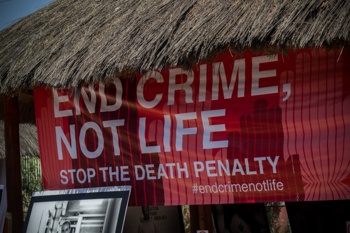
In the framework of its Partnership Instrument, the EU is pursuing action in support of the worldwide abolition of death penalty which is a top foreign policy objective and priority in the EU external human rights policy.
Asia appears as the next frontier in the international campaign against capital punishment. With eight retentionist countries of out 10 ASEAN Member States, South-East Asia (SEA) is a region where capital punishment remains a general standard, with strong roots in local history, cultures and religions/beliefs. A project "Moving away from Death Penalty in South-East Asia" has therefore been designed under the EU's Partnership Instrument. One of its components was this regional awareness campaign with the global objective to promote the abolition of death penalty in South-East Asia
Specific objectives:
- accompany the ASEAN Intergovernmental Commission on Human Rights (AICHR) death penalty study and recommendation process;
- develop and deploy a communication plan and tools in support of regional action on death penalty.
- Socios:
- Edelman Indonesia, HRWG, ICF Next
- Palabras clave:
- Comunicación y medios, Derechos humanos

Post-conflict and post-disaster needs assessment (PCNA/PDNA): development of assessment capacity and tools - Phase I + II
- 2013 – 2017
- de 2 a 5 millones de €
- Global
Relevant background
Since early 2007, the Commission, the UN-family and the World Bank have worked together in setting up a platform for cooperation on post-crisis needs assessments for natural disaster (Post-Disaster Needs Assessment, PDNA) and conflict (Recovery and Peacebuilding Assessment (RPBA), previously named Post-Conflict Needs Assessment, PCNA) scenarios. This trilateral cooperation was framed and formalised through the signature of a Joint Declaration on “Post-Crisis Assessments and Recovery Planning” in September 2008. The EU/UN/WB platform covers the whole PDNA/RPBA(PCNA) process, including strategic coordination, development of joint methodologies for post-crisis assessments, joint deployment of assessment teams, joint training and joint recovery planning and monitoring.
In line with the 2008 Declaration on Joint Post-crisis Assessments and Recovery Planning, the overall objective of the project is to assist and develop third countries’ in-country capacity to gradually assume a more prominent role in Post-Disaster Needs Assessments and Post-Conflict Needs Assessments (now changed to Recovery and Peacebuilding Assessments, RPBA).
The purpose of this project was:
- to support further development of joint PDNA/RPBA(formerly PCNA) methodologies, tools, training programmes, etc.;
- to support joint PDNA/RPBA(formerly PCNA) missions in-country/in region (in coordinating with EU Heads of Delegations and with the European External Actions Service (EEAS) and European Commission). While such support could cover any relevant technical field (long-term and short-term expertise), it is foreseen that a particular emphasis is put on expertise in mission planning and development of final reports/recovery frameworks.
The two phases of the project contributed to a variety of outputs and results, including:
- Phase 1 (01/01/2013 – 31/07/2015): revision of the PDNA methodology and development of the joint EU/UN/WB PDNA Guide, development of the Disaster Recovery Framework (DRF) Guide, review of the PCNA methodology, development of training and capacity building materials, delivery of information/capacity building sessions, joint PDNA/PCNA training courses for national authorities and regional/international organisations, support to over 15 joint EU/UN/WB PDNA/PCNA missions;
- Phase 2 (10/07/2015 – 09/07/2017): revision of the PCNA methodology and development of the RPBA methodology, development of training and capacity building materials, delivery of information/capacity building sessions, joint PDNA/RPBA training courses for national authorities and regional/international organisations, support to over 10 joint EU/UN/WB PDNA/RPBA missions.
- Socios:
- Particip (líder), Dara, ECDPM, GOPA, Punto.sud
- Palabras clave:
- Ayuda humanitaria, Desarrollo institucional, Formación, Gobernanza