Egypt
21 referencias

To achieve the first specific objective, the contractor will need to complete four interlinked results to ensure that the MLS in place efficiently measures overall progresses of migration related projects implemented in the Neighbourhood South.
Result 1
The first critical step is to develop a Monitoring and Learning System (MLS) methodology for the Migration Neighbourhood South portfolio - ensuring tailor made information provision and reporting services - according to corporate reporting requirements. The contractor will assess the needs and agree upon the MLS methodology with all relevant parties, including DG MENA HQ team, EU Delegations and a sensible sample of key Implementing Partners (IP) (Result 1). The main rationale is to build on the experience and knowledge from previous and ongoing MLS systems, in particular the MLS for the EUTF North of Africa window and MLS MADAD, and to foster harmonization with the current MLS approaches and methodology, ensuring continuity and comparability in MLS data and reporting.
Result 2
The second layer envisaged is developing a capacity-building strategy aimed at providing tailoredtechnical support to the EC Neighbourhood South Migration teams and Implementing Partners (IP) based on a need analysis (Result 2). This capacity-building component will be implemented over the whole duration of the contract and adjusted according to any emerging ad-hoc needs. To be noted that, if some adjustments of the MLS methodology are deemed necessary, it is critical to foresee a solid capacity-building session to foster knowledge transfer, mutual understanding and consensual agreement among all parties (MLS, EC and IP teams).
Result 3
Finally, yet importantly, the third key component is for the MLS contractor to regularly produce and disseminate monitoring reports, on one hand analysing overall progresses of the Neighbourhood South
Migration portfolio in function of the stakeholders’ needs and relevant EC results reporting exercises
(e.g. against the MIP priorities or other relevant principles of interventions as well as the Neighbourhood South intervention logic, and on the other hand summarizing, structuring and facilitating dissemination of relevant key migration facts (Result 3).
Result 4
To achieve the second specific objective and taking into account the recommendations from the of the
European Court of Auditors (ECA) Special Report 17/2024 on the EUTF for Africa and the European Commission’s replies, the contractor will develop a learning and communication strategy (Result 4), providing for cross-country analysis of MLS data, cross-regional analysis of Neighbourhood South Migration main thematic areas in the region and qualitative case studies of best practices. The reports produced will also put Neighbourhood South Migration activities into a broader contextual perspective assessing their coherence with other donor funded activities and identifying priorities and opportunities for extending current migration related activities into the next programming exercise. Particular attention should also be paid on creating a bridge between ongoing migration activities and future programming on migration to ensure that the knowledge and experience gained are integrated into policymaking and the next funding cycles, as well on assessing if and to which extent previous lessons learned have been implemented so far.
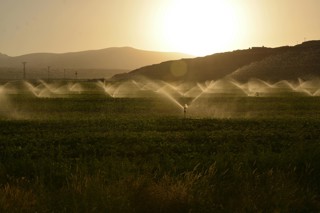
Support to the Egyptian Irrigation Modernization to Enhance the Water Productivity programme
- 2024 – 2027
- de 500.000 € a 1 millón de €
- Egypt
The envisaged programme to be designed is foreseen to include:
Component 1: Implementation of on-farm irrigation water management Infrastructure. This component is intended to support on-farm (marwa/mesqa) irrigation modernization in the Nile Valley (specific areas to be decided).
The component is divided into the following:
1. Rehabilitation of mesqa (tertiary) system, including pump stations, wherever feasible renewable energy pumps (mainly solar pumps) will be considered, while accounting for feasibility and sustainability measures.
2. Transformation from open marwa canals to a pressurized distribution system composed of buried PVC pipes and hydrants and installing modern irrigation system (drip or bubblers) in the farms.
3. Establishment of mesqa Water User Associations and ensuring their proper representation.
Component 2: Capacity building and participation for government staff and farmers in the project area. This component aims to improve stakeholders' knowledge through
1. Building the capacity of Water User Associations, and key farmers on operation and maintenance of modernized irrigations systems, marketing, accounting and management.
2. Building the capacity of Ministry of Water Resources and Irrigation officials in the field of design, implementation and operation of modern irrigation schemes, and improving their knowledge in the most recent technologies of water management and irrigation modernization.
- Socios:
- Particip (líder), Incatema
- Palabras clave:
- Agricultura, Desarrollo rural y urbano, Medio ambiente
- Result 1: MLS-NoA methodology – ensuring the overall MLS stability and continuing to address
NoA specific needs – is reviewed to provide for an increased level of harmonization with the MLS in place in HoA and SLC with any necessary revisions agreed upon by all parties involved.
- Result 2: NoA capacity-building strategy – providing tailored technical support to both the EUTF teams and implementing partners – is developed and executed according to a need-based analysis.
- Result 3: NoA monitoring reports – analysing progresses of the EUTF-NOA portfolio against both
EUTF strategic objectives and principles of interventions as well as EUTF-NoA intervention logic
– are regularly produced and publically disseminated.
- Result 4: NoA learning strategy – based on cross-country analysis of MLS data, cross-regional analysis of EUTF main thematic areas, qualitative case studies of best practices and contextual analysis – is developed with its findings publically presented to the relevant audience agreed upon.
- Socios:
- InProvE EEIG (managed by Particip) (líder)
- Palabras clave:
- Seguimiento y evaluación
Results Oriented Monitoring (ROM) Systems for External aid Interventions Financed by the European Union — Neighbourhood Region
- 2021 – 2026
- más de 10 millones de €
- ENI
Results Oriented Monitoring (ROM) reviews aim to assist the European Commission’s services and EU Delegations in monitoring of and reporting on EU financed development and cooperation projects and programmes in third countries through independent reviews of the progress of their implementation and the achievement of project results.
ROM services to be provided through this contract are clustered in three components:
** Component 1: ROM Reviews. ROM contractors will assess the performance of EU-funded interventionson the basis of the following OECD DAC evaluation criteria: relevance, efficiency, effectiveness, and sustainability.
ROM reviews will cover:
-A sample of EU funded interventions during the inception phase of implementation. The ROM review will support the OM in confirming or updating intervention logic and logframe matrix, in reviewing the monitoring system of the IP, in assessing risks and mitigation measures and fine tune the calendar of activities with a view to improve the performance of the intervention across the OECD DAC criteria.
- ROM reviews will assist the OM in adressing the main implementation problems.
-Other interventions for which Commission services request a ROM review on demand (interventions which could not be visited by EU OMs or for which there is a lack of sector expertise in the EU Delegation/operational unit in HQ).
- Blending operations, focused on asessing the value added of the EU contribution and on the performance of blending interventions in terms of socio-economic development.
** Component 2: Quality assurance and support at design stage for a sample of interventions. Provide technical support to EC services in the formulation of intervention logics and related logical frameworks matrices (logframes) and monitoring and reporting arrangements for a sample of interventions.
**Component 3: Results report (at corporate and intervention level). The Contractor will provide services to encode and quality control results data for a set of interventions subject to results reporting. TOM contractor will ensure quality control of data included in the intervention's logframes. Such quality controls will include, amongs others: verifying that the logframe is correctly encoded and up-to-date , enssuring that the latest values related to logframe indicators are available, and supporting the aggregation of intervention-level results into the EU Results Framework or other frameworks.
- Socios:
- Particip (líder), Dev4U, Integration
- Palabras clave:
- Seguimiento y evaluación

Evaluation of the EU's support to climate change and environment in Enlargement and Neighbourhood regions
- 2021 – 2022
- menos de 500.000 €
- ENI East, ENI South, IPA
The purpose of this study is i) to provide an independent and evidence-based assessment of the EU's past and current external action support in the policy area of environment and climate change in Enlargement and Neighbourhood regions; and ii) based on this assessment, to provide lessons learnt and recommendations for decision-makers at EU level.
The evaluation encompasses both spending and non-spending activities between 2014 and 2020. It examines all funding mechanisms and modalities of implementation used under the Instrument for Pre-Accession (IPA) II and the European Neighbourhood Instrument (ENI) in a variety of sectors (e.g. energy, water and waste management).
The evaluation covers all thematic areas related to environment and climate change, paying special attention to i) issues of mainstreaming in EU external aid programmes and projects for the ten sectors in the environmental chapter of the acquis; and ii) the EU support provided through international organisations, in particular support aimed at strengthening environment and climate change governance at national and regional levels. Process and context factors – conducive to or hampering the performance of EU support, including in terms of the convergence with EU legislation in the regions under scope – are also systematically assessed.
The evaluation aims to contribute to ongoing EU strategic discussions on the use of innovative financing, in particular blending, which is playing an increasingly important role in EU support to environment and climate change. The evaluation results are also useful in enriching ongoing reflections on the future role of European Development Finance Institutions in EU external action. Finally, in the context of the COVID-19 pandemic, the evaluation contributes to identifying good practices that can strengthen Team Europe’s ongoing efforts to help ‘build back better’ and design ‘risk-informed and climate-smart’ recovery actions.
- Palabras clave:
- Energía, Gobernanza, Medio ambiente, Seguimiento y evaluación

Strengthening the Policy Frameworks for Transboundary Water Resources Management in the Nile Basin
- 2020 – 2022
- menos de 500.000 €
- Burundi, Congo (Brazzaville), Egypt, Ethiopia, Kenya, Rwanda, South Sudan, Sudan, Tanzania, Uganda
The Nile Basin Initiative (NBI) is a partnership of the 10 Nile Basin riparian states with a shared vision objective to promote sustainable socio-economic development through the equitable utilization of and benefit from the shared Nile Basin water resources. Nile Basin countries face increasing challenges of meeting the requirements of their rapidly growing populations in the face of dwindling resources that are threatened by emerging pressures like climate change, land use change and degradation, urbanization, etc. The challenges result in increased efforts at utilization of the Nile waters for agricultural, domestic, industrial and environmental purposes. Countries are embarking on large-scale developments for water utilization and water-related use in riparian countries which have major implications for current and future availability of water resources.
The assignment took the basin perspective and looked at the transboundary governance mechanisms in place. Especially national level arrangements such as policies and Transboundary Water Management (TWM) units served the various transboundary mechanisms a country subscribes to at the same time.
The objective was to facilitate and document a joint review and learning process on provisions for transboundary cooperation in national policies and related institutional arrangements.
The primary work of the project consisted of the following tasks:
- Task 1: Finalization of the NBI Policy Handbook
- Task 2: Guidance Document on key TWM principles for national water policies
- Task 3: Review of experience and mapping of cross-border cooperation arrangements in Nile Basin
- Task 4: Review of experience of the national level organizational arrangements for TWM
- Task 5: Collaborative assessment of progress of implementation of TWM principles in
National Water Policies
- Task 6: Action plan for transboundary water policy at national and regional level
- Task 7: Policy Synthesis Report – Status of TWM governance and Implementation of
SDG 6.5.2. in the Nile Basin
- Task 8: Blended Learning Module
- Prepare and facilitate Policy Roundtables
- Palabras clave:
- Formación, Medio ambiente

Mediterranean Climate Finance Strategy
- 2019 – 2021
- menos de 500.000 €
- Albania, Algeria, Bosnia & Herzegovina, Egypt, Israel, Jordan, Lebanon, Mauritania, Montenegro, Morocco, Palestine, Syria, Tunisia, Türkiye
Background
In March 2017, the UfM Climate Change Expert Group (UfM CCEG) adopted a 5-years work-program, which stress the importance to strengthen climate finance in the Euro-Mediterranean region to address climate change issues. In April 2019, UfM Member States agreed to pursue the assessment of climate finance in the UfM region, with the view of providing sound basis for a renewed climate mandate of the UfM by 2020, with the new UfM Ministerial Declaration on Climate Change.
Target Groups
Target gruops of tehis technical assistance are: UfM Institutions, UfM Member States, International Financial Institutions, International Climate Change Institutions, Civil society representatives, Private sector Organisations and Institution interested in UfM regional integration.
Objectives
- The primary objective of this technical assistance is to enhance the knowledge of UfM Member States, International Financial Institutions, civil society representatives, private sector organisations and any other institution interested in the UfM regional integration, regarding the level of financial commitments made in 2018 and in 2019 to address climate change issues in the UfM region.
- The second objective is to explore the feasibility of financial mechanisms, which could be implemented in the UfM region with the aim of enhancing the mobilisation of climate finance for specific population or sectors, while building on lessons learned in some specific sectors (in particular in the water sector) or potentially in other regions, such as Caribbean or Latin America.
Expected Results
- R1 - to have a precise figure of financial commitments made to recipients in UfM developing countries in 2018 and in 2019, by public/private donors from developed/developing countries;
- R2 - to have a precise view of commitments and disbursements made by national governments, local authorities, private sector and, if possible, households addressing climate change in UfM developing countries;
- R3 - to have the methodology and process in place for monitoring, reporting and verifying climate finance commitments made in the UfM region, especially by ensuring the involvement of all relevant actors, including the scientific community, the private sector and NGOs;
- R4 - quantitative and qualitative analysis of financial mechanisms, which could be implemented in the UfM region with the aim of enhancing the mobilisation of climate finance for specific population or sectors.
- Palabras clave:
- Medio ambiente
Results Oriented Monitoring (ROM) system for external aid interventions financed by the European Union - Lot 1 – Neighbourhood region
- 2019 – 2021
- de 5 a 10 millones de €
- ENI
Results Oriented Monitoring (ROM) reviews aim to assist the European Commission’s services and EU Delegations in monitoring of and reporting on EU financed development and cooperation projects and programmes in third countries through independent reviews of the progress of their implementation and the achievement of project results.
ROM services provided through this contract were clustered in three components:
** Component 1: ROM Reviews. ROM contractors assessed the performance of EU-funded interventions on the basis of the following OECD DAC evaluation criteria: relevance, efficiency, effectiveness, and sustainability.
ROM reviews covered:
-A sample of EU funded interventions during the inception phase of implementation. The ROM review supported the OM in confirming or updating intervention logic and logframe matrix, in reviewing the monitoring system of the IP, in assessing risks and mitigation measures and fine tune the calendar of activities with a view to improve the performance of the intervention across the OECD DAC criteria.
- ROM reviews assisted the OM in adressing the main implementation problems.
-Other interventions for which Commission services requested a ROM review on demand (interventions which could not be visited by EU OMs or for which there was a lack of sector expertise in the EU Delegation/operational unit in HQ).
- Blending operations, focused on asessing the value added of the EU contribution and on the performance of blending interventions in terms of socio-economic development.
** Component 2: Quality assurance and support at design stage for a sample of interventions.The Contractor Provided technical support to EC services in the formulation of intervention logics and related logical frameworks matrices (logframes) and monitoring and reporting arrangements for a sample of interventions.
**Component 3: Results report (at corporate and intervention level). The Contractor provided services to encode and quality control results data for a set of interventions subject to results reporting. TOM contractor ensured quality control of data included in the intervention's logframes. Such quality controls included, amongs others: verifying that the logframe is correctly encoded and up-to-date , enssuring that the latest values related to logframe indicators were available, and supporting the aggregation of intervention-level results into the EU Results Framework or other frameworks.
- Socios:
- Particip (líder), Dev4U, GOPA, Integration

TC measure: promotion of dual education in Egypt
- 2018 – 2020
- de 2 a 5 millones de €
- Egypt
The main objective of the contract is to enable VET staff of state and private actors of the dual system to better fulfill their tasks in the implementation of dual training. This should improve the quality of education. In addition to imparting theoretical, practical and didactic competencies as well as the necessary competences for the management of dual training, the team should also train individuals and organizations to enter into competent and prepared dialogue with other actors.
The project focuses on Egyptian trainings for jobs with high employment potential, as are expected to occupations in the following areas:
- Textiles and Clothing, especially the clothing industry,
- Metal, in particular production, as well as maintenance and servicing,
- Electrical engineering, especially electrical installation and electronics,
- Office and administration, especially administrative and commercial professions.
- Socios:
- IB (líder), Particip
- Palabras clave:
- Educación
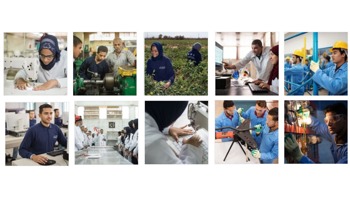
ENPI — Development and implementation of TVET II programme visibility and communication strategy
- 2016 – 2019
- menos de 500.000 €
- Egypt
The purposes of this contract are as follows:
- To provide all possible support for the effective implementation of the project, to increase project activities’ visibility and to present the achievements of the project to a wide audience. It is crucial to establish strong lines of communication and information-sharing with all stakeholders in order to coordinate and adjust activities towards achieving the overall project results.
- To develop a visibility and communication strategy and plan to help in the achievement of
TVET II programme objectives through various activities that supports the programme and reach the target groups of the project.
Results to be achieved by the Contractor
- Formulation and implementation of Visibility and Communications strategy and plan for TVET
II Programme.
- Organization of awareness raising campaigns, events, Market place, roundtable discussions, press conferences, briefing sessions, interviews.
- Development of communication materials for marketing and awareness-raising campaigns, including briefing materials and press releases and produce all project's printings including:
designing and editing the leaflets, reports, articles and press releases; information material produced (leaflet, brochure); Project identity produced (folder, report cover, etc.), and any other required printing material for the marketing and awareness raising for the project.
- Conduct feedback surveys on information and communication activities and materials produced by the PIU and publish the results.
- Provide reports on assignments, for proper utilization of accumulated data and information.
Develop, support and manage web site, Social Medias including all online communication tools.
- Socios:
- CID (líder), Particip
- Palabras clave:
- Comunicación y medios, Educación

Final evaluation of the EU funded programme 'Promotion and protection of Human rights and civil society in Egypt'
- 2019 – 2019
- menos de 500.000 €
- Egypt
The main objectives of this evaluation were to provide the relevant services of the European Union and the interested stakeholders with:
- an overall independent assessment of the past performance of "Promotion and protection of Human rights and civil society in Egypt" (ENPI/2008/019-607), paying particular attention to its results measured against its expected objectives; and the reasons underpinning such results;
- key lessons learned, conclusions and related recommendations in order to improve current and future Actions.
In particular, this evaluation served to understand the performance of the Action, its enabling factors and those hampering a proper delivery of results as to inform the planning of the future EU interventions and Actions in the same sector.
- Palabras clave:
- Derechos humanos, Seguimiento y evaluación, Sociedad civil
Results Oriented Monitoring (ROM) reviews aim to assist the European Commission’s services and EU Delegations in monitoring of and reporting on EU financed development and cooperation projects and programmes in third countries through independent reviews of the progress of their implementation and the achievement of project results.
The ROM reviews and support missions to be carried out are the following:
a) +++ROM reviews of projects signalled as having implementation problems and where EC services have identified a need for an outside expert review to assist in addressing the problems, identifying causes and options for solution and making recommendations.
b) +++ ROM reviews of other projects for which such ROM reviews may have a particular usefulness, in particular for projects which could not be included in the EUDs’ planning of field visits or for which the necessary sector expertise at EUD level may not be sufficiently available at a given point of time or for innovative projects.
c) ROM reviews of BS programmes: in countries where a BS programme is signalled as having implementation problems, a ROM review may be organized focusing on the programme in question for the sector specific aspects but also covering the Public Financial Management (PFM) and macroeconomics aspects of all BS programmes financed by the EU in the country .
d) ROM support to end of project reporting on results (outputs and direct outcomes), including for BS programmes. These ROM support missions are to assist EC services and EUD in strengthening their results reporting capacities in: assisting with the recording actual results achieved by projects and programmes that have come to an end in the specified calendar year, solving technical difficulties that may occur linked to results reporting, and identifying the systemic needs and modalities for improvement which may be needed in these areas. The ROM support to end of project results reporting missions are to focus on projects of EUR 750.000 or more.
- Socios:
- Particip (líder), GOPA, Integration
- Palabras clave:
- Seguimiento y evaluación

Review of Gender Equality Findings from Middle East Evaluations
- 2019 – 2019
- menos de 500.000 €
- ENI South
Following intensive consultations that took place in 2016, Canada refocused its international assistance on helping the poorest and most vulnerable people and supporting fragile states.
Within this broader context, support has been requested by the International Assistance Evaluation Division (PRA) of Global Affairs Canada for the planning of an evaluation of gender equality programming in the Middle East. In this regard, a review of evaluations by other donors of development and humanitarian assistance programmes in the region has been considered as necessary.
The purpose of this study is to review available thematic evaluations, country programme evaluations, major project evaluations and possibly other essential documents related to the achievement of gender equality outcomes in the Middle East.
The focus of the study has been on three countries: Turkey, Lebanon and Egypt. The countries were chosen on the basis of amount and quality of the available literature rather than total spending of Global Canada’s which is highest in Jordan, Syria, and Iraq.

Final Evaluation of 'Development of the North West Coast and Mine action project'
- 2018 – 2018
- menos de 500.000 €
- Egypt
The overall objective of the project was to improve the efficiency and effectiveness of the overall Mine Action Programme in Egypt.
The specific objectives of the final evaluation were:
- To conduct a comprehensive review of the performance of the programme, in particular of the interventions implemented in Marsa Matrouh governorate;
- To verify and explain achieved results (including unexpected results) attributable to the programme;
- To assess the sustainability of the intervention benefits and their impact;
- To identify lessons learned and make recommendations.
- Palabras clave:
- Ayuda humanitaria, Seguimiento y evaluación
Mid-term Evaluation - Support to Public Administration Reform and Local Development
- 2018 – 2018
- menos de 500.000 €
- ENI
The main objectives of this evaluation were to provide the relevant services of the European Union, the interested stakeholders with:
- an overall independent assessment of the past performance of the 'Support to Public Administration Reform and Local Development' Programme, paying particular attention to its [in case of a mid-term evaluation you may add ‘intermediate’] results measured against its objectives;
- key lessons and recommendations in order to improve current performance of the programme and to provide an insight into future cooperation with Egypt in the sectors of interventions.
In particular, this evaluation served in assessing key elements of relevance, effectiveness, efficiency, sustainability, and early signs of impact among other important criteria.
The main users of this evaluation were the European Union and the Government of Egypt (GoE) represented by key beneficiaries and stakeholders of the programme.
- Palabras clave:
- Desarrollo institucional, Finanzas públicas / presupuestación, Seguimiento y evaluación

The global objective of the assignment was to assess the EU support at regional level, bilateral level and through the blending mechanism (the NIF ) to the partner countries of the Neighbourhood South in the fields of environment (H2020 initiative, Sustainable Consumption and Production, Integrated Water Management, biodiversity and Marine Protected Areas…) over the period 2010-2017, and to propose recommendations for further EU support for the forthcoming programming period 2018-2023.
It also considered how the political relationships between the EU and its partner countries as well as relations between partner countries affect both the implementation of the EU support and the development of harmonised environment sector policies in the Mediterranean region.
- Socios:
- Particip (líder), DAI Global UK, ETI
- Palabras clave:
- Medio ambiente

Evaluation of the EU development cooperation support to higher education in partner countries (2007-2014)
- 2015 – 2017
- menos de 500.000 €
- Global
The Evaluation of the EU development cooperation support to Higher Education in partner countries (2007-2014) evaluated the design and the implementation of policies, strategies and sector programmes of the EU’s past and current development cooperation support to higher education.
The main objectives of the evaluation were:
- to provide the relevant external co-operation services of the EU and the wider public with an independent assessment of the development cooperation support provided to higher education in partner countries over the period 2007-2014;
- to identify key lessons and forward-looking recommendations.
The evaluation used the five standard OECD/DAC evaluation criteria, namely relevance, effectiveness, efficiency, impact and sustainability. In addition, the evaluation also looked at the EU added value and the 3Cs.
The evaluation was conducted in four phases
- An Inception Phase, focusing on the design and the methodology of the evaluation including the reconstruction of the intervention logic and the compilation of a comprehensive inventory incl. monetary flow of all relevant activities between 2007 and 2014;
- A Desk Phase, focusing on gathering and analysing existing data and information (through literature/document reviews and interviews/focus groups/surveys);
- A Field Phase, including preparation of field missions, visits to the case study countries (Cameroon, the Dominican republic, Egypt, Guatemala, Kenya, Mexico, Moldova, South Africa) and drafting of country notes;
- A Synthesis Phase, producing a final report and dissemination of results to concerned stakeholders.
The report is available at: https://ec.europa.eu/europeaid/strategic-evaluation-eu-development-co-operation-support-higher-education-partner-countries-2007_en
- Socios:
- Particip (líder), ECDPM, Ecorys B.V., LA International Cooperation S.R.L.
- Palabras clave:
- Desarrollo institucional, Educación, Gobernanza, Seguimiento y evaluación

Evaluation of the capacity building initiatives in support of Civil Society in the Neighbourhood South (2012 – 2016)
- 2016 – 2017
- menos de 500.000 €
- ENI South
The main objective of the evaluation was to analyse and evaluate the capacity building support provided to civil society by both regional and bilateral programmes during the period 2012-2016. This evaluation has focused on the efforts funded under ENPI and ENI.
The evaluation was also supposed to provide a series of recommendations to support innovative ways for contributing to building capacities of civil society organizations at a regional level in the future in complementarity with the political objectives as set out in the revised ENP and in the 2012 Communication of the European Commission - The roots of democracy and sustainable development: Europe's engagement with Civil Society in external relations and related Council Conclusions, as well as the EU Country Roadmaps for Engagement with Civil Society, a joint initiative between the European Union and Member States which aims to strengthen the strategic engagement with civil society.
Specific objectives
- to provide an overall independent assessment of the support given by the European Union to build capacities of civil society in the Neighbourhood South from both regional and national programmes - mainly through i) the Technical Assistance programme of the Civil Society Facility; ii) the Regional Grants of the Civil Society Facility; iii) bilateral support to capacity building (managed by EU Delegations) and iv) specific support to two institutions: Anna Lindh Foundation and European Endowment for Democracy. The assessment was supposed to take a look into issues related to their design, implementation and overall performance;
- Drawing up from key lessons; provide recommendations in order to inform the identification of current and future regional initiatives supporting capacities of civil society, especially in light of the complementarity and added value that can be given to efforts implemented at the national level
- Socios:
- Particip (líder), EPRD
- Palabras clave:
- Sociedad civil

Mid-Term Review of 'Support to the Implementation of the Action Plan and the Association Agreement Programme' (SAAP)'
- 2016 – 2017
- menos de 500.000 €
- Egypt
The global objective of this assignment was to carry out a Mid-Term Review (MTR) of SAAP III (n°ENPI/2009/20492) and SAAP IV (n°ENPI/2010/21871). The MTR provided the Government of Egypt, institutional counterparts and the European Union (EU) with an overall independent assessment presenting sufficient information to make an informed judgement about the performance of the project (its efficiency, effectiveness and the likelihood for the project to achieve its stated objectives), and to take decisions about any required adjustments for the last two years of implementation.
The specific objectives of the MTR were:
- To conduct a comprehensive review of the performance of the project to assess key elements of efficiency, effectiveness, and potential sustainability.
- To identify lessons learnt and to make recommendations for the improvement of the project performance.
- To assess whether the project is on track to achieve its outcomes and impact, and make recommendations for an exit strategy that would ensure sustainability of the outcomes after the completion of the project.
- Socios:
- Particip (líder), GOPA

Post-conflict and post-disaster needs assessment (PCNA/PDNA): development of assessment capacity and tools - Phase I + II
- 2013 – 2017
- de 2 a 5 millones de €
- Global
Relevant background
Since early 2007, the Commission, the UN-family and the World Bank have worked together in setting up a platform for cooperation on post-crisis needs assessments for natural disaster (Post-Disaster Needs Assessment, PDNA) and conflict (Recovery and Peacebuilding Assessment (RPBA), previously named Post-Conflict Needs Assessment, PCNA) scenarios. This trilateral cooperation was framed and formalised through the signature of a Joint Declaration on “Post-Crisis Assessments and Recovery Planning” in September 2008. The EU/UN/WB platform covers the whole PDNA/RPBA(PCNA) process, including strategic coordination, development of joint methodologies for post-crisis assessments, joint deployment of assessment teams, joint training and joint recovery planning and monitoring.
In line with the 2008 Declaration on Joint Post-crisis Assessments and Recovery Planning, the overall objective of the project is to assist and develop third countries’ in-country capacity to gradually assume a more prominent role in Post-Disaster Needs Assessments and Post-Conflict Needs Assessments (now changed to Recovery and Peacebuilding Assessments, RPBA).
The purpose of this project was:
- to support further development of joint PDNA/RPBA(formerly PCNA) methodologies, tools, training programmes, etc.;
- to support joint PDNA/RPBA(formerly PCNA) missions in-country/in region (in coordinating with EU Heads of Delegations and with the European External Actions Service (EEAS) and European Commission). While such support could cover any relevant technical field (long-term and short-term expertise), it is foreseen that a particular emphasis is put on expertise in mission planning and development of final reports/recovery frameworks.
The two phases of the project contributed to a variety of outputs and results, including:
- Phase 1 (01/01/2013 – 31/07/2015): revision of the PDNA methodology and development of the joint EU/UN/WB PDNA Guide, development of the Disaster Recovery Framework (DRF) Guide, review of the PCNA methodology, development of training and capacity building materials, delivery of information/capacity building sessions, joint PDNA/PCNA training courses for national authorities and regional/international organisations, support to over 15 joint EU/UN/WB PDNA/PCNA missions;
- Phase 2 (10/07/2015 – 09/07/2017): revision of the PCNA methodology and development of the RPBA methodology, development of training and capacity building materials, delivery of information/capacity building sessions, joint PDNA/RPBA training courses for national authorities and regional/international organisations, support to over 10 joint EU/UN/WB PDNA/RPBA missions.
- Socios:
- Particip (líder), Dara, ECDPM, GOPA, Punto.sud
- Palabras clave:
- Ayuda humanitaria, Desarrollo institucional, Formación, Gobernanza

Evaluation of the European neighbourhood instrument (ENI)
- 2016 – 2017
- menos de 500.000 €
- ENI
The European Neighbourhood Instrument (ENI) aims to develop closer relations between the EU and its neighbouring countries (6 in Eastern Europe and 10 in North Africa and the Middle East). To that end, the ENI evaluation was designed to assess whether ENI was fit for purpose to deliver EU resources towards EU’s external policy, both at the start of the planning period (2014) and currently, and considered the place of ENI –its complementarities and synergies – within the wider set of external financing instruments (EFIs). Together with other independent evaluations of each EFI, the ENI evaluation will feed into the Mid Term Review Report of the EFIs required by the Common Implementing Regulation (CIR) by end December 2017.
The specific objectives of the ENI evaluation were to 1) provide the relevant external relations services of the European Union and the wider public with an independent assessment of the ENI instrument, including complementarities/synergies between ENI and the other EFIs; and 2) to inform the future programming and implementation of the current EFIs, as well as the next generation of the EFIs.
The evaluation used a mixed methods approach blending quantitative and qualitative methods, with a focus on the latter. The main analytical tools consisted of rigorous assessment of documentation (policy documents, evaluations, etc.), statistical information and consultation of stakeholders (via interviews, group consultations, a telephone survey focusing on EU Delegations and the Open Public Consultation- OPC; key issues are additionally addressed by a joint-EFI survey managed by the chapeau contract). Country case studies were prepared for Egypt, Georgia, Lebanon, Tunisia and Ukraine. With the exception of Lebanon, these case studies were backed by short country visits.
The report is available at:
https://ec.europa.eu/neighbourhood-enlargement/sites/near/files/final_report_eni_evaluation.zip
- Socios:
- Particip (líder), Ecorys B.V.
- Palabras clave:
- Seguimiento y evaluación