Syria
13 referencias
Results Oriented Monitoring (ROM) Systems for External aid Interventions Financed by the European Union — Neighbourhood Region
- 2021 – 2026
- más de 10 millones de €
- ENI
Results Oriented Monitoring (ROM) reviews aim to assist the European Commission’s services and EU Delegations in monitoring of and reporting on EU financed development and cooperation projects and programmes in third countries through independent reviews of the progress of their implementation and the achievement of project results.
ROM services to be provided through this contract are clustered in three components:
** Component 1: ROM Reviews. ROM contractors will assess the performance of EU-funded interventionson the basis of the following OECD DAC evaluation criteria: relevance, efficiency, effectiveness, and sustainability.
ROM reviews will cover:
-A sample of EU funded interventions during the inception phase of implementation. The ROM review will support the OM in confirming or updating intervention logic and logframe matrix, in reviewing the monitoring system of the IP, in assessing risks and mitigation measures and fine tune the calendar of activities with a view to improve the performance of the intervention across the OECD DAC criteria.
- ROM reviews will assist the OM in adressing the main implementation problems.
-Other interventions for which Commission services request a ROM review on demand (interventions which could not be visited by EU OMs or for which there is a lack of sector expertise in the EU Delegation/operational unit in HQ).
- Blending operations, focused on asessing the value added of the EU contribution and on the performance of blending interventions in terms of socio-economic development.
** Component 2: Quality assurance and support at design stage for a sample of interventions. Provide technical support to EC services in the formulation of intervention logics and related logical frameworks matrices (logframes) and monitoring and reporting arrangements for a sample of interventions.
**Component 3: Results report (at corporate and intervention level). The Contractor will provide services to encode and quality control results data for a set of interventions subject to results reporting. TOM contractor will ensure quality control of data included in the intervention's logframes. Such quality controls will include, amongs others: verifying that the logframe is correctly encoded and up-to-date , enssuring that the latest values related to logframe indicators are available, and supporting the aggregation of intervention-level results into the EU Results Framework or other frameworks.
- Socios:
- Particip (líder), Dev4U, Integration
- Palabras clave:
- Seguimiento y evaluación

Evaluation of the Syrian Arab Republic WFP Interim Country Strategic Plan (2022-2023)
- 2022 – 2024
- menos de 500.000 €
- Syria
The evaluation of the WFP Interim Country Strategy Plan (ICSP) in Syria assessed the strategic positioning, added-value and results of WFP operations in the country from 2018 to 2023.
The evaluation served the double purpose of accountability (performance and result assessment) and learning (why certain results occurred or not, lessons and evidence for decision-making). It is envisioned to enable the Syria WFP Country Office (CO) to use the evidence on past and current performance for the design of the new Syria CSP. The early findings of the CSPE also fed into the development of the extension of the ICSP until end of 2024.
ICSP key sectors and activities included:
- Emergency preparedness and response, including cash-based transfers
- Nutrition and school feeding
- Social protection
- Livelihoods activities
- Institutional capacity strengthening
Cross-cutting themes included: Gender Equality and Women's Empowerment (GEWE) and Accountability to Affected Populations (AAP), centrality of protection, humanitarian principles and access, inclusion of people with disabilities (PWD), social cohesion, and capacity strengthening.
The evaluation was theory-based and relied on a mixed-method approach that triangulates qualitative and quantitative data from a variety of sources. For this purpose, the evaluation team conducted interviews with different stakeholders including WFP staff at HQ, regional and country level, WFP cooperating partners, donors, UN agencies, government entities as well as focus group discussions with the beneficiaries.
- Palabras clave:
- Agricultura, Alimentación y nutrición, Ayuda humanitaria, Seguimiento y evaluación

Evaluation of Finland's Humanitarian Assistance 2016-2022
- 2021 – 2022
- menos de 500.000 €
- Global
The Ministry for Foreign Affairs of Finland (MFA) commissioned an evaluation of Finland’s humanitarian assistance. The purpose of the evaluation was to help further enhance the effectiveness of the humanitarian assistance provided by Finland. To that end, the evaluation identifed the strengths and weaknesses of Finland’s delivery model for its humanitarian assistance and cooperation arrangements, including the effectiveness and efficiency of its management arrangements.
The specific objectives of the evaluation were:
- To review the relevance of Finnish humanitarian assistance 2016-current in meeting the needs of affected populations, and in its interconnections with development and peace interventions
- To assess the function and purpose of the 2019 Humanitarian Policy as a guiding instrument for Finnish humanitarian assistance
- To assess the functioning of partnerships and co-operation in Finnish humanitarian assistance and whether the current balance of partnerships/scope of Finnish influencing is optimal;
- To assess the management arrangements for humanitarian assistance in light of its effectiveness and make proposals for any future improvements; and
- To assess the effectiveness of the assistance in delivering results for affected populations.
- Socios:
- Particip (líder), NIRAS
- Palabras clave:
- Ayuda humanitaria, Seguimiento y evaluación

Mid-Term Evaluation of the 'UN Joint Programme to strengthen urban and rural resilience and conditions for community recovery in Syria
- 2022 – 2022
- menos de 500.000 €
- Syria
The main objectives of this evaluation were to provide the relevant services of the European Union with:
- an overall independent assessment of the performance of the project ‘UN Joint Programme to strengthen urban and rural resilience and conditions for community recovery in Syria’, paying particular attention both to its results, measured against its expected objectives, and to the reasons underpinning such results;
- key lessons learned, conclusions and related recommendations in order to improve the remaining period of implementation and potential second phase as well as similar future Interventions.
In particular, this evaluation served:
- to understand the performance of the intervention and the reasons behind it in order to maximise its potential to achieve the expected results during the residual implementation time
- to understand whether the implementation modalities of the intervention are the most appropriate in order to achieve its objectives;
- to understand whether the governance mechanism of the intervention allows for a suitable and efficient representation of the interests of key stakeholders;
The main users of this evaluation are the EU Delegation to Syria and DG NEAR Directorate B.1 (Middle East), the JP itself and the relevant UN Agencies involved, as well as local implementing partners and counterparts.
- Socios:
- Particip (líder), TANA Copenhagen
- Palabras clave:
- Alimentación y nutrición, Derechos humanos
Evaluation Series on Emergency School Feeding in the Democratic Republic of Congo, Lebanon, Niger and Syria (2015-2019)
- 2019 – 2022
- de 500.000 € a 1 millón de €
- Congo (Kinshasa), Lebanon, Niger, Syria
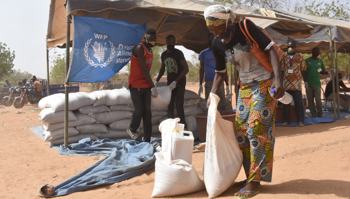
The evaluation series was commissioned by the WFP School-based Programmes Unit in Rome and covered WFP emergency school feeding (ESF) programmes during 2015-2019. It encompassed four country-specific evaluations in the Democratic Republic of Congo (focus on North Kivu region), Lebanon, Niger (focus on Diffa region) and Syria, as well as a global synthesis report. It covers the period 2015-2019.
The evaluation was financed from a multi-year Canadian contribution to WFP that also covered the costs of the ESF activities in the last years of the evaluation period. In 2018, these activities had reached nearly 1 million children in Syria and 17,000-71,000 children in each of the other three countries.
The findings of the evaluation series were meant to strengthen the global evidence base on ESF with specific guidance on school feeding in crisis and humanitarian settings. The findings will be used by Country offices to design future ESF activities.
All evaluations in this series used a mixed-method, theory-driven approach based on a set of reconstructed, country-specific Theories of Change. The country evaluation reports were based on document reviews, key informant interviews, focus groups discussions, and large-scale field surveys of schools, children, and households. The synthesis report was based on the four country reports of the evaluation series, a literature review, an online survey among WFP offices, and key informant interviews.
The country evaluation reports are available at:
https://www.wfp.org/publications/democratic-republic-congo-school-feeding-emergencies-evaluation https://www.wfp.org/publications/lebanon-school-feeding-emergencies-evaluation https://www.wfp.org/publications/niger-school-feeding-emergencies-evaluation https://www.wfp.org/publications/syrian-arab-republic-school-feeding-emergencies-evaluation
- Socios:
- Particip (líder)
- Palabras clave:
- Alimentación y nutrición, Ayuda humanitaria, Educación, Seguimiento y evaluación

Final Evaluation of confidential contracts NEAR-TS/2019/411-255, NEAR-TS/2015/364-248 and EIDHR/2018/400-562
- 2021 – 2022
- menos de 500.000 €
- Syria
The main objectives of this evaluation are to provide the services of the European Union in charge of the listed contracts (i.e., DG NEAR and DG INTPA) with:
- an overall independent assessment of the past performance of the interventions Supporting Human Rights, Activists and Human Rights Monitors in Syria V, Supporting Human Rights and Human Rights Defenders in Syria IV and Supporting Human Rights and Human Rights Defenders in Syria III, paying particular attention to the results measured against the expected objectives; and the reasons underpinning such results;
- key lessons learned, conclusions and related recommendations in order to improve current and future Interventions.
In particular, this evaluation will serve the EU to further assess the utility of future support of the entity against the considerable fiduciary risk that comes with the high confidentiality of its operations and the difficulty of tracing financial flows. Furthermore, the evaluation will help the EU to understand whether the supported entity is sufficiently adapting and transforming itself, in view of the current political context and trends in Syria to become sustainable by creating a reputation among all Syrians for being an impartial whistle-blower on human rights violations when many similar organisations are often perceived as partial opposition bodies, pushing a particular political agenda, and therefore not taken seriously by other groups.
The main users of this evaluation will be the EU Delegation to Syria, DG INTPA Directorate G (Unit G.1) as well as DG NEAR Directorate B.1 (Middle East)
- Palabras clave:
- Derechos humanos, Seguimiento y evaluación

Mediterranean Climate Finance Strategy
- 2019 – 2021
- menos de 500.000 €
- Albania, Algeria, Bosnia & Herzegovina, Egypt, Israel, Jordan, Lebanon, Mauritania, Montenegro, Morocco, Palestine, Syria, Tunisia, Türkiye
Background
In March 2017, the UfM Climate Change Expert Group (UfM CCEG) adopted a 5-years work-program, which stress the importance to strengthen climate finance in the Euro-Mediterranean region to address climate change issues. In April 2019, UfM Member States agreed to pursue the assessment of climate finance in the UfM region, with the view of providing sound basis for a renewed climate mandate of the UfM by 2020, with the new UfM Ministerial Declaration on Climate Change.
Target Groups
Target gruops of tehis technical assistance are: UfM Institutions, UfM Member States, International Financial Institutions, International Climate Change Institutions, Civil society representatives, Private sector Organisations and Institution interested in UfM regional integration.
Objectives
- The primary objective of this technical assistance is to enhance the knowledge of UfM Member States, International Financial Institutions, civil society representatives, private sector organisations and any other institution interested in the UfM regional integration, regarding the level of financial commitments made in 2018 and in 2019 to address climate change issues in the UfM region.
- The second objective is to explore the feasibility of financial mechanisms, which could be implemented in the UfM region with the aim of enhancing the mobilisation of climate finance for specific population or sectors, while building on lessons learned in some specific sectors (in particular in the water sector) or potentially in other regions, such as Caribbean or Latin America.
Expected Results
- R1 - to have a precise figure of financial commitments made to recipients in UfM developing countries in 2018 and in 2019, by public/private donors from developed/developing countries;
- R2 - to have a precise view of commitments and disbursements made by national governments, local authorities, private sector and, if possible, households addressing climate change in UfM developing countries;
- R3 - to have the methodology and process in place for monitoring, reporting and verifying climate finance commitments made in the UfM region, especially by ensuring the involvement of all relevant actors, including the scientific community, the private sector and NGOs;
- R4 - quantitative and qualitative analysis of financial mechanisms, which could be implemented in the UfM region with the aim of enhancing the mobilisation of climate finance for specific population or sectors.
- Palabras clave:
- Medio ambiente

Global objective: The overall objectives of the project were as follows:
- To hold the participants of past and future conferences on 'Supporting the future of Syria and the region’ accountable for the financial pledges made at the conference, to inform neighbouring countries of the international support they will receive as they implement their policy commitments, and to increase accurate, timely and comprehensive information on the international response to the Syrian crisis in order to inform relevant stakeholders gap analysis and programming (donors, UN & implementing partners, etc).
- To address the discrepancy between the funding of the different response plans and the commitments of the pledges in Lebanon and Jordan; and to facilitate the publication of conclusions and data with consistent methodology.
- To contribute to the monitoring of the key mutual policy commitments towards Lebanon and Jordan made by donors and partners countries on the occasion of the Brussels conferences.
- To allow the EU to communicate clearly on the support provided to Syria and the region.
Specific objectives: The purposes of this contract were as follows:
- Financial tracking:
- Collate information from various sources and other organisations that made financial pledges at the Brussels IV Conference, and triangulate this information with recipient organisations;
- Assess how much of these financial commitments will be committed and contracted to support: a) the UN appeals, b) each recipient country affected by the Syria crisis in the region (Syria, Lebanon, Jordan, Turkey, Iraq, and Egypt); and how much will be delivered to a) the various sectors and b) through the various implementing channels;
- Monitor disbursement of financial lending by institutions against statements made at the Conference, including terms of loans to determine if they are “concessional” under the revised OECD DAC principles agreed on 16 December 2014;
- Provide an explanation on the gap between various data sources on financial contributions related to the Syrian Crisis response in Lebanon and Jordan.
- Reporting on policy commitments:
- Report on progress made in Jordan and Lebanon on key mutual policy commitments taken in the series of the London and Brussels conferences as well as providing analytical reports on status and gaps.
- Describe in depth the findings including gaps analysis, and provide recommendations on the basis of the Steering Committee LCRP common monitoring framework for Lebanon and on the basis of the monitoring matrix elaborated for Jordan (by Agulhas) in 2019 and mentioned above.
- Socios:
- Particip (líder), EMI (formerly: Cardno Belgium)
- Palabras clave:
- Seguimiento y evaluación
Results Oriented Monitoring (ROM) system for external aid interventions financed by the European Union - Lot 1 – Neighbourhood region
- 2019 – 2021
- de 5 a 10 millones de €
- ENI
Results Oriented Monitoring (ROM) reviews aim to assist the European Commission’s services and EU Delegations in monitoring of and reporting on EU financed development and cooperation projects and programmes in third countries through independent reviews of the progress of their implementation and the achievement of project results.
ROM services provided through this contract were clustered in three components:
** Component 1: ROM Reviews. ROM contractors assessed the performance of EU-funded interventions on the basis of the following OECD DAC evaluation criteria: relevance, efficiency, effectiveness, and sustainability.
ROM reviews covered:
-A sample of EU funded interventions during the inception phase of implementation. The ROM review supported the OM in confirming or updating intervention logic and logframe matrix, in reviewing the monitoring system of the IP, in assessing risks and mitigation measures and fine tune the calendar of activities with a view to improve the performance of the intervention across the OECD DAC criteria.
- ROM reviews assisted the OM in adressing the main implementation problems.
-Other interventions for which Commission services requested a ROM review on demand (interventions which could not be visited by EU OMs or for which there was a lack of sector expertise in the EU Delegation/operational unit in HQ).
- Blending operations, focused on asessing the value added of the EU contribution and on the performance of blending interventions in terms of socio-economic development.
** Component 2: Quality assurance and support at design stage for a sample of interventions.The Contractor Provided technical support to EC services in the formulation of intervention logics and related logical frameworks matrices (logframes) and monitoring and reporting arrangements for a sample of interventions.
**Component 3: Results report (at corporate and intervention level). The Contractor provided services to encode and quality control results data for a set of interventions subject to results reporting. TOM contractor ensured quality control of data included in the intervention's logframes. Such quality controls included, amongs others: verifying that the logframe is correctly encoded and up-to-date , enssuring that the latest values related to logframe indicators were available, and supporting the aggregation of intervention-level results into the EU Results Framework or other frameworks.
- Socios:
- Particip (líder), Dev4U, GOPA, Integration
Evaluation of Finland's Country Strategy Modality in Fragile Situations
- 2019 – 2020
- de 500.000 € a 1 millón de €
- Afghanistan, Myanmar, Palestine, Somalia, Syria
The evaluation assessed the applicability and feasibility of the Country Strategy instrument in fragile contexts, given their specific challenges and requirements. It will draw evidence from the experience of Country Strategies in five contexts, namely Afghanistan, Myanmar, the Occupied Palestinian Territory, Somalia and Syria/Iraq, to draw wider findings and conclusions. It will cover the period 2012-2020, with the emphasis on more recent activity (2016 onwards) and its main body of work will be completed during the period March 2019-April 2020.
The evaluation’s specific objectives are as follows:
- To assess the coherence between the five country strategies and MFA internal strategies and multilateral influencing plans, as well as with the Finnish Development Policy Programme 2016;
- To assess the relevance of Finland’s co-operation in fragile situations, as supported by Country Strategies, to the needs of beneficiaries and to the complexities of the context, including adaptation over time (e.g. the ‘triple nexus’);To assess role of Country Strategies in supporting the appropriateness and feasibility of Finland’s policy dialogue in fragile contexts;
- To assess the appropriateness of multi-bi cooperation as the main channel for delivery in fragile contexts;
- To assess the extent to which Finnish development priorities, as articulated in Country Strategies, are prioritised within planning and implementation of multi-bi co-operation, including in ensuring that crosscutting objectives (the rights of the most vulnerable, gender equality and climate change preparedness and mitigation) are integrated as appropriate/feasible;
- To assess the extent to which Country Strategies have supported co-operation to be conflict sensitive and to adhere to international commitments relevant to fragile situations, such as the International Humanitarian Principles, Do No Harm and Accountability to Affected Populations;
- To assess the role of Country Strategies in supporting results achieved by Finnish co-operation, as far as they can be determined;
- To assess the role of Country Strategies in supporting Finland’s approach to partnership (including relationship-building, predictability and the adoption of a principled approach) in fragile contexts, particularly as perceived by external partners.
The report and other material are available at: https://um.fi/development-cooperation-evaluation-reports-comprehensive-evaluations/-/asset_publisher/nBPgGHSLrA13/content/evaluointiraportti-ulkoministeri-c3-b6n-maaohjelmien-soveltuvuus-hauraissa-maissa-ja-konfliktiymp-c3-a4rist-c3-b6iss-c3-a4-teht-c3-a4v-c3-a4-c3-a4n-ke/384998
- Palabras clave:
- Seguimiento y evaluación
Results Oriented Monitoring (ROM) reviews aim to assist the European Commission’s services and EU Delegations in monitoring of and reporting on EU financed development and cooperation projects and programmes in third countries through independent reviews of the progress of their implementation and the achievement of project results.
The ROM reviews and support missions to be carried out are the following:
a) +++ROM reviews of projects signalled as having implementation problems and where EC services have identified a need for an outside expert review to assist in addressing the problems, identifying causes and options for solution and making recommendations.
b) +++ ROM reviews of other projects for which such ROM reviews may have a particular usefulness, in particular for projects which could not be included in the EUDs’ planning of field visits or for which the necessary sector expertise at EUD level may not be sufficiently available at a given point of time or for innovative projects.
c) ROM reviews of BS programmes: in countries where a BS programme is signalled as having implementation problems, a ROM review may be organized focusing on the programme in question for the sector specific aspects but also covering the Public Financial Management (PFM) and macroeconomics aspects of all BS programmes financed by the EU in the country .
d) ROM support to end of project reporting on results (outputs and direct outcomes), including for BS programmes. These ROM support missions are to assist EC services and EUD in strengthening their results reporting capacities in: assisting with the recording actual results achieved by projects and programmes that have come to an end in the specified calendar year, solving technical difficulties that may occur linked to results reporting, and identifying the systemic needs and modalities for improvement which may be needed in these areas. The ROM support to end of project results reporting missions are to focus on projects of EUR 750.000 or more.
- Socios:
- Particip (líder), GOPA, Integration
- Palabras clave:
- Seguimiento y evaluación

The main objective of the evaluation was to: ‘assess how coherently Finland’s development policy and its targets relating to forced displacement have been implemented and how the coherence could be enhanced’.
The evaluation covered the period 2012 until late-2018 which includes the two last Development Policy Programmes (DPPs) of 2012 (MFA 2012) and 2016 (MFA 2016), with emphasis on the latter part of the period.
The backdrop to this evaluation was the growing complexity of the drivers of forced displacement, the historically high numbers of those displaced and the increasingly protracted nature of displacement. These conditions constitute major global challenges for peace and security, human wellbeing and the 2030 Sustainable Development Goals (SDGs) amongst many other impacts.
This evaluation was a formative evaluation, steering the outputs towards a learning process, the main purpose of which was to increase knowledge, awareness and the operationalisation of the humanitarian development nexus (HDN) and the concept of forced displacement (FD) within the MFA. Aligning development cooperation and humanitarian assistance programming more effectively in relation to forced displacement expected to enhance PCD within the MFA and with its partners.
The Evaluation also served wider policy making intentions: it contributed significantly to the preparation of the MFA’s 2020 DPP, and it also contributed to increased knowledge on how to better promote the 2030 SDGs Agenda.
The three questions sought to ascertain: the overall understanding of and approach to FD and HDN and how it has evolved over the evaluation period 2012-18 (EQ 1); its adequacy and the scope of policy influence in this context (EQ 2); and the extent of policy coherence (EQ 3).
The evaluation undertook three country/regional case studies: Afghanistan, Jordan/Lebanon/Syria (covering the Syrian refugee crisis and termed MENA (Middle East and North Africa for short) and Somalia (in view of the MFA’s engagement in long-term displacement and development contexts).
The report and other material are available at:
https://um.fi/development-cooperation-evaluation-reports-comprehensive-evaluations/-/asset_publisher/nBPgGHSLrA13/content/evaluointi-pakkomuutosta-ja-kehityspolitiikasta/384998
- Socios:
- Particip (líder), Indufor Oy - Metsahallitus Group
- Palabras clave:
- Ayuda humanitaria, Derechos humanos, Seguimiento y evaluación, Sociedad civil

Evaluation of the capacity building initiatives in support of Civil Society in the Neighbourhood South (2012 – 2016)
- 2016 – 2017
- menos de 500.000 €
- ENI South
The main objective of the evaluation was to analyse and evaluate the capacity building support provided to civil society by both regional and bilateral programmes during the period 2012-2016. This evaluation has focused on the efforts funded under ENPI and ENI.
The evaluation was also supposed to provide a series of recommendations to support innovative ways for contributing to building capacities of civil society organizations at a regional level in the future in complementarity with the political objectives as set out in the revised ENP and in the 2012 Communication of the European Commission - The roots of democracy and sustainable development: Europe's engagement with Civil Society in external relations and related Council Conclusions, as well as the EU Country Roadmaps for Engagement with Civil Society, a joint initiative between the European Union and Member States which aims to strengthen the strategic engagement with civil society.
Specific objectives
- to provide an overall independent assessment of the support given by the European Union to build capacities of civil society in the Neighbourhood South from both regional and national programmes - mainly through i) the Technical Assistance programme of the Civil Society Facility; ii) the Regional Grants of the Civil Society Facility; iii) bilateral support to capacity building (managed by EU Delegations) and iv) specific support to two institutions: Anna Lindh Foundation and European Endowment for Democracy. The assessment was supposed to take a look into issues related to their design, implementation and overall performance;
- Drawing up from key lessons; provide recommendations in order to inform the identification of current and future regional initiatives supporting capacities of civil society, especially in light of the complementarity and added value that can be given to efforts implemented at the national level
- Socios:
- Particip (líder), EPRD
- Palabras clave:
- Sociedad civil